
Comprehensive cover claim: What is it? Benefits & tips
What is a comprehensive insurance claim? Find out everything about cover, exclusions and how to handle it correctly. Find out more now at nextsure!
 Katrin StraubManaging DirectorInsurance expert with over 20 years of experience in the insurance industry.
Published on
Last updated on
12 min read
Table of Contents
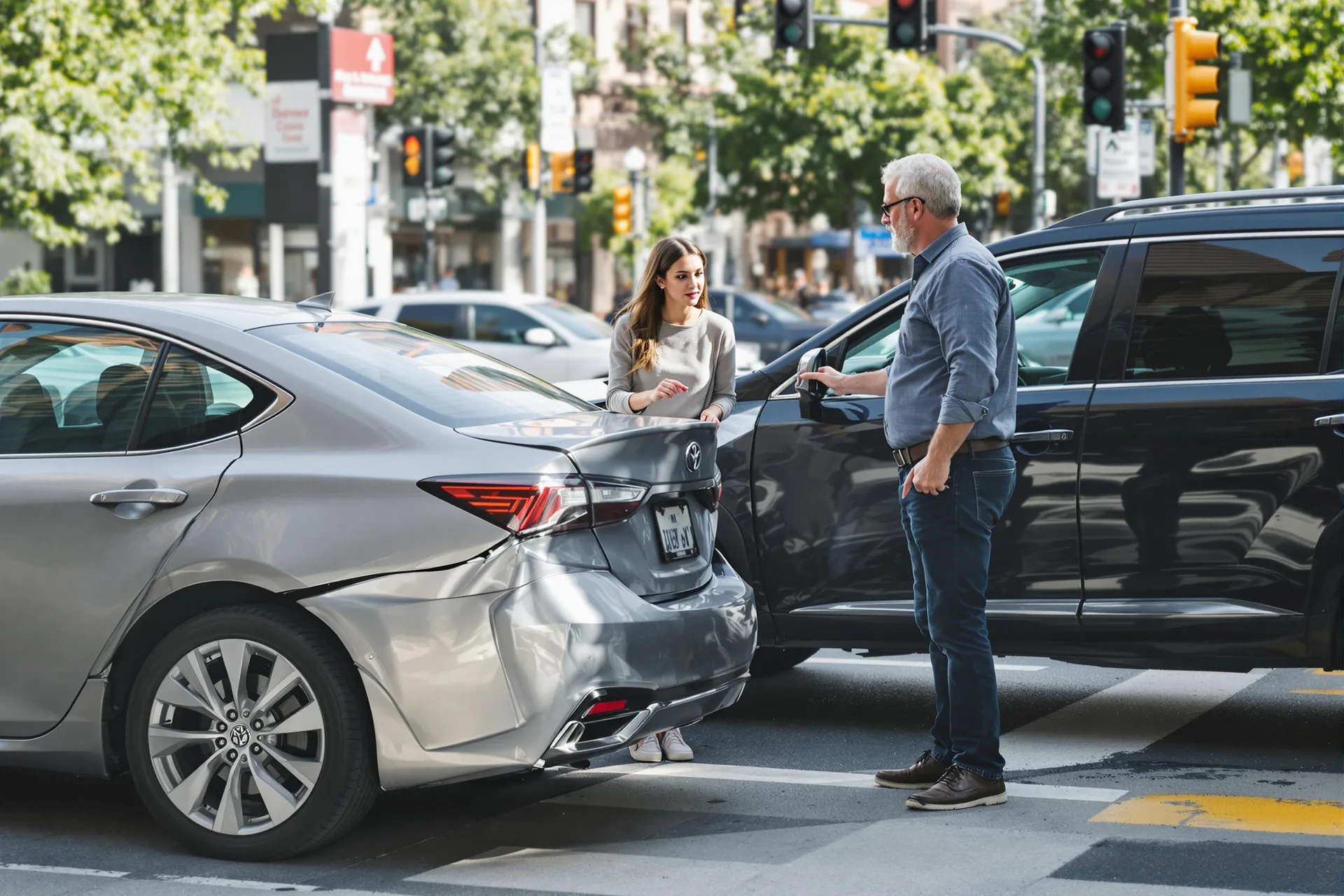
A comprehensive insurance claim for damage to your own car is frustrating and raises many questions. Find out here how to handle everything correctly, from reporting the claim to the repair, and which pitfalls you should be aware of. This will help you protect your entitlements and minimise costs.
Understanding fully comprehensive cover claims: core benefits and distinctions
A fully comprehensive claim refers to damage to your own vehicle that is covered by fully comprehensive insurance. This insurance steps in if you have caused the damage yourself or if vandalism has occurred. In contrast to partial comprehensive cover, which primarily covers damage caused by external influences such as storms, hail, theft or collisions with wildlife, fully comprehensive cover offers broader protection. It includes all the benefits of partial comprehensive cover and extends them to cover important additional aspects. For new cars or vehicles of high value, often up to an age of five years, this extended cover is particularly recommended. The exact terms and scope of benefits can vary depending on the insurance policy, so it is essential to take a look at the policy. This cover is a voluntary addition to the legally required motor third-party liability insurance. Knowing the differences between partial and comprehensive cover is crucial when choosing the right insurance protection.
Types of damage in focus: When comprehensive insurance actually pays out
Comprehensive motor insurance covers a wide range of damage scenarios that go beyond the cover provided by partial comprehensive insurance. A typical example of a comprehensive insurance claim is an accident caused by the policyholder, for example a parking bump costing EUR 1,500. Comprehensive cover also pays out for damage caused by vandalism, such as scratched paintwork or broken mirrors, often minus an excess of, for example, EUR 300. Another important insured event is damage to your own vehicle caused by unidentified third parties who then flee the scene. As a rule, the cover includes repair costs up to the vehicle’s replacement value. In the event of a total loss, this can mean the purchase of a replacement vehicle worth up to, for example, EUR 15,000. It is important to know what exactly is covered in the event of vandalism.
The following types of damage are typically covered by comprehensive insurance:
- Self-inflicted accident damage to your own vehicle.
- Damage caused by vandalism (wilful damage by third parties).
- Damage caused by a hit-and-run by an unidentified third party.
- All benefits of partial comprehensive insurance (e.g. theft, fire, broken glass, collisions with animals, natural hazards).
The exact definition and scope of what constitutes a comprehensive insurance claim can be decisive for settlement.
Exclusions and limitations: In these cases, comprehensive insurance does not pay
Despite the comprehensive cover, there are situations in which comprehensive motor insurance can reduce or refuse payment for a comprehensive claim. A common ground for exclusion is gross negligence, for example driving under the influence of alcohol from 0.3 per mille with signs of impairment. Deliberately caused damage is, of course, also not covered. Operating damage arising from the normal use of the vehicle (e.g. material fatigue, wear to the brakes) is generally not covered by comprehensive insurance, unless it is expressly included in the policy. Tyre damage without an accident, such as a burst tyre due to age, is often not covered.
Insurance cover also lapses if you take part in unauthorised races or drive without a valid driving licence. It is therefore important to know the exact exclusion clauses in your own policy. Breaches of the type approval, such as driving with heavily worn tyres, can also lead to reduced benefits if this was the cause of the damage.
Claims reporting and processing: step by step to compensation
If a comprehensive insurance claim has occurred, prompt and correct notification to the insurer is crucial. Most insurers require notification within one week of becoming aware of the damage. Document the damage immediately with photos and gather all relevant information. In cases of vandalism or hit-and-run, a police report is often a prerequisite for settlement. The insurer then reviews the facts and may appoint an assessor, especially for damage over €750. You often have the choice between repair at a garage or a notional settlement based on the assessment report. When handling damage to your own car, communication with the insurer is essential.
Our expert tip: clarify in advance with your insurer whether you are tied to a specific repair shop, as this can restrict your free choice of garage and, if not complied with, can lead to deductions of up to 15 per cent.
The important steps in handling the claim are:
- Immediate notification of the damage to the insurer (often within seven days).
- Accurate documentation of the damage (photos, notes).
- In cases of vandalism or hit-and-run: report it to the police.
- Coordination of the further course of action with the insurer (assessor, choice of garage).
- Checking the option of a notional settlement.
Knowledge of the rules on own-damage cover can be helpful here.
Cost factor for excess and no-claims bonus class
When settling a comprehensive insurance claim, two cost factors play an important role: the excess and the downgrade in the no-claims bonus class (SF class). The excess is the amount you pay yourself per claim; typical amounts range from €150 to €1,000. A higher excess does reduce the annual insurance premium, but it increases your costs in the event of a claim. After a settled comprehensive claim, you are usually downgraded to a less favourable SF class in the next insurance year, which leads to higher premiums. For smaller claims, for example up to €1,500, it can therefore be more economical to cover the costs yourself in order to avoid a downgrade. Some tariffs offer discount protection, which allows a certain number of claims without a downgrade. The question of when comprehensive cover is no longer worthwhile depends largely on these factors and the vehicle's value.
Expert knowledge: fictitious billing and recent rulings
The fictitious settlement is an option in the event of a comprehensive insurance claim. In this case, the policyholder is paid out for the damage on the basis of an expert report or cost estimate, without having the vehicle actually repaired. The Federal Court of Justice (BGH) has ruled that, under certain circumstances, policyholders are entitled to reimbursement of the repair costs of a manufacturer-authorised specialist workshop, even if they settle on a fictitious basis (BGH, ref. IV ZR 426/14). This applies in particular if the vehicle is less than three years old or has so far been serviced without interruption at a brand workshop.
VAT is generally not reimbursed in the event of a fictitious settlement. Current court rulings continually influence claims handling practice. For example, hit-and-run can result in the insurer being released from liability (Saarbrücken Higher Regional Court, ref. 5 U 28/23). Our expert tip: If there is uncertainty or a dispute with the insurer regarding the amount of the loss or fictitious settlement, legal advice can be useful in enforcing your claims. The question, whether comprehensive insurance pays for engine damage, is often complex and requires a close review of the policy terms and the cause of the damage.
The value of fully comprehensive cover: when is the cover worth it?
The decision for or against fully comprehensive motor insurance depends on several factors. In general, it is highly recommended for new cars and young used cars (up to around five years old), as the loss in value in the event of a total loss or costly repairs can be significant. Fully comprehensive cover is often also required by the lender for leased or financed vehicles in order to safeguard the financial risk. New drivers, who statistically have a higher risk of accidents, also benefit from this comprehensive protection. If you rely on your vehicle and would not be able to easily cover the cost of a major repair or replacement, fully comprehensive insurance offers financial security.
Consider how long you want to keep your car fully comprehensively insured, based on the vehicle’s value and your appetite for risk. An annual review of the insurance terms and the vehicle’s value helps with the decision. For vehicles worth less than 4,000 euros, partial cover or third-party insurance is often sufficient.
Find the right cover and manage costs
Choosing the right comprehensive car insurance and managing a claim require attention. Compare offers from different insurers, as premiums and benefits can differ significantly in some cases – a difference of several hundred euros per year is possible. Pay attention not only to the price, but also to included benefits such as waiving the defence of gross negligence (except in the case of alcohol/drugs) or new-for-old compensation for a period of at least 24 months. A sensible excess, for example 300 or 500 euros, can noticeably reduce the premium. Check regularly whether comprehensive cover for your vehicle is still appropriate or whether switching to partial cover is sufficient. nextsure supports you as a digital insurance portal in finding tailored and easy-to-understand insurance solutions. The comparison between third-party liability, partial cover and comprehensive cover is an important step towards optimal protection.
Frequently asked questions
- How quickly do I need to report a fully comprehensive insurance claim to my insurer?
You should report comprehensive insurance damage to your insurer as soon as possible, ideally on the same day. Most insurance policies allow a maximum notification period of seven days.
- Can I also have a fully comprehensive insurance claim paid out to me (notional settlement)?
Yes, fictitious settlement of a comprehensive insurance claim is possible. You will then receive the amount that the repair would cost according to the expert report or estimate, less the excess and VAT.
- Will my no-claims discount be downgraded after a comprehensive insurance claim?
Yes, in most cases, making a claim on fully comprehensive insurance leads to a downgrade to a less favourable no-claims class in the following insurance year, which results in higher premiums.
- Is fully comprehensive car insurance worth it for an older car?
For very old cars with a low residual value (e.g. under 4,000 euros), comprehensive cover often no longer pays off, as the premiums are not proportionate to the possible compensation. In this case, partial comprehensive cover or third-party liability insurance only may be sufficient.
- What happens if I have caused damage covered by fully comprehensive insurance through gross negligence?
In cases of gross negligence (e.g. running a red light, using a mobile phone while driving), the insurer may reduce benefits. In the event of driving under the influence of alcohol or drugs, cover may be completely withdrawn. However, many policies include the 'waiver of the defence of gross negligence' for certain cases.
- Does fully comprehensive insurance also cover damage caused by animals that are not wild animals?
Partial cover (and thus also fully comprehensive cover) usually covers damage caused by wild animals. Many modern policies extend this cover to collisions with animals of all kinds. A look at the policy terms provides clarity here.
Sources
- [1]GDV (German Insurance Association) offers a data service on natural hazard reports, focusing on fluctuations in motor insurance claims caused by natural disasters.
- [2]Federal Statistical Office (Destatis) provides comprehensive information on road traffic accidents in Germany.
- [3]Accident Atlas (Statistics Portal) visualises road traffic accidents and provides detailed statistical data on them.
- [4]Federal Motor Transport Authority (KBA) publishes comprehensive statistics on vehicles, drivers and road traffic.
- [5]Consumer Advice Centre NRW offers legal advice and information on rights in the event of insurance claims.
- [6]Laws on the Internet (Federal Ministry of Justice) provides the full text of the Insurance Contract Act (VVG 2008).