
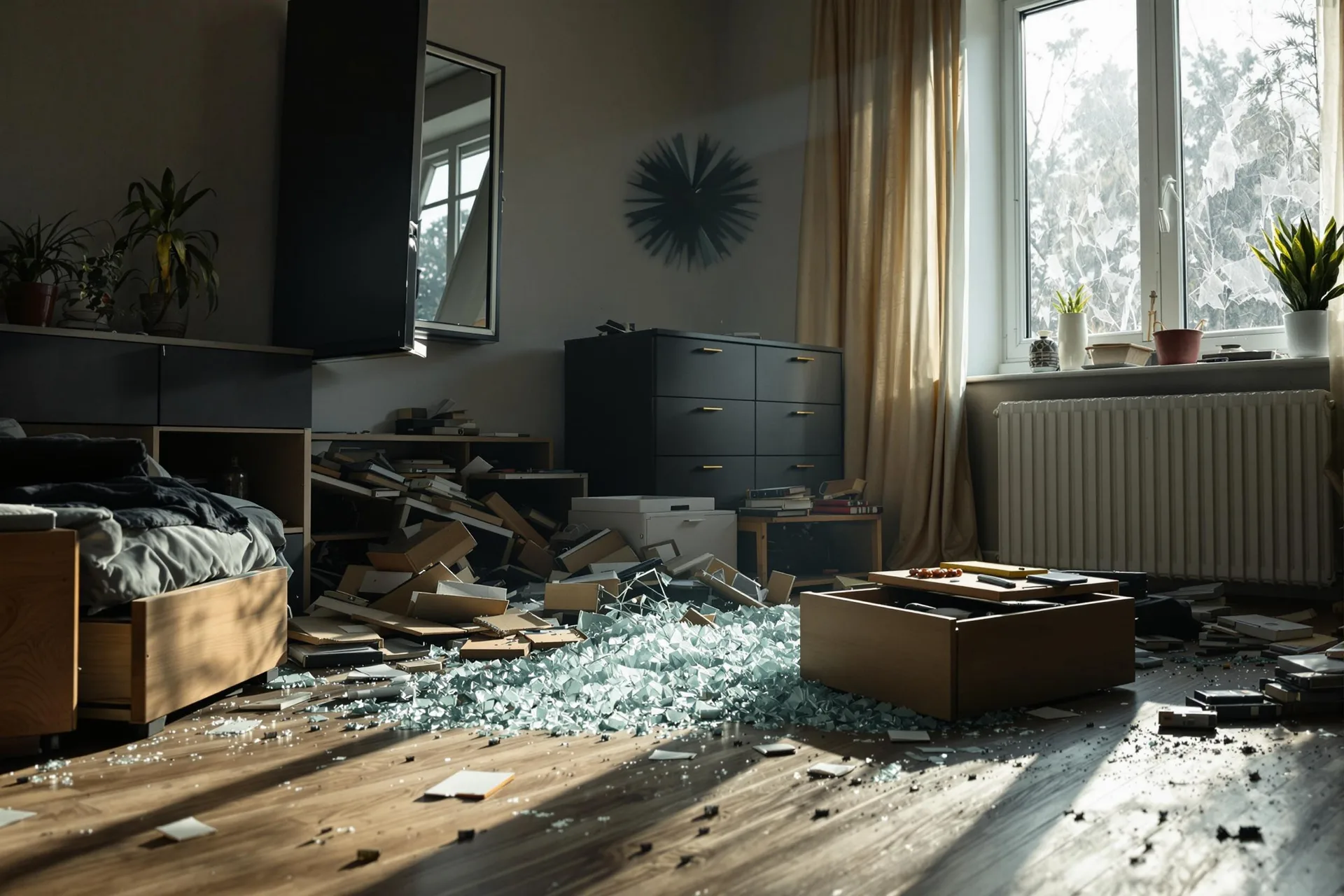
Who pays in the event of a burglary? Info & tips
Burglary: Who pays? Find out which insurance covers burglary theft and how to report damage correctly. Find out more now!
 Katrin StraubManaging DirectorInsurance expert with over 20 years of experience in the insurance industry.
Published on
Last updated on
9 min read
Table of Contents
Burglary: Who pays for the damage and how you can best protect yourself
A burglary is a shock that leaves not only emotional but also financial scars. Find out which insurance policy pays out when and how to successfully make your claims.
Immediate measures after a break-in: Taking the right steps secures your claims
The shock after a burglary runs deep. Nevertheless, swift and correct action is crucial to protect your insurance claim. Contact the police immediately on emergency number 110, before changing anything at the scene. Do not enter the property if you suspect the offenders may still be present. Report the damage to your home contents insurance, and if applicable your buildings insurance, without delay, ideally within a few days.
Create a detailed list of all stolen or damaged items, known as the list of stolen goods. The police and your insurer will both need this. Carefully document all damage and signs of a break-in with photos. Also have all stolen cards (debit cards, credit cards) and SIM cards blocked immediately to prevent further misuse. Properly reporting a claim is the first step towards settlement.
Contents insurance: Core cover for burglary
Contents insurance is the key component when it comes to who pays in the event of a break-in. It generally covers the replacement value of stolen movable items or items damaged during the break-in. This includes furniture, clothing, electrical appliances, and also cash or jewellery, although compensation limits often apply here. For cash, this is often around 1,000 to 2,500 euros. Damage caused by vandalism in the course of the break-in is usually covered too.
The following points are typically covered by contents insurance:
- Loss of contents items at replacement value.
- Repair costs for damaged contents items.
- Damage caused by vandalism in connection with the break-in.
- Under certain circumstances, hotel costs if the flat is temporarily uninhabitable.
- Damage to the flat’s doors and windows (often also covered by contents insurance).
Note the limits for valuables, which often amount to 15 to 25 per cent of the total sum insured. A precise understanding of what contents insurance includes is essential. Contents insurance can also apply if something is stolen from your locked hotel room while you are on holiday, usually for stays of up to three months. However, this so-called outside cover also has compensation limits.
Buildings insurance: protection for the building itself
While contents insurance protects the contents, buildings insurance is responsible for damage to fixed parts of the property. This includes, for example, broken-in doors, smashed windows or damaged walls. Not every buildings insurance policy automatically covers burglary damage; sometimes this is an optional extra. It is advisable for homeowners to take out both policies, contents and buildings insurance, ideally with the same provider, to avoid disputes over liability in the event of a claim.
Buildings insurance can cover the following costs:
- Repair or replacement of damaged doors and windows.
- Repair of damaged masonry.
- Costs for necessary security measures following the burglary.
Find out exactly about the difference between buildings and contents insurance to ensure you are optimally protected. Check your policy carefully to see whether burglary damage and vandalism to the building are explicitly included.
Gross negligence: When insurance cover is jeopardised
An important aspect in the question of who pays in the event of a burglary is the so-called gross negligence. If this is the case, the insurer may reduce the payout or even refuse cover altogether. Gross negligence applies, for example, if windows were left ajar when leaving the home or the door was not locked for a prolonged period. A key hidden under the doormat can also be deemed grossly negligent.
Some insurers offer tariffs that waive the defence of gross negligence. This may mean an additional premium, but it offers greater security in an emergency. A ruling by the Federal Court of Justice (BGH) of 5 July 2023 (case no. IV ZR 118/22) confirmed that an insurer does not have to pay if a burglary was carried out with a key that was lost through the policyholder's negligence and the policy excludes this. You can find more on the topic of gross negligence in home contents insurance in our blog. Therefore always close all windows and doors carefully, even when you are away only briefly.
Special case: rented flat — who pays which costs?
In the event of a break-in to a rented flat, the question of responsibility often arises. As a general rule: the tenant’s contents insurance covers damage to their belongings. For damage to the rented property itself, i.e. to doors, windows or the flat’s walls, the landlord is usually responsible and can cover this through their buildings insurance. The landlord is obliged to repair such damage.
However, if the tenant facilitated the break-in by neglecting their duty of care (e.g. leaving a window open), the landlord may be able to assert recourse claims in certain circumstances. Clear communication between tenant and landlord is important after a break-in in order to clarify responsibilities quickly. Tenants should inform their landlord promptly about the break-in and any damage to the building.
Prevention: Effective burglary protection reduces risk and costs
The best protection against the financial and emotional consequences of a burglary is effective prevention. Mechanical security measures on doors and windows, such as crossbar locks or mushroom-head locking systems, make it much more difficult for burglars to gain access. More than 46 per cent of attempted burglaries are abandoned if offenders cannot gain entry within five minutes. Alarm systems can also act as a deterrent and alert help in an emergency. Some insurers reward good burglary prevention measures with premium discounts.
Further tips for prevention:
- Close windows, balcony doors and patio doors even if you are only away for a short time.
- Lock your front door or flat door as securely as possible, ideally twice.
- Do not hide any keys outside.
- If you are away for a longer period, ask neighbours to empty the letterbox and move the roller shutters.
- Only post holiday photos on social media after you have returned.
- Make use of funding options such as the KfW grant 455-E for burglary prevention measures. [-ö1.600.]
Our expert tip: A combination of mechanical security and vigilant behaviour often offers the best protection. Also consider contents insurance if you run a business from home. An emergency locksmith service should also be chosen carefully.
Claims settlement: How to proceed and assert your claims
After you have informed the police and your insurer, the actual claims process begins. Submit the list of stolen items and all supporting documents (purchase receipts, photos, if applicable valuation reports) to your insurer as quickly as possible. The insurer will review your case and, if necessary, send an assessor. Keep damaged items until the insurer agrees to their disposal.
Should the insurer reduce or deny the claim, check the reasoning carefully. If there are inconsistencies, you can lodge an objection or contact an insurance ombudsman. In complex cases, advice from a specialist solicitor for insurance law can also be useful. Complete documentation and cooperation with the insurer are crucial for a swift and fair settlement. Remember that the clear-up rate for burglaries is often below 20 per cent, which is why the insurer is the primary point of contact for financial compensation.
Frequently asked questions
- Who pays in the event of a burglary if the door was not locked?
If the door was only pulled shut and not locked, the insurer may assume gross negligence and reduce or refuse cover, especially if you were away for an extended period. Some policies also provide cover in cases of gross negligence, but this is not standard.
- What is the difference between burglary and simple theft?
Burglary theft requires that the perpetrator has forced entry (e.g. by breaking open doors/windows). Ordinary theft occurs when items are taken without overcoming any barriers (e.g. from an open bag). Household contents insurance generally only covers burglary theft.
- Does the insurance also pay out in the event of an attempted break-in?
Yes, even an attempted burglary can cause damage (e.g. to a door or window). Home contents insurance or buildings insurance may cover these repair costs, even if nothing was stolen. Report the attempt to the police and your insurer as well.
- How do I prove the value of stolen items?
Keep purchase receipts, certificates (especially for jewellery), photos or videos of your valuables. Witness statements can also help. An up-to-date inventory list is also very useful.
- Does the insurance cover the cost of a security guard after a break-in?
If your flat can no longer be adequately secured after a break-in (e.g. if the door is badly damaged), the costs of a necessary security guard service until repairs can be covered by some contents insurance policies. Please check your policy conditions for this.
- What happens if I am underinsured in the event of a burglary?
Underinsurance occurs when the agreed sum insured is lower than the actual value of your household contents. In the event of a claim, the insurer may then reduce the compensation proportionally. Make sure the sum insured is calculated correctly.
Sources
- [1]K-EINBRUCH offers comprehensive safety tips for burglary prevention.
- [2]Police advice provides detailed information on technical security measures against burglaries.
- [3]Wikipedia offers a general overview of the topic of burglary.