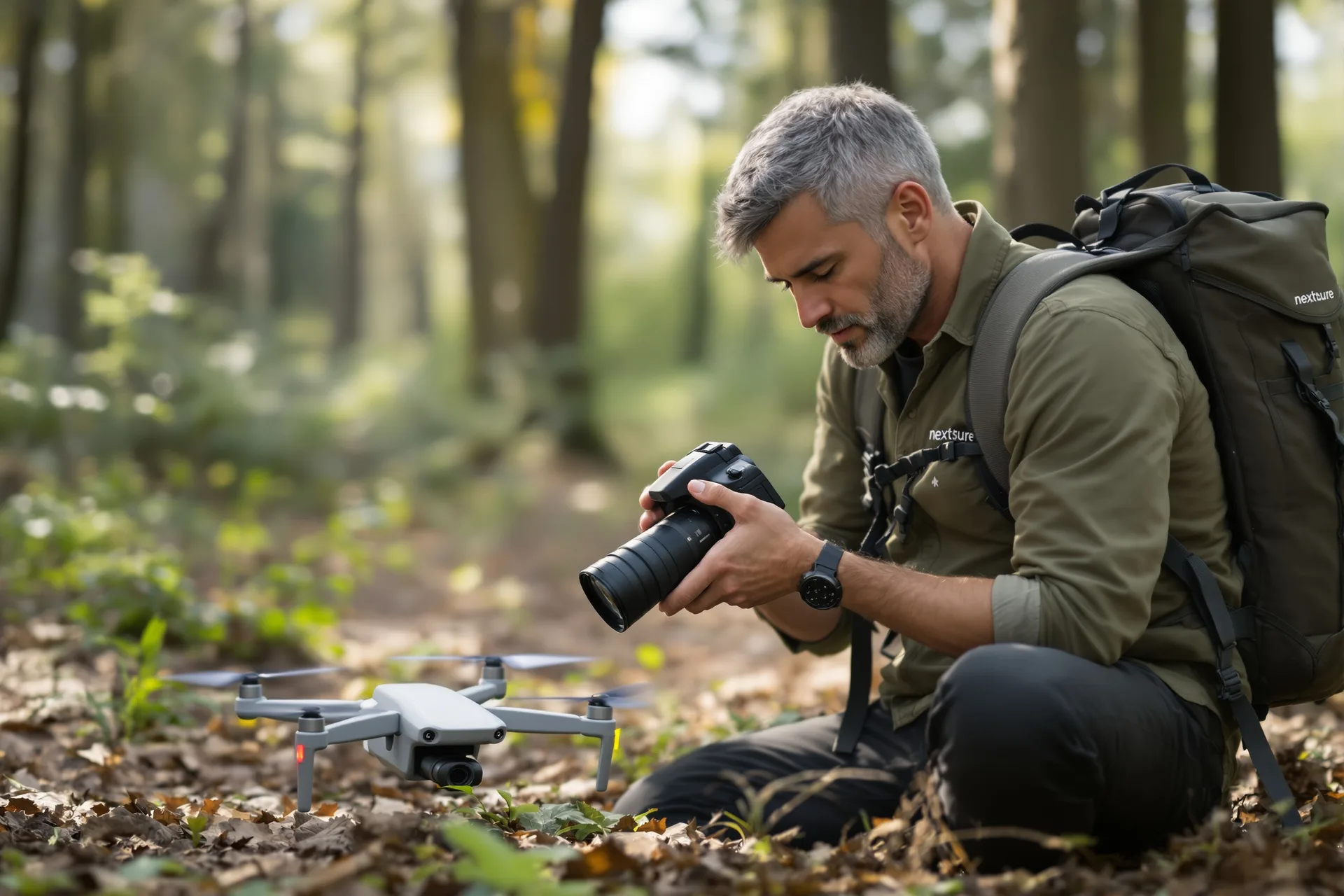
Camera & Drone Insurance Worldwide
Insure your camera and drone worldwide. Comprehensive protection against theft, damage and loss. Request your personalised risk analysis now!
All details are taken from the provider's linked product page and the contract documents (IPID/policy conditions) published there; the insurer's documents prevail. Premiums, benefits and the insurance product itself may change – please verify the details directly with the partner before signing up; only the information provided there is binding.
 Katrin StraubManaging DirectorInsurance expert with over 20 years of experience in the insurance industry.
Published on
Last updated on
9 min read
Table of Contents
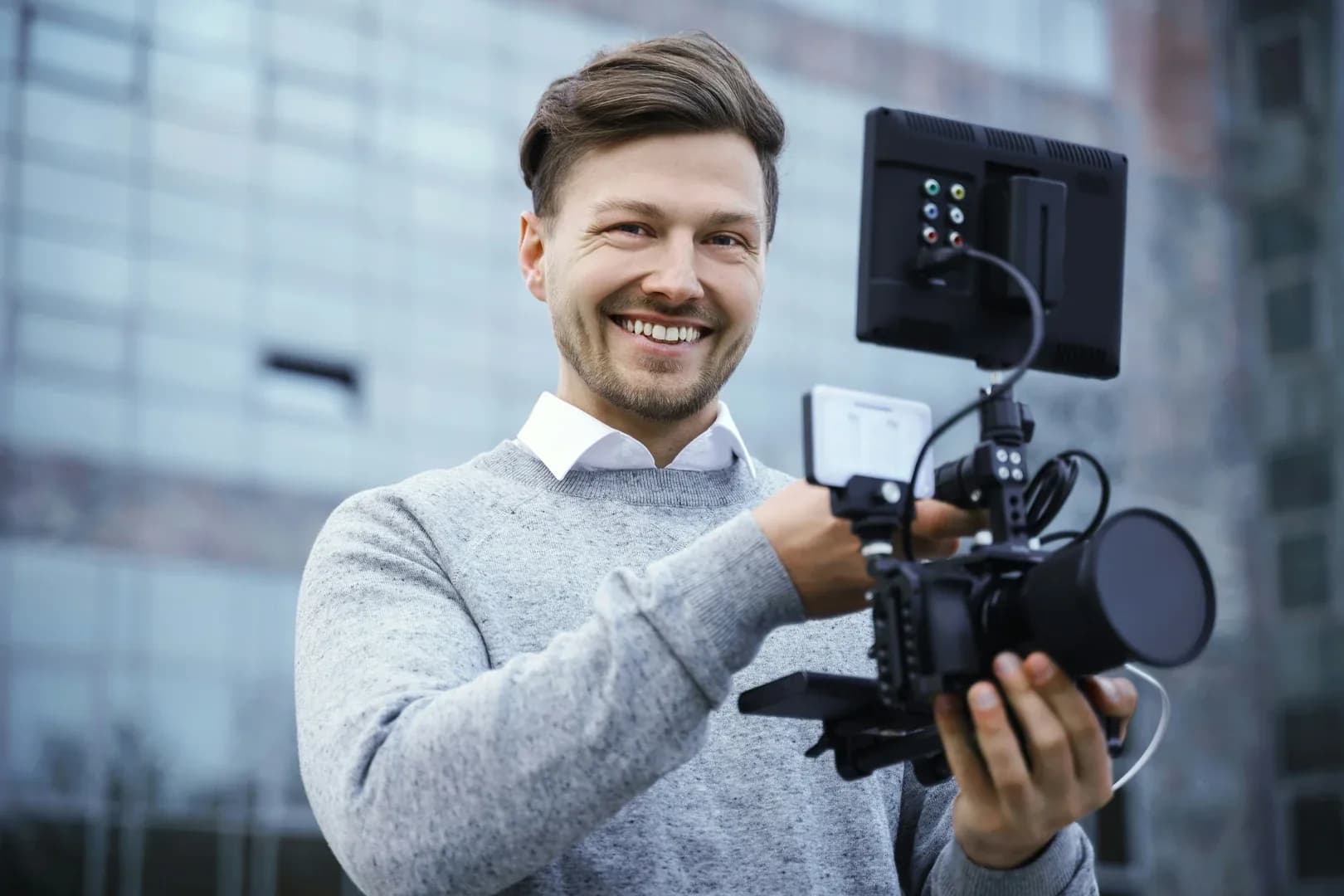
Camera Equipment Insurance
Secure your valuable camera equipment thoroughly against damage, theft, and loss with the camera equipment insurance from nextsure. Tailored protection for professionals and hobby photographers.
Learn moreCamera and Drone Insurance: Worldwide Protection for Your Equipment
Your camera and drone are indispensable travel companions, but they are also exposed to significant risks. A moment of carelessness can result in damage worth several thousand euros. Find out how a specialist camera and drone insurance policy with worldwide cover can prevent financial losses.
Risk analysis: Typical hazards for equipment abroad
When travelling, your equipment worth thousands of euros is exposed to risks every day. Statistically, the risk of theft in tourist hotspots is up to thirty per cent higher. A simple camera drop can result in repair costs of over 500 euros. A drone thrown off course by a gust of wind can not only be a total loss, but also cause damage to third parties. Conventional contents insurance often covers such specific “out-of-home” damage only for low amounts or not at all. A specialist camera equipment insurance policy is therefore the first line of defence. This analysis of the risk situation shows how important tailored cover is.
Liability vs. Hull Insurance: Two Pillars of Drone Safety
When insuring drones, two types of insurance are essential. Drone third-party liability insurance is legally required in Germany and throughout the EU and covers damage you cause to third parties. The cover limits should be at least three million euros, as personal injury can quickly run into six-figure sums. The second pillar is drone comprehensive insurance, which covers damage to your own equipment. It covers:
- Crashes caused by operating errors or technical faults.
- Damage caused by weather conditions such as storms.
- Loss due to a so-called „Fly-Away“.
- Theft and vandalism (depending on the policy).
While liability is the legal standard, comprehensive cover protects your own investment, often worth over €1,500. Without comprehensive cover, after an accident caused by your own fault you are left to bear the full cost.
Worldwide protection: understanding the scope and its limits
A worldwide policy is essential, but the details matter. Many policies offer worldwide cover, but explicitly exclude the USA and Canada due to the strict liability rules there. Therefore, check the geographical validity of your camera and drone insurance with worldwide cover carefully. For travel to excluded regions, special additional modules are often required, which can increase the premium by around ten to fifteen per cent. Our expert tip: always carry an international insurance confirmation in English. This is often requested during checks abroad, for example in Thailand. Comprehensive cover, such as that offered by a content creator insurance, takes these international requirements into account from the outset.
EU Drone Regulation: Legal obligations for pilots
Since 2021, the EU Drone Regulation has standardised the operation of unmanned aircraft systems across the EU. Every drone operator must register with the Federal Aviation Office and receives an electronic operator ID (e-ID). This number must be affixed to the drone. For drones from 250 grams upwards, the EU certificate of competence A1/A3 („small drone licence“) is also mandatory. This online test ensures basic knowledge and is valid for five years. Compliance with these regulations is a basic prerequisite for insurance cover. In the event of an accident without valid registration or the necessary licence, the insurer may refuse to pay out. A drone pilot liability cover is therefore inseparably linked to compliance with the law.
Case study: Claims handling in the event of theft abroad
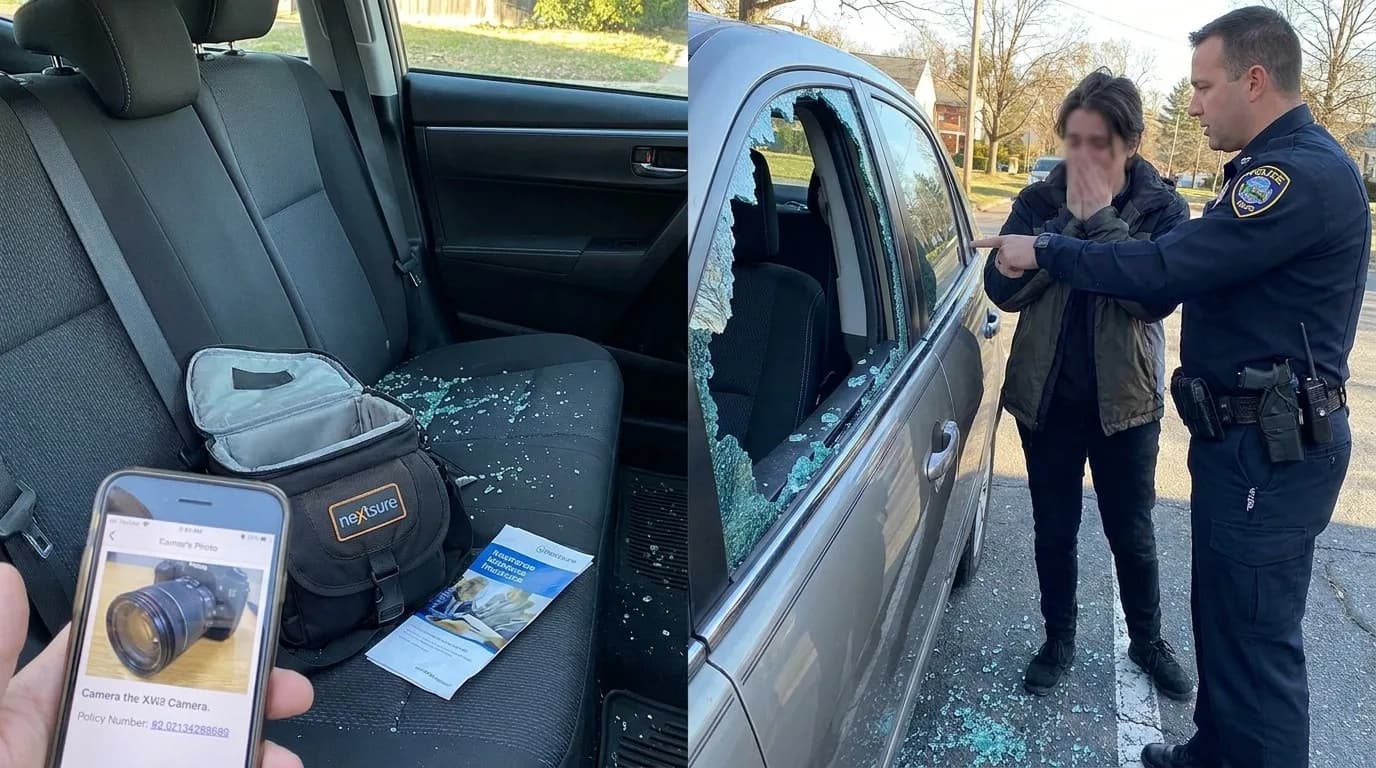
Imagine your camera equipment worth €4,000 being stolen from your hire car in Mexico. A standard travel baggage insurance policy often limits reimbursement for electronics to €500. A good camera insurance policy, on the other hand, covers the replacement value. Three steps are crucial for a smooth claims process:
- Report the theft to the local police immediately and obtain a report.
- Contact your insurer’s 24-hour claims service straight away.
- Submit all documents, such as the police report and the original purchase invoices for the equipment, digitally.
A prompt report within 48 hours is often contractually required. With the right policy, such as dedicated camera insurance for Mexico, you can receive full replacement value reimbursed within a few weeks.
Expert tips on tariff selection and contract drafting
When choosing the right policy, the details determine the quality of the cover. Look for an “all-risks cover”, which also includes damage caused by clumsiness or user error. An excess of 150 to 250 euros can reduce the annual premium by up to twenty per cent. Our expert tip: Insure not just the camera, but list all accessories such as lenses and tripods separately. Only then is the full value covered in the event of a claim. For special trips, such as a safari, there are even short-term policies that provide tailored cover for photo equipment insurance for Africa. Also check whether private and commercial use is covered if you monetise your images.
Find your personalised protection solution
The best protection is always a tailored solution that is matched to your equipment and travel plans. A generic insurance policy can have gaps that become costly in the event of a claim. A detailed analysis of your risks is the first step towards comprehensive protection. Take into account the total value of your equipment, your typical destinations and the way you use it. With this information, a package can be put together that gives you the confidence to focus fully on your creative work. Request an individual risk analysis now: Have your insurance situation reviewed free of charge and receive concrete recommendations for improvement.
Frequently asked questions
- What level of insurance cover is sensible for drone liability insurance?
We recommend cover of at least three to five million euros. Personal injury can quickly lead to very high costs, so a higher amount offers better protection against financial risks.
- Are operating errors on my camera also covered?
In policies with all-risk cover, damage caused by operating errors, clumsiness or improper handling is generally covered. This is a key advantage over basic policies.
- What is the difference between replacement cost compensation and actual cash value compensation?
New value compensation means that in the event of a claim, you receive the amount required to purchase a new, equivalent device. Current value compensation takes wear and tear into account and only reimburses the value that the device still had at the time of the loss.
- Do I need to list all my accessories individually?
Yes, it is strongly recommended to list all valuable accessories such as lenses, filters, tripods and batteries individually in the insurance policy. This is the only way to ensure that, in the event of a claim, the full value of your equipment is reimbursed.
- What should I do after damage abroad?
Report the damage to the local police without delay (especially in the event of theft) and contact your insurer immediately, usually within 48 hours. Document the damage with photos and collect all relevant evidence such as purchase receipts and the police report.
- Can I also take out the insurance for just a single trip?
Yes, some providers offer short-term insurance that applies only for the duration of a specific trip. For people who travel several times a year, an annual policy is often more cost-effective and provides continuous cover.
Sources
- [1]The Luftfahrt-Bundesamt provides comprehensive general information on the subject of drones in Germany.
- [2]The Luftfahrt-Bundesamt provides current statistics and data relating to aviation.
- [3]The Foreign Office provides travel and security advice for countries worldwide that is relevant for international travel.
- [4]The Consumer Advice Centre provides valuable tips and legal guidance on insurance and the use of private drones.
- [5]The Federal Ministry for Digital and Transport provides official information and regulations on the operation of drones in Germany.
- [6]The German Photographic Association e.V. (DVF) is a central point of contact for photographers and offers information as well as opportunities for exchange relating to photography.
- [7]The Federal Network Agency provides information on frequency usage and special applications such as radio location services, which may be relevant for certain drone technologies.
Conclude directly online
Verified partner tariffs at no extra cost. The button takes you straight to the provider's calculator.
 Hepster
Camera insurance
Worldwide cover for new and used cameras, including original accessories.
- Coverage area:
- worldwide
- Battery-wear threshold:
- up to 60% remaining capacity, device max. 4 years old
- Minimum term:
- 3 months (monthly subscription)
- Drop, breakage, sand, and liquid damage
- Fire, explosion, power surge, short circuit, sabotage, vandalism
- Battery and screen damage, plus battery wear (where not covered by warranty)
- Operating errors and improper handling
- Theft module: theft, burglary from a car or home, robbery
Key exclusions
- Loss and forgetting outside the insured theft scenarios
- Devices without a known serial/IMEI number
- Damage covered under warranty or manufacturer's guarantee
- Gross negligence or intentional acts
Trusted Shops: 4,5/5 „Sehr gut“ (2.600 Bewertungen)
hepster insgesamt (Anbieterbewertung, alle Versicherungen)
Claims must be reported online within 14 days; theft must be reported to the police within 24 hours. Insurer: Hiscox SA, Niederlassung für Deutschland
Fact sheet: benefits, exclusions and waiting periods in detail
All details are taken from the provider's linked product page and the contract documents (IPID/policy conditions) published there; the insurer's documents prevail. Premiums, benefits and the insurance product itself may change – please verify the details directly with the partner before signing up; only the information provided there is binding.
Information last updated: July 2026 · Source: provider product information (IPID/policy conditions)