Insurance for cameras & drones worldwide
As a content creator, protect your camera & drone worldwide. Find out everything about liability, comprehensive cover & overseas protection. Find out more now!
All details are taken from the provider's linked product page and the contract documents (IPID/policy conditions) published there; the insurer's documents prevail. Premiums, benefits and the insurance product itself may change – please verify the details directly with the partner before signing up; only the information provided there is binding.
 Katrin StraubManaging DirectorInsurance expert with over 20 years of experience in the insurance industry.
Published on
Last updated on
7 min read
Table of Contents
Camera Equipment Insurance
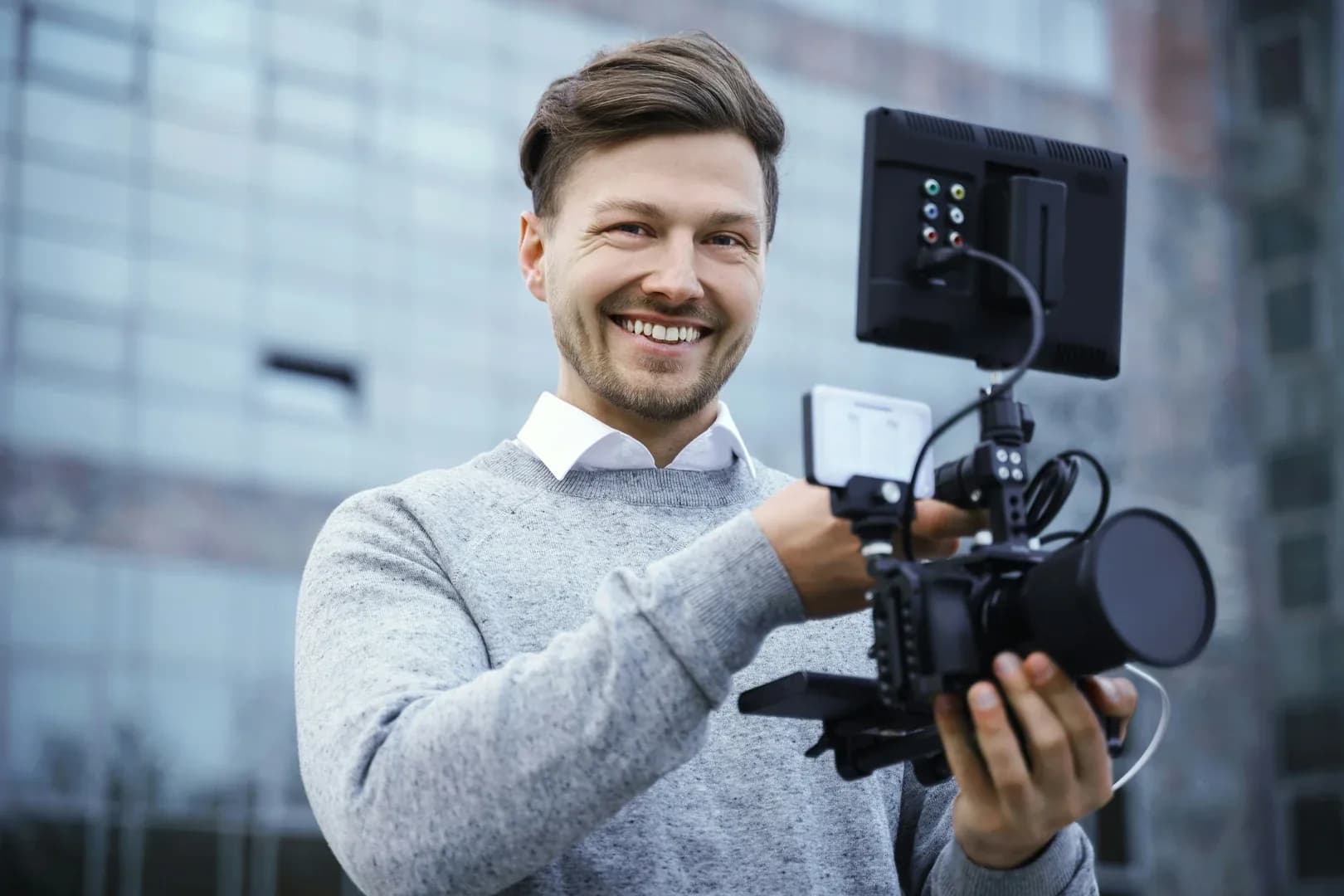
Secure your valuable camera equipment thoroughly against damage, theft, and loss with the camera equipment insurance from nextsure. Tailored protection for professionals and hobby photographers.
Learn moreInsurance for content creators: worldwide cover for camera and drone
A drone crash in Tokyo or a camera theft in Rome can cost thousands of euros. For content creators, specialised insurance for cameras and drones with worldwide cover is not a luxury, but a business necessity. This article shows you how to comprehensively protect your equipment.
Understanding the basics of insurance cover for creative equipment
For content creators, there are two key types of insurance. Drone liability insurance is legally required in Germany and almost all EU countries and covers damage you cause to third parties. If your drone crashes onto a parked car, for example, this insurance covers repair costs of several thousand euros. The second pillar is comprehensive or equipment insurance. This protects your own equipment against damage, destruction and theft. Home contents insurance is usually not sufficient here, as it often only covers simple theft on the move up to ten per cent of the sum insured. A specialised camera equipment insurance offers more comprehensive protection. This distinction is the basis for every further step.
Mastering the legal requirements for drone flights in Europe
Since the EU Drone Regulation came into force, registration has been mandatory for almost every drone operator. If your drone has a camera, you must register online as an operator with the Federal Aviation Office (LBA). The costs are low, but the consequences of non-compliance are significant. After registration, you will receive an electronic operator ID (e-ID), which must be visibly attached to the drone. This e-ID is used to uniquely identify the operator in the event of incidents. For drones in classes C1, C2 and C3, the ID must also be loaded into the drone’s software. These regulations apply throughout the EU and create a uniform legal framework with a maximum altitude of 120 metres. Compliance with these obligations is a prerequisite for insurance cover.
Choosing the right liability cover for worldwide drone operations
Choosing the right level of cover in drone liability insurance is crucial. For private flights, sums insured between three and five million euros are recommended. However, once you start generating income from your footage, for example through a monetised YouTube channel, you need a commercial policy. Here, sums insured of at least five to ten million euros are advisable, as the risk is assessed as higher for commercial productions. Some policies cover a secondary occupation up to a profit of 6,000 euros per year. Be sure to pay attention to the territorial scope: worldwide cover, including the USA and Canada, is essential for creators working internationally. An insurance certificate in English should always be available digitally. This will protect you against substantial claims for damages.
Optimise camera and equipment insurance against theft and damage
A high-quality camera kit can quickly cost over 15,000 euros. The risk of theft is particularly high at tourist hotspots such as Paris or Rome. A good insurance for cameras and drones covers not only burglary from a locked hotel room, but also simple theft. Here is a list of important benefits:
- New-for-old compensation: In the first three years, the full replacement value is reimbursed in the event of a total loss.
- Operator error: Damage caused by incorrect handling is often one of the most common causes and should be covered.
- Water damage: A spilled bottle in your backpack can cause damage worth 4,000 euros.
- Theft from a car: Cover should also apply if the equipment is stolen from a locked vehicle.
These points are crucial for comprehensive protection of your equipment.
Expert tips: Recognise and avoid pitfalls in the small print
The devil is in the detail of the insurance terms and conditions. All-risk cover is often the best choice. Unlike traditional policies, it covers all risks that are not expressly excluded. Our expert tip: Check the exclusions carefully. Damage caused by wear and tear, gross negligence or during transport by third parties is often not covered. Another important point is the excess. An excess of €250 can reduce the annual premium by up to 20 per cent, but it also means that you bear smaller claims yourself. Also clarify whether borrowed equipment, which is often needed for special projects, is also covered. A good drone hull insurance policy should take these eventualities into account. This helps you avoid nasty surprises in the event of a claim.
Checklist for securing your equipment before your next trip
Good preparation minimises risks and ensures smooth operations. Before you set off on your next trip as a content creator, you should check the following points:
- Check registration: Is your e-ID up to date and correctly attached to the drone?
- Liability cover limit: Does the amount (at least five million euros for commercial use) meet the requirements of your destination country?
- Worldwide cover: Do you have written confirmation of worldwide cover, including the USA/Canada?
- Equipment list: Have you created an up-to-date list of your equipment, including serial numbers and proof of purchase?
- All-risk cover: Is your equipment insured against all relevant risks such as simple theft and operating errors?
- Local laws: Have you familiarised yourself with the specific drone rules and no-fly zones in your destination country?
These six steps form the basis for safe production abroad.
Request a customised risk analysis for your equipment now
The right cover is as individual as your content. A one-size-fits-all solution rarely does justice to the specific risks faced by a creator operating worldwide. A detailed analysis of your equipment and your travel activity is the first step towards tailored protection. Only then can you ensure that an investment of €20,000 in cameras and drones is not ruined by a single unfortunate moment. Have your insurance situation reviewed free of charge and receive specific recommendations for improvement tailored precisely to your needs as a content creator. Request your individual risk analysis now.
Frequently asked questions
- Which insurance do I really need as a content creator?
You absolutely need drone liability insurance, ideally with commercial cover. In addition, all-risk equipment insurance for all your equipment (camera, lenses, drone, laptop) is strongly recommended, to protect yourself worldwide against theft and damage.
- What is the difference between private and commercial use?
Private use is purely a hobby without income. As soon as you earn money from your recordings, whether through client assignments, the sale of stock material or a monetised social media channel, this is considered commercial use and requires an appropriate insurance tariff.
- How high should the sum insured for my drone liability insurance be?
For commercial use as a content creator, we recommend cover of at least EUR 10 million. This ensures that even larger personal injury or property damage claims abroad, where compensation claims can be high, are covered.
- Does the insurance also cover damage caused by operator error?
A good equipment or hull insurance policy should explicitly include damage caused by operator error. This is one of the most common causes of damage. For drone liability insurance, this is irrelevant, as damage to third parties is covered here, regardless of the cause.
- What do I need to bear in mind when travelling to the USA or Canada?
Make sure that your insurance policy explicitly and without restrictions covers these countries. Liability risks are particularly high there. Always carry an insurance confirmation in English with you and find out about the local drone laws of the FAA (USA) or Transport Canada.
- What should I do in the event of a claim abroad?
Document the damage immediately with photos. Report theft to the local police without delay and obtain written confirmation. Then contact your insurer’s 24-hour claims hotline immediately to agree the next steps.
Sources
- [1]The Federal Aviation Office (LBA) offers comprehensive information on drones.
- [2]The Federal Ministry for Transport provides information on drones.
- [3]The Consumer Advice Centre provides tips on insurance and the legal situation for private drones.
- [4]Statista offers a topic page about influencers and content creators.
- [5]The Federal Employment Agency provides career information on media designer in image and sound.
- [6]Chambers publishes an article on the legal aspects of content creation.
- [7]The Federal Aviation Office (LBA) offers general information on drones.
- [8]The WIPO (World Intellectual Property Organization) provides a podcast transcript on intellectual property.
Conclude directly online
Verified partner tariffs at no extra cost. The button takes you straight to the provider's calculator.
 Hepster
Camera insurance
Worldwide cover for new and used cameras, including original accessories.
- Coverage area:
- worldwide
- Battery-wear threshold:
- up to 60% remaining capacity, device max. 4 years old
- Minimum term:
- 3 months (monthly subscription)
- Drop, breakage, sand, and liquid damage
- Fire, explosion, power surge, short circuit, sabotage, vandalism
- Battery and screen damage, plus battery wear (where not covered by warranty)
- Operating errors and improper handling
- Theft module: theft, burglary from a car or home, robbery
Key exclusions
- Loss and forgetting outside the insured theft scenarios
- Devices without a known serial/IMEI number
- Damage covered under warranty or manufacturer's guarantee
- Gross negligence or intentional acts
Trusted Shops: 4,5/5 „Sehr gut“ (2.600 Bewertungen)
hepster insgesamt (Anbieterbewertung, alle Versicherungen)
Claims must be reported online within 14 days; theft must be reported to the police within 24 hours. Insurer: Hiscox SA, Niederlassung für Deutschland
Fact sheet: benefits, exclusions and waiting periods in detail
All details are taken from the provider's linked product page and the contract documents (IPID/policy conditions) published there; the insurer's documents prevail. Premiums, benefits and the insurance product itself may change – please verify the details directly with the partner before signing up; only the information provided there is binding.
Information last updated: July 2026 · Source: provider product information (IPID/policy conditions)