Liability & own damage: Does insurance pay? nextsure
Find out whether your liability insurance covers your own damage. Information & tips from nextsure. Get free advice now!
All details are taken from the provider's linked product page and the contract documents (IPID/policy conditions) published there; the insurer's documents prevail. Premiums, benefits and the insurance product itself may change – please verify the details directly with the partner before signing up; only the information provided there is binding.
 Katrin StraubManaging DirectorInsurance expert with over 20 years of experience in the insurance industry.
Published on
Last updated on
3 min read
Table of Contents

Personal liability insurance
Your everyday shield: nextsure's personal liability insurance reliably protects you from the financial consequences of damage you cause to others.
Learn moreDoes your liability insurance pay for your own damage? The clear answer for 2025
An accident, and your own expensive smartphone is broken – will your liability insurance cover it? Many policyholders only ask themselves this question when a claim arises. This article explains when your insurance covers you and when it does not.
Quick Facts: Own damage and liability – The most important points at a glance
Your private liability insurance primarily covers damage to third parties. Your own damage is excluded in nine out of ten cases.
The basic principle is: protection against third-party claims. This reduces premiums by around 40 to 60 per cent.
If you drop your €1,500 smartphone? This is considered own damage. Your liability insurance will not cover it.
There are only very few exceptions. These are usually found in special contractual clauses or other types of insurance.
The principle of liability insurance: Why own damage is not covered
Liability insurance is based on the principle of liability for damage caused to third parties. This protects over 80 million people in Germany.
The German Civil Code regulates this duty to compensate for damages, in particular § 823 BGB. This statutory basis defines 100% of claims.
The insurer covers valid claims. Coverage limits often reach up to 50 million euro.
The focus is clearly on protection against liability risks towards third parties. A missing liability insurance policy can cost 100,000 euro.
Own damage concerns your own property or your person. Over 90 per cent of all own-damage claims are excluded.
Cover for own damage would be equivalent to all-risk cover. This would increase premiums for everyone by 40 to 60 per cent.
The way liability insurance works is strictly aimed at third-party damage. This affects millions of insured people.
Example: You accidentally damage a friend's property worth 500 euro. Your liability insurance covers this.
Do you damage your own property? Your private liability insurance does not apply in 100% of typical cases here.
Practical examples: When liability insurance definitely does not cover own damage
In everyday life, situations arise quickly. Over 70% of enquiries relate to own damage.
Here are three clear examples of when your private liability insurance does not cover own damage. This accounts for 90% of enquiries.
- Your own smartphone falls: your €800 smartphone slips out of your hand. The display is cracked. This is purely own damage.
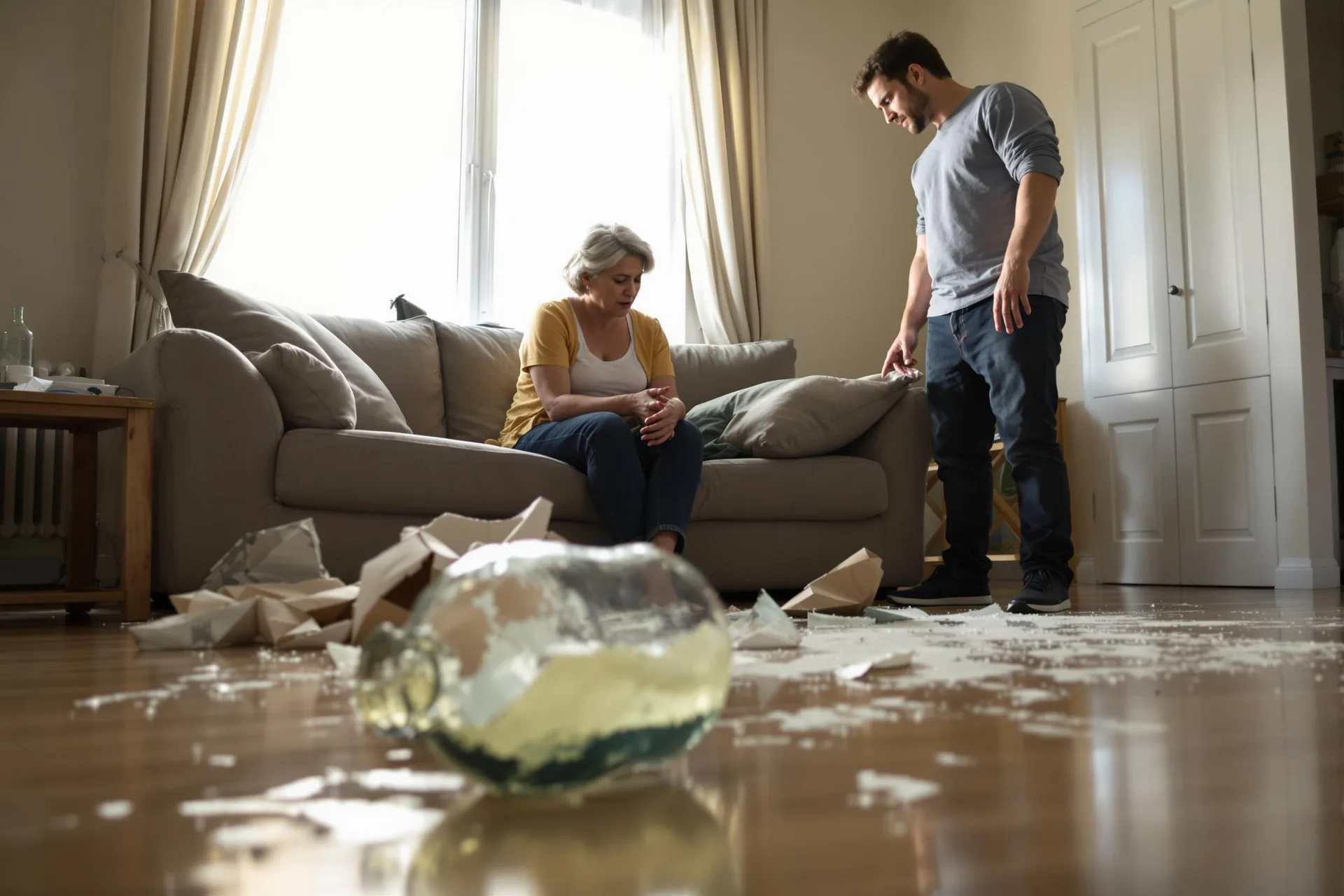
- Damage caused by family members in the same household: your child knocks over a vase worth €150. As the child is also insured, this is own damage. More: Liability claim involving family.
- Unintentional self-damage: while renovating, you knock over a ladder worth €200. This, too, is damage to your own property.
These three examples illustrate the core principle: liability insurance is there for damage caused to third parties.
Other insurance policies are responsible for damage to your own property. Contents or personal belongings insurance covers this 100%.
The need for liability insurance remains unchanged. It protects against claims worth millions of euros.
Exceptions and special cases: Are there any scenarios for a service?
The rule “no cover for self-inflicted damage” is very strict. There are only a few defined scenarios, perhaps 2–3 relevant cases.
Self-damage cover is extremely rare in private liability insurance. Fewer than 1% of policies offer it.
It is more commonly found in specialist motor third-party liability policies. For example: you damage your second car with your first car.
Special motor self-damage cover could apply. This often costs an additional 50 euros per year.
Another area is damage caused while helping out. You help a friend move house and drop their vase worth 1,000 euros.
This is not genuine self-damage, but damage to someone else’s property. Good policies cover this up to 5,000 euros.
Check your policy carefully for such clauses. They are often only included in premium policies.
The private liability insurance offers a wide range of options. More than 300 policies are available to choose from.
Expert depth: Legal foundations and insurance terms and conditions
The exclusion of own damage is deeply rooted in insurance. This has been standard for over 50 years.
The General Liability Terms and Conditions (AHB) clearly define the scope of cover. Own damage is explicitly excluded.
A look at § 1 AHB shows: cover applies only when claims are made by third parties.
This serves risk assessment. This keeps premiums affordable for millions of policyholders.
Our expert tip: Do not confuse private liability insurance with comprehensive motor insurance.
The definition of liability insurance is clear. It protects against 100% of third-party damage.
For damage to your own car, there is comprehensive motor insurance. It covers over 90% of vehicle damage.
For household contents there is contents insurance. This covers 100% of insured own damage.
Mixing the two would undermine the liability system. It would lead to a premium increase of at least 30 per cent.
Recommendations for action: How to protect yourself optimally
Three concrete steps help to avoid misunderstandings and gaps in cover. This way you are 100% covered.
- Read your policy: Check your insurance terms carefully. Only 50% of policyholders do this. Pay attention to exclusions.
- Recognise the need: Private liability insurance does not provide cover for your own damage. For valuable items such as a €500 device, other insurance is required.
- Get advice: Have your individual insurance needs assessed professionally. Good advice can save up to 20 per cent in costs.
A clear separation of insurance purposes protects you from nasty surprises in the event of a claim. This helps you avoid 100% of uncertainties.
The impact of a claim on your premium is also an important aspect. This can account for up to 30%.
Conclusion: Clear limits of private liability insurance for own damage
The question “Does my liability insurance pay for my own damage?” can be answered clearly: usually not.
Private liability insurance protects you from the financial consequences of damage to third parties. It does not cover your own property.
This principle ensures the insurance remains affordable. Millions of policyholders benefit from low premiums.
There are specialised solutions for protecting your own belongings. Contents insurance covers 100% of your contents.
For example, in the case of loss of someone else’s property: this is damage to a third party. That is where your liability insurance pays out.
Solid cover requires knowledge. Understand the limits of cover in your policies 100%.
Frequently asked questions
- Why is own damage not covered by my private liability insurance?
Private liability insurance is designed to protect you against financial claims from third parties to whom you have caused damage. Damage to your own property (own damage) does not fall under this purpose, as, in legal terms, you are not liable to yourself. Cover for own damage would undermine the principle of liability insurance and significantly increase premiums.
- My child damaged my laptop. Is this a case for liability insurance?
If your child lives with you in the same household and is co-insured under your family liability insurance, the damage to your laptop is treated as damage to your own property. In this case, private liability insurance does not usually pay out. There are policies that cover damage caused by children who are not legally liable (under seven) to third parties, but not to the parents’ property.
- I helped a friend move and damaged one of his pieces of furniture in the process. Is this own damage?
No, this is not own damage, but damage you caused to a third party (your friend). Many good private liability insurance policies cover so-called courtesy damage. Check your policy or ask your insurer. The damage did not occur to your property.
- Is there insurance that covers own damage?
Yes, there are insurance policies that cover damage to your own property. These include, for example, household contents insurance for damage to your household contents (e.g. caused by fire, water leaks, storm, burglary), comprehensive car insurance for your car, or specialist item insurance for valuable individual items such as jewellery or electronics.
- What is the difference between own damage and third-party damage?
Own damage is damage you cause to yourself or your own property. Third-party damage is damage you cause to another person (a third party) or their property. Private liability insurance covers third-party damage.
- Can I take out own damage cover in addition to my private liability insurance?
Explicit own-damage cover as an additional component to private liability insurance is unusual and is generally not offered. Separate types of insurance, such as home contents or comprehensive insurance, are used to protect one's own property. A few specialist tariffs, e.g. in motor insurance for damage to one's own second car caused by the first car, may contain elements of own-damage cover.
Sources
- [1]Wikipedia provides a comprehensive overview of liability insurance in Germany.
- [2]The Verbraucherzentrale provides valuable consumer advice on private liability insurance.
- [3]The GDV (Association of the German Insurance Industry) provides statistics on the number of claims in property and casualty insurance.
- [4]Gesetze im Internet provides the full text of the Insurance Contract Act (VVG).
- [5]The ADAC provides comprehensive information on motor vehicle liability insurance.
Conclude directly online
Verified partner tariffs at no extra cost. The button takes you straight to the provider's calculator.
 Hepster
Private liability insurance
Private liability cover in three tariffs (Basis, Premium, Superior) with worldwide protection for you and your family.
- Tariffs:
- Basis, Premium, Superior
- Coverage area:
- worldwide; unlimited in Europe, up to 5 years outside Europe
- Sum insured:
- as stated in the insurance certificate
- Damage as a pedestrian, cyclist, or while doing sports
- Drones and model aircraft: up to 250g (Basis/Premium) or up to 5kg (Superior)
- Owners of tame pets, tamed small animals, and bees are covered
- From Premium: loss of third-party keys and damage in vacation accommodation
- Superior: key loss including keycards, safe keys, and vehicle keys
- Additional persons are co-insured (e.g. spouse/partner, children)
Key exclusions
- Professional activities
- Keeping dogs or horses (separate cover required)
- Driving motor vehicles subject to mandatory insurance
- Damage caused intentionally
Trusted Shops: 4,5/5 „Sehr gut“ (2.600 Bewertungen)
hepster insgesamt (Anbieterbewertung, alle Versicherungen)
Monthly subscription: minimum term 12 months, notice period 3 business days before the end of the billing period. Insurer: andsafe Aktiengesellschaft
Fact sheet: benefits, exclusions and waiting periods in detail
All details are taken from the provider's linked product page and the contract documents (IPID/policy conditions) published there; the insurer's documents prevail. Premiums, benefits and the insurance product itself may change – please verify the details directly with the partner before signing up; only the information provided there is binding.
Information last updated: July 2026 · Source: provider product information (IPID/policy conditions)