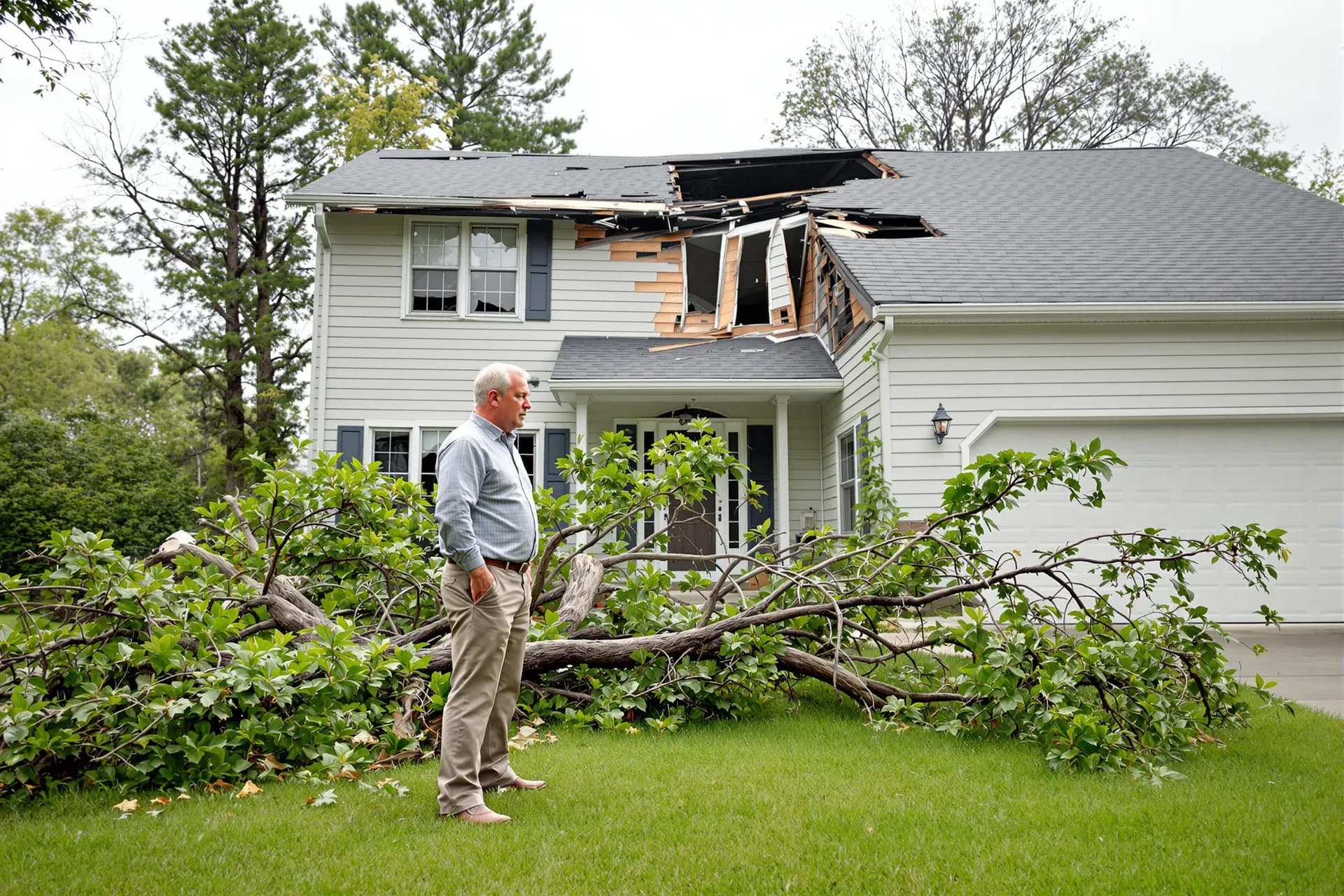
Liability: Loss of third-party property
Find out how your liability insurance applies in the event of loss of someone else's property. Minimise risks now with nextsure.
All details are taken from the provider's linked product page and the contract documents (IPID/policy conditions) published there; the insurer's documents prevail. Premiums, benefits and the insurance product itself may change – please verify the details directly with the partner before signing up; only the information provided there is binding.
 Katrin StraubManaging DirectorInsurance expert with over 20 years of experience in the insurance industry.
Published on
Last updated on
3 min read
Table of Contents

Personal liability insurance
Your everyday shield: nextsure's personal liability insurance reliably protects you from the financial consequences of damage you cause to others.
Learn moreLiability insurance and the loss of third-party property: How to be optimally protected
An accident can happen quickly and damage someone else’s property. Without suitable cover, this can become expensive. This article shows you how good liability insurance protects you from the financial consequences in the event of loss of someone else’s property, and what you need to bear in mind if a claim occurs.
Understand cover for damage to third-party property
Private liability insurance covers personal injury, property damage and financial losses that you cause to third parties. The loss of third-party property typically falls under property damage. A classic example is accidentally damaging a friend’s mobile phone; in this case, your insurance covers the costs. The sum insured should be at least ten million euros in order to cover larger claims as well. Many policies also provide cover for damage to rented property or loss of keys. This illustrates the need for comprehensive cover.
Quick Facts: The most important points about the loss of third-party property
Here are the key points on liability insurance and the loss of third-party property:
- Your private liability insurance kicks in if you damage or destroy someone else’s property.
- Cover for borrowed or rented items varies greatly between tariffs.
- Loss of keys for rented flats is often, but not always, automatically included.
- Report damage to your insurer without delay, usually within one week.
- The legal basis is Section 823 of the German Civil Code (BGB), which imposes an obligation to pay compensation in the event of damage to property.
- A high level of cover, with at least ten million euros recommended, protects against high costs.
These points form the basis for a more in-depth understanding of the subject.
Practical cases: When liability insurance covers damage to third-party property
Imagine helping a friend move and dropping their expensive vase. This is a typical case for liability insurance. The insurer assesses the claim and covers the cost of repair or replacement up to the agreed sum. Another example: while playing in the park, your child damages another child’s bicycle. In this case, your family liability insurance usually applies too. It is important that the damage was not caused intentionally. The importance of liability insurance becomes apparent in everyday situations. The insurer often covers the current value of the damaged item. Next, we look at specific scenarios such as borrowed and rented items.
Special case: Borrowed and rented items: What you need to pay attention to
Not every policy automatically covers damage to borrowed or rented items. However, around 77 per cent of policies include such damage, often with cover limits of, for example, €10,000. If you borrowed a friend's camera for your holiday and it is lost, your liability insurance can step in if this is provided for in the policy. A survey found that 41 per cent of respondents have at some point lent out something that was damaged or lost. For rental property damage, such as a crack in the washbasin of a rented flat, liability insurance will also cover it if this is included. [1,2ä] The price of liability insurance can vary depending on the scope of cover. So check your policy carefully. The loss of keys to a rented flat is a common special case that is often covered. [3,4ü]
The following points are relevant for borrowed or rented items:
- Check the policy conditions specifically for inclusion of borrowed items.
- Look out for any maximum limits for compensation.
- Damage to borrowed vehicles is usually covered by the owner's motor insurance, not private liability insurance.
- Rental property damage to permanently installed fixtures is often included. [4ä]
- The loss of someone else's private keys can cause costs of several thousand euros.
The exact terms can be decisive, as the next section on claims reporting shows.
Damage reporting and claims handling: How to proceed correctly
If damage has been caused to someone else’s property, you must report this to your insurer without delay. Most insurers set a deadline of around one week. Document the damage carefully, preferably with photos and a detailed description of what happened. Do not admit liability and do not make any payments out of your own pocket before the insurer has reviewed the case. The insurer will assess whether, and to what extent, you are obliged to pay compensation. It will meet justified claims and defend against unjustified ones, which is equivalent to a passive legal protection function. Find out more about whether your premium rises after a claim. The correct claim notification to the insurer is crucial for a smooth settlement. Next, we take a look at the legal background.
Expert insight: legal foundations and key clauses
The legal basis for liability for damage to another person's property is found in § 823 paragraph 1 of the German Civil Code (BGB). This provision states that anyone who intentionally or negligently unlawfully infringes another person's property is obliged to compensate for the resulting damage. Our expert tip: Pay attention to the clause "damage to rented, borrowed or leased items" in your insurance conditions. This is not included in all basic plans. The cover amount should, as recommended by consumer advice centres, be at least ten million euros; 50 million euros is better. In the event of lost keys, the costs of replacing a locking system can quickly reach five-figure sums, which is why good cover is important here. [4ä] Recent rulings often confirm insurers' obligation to pay in clear-cut cases, but can differ in cases of gross negligence or intent. Find out more, when exactly liability insurance applies. A precise understanding of your policy is essential.
Optimise cover limits and excess
An adequately high sum insured is crucial when taking out liability insurance. Experts recommend at least ten to 15 million euros as a lump sum for personal injury, property damage and financial loss. Some insurers even offer sums insured of 50 million euros or more, which costs only a few euros extra per year. An excess can reduce the premium; an amount of up to 500 euros is often regarded as economically manageable. Check whether the sum insured you choose also applies to specific risks such as damage to rented property (recommended at least 300,000 euros) or loss of keys (recommended at least 50,000 euros). [2] An excessively low sum insured can, in an emergency, mean that you have to bear part of the loss yourself. The way liability insurance works also includes assessing the question of liability. These considerations help you find the right cover.
Exclusions: When liability insurance does not pay out
There are situations in which liability insurance does not cover the loss of third-party property. Damage caused intentionally is generally excluded from insurance cover. Damage to your own property or to property belonging to persons co-insured under the same policy (own damage) is also not covered. [3,18] For example, if you damage your own mobile phone, this is not a matter for liability insurance. In the case of damage caused to you by borrowed motor vehicles, the owner's motor liability insurance is usually responsible, not your private liability insurance. Certain professional liability risks or damage arising from criminal acts are also often excluded. It is important to know whether liability insurance is mandatory and what limits the cover has. A close look at the insurance terms and conditions will clarify specific exclusions.
Typical exclusion criteria include:
- Intentional acts: Damage caused deliberately.
- Own damage: Damage to your own property or that of co-insured persons.
- Use of motor vehicles: Damage caused by using cars (motor liability insurance applies here).
- Professional risks: Special professional liability insurance is often required.
- Criminal acts: Damage arising from criminal acts.
- Uninsured risks: e.g. certain animals without animal owner's liability insurance.
This knowledge is important for the conclusion of the article.
Conclusion and recommendation: How to protect yourself properly
The loss of someone else’s property can affect anyone and become costly without adequate insurance cover. A comprehensive private liability insurance policy is therefore essential. Look for a high sum insured of at least ten, preferably 50 million euros. Check whether, and to what extent, damage to borrowed and rented items as well as the loss of someone else’s keys is covered. Always report claims immediately and document the incident carefully. Our expert tip: compare not only the price, but above all the benefits of different tariffs. Good advice can help you find the right cover for your needs. That way, you are ideally protected in the event of a claim.
Frequently asked questions
- What damage to third-party property does liability insurance cover?
Liability insurance generally covers property damage that you accidentally cause to third-party property. This can include the repair costs or current value of the damaged item. Examples include a friend’s smartphone that has been dropped or a red wine stain on the neighbour’s carpet.
- Are damages to borrowed items always covered by insurance?
No, not always. While many newer policies include damage to borrowed, rented or leased movable property, this is not a given. Check your policy terms and conditions or ask your insurer. There are often also maximum indemnity limits.
- What should I do if I have damaged someone else's property?
Report the damage to your liability insurance immediately, usually within a week. Document the damage (e.g. with photos) and describe exactly how it happened. Do not admit liability and do not make any payments before the insurance company has reviewed the case.
- Does liability insurance also cover damage in my rented flat?
Yes, damage to rented property (so-called damage to rented items) is often covered by private liability insurance. This usually applies to permanently installed parts of the flat, such as washbasins, doors or parquet flooring. Damage to movable rented furnishings or glass damage may be regulated separately. [1ä,2ä]
- What compensation is there for the loss of someone else’s property?
Liability insurance usually reimburses the current value of the damaged or lost item. This is the value the item had immediately before the loss event, taking into account age and wear and tear. In some policies, replacement value compensation may also be agreed.
- Is there an excess for damage to third-party property?
Whether an excess applies depends on your individual policy. Many tariffs are offered with or without an excess. An excess can reduce the insurance premium, but it means that you cover smaller claims yourself up to the agreed amount.
Sources
- [1]Wikipedia offers a comprehensive overview of liability insurance.
- [2]Consumer Advice Centre provides important consumer guidance on private liability insurance.
- [3]Gesetze im Internet provides Section 823 of the German Civil Code (BGB) on liability for damages.
- [4]GDV (General Association of the German Insurance Industry) provides information on the conditions for private and commercial liability insurance.
- [5]GDV (General Association of the German Insurance Industry) provides the General Insurance Conditions (AVB PHV) for private liability insurance from 2020.
- [6]Federal Court of Justice (BGH) publishes judgments on liability.
- [7]Destatis (Federal Statistical Office) offers press releases, such as the “Number of the Week”.
- [8]Gesetze im Internet provides access to the entire German Civil Code (BGB).
Conclude directly online
Verified partner tariffs at no extra cost. The button takes you straight to the provider's calculator.
 Hepster
Private liability insurance
Private liability cover in three tariffs (Basis, Premium, Superior) with worldwide protection for you and your family.
- Tariffs:
- Basis, Premium, Superior
- Coverage area:
- worldwide; unlimited in Europe, up to 5 years outside Europe
- Sum insured:
- as stated in the insurance certificate
- Damage as a pedestrian, cyclist, or while doing sports
- Drones and model aircraft: up to 250g (Basis/Premium) or up to 5kg (Superior)
- Owners of tame pets, tamed small animals, and bees are covered
- From Premium: loss of third-party keys and damage in vacation accommodation
- Superior: key loss including keycards, safe keys, and vehicle keys
- Additional persons are co-insured (e.g. spouse/partner, children)
Key exclusions
- Professional activities
- Keeping dogs or horses (separate cover required)
- Driving motor vehicles subject to mandatory insurance
- Damage caused intentionally
Trusted Shops: 4,5/5 „Sehr gut“ (2.600 Bewertungen)
hepster insgesamt (Anbieterbewertung, alle Versicherungen)
Monthly subscription: minimum term 12 months, notice period 3 business days before the end of the billing period. Insurer: andsafe Aktiengesellschaft
Fact sheet: benefits, exclusions and waiting periods in detail
All details are taken from the provider's linked product page and the contract documents (IPID/policy conditions) published there; the insurer's documents prevail. Premiums, benefits and the insurance product itself may change – please verify the details directly with the partner before signing up; only the information provided there is binding.
Information last updated: July 2026 · Source: provider product information (IPID/policy conditions)