
What does comprehensive insurance mean? Info & tips
Learn everything about comprehensive car insurance (partial and fully comprehensive), cover and costs. Find the right protection for your car with nextsure.
 Katrin StraubManaging DirectorInsurance expert with over 20 years of experience in the insurance industry.
Published on
Last updated on
7 min read
Table of Contents
Understanding comprehensive car insurance: Your complete guide to optimal vehicle protection
Comprehensive car insurance protects your own vehicle against a wide range of damage, but choosing between third-party, fire and theft and fully comprehensive cover raises questions. This article explains the differences and helps you find the right level of cover for your situation while optimising costs.
Comprehensive insurance in detail: Correctly classifying the cover for your vehicle
Comprehensive motor insurance, whose term derives from the Spanish word “casco” for ship’s hull, covers damage to your own vehicle. Unlike motor third-party liability insurance, which is compulsory in Germany for every vehicle owner and covers damage to third parties, comprehensive motor insurance is an optional add-on. It applies in the event of damage, destruction or loss of the insured vehicle. Established for decades, it offers financial security in a wide range of loss events. The premium is often based on the vehicle’s list price and the selected optional extras. There are two basic forms: partial comprehensive insurance and fully comprehensive insurance, which cover different scopes of damage. This distinction is essential when choosing the right level of protection.
Partial comprehensive insurance: choose basic cover against damage not caused by you
Partially comprehensive insurance covers a range of damage for which, as a driver, you are generally not at fault. Typical benefits, often available with an excess of as little as zero euros, include:
- Fire and explosion: damage caused by fire, for example due to a technical defect, is covered; this affects several thousand vehicles every year.
- Theft: theft of the entire vehicle or permanently installed parts such as navigation systems; the clear-up rate for car thefts was around 29 per cent in 2022.
- Glass breakage: damage to the windscreen, side windows or rear window, often caused by stone chips; more than two million such claims are settled each year.
- Storm, hail, lightning, flooding: so-called natural hazard damage, the frequency of which is increasing due to extreme weather; hail alone often causes damage worth millions.
- Collision with game: collisions with deer, wild boar, etc. under the Federal Hunting Act; some tariffs extend this to all animals.
- Marten damage: damage to cables, hoses and insulating materials; this results in costs of over 90 million euros every year.
- Short-circuit in the wiring: consequential damage such as a smouldering fire may also be insured.
It is important to know that partially comprehensive insurance does not include a no-claims bonus, so the premium does not become cheaper through claim-free driving. It is particularly suitable for vehicles of medium age, where depreciation no longer necessarily makes fully comprehensive insurance seem essential, but protection against the risks mentioned above is still desired. A difference from comprehensive cover is central here.
Fully comprehensive insurance: Maximise comprehensive protection for your vehicle
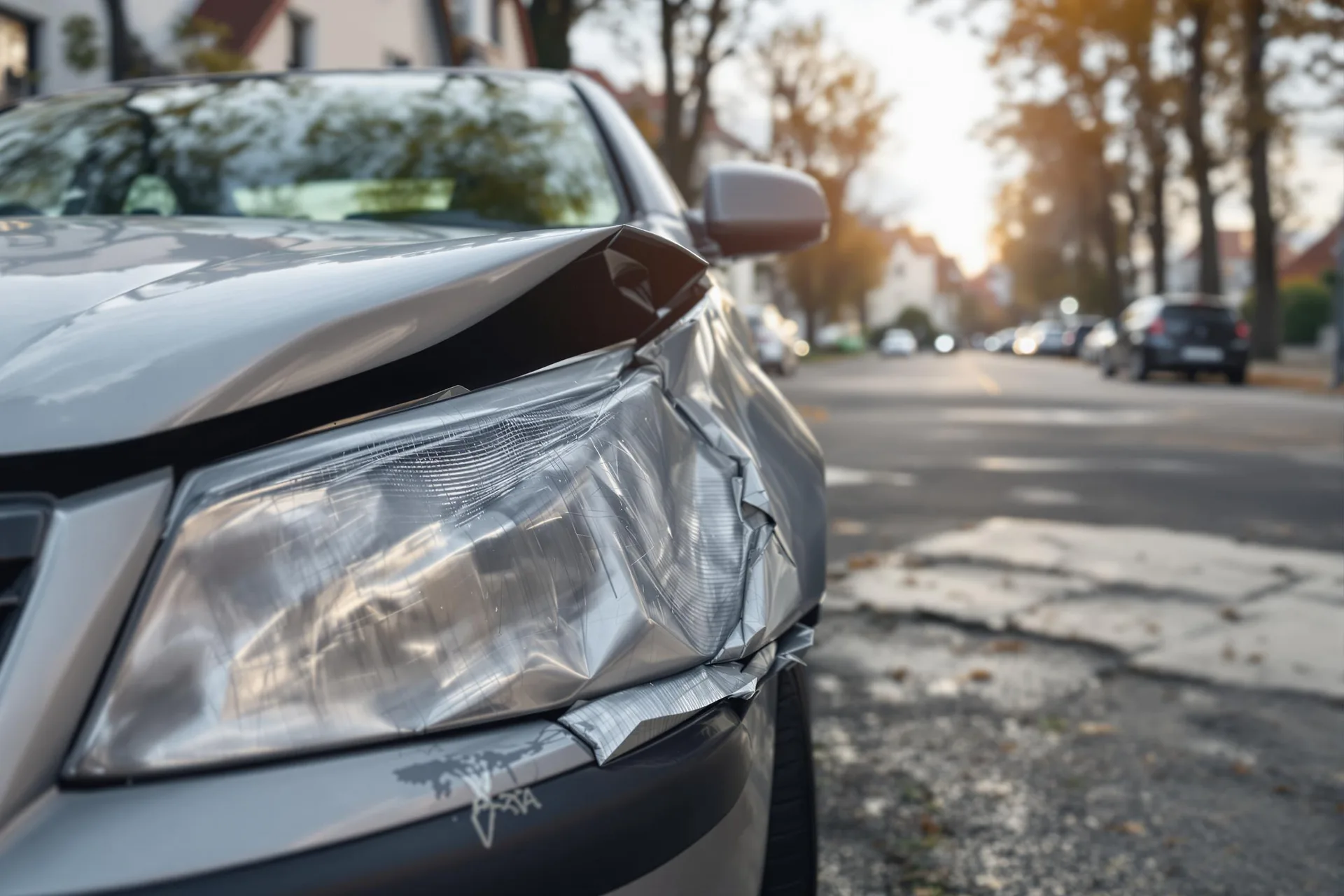
The fully comprehensive insurance includes all benefits of partial comprehensive insurance and significantly extends this protection. It also covers damage caused by your own fault or by vandalism. This is a decisive advantage, often associated with an excess of, for example, €300 or €500. The following types of damage are typically also insured:
- Self-inflicted accident damage: Damage to your own vehicle after an accident you caused yourself; this can quickly mean repair costs of several thousand euros.
- Vandalism: Deliberate damage by third parties, such as scratched paintwork or broken-off mirrors; tens of thousands of such cases are reported every year.
- Damage caused by unidentified third parties: If the person responsible for the damage flees the scene and cannot be held liable (under certain conditions).
Comprehensive insurance is particularly recommended for new cars and young used cars (often up to an age of five years), as well as for leased vehicles, where it is often mandatory. It also offers important protection for new drivers with a statistically higher accident risk. In contrast to partial cover, a no-claims discount is taken into account with comprehensive insurance, which reduces the premium over the years if you drive without accidents. Think carefully, from when comprehensive insurance is no longer worthwhile, as the premium can become too high in relation to the vehicle's value. The question of how long you should insure a car comprehensively depends on many individual factors. A comprehensive insurance claim can take many forms, and the advantages of comprehensive insurance clearly lie in the extended protection. For certain types of damage such as hail damage, it should be checked whether partial or comprehensive cover applies (usually partial comprehensive insurance).
Use cost factors and savings potential in comprehensive motor insurance wisely
Your comprehensive cover premium is influenced by several factors. One important aspect is the type class of your vehicle: models that are statistically more frequently involved in accidents or often stolen are assigned higher type classes (e.g. classes 10 to 34 in comprehensive cover) and therefore have more expensive premiums. Another lever is the excess. By agreeing an excess, for example €150 in partial cover and €300 in comprehensive cover, you can often reduce your annual premium by up to 25 per cent. In comprehensive cover, the no-claims class (SF class) also plays a role: for every claim-free year, you move up to a better SF class, which can lead to significant premium discounts of up to 70 per cent or more. Some insurers offer discounts for certain occupational groups or drivers who park in a garage, which can reduce the premium by a further five to ten per cent.
It is worth taking these factors into account when choosing a tariff in order to optimise your insurance cover without paying unnecessarily high amounts. Choosing the right tariff is therefore an important step in controlling costs.
Expert knowledge on comprehensive motor insurance: Understanding recent rulings and important clauses
In insurance law, there are always relevant judgments and clauses that are important for comprehensive insurance policyholders. A key point is the pre-contractual duty of disclosure under Section 19 of the Insurance Contract Act (VVG). If you fail to disclose pre-existing damage to the vehicle, the insurer may refuse to pay in the event of a claim or contest the contract, as a ruling by the Duisburg Regional Court (case no. 6 O 137/21) makes clear. Pay attention to the clause on the „waiver of the defence of gross negligence“.
Without this clause, the insurer may reduce the benefit if a loss was caused by gross negligence (e.g. running a red light). However, this usually does not apply in cases of alcohol or drugs at the wheel. Tie-in repair agreements can lower premiums, but restrict the free choice of repair shop. A ruling by the Munich Local Court (case no. 122 C 6798/14) confirmed that insurers may make deductions if this is not complied with. In claims settlement, especially in the event of a total loss, the replacement value is decisive.
The Federal Court of Justice (BGH, case no. IV ZR 426/14) ruled that comprehensive insurance must settle the loss in accordance with the expert report. The burden of proof for theft or the removal of parts often lies with the policyholder (Hamm Higher Regional Court, case no. 20 U 356/21). Not all items carried in the vehicle count as insured accessories; a mobile navigation device may be assessed differently from one built in permanently (Wuppertal Regional Court, case no. 9 S 7/20). Our expert tip: check your policy terms carefully for these points and seek advice if anything is unclear.
This way, you can be sure your cover will really apply when the worst comes to the worst.
Frequently asked questions
- What exactly does comprehensive insurance mean?
Comprehensive car insurance means cover for damage to your own motor vehicle. It supplements third-party motor insurance and covers damage, destruction or loss of the vehicle, depending on the level selected (third-party, fire and theft or fully comprehensive).
- What damage does partial comprehensive insurance cover?
Partial comprehensive insurance typically covers damage caused by fire, explosion, theft, glass breakage, natural events (storm, hail, flooding), collisions with game animals and marten damage.
- What else is covered by comprehensive insurance?
Fully comprehensive cover includes all the benefits of third-party, fire and theft cover and also covers damage caused by accidents you have caused yourself as well as malicious and wilful acts by third parties (vandalism).
- Does comprehensive insurance have an excess?
Yes, an excess can be agreed for both partial comprehensive cover and fully comprehensive cover. A higher excess usually results in a lower insurance premium. Typical amounts are €150 for partial comprehensive cover and €300 or €500 for fully comprehensive cover.
- What is the duty to notify under comprehensive motor insurance?
The duty of disclosure (in accordance with Section 19 VVG) requires you to correctly disclose all circumstances material to the risk (e.g. previous damage to the vehicle) before the contract is concluded. A breach may lead to loss of insurance cover.
- What does “waiver of the defence of gross negligence” mean?
This clause means that the insurer will also provide cover (or only reduce the payout slightly) if a claim was caused by gross negligence (e.g. failing to notice a red traffic light). Journeys under the influence of alcohol or drugs are usually excluded.
Sources
- [1]Wikipedia provides a comprehensive article on comprehensive car insurance, explaining its fundamentals and various forms.
- [2]The Federal Motor Transport Authority (KBA) provides current statistics on the vehicle stock in Germany, which are relevant for assessing insurance risks.
- [3]The Federal Statistical Office (Destatis) provides detailed data and analyses on road traffic accidents in Germany, offering insights into accident causes and frequencies.
- [4]The German Insurance Association (GDV) offers comprehensive statistics on the German insurance industry, including relevant data on motor vehicle insurance.
- [5]The Consumer Advice Centre provides information on ways to save on car insurance and offers practical tips for consumers.
- [6]Laws on the Internet provides the full text of the Compulsory Insurance Act (PflVG), which forms the basis for motor third-party liability insurance.
- [7]The Federal Court of Justice (BGH) provides access to rulings from Germany’s highest civil court, which may be relevant to the interpretation of insurance law.
- [8]The Federal Highway Research Institute (BASt) publishes statistics and research findings on road safety, which also indirectly influence risk assessment in motor insurance.