Horse Surgery Insurance & Standing Anaesthesia
Find out whether your horse surgery insurance covers the costs of standing anaesthesia. Check your policies now and secure the best protection!
All details are taken from the provider's linked product page and the contract documents (IPID/policy conditions) published there; the insurer's documents prevail. Premiums, benefits and the insurance product itself may change – please verify the details directly with the partner before signing up; only the information provided there is binding.
 Katrin StraubManaging DirectorInsurance expert with over 20 years of experience in the insurance industry.
Published on
Last updated on
10 min read
Table of Contents
An operation on a horse is an emotional and financial burden for every owner. But what happens when the procedure takes place under standing sedation? We explain whether your horse surgery insurance covers the costs of standing sedation and what you need to look out for in the fine print.
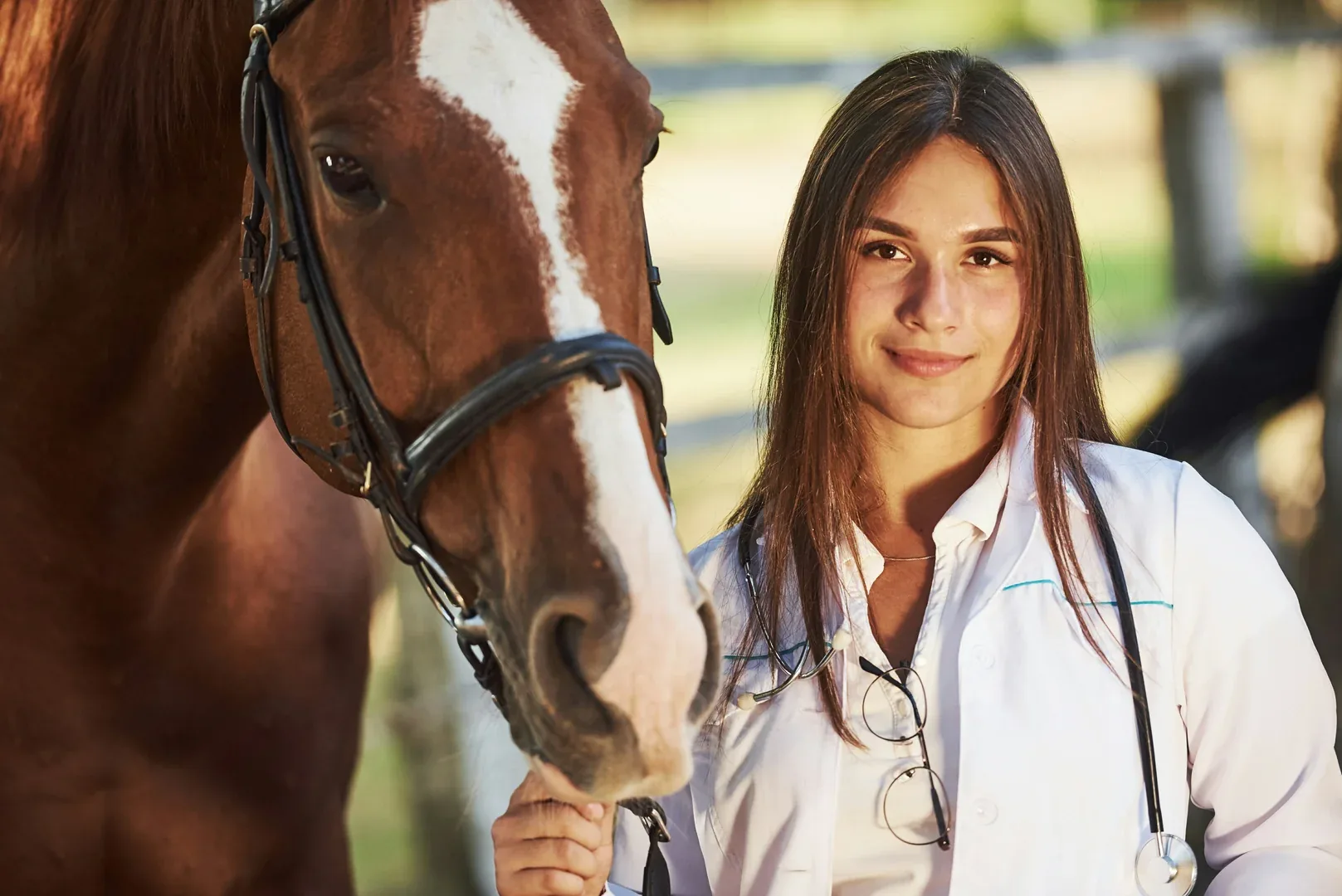
Equine surgery insurance
Horse surgery insurance via nextsure: Three flexible tariffs, reimbursement up to twice the GOT rate, and free choice of clinic worldwide. Protect your horse from high surgery costs – digital, transparent and uncomplicated.
Learn moreRisks and costs: standing anaesthesia versus general anaesthesia
A standing anaesthetic combines sedatives with a local anaesthetic, so that the horse remains awake during the procedure. This method significantly reduces the anaesthetic risk, as the circulatory system and breathing are placed under less strain than with a general anaesthetic. Statistically, around one in a hundred horses does not survive a general anaesthetic, which underlines the advantages of a standing anaesthetic. Typical procedures such as tooth extractions or wound treatment often cost between 300 and 800 euros under standing anaesthetic. A general anaesthetic involves greater staffing and monitoring requirements, which can quickly increase costs by 30 per cent or more. The choice of anaesthetic method affects the total cost of an operation by up to 1,500 euros. However, the decision always depends on the individual procedure and the horse's condition, as taken into account by the schedule of fees for veterinarians (GOT).
The precise understanding of these differences is the first step towards choosing the right horse health insurance.
Coverage check: Does your plan cover standing anaesthesia?
The good news is that most modern horse surgical insurance policies include procedures carried out under standing sedation. Low-cost basic policies from around €22 per month often cover only a catalogue of specific operations, but standing sedation is usually included. Premium policies for over €50 a month go a step further and usually insure all medically necessary operations, regardless of the type of anaesthesia. The crucial point is the wording in the policy terms: look for the clause “Operations under standing or general anaesthesia”. If this addition is missing, you could be left to pay the costs yourself. For example, a splint bone fracture can often be operated on while the horse is standing, and a good policy will cover the costs of around €1,200 in full. An outdated contract without a standing sedation clause may not pay out in this case. A detailed comparison of surgical and health insurance policies is therefore essential.
Analysing contract details: What matters in the fine print
The devil is in the detail of the General Terms and Conditions (AVB). The definition of a “covered operation” is the key point here. Some insurers define an operation as a procedure that necessarily requires anaesthesia. It must be explicitly stated here that both standing and general anaesthesia are accepted. A look at the benefit limits is equally important. Many policies reimburse costs up to twice the rate of the schedule of fees for veterinarians (GOT), while more comprehensive policies even cover up to four times the rate in emergencies. Our expert tip: Check whether the costs for the pre-operative examination on the day of surgery and aftercare for at least seven to ten days are also covered, as these can often amount to an additional 500 euros. Also look out for typical exclusions in equine surgery insurance.
Case studies: Typical procedures and their cost coverage
Many routine, but expensive procedures are carried out with the horse standing. Cover under an appropriate policy can mean financial relief of several thousand euros. Here are some common examples:
- Tooth extraction: A wolf tooth or a damaged molar is often removed with the horse standing. According to the GOT, the cost is €250 to €600.
- Wound suturing: Larger injuries that need stitching often require standing anaesthesia. Costs can quickly reach €400 to €900.
- Tumour removal: Smaller skin tumours such as sarcoids can often be removed under local anaesthetic and sedation, costing around €500 to €1,500.
- Endoscopic procedures: Diagnostic or therapeutic endoscopies, for example in the tendon sheaths, are often performed with the horse standing and not infrequently cost over €2,000.
Without a policy that explicitly includes standing anaesthesia, you would have to cover these four-figure sums yourself. A Insurance for colic operations is certainly important, but these routine procedures are statistically more common.
Choosing the right tariff: How to find the right cover
Choosing the right insurance policy protects you from unexpected costs of several thousand euros. A good horse surgery insurance policy should offer more than just cover for general anaesthesia. When choosing, look for plans that use a broad definition of surgery and explicitly include standing anaesthesia. Compare the reimbursement rates under the GOT; double the rate should be the minimum, with better plans offering three or four times the rate. A plan with aftercare cover for at least ten days can save you up to €1,000 in follow-up costs. Also check the waiting periods, which for colic are often only a few days, but for other procedures can be three months. Comprehensive cover that also covers joint chip operations offers long-term security.
Checklist for optimal insurance cover
To ensure that your horse surgery insurance pays out when the time comes, you should review your policy against the following points. These criteria will help you identify gaps in cover and make an informed decision.
- Anaesthesia type: Is standing anaesthesia explicitly included in the scope of cover?
- Benefit limit: Is there an annual maximum limit or a limit per operation?
- GOT rate: Up to which rate of the veterinary fee schedule are the costs reimbursed (minimum: twice the rate)?
- Pre- and post-operative care: How many days before and after the operation are diagnostics, medication and accommodation covered? Ten days is a good benchmark.
- Free choice of vet: Can you choose your vet or clinic freely?
- Waiting periods: How long are the waiting periods for different procedures such as colic or orthopaedic surgery?
The answers to these questions show you the quality of your protection and illustrate how high the veterinary costs without insurance can be.
Conclusion: Act proactively for comprehensive security
The question of whether horse surgery insurance covers standing anaesthesia can be answered with a yes for most modern policies. Nevertheless, a careful review of the policy is essential to avoid gaps in cover. Surgery performed standing is often the gentler and more cost-effective alternative, but it can quickly amount to four-digit sums. Comprehensive insurance cover that reimburses at least twice the GOT rate and includes thorough aftercare is therefore not a luxury choice, but an economic necessity. The monthly cost of around €40 for a good policy is no match for a potential risk of more than €5,000. With the right horse insurance, you can focus on what matters most: your horse's recovery. Request an individual risk analysis now: have your insurance situation reviewed free of charge and receive specific recommendations for optimisation.
Frequently asked questions
- Does my horse surgery insurance cover standing anaesthesia?
In most modern policies, sedation anaesthesia is covered on the same terms as general anaesthesia. Check your insurance terms for wording such as “surgical procedures under sedation or general anaesthesia” to be sure. This benefit may be missing in older policies.
- What is the difference between stand anaesthesia and general anaesthesia?
With standing anaesthesia, the horse remains standing and is treated with a combination of sedatives (sedation) and local anaesthesia. With general anaesthesia, the horse is placed into an unconscious state using medication and artificially ventilated, which is necessary for complex operations.
- Why is the GOT rate important in my insurance?
The schedule of fees for veterinarians (GOT) sets the cost framework for veterinary services. Depending on the effort involved, veterinarians can charge at the basic, double or triple rate. Insurance that only covers the basic rate can lead to high out-of-pocket costs for you in the event of a complicated operation.
- Are pre- and post-treatment covered as well for an operation under general anaesthetic?
That depends on your policy. Good policies cover the costs of the final examination before the operation as well as follow-up treatment for a specified period (e.g. seven or ten days). This includes medication, dressings and often also accommodation in the clinic.
- Are there waiting periods for cost coverage for surgeries?
Yes, almost all insurance policies have waiting periods. For colic operations, it is often only a few days (e.g. seven). For most other operations, a general waiting period of three months applies. For specific diagnoses such as OCD/chips, the waiting period can be up to twelve months.
- What happens if my vet charges more than the insured GOT rate?
If your vet, for example, charges the triple rate but your policy only reimburses the double rate, you will have to pay the difference out of pocket. Therefore, before a planned operation, clarify the expected costs and the billing rate with your clinic.
Sources
- [1]Gesetze im Internet provides the official legal text of the Fee Schedule for Veterinarians (GOT) from 2022.
- [2]The Bundestierärztekammer provides information and resources on the Fee Schedule for Veterinarians (GOT) on this page.
- [3]The Deutsche Tierärzteverband offers a PDF document on the Fee Schedule for Veterinarians (GOT) from 2022.
- [4]The Bundestierärztekammer publishes guidance on informed consent for treatments of horses (PDF document).
- [5]A collection of guidelines on equine medicine (GPM) as a PDF document is available from the Bundestierärztekammer.
- [6]The Tierärztekammer Hamburg provides information on its site about anaesthesia in animals.
- [7]The Deutsche Tierärzteblatt offers information and articles on anaesthesia, analgesia and perioperative care in horses.
- [8]Vetline publishes an article on the impact of the new GOT on horse husbandry.
Conclude directly online
Verified partner tariffs at no extra cost. The button takes you straight to the provider's calculator.
 Barmenia
Horse surgery insurance
Surgery cost cover for horses in case of illness and accidents, including diagnostics and after-care.
- Waiting period:
- 3 months (colic surgery: 5 days, accidents: none)
- Coverage abroad:
- worldwide, up to 12 months
- Maximum benefit:
- depends on the cover level, as stated in the policy
- Surgery costs for illness and accidents, including tooth extractions and root canal treatment
- Pre-surgical examination (X-ray, endoscopy, biopsy, lab work)
- After-care including acupuncture, homeopathy, physiotherapy, laser therapy
- Emergency veterinary service up to 4x the standard veterinary fee schedule (GOT) rate plus the emergency callout fee
- Premium cover: up to 5 physiotherapy sessions (max. 60 minutes each) after the after-care period ends
- Once per animal: surgery costs for a birth-related, medically necessary caesarean section
Key exclusions
- Illnesses and developmental abnormalities known at the time of application
- Hoof abscesses and hoof ulcers (exception: hoof cancer)
- Surgery due to cryptorchidism
- Neutering that isn't medically necessary
Service-Champions GOLD: Nr. 1 der Versicherer im Multikanalvertrieb (ServiceValue, 10/2024)
Barmenia (Anbieter der Pferde-OP-Versicherung)
Special waiting periods: 12 months for joint surgery (chip fragments, OC/OCD, Birkeland fractures), 6 months for medically necessary neutering; Premium cover includes a waiver of the insurer's right to cancel from the 7th insurance year.
Fact sheet: benefits, exclusions and waiting periods in detail
All details are taken from the provider's linked product page and the contract documents (IPID/policy conditions) published there; the insurer's documents prevail. Premiums, benefits and the insurance product itself may change – please verify the details directly with the partner before signing up; only the information provided there is binding.
Information last updated: July 2026 · Source: provider product information (IPID/policy conditions)