Horse insurance colic surgery cost cover
Find out how your horse insurance covers the cost of colic surgery up to €12,000. Find out more about plans and waiting periods now!
All details are taken from the provider's linked product page and the contract documents (IPID/policy conditions) published there; the insurer's documents prevail. Premiums, benefits and the insurance product itself may change – please verify the details directly with the partner before signing up; only the information provided there is binding.
 Katrin StraubManaging DirectorInsurance expert with over 20 years of experience in the insurance industry.
Published on
Last updated on
10 min read
Table of Contents
A colic operation on a horse can quickly cost more than €10,000. Without the right cover, this medical emergency becomes a serious financial burden. Find out now how a good horse insurance policy can fully cover the costs of colic surgery.
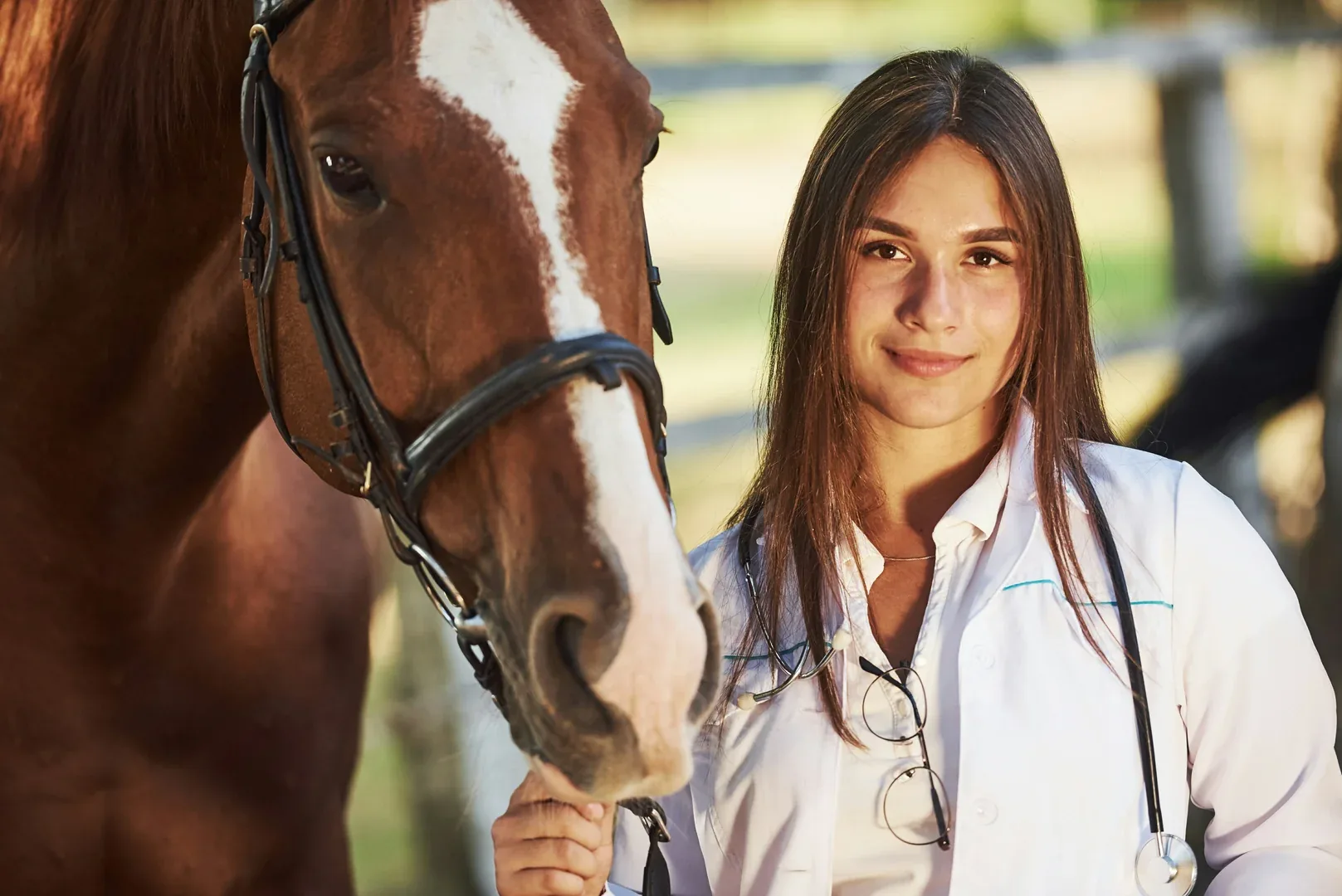
Equine surgery insurance
Horse surgery insurance via nextsure: Three flexible tariffs, reimbursement up to twice the GOT rate, and free choice of clinic worldwide. Protect your horse from high surgery costs – digital, transparent and uncomplicated.
Learn moreThe cost of colic surgery quickly exceeds €10,000
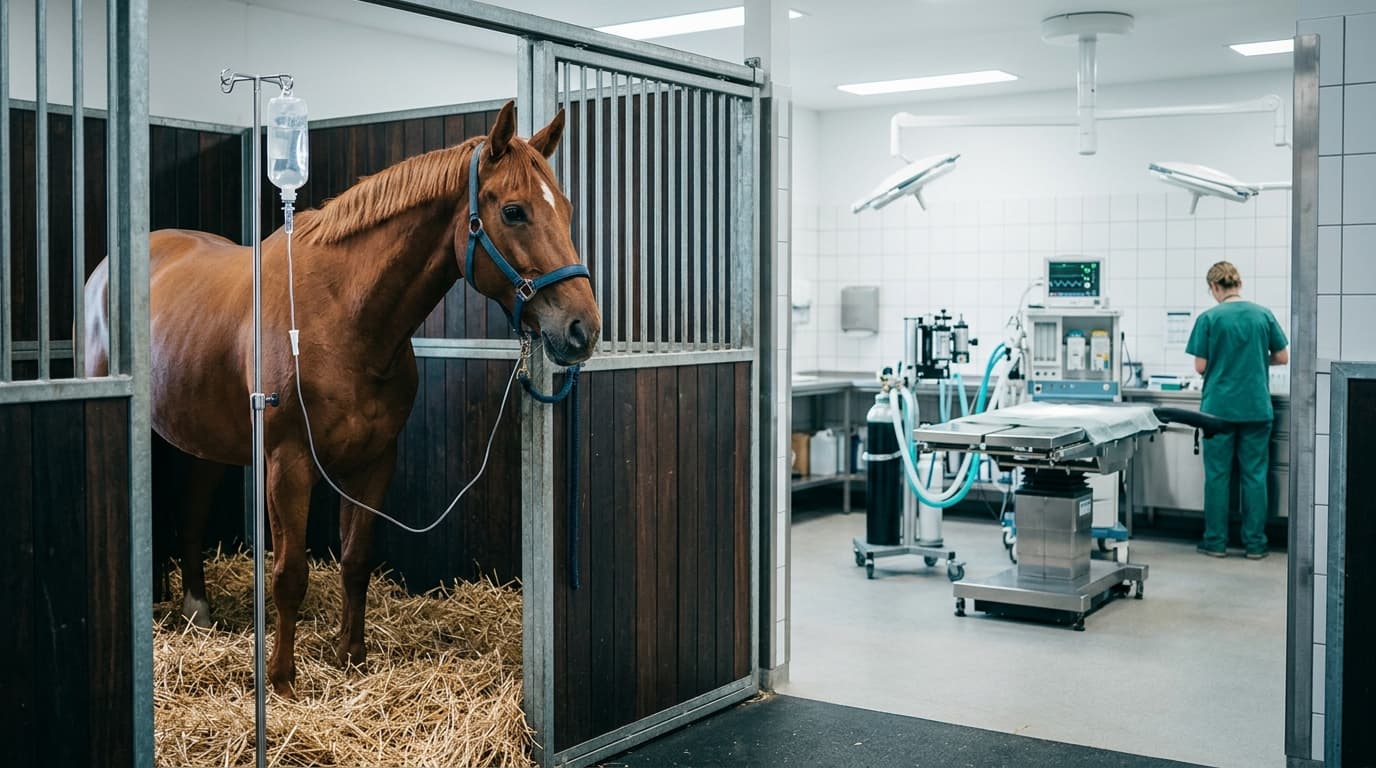
Colic surgery is one of the most expensive procedures in equine medicine. The surgery costs alone are only part of the total bill, which often comes to between €7,500 and €12,000. In complex cases, the costs can even rise to more than €30,000.
The final amount is made up of many individual items, which are billed according to the scale of fees for veterinarians (GOT). These include the pre-examination, the surgical procedure itself and the anaesthetic. An inpatient stay of seven to ten days is common after the operation and often costs more than €30 per day for accommodation alone.
Medication, dressings and intensive aftercare drive the costs up further. Veterinary clinics can charge up to four times the GOT rate, depending on the complexity and timing of the procedure. A good equine surgery insurance policy is therefore essential to help absorb this financial burden.
These high costs show why the exact terms of the insurance are so important.
Basics of cost coverage: How insurance plans work
The central task of horse surgery insurance is to cover veterinary costs for surgical procedures. The amount reimbursed depends on three key factors in the insurance policy. First: the agreed sum insured, which is often unlimited.
Second: the covered rate of the scale of fees for veterinarians (GOT). Many basic plans reimburse only up to twice the rate. Emergency services or complex operations are, however, often billed at three or four times the rate, which can lead to a coverage gap of several thousand euros.
Third: the deductible, which is payable per insured event. A plan with no deductible and cost coverage up to four times the GOT rate offers the most comprehensive protection. A detailed analysis of insurance costs helps in selecting the right plan.
But even the best plan is of no use if the benefit is denied due to waiting periods or exclusions.
Review waiting periods and exclusions carefully and avoid pitfalls
Insurers protect themselves with waiting periods against covering costs for pre-existing conditions. In equine insurance, cover for colic surgery is subject to particularly short waiting periods. The waiting period for colic operations is often only five to seven days.
For other planned operations, a general waiting period of three months usually applies. For joint operations due to chips or OCD, the period can even be twelve months. Accidents are generally covered immediately. A close look at the insurance exclusions is essential.
The following items are often excluded from cover:
- Conditions that were already known when the application was submitted or were treated in the last twelve months.
- Congenital or genetic developmental abnormalities.
- Certain operations such as laryngeal tie-back surgery (laryngeal paralysis) or corrections of dental malocclusions.
- Procedures related to pregnancy and foaling.
Our expert tip: Always clarify any pre-existing conditions of your horse with the insurer in full transparency to avoid a rejection in an emergency.
If cover applies, the right course of action in an emergency is crucial for a smooth claims process.
Act correctly in an emergency and ensure you receive the full benefits
A colic diagnosis requires swift and structured action, including in relation to insurance. Prompt reporting of the claim is often a contractual obligation. Have your insurance number ready when you call the provider's emergency hotline.
Follow these four steps to ensure costs are covered:
- Inform your insurer immediately: Report the emergency without delay, ideally before the operation begins. Many insurers have a 24-hour hotline.
- Check free choice of clinic: Most policies allow you to choose the veterinary clinic freely, which is crucial in an emergency.
- Ask about direct billing: Ask the clinic and the insurer whether direct billing is possible. This saves you from having to pay an invoice of €10,000 upfront.
- Collect all documents: Submit all invoices and medical reports in full and promptly to speed up processing.
An insurance without a waiting period for accidents offers additional peace of mind here. With the right preparation, you can maximise the protection provided by your policy.
Expert tips: Optimise insurance cover beyond the standard
A standard tariff offers a good basis, but only specific clauses ensure truly comprehensive cover for the costs of colic surgery. Look for tariffs that cover four times the GOT rate. Only then are you fully protected even for emergency weekend operations, where vets are permitted to charge higher rates.
Another important point is the coverage of the costs for the final examination before the procedure. Some insurers only pay from the point of the surgery diagnosis, which excludes diagnostic measures such as ultrasound costing several hundred euros. Good tariffs explicitly include these pre-examinations.
Aftercare is also a cost factor. A good policy covers follow-up treatment for at least ten to 15 days after the operation. The difference between surgery and health insurance often lies precisely in these details. So compare not only the price, but also these benefit components.
Frequently asked questions
- What costs does horse insurance cover exactly for a colic operation?
A good equine surgical insurance policy covers the costs of the pre-operative examination on the day of surgery, the surgical procedure itself, anaesthesia, medication, consumables, as well as the inpatient stay and aftercare for a specified period (e.g. ten to 15 days).
- Is direct billing with the veterinary clinic possible?
Many insurers offer direct billing with the veterinary clinic. This is an important service, as it means you do not have to pay the high surgery costs upfront. It is best to clarify this option directly when reporting the emergency.
- Are alternative treatment methods also covered after the operation?
Coverage for alternative treatment methods such as homeopathy or physiotherapy during the aftercare phase depends on the tariff selected. Standard surgical insurance policies usually do not cover this, but it may be included in more comprehensive health insurance tariffs or as an additional module.
- Is there an age limit for taking out horse surgery insurance?
Yes, many insurance providers have an age limit for acceptance, often set at 15 years. Foals can usually be insured from their third month of life. Taking out cover early is usually more cost-effective and straightforward.
- What happens if the operating costs exceed the sum insured?
Most modern policies no longer have an annual maximum reimbursement for operations. However, if there is still a contractual limit and the costs exceed it, you will have to cover the difference yourself. So look for policies with unlimited cover.
- Does the insurance also cover the costs if my horse has to undergo surgery abroad?
Insurance cover generally applies across Europe, and with some providers even worldwide, at least for a temporary period. Check the exact conditions in your policy if you are planning a trip with your horse.
Sources
- [1]Laws on the Internet provides the official text of the Fee Schedule for Veterinarians (GOT) from 2022, which sets out the legal basis for billing veterinary services.
- [2]The German Veterinary Association of Practising Veterinarians provides the current Fee Schedule for Veterinarians (GOT) as a PDF document.
- [3]The German Equestrian Federation (FN) provides information on its positions and explanations regarding the veterinary fee schedule.
- [4]The State Parliament of Schleswig-Holstein offers insights into political discussions and news surrounding the topic of veterinary costs and the fee schedule.
- [5]The Consumer Advice Centre provides independent information and advice on various types of insurance, including liability insurance for pets.
Conclude directly online
Verified partner tariffs at no extra cost. The button takes you straight to the provider's calculator.
 Barmenia
Horse surgery insurance
Surgery cost cover for horses in case of illness and accidents, including diagnostics and after-care.
- Waiting period:
- 3 months (colic surgery: 5 days, accidents: none)
- Coverage abroad:
- worldwide, up to 12 months
- Maximum benefit:
- depends on the cover level, as stated in the policy
- Surgery costs for illness and accidents, including tooth extractions and root canal treatment
- Pre-surgical examination (X-ray, endoscopy, biopsy, lab work)
- After-care including acupuncture, homeopathy, physiotherapy, laser therapy
- Emergency veterinary service up to 4x the standard veterinary fee schedule (GOT) rate plus the emergency callout fee
- Premium cover: up to 5 physiotherapy sessions (max. 60 minutes each) after the after-care period ends
- Once per animal: surgery costs for a birth-related, medically necessary caesarean section
Key exclusions
- Illnesses and developmental abnormalities known at the time of application
- Hoof abscesses and hoof ulcers (exception: hoof cancer)
- Surgery due to cryptorchidism
- Neutering that isn't medically necessary
Service-Champions GOLD: Nr. 1 der Versicherer im Multikanalvertrieb (ServiceValue, 10/2024)
Barmenia (Anbieter der Pferde-OP-Versicherung)
Special waiting periods: 12 months for joint surgery (chip fragments, OC/OCD, Birkeland fractures), 6 months for medically necessary neutering; Premium cover includes a waiver of the insurer's right to cancel from the 7th insurance year.
Fact sheet: benefits, exclusions and waiting periods in detail
All details are taken from the provider's linked product page and the contract documents (IPID/policy conditions) published there; the insurer's documents prevail. Premiums, benefits and the insurance product itself may change – please verify the details directly with the partner before signing up; only the information provided there is binding.
Information last updated: July 2026 · Source: provider product information (IPID/policy conditions)