
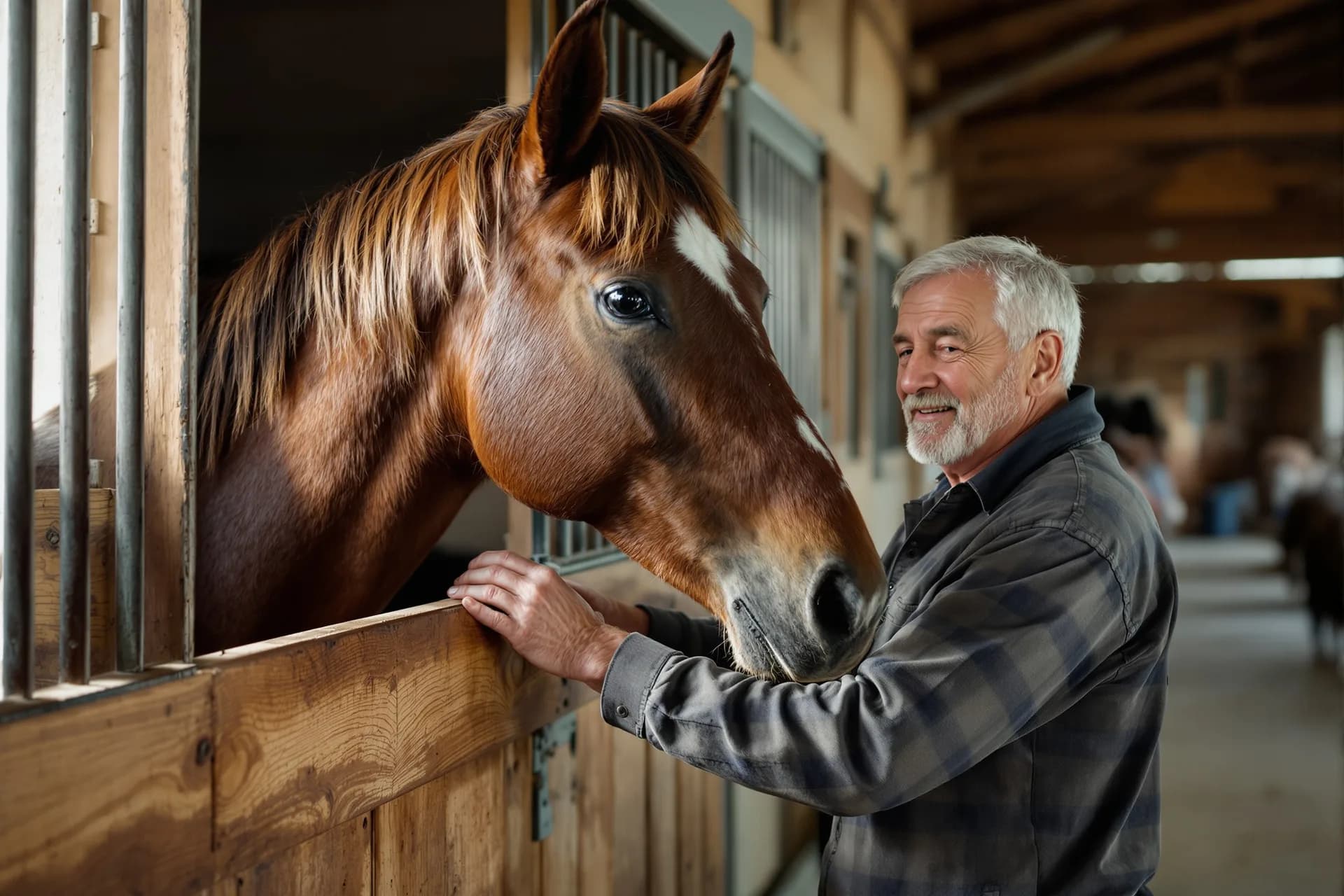
Horse Insurance: Comprehensive Cover for Your Horse
Protect yourself against high costs from illness or liability. Find the right horse insurance. Get free advice now!
All details are taken from the provider's linked product page and the contract documents (IPID/policy conditions) published there; the insurer's documents prevail. Premiums, benefits and the insurance product itself may change – please verify the details directly with the partner before signing up; only the information provided there is binding.
 Katrin StraubManaging DirectorInsurance expert with over 20 years of experience in the insurance industry.
Published on
Last updated on
10 min read
Table of Contents
A horse enriches life, but it also carries financial risks that can quickly become existentially threatening. An unexpected operation or a liability claim can cost more than €50,000. This article shows you how a well-considered horse insurance policy protects you from these burdens.
Equine surgery insurance
Horse surgery insurance via nextsure: Three flexible tariffs, reimbursement up to twice the GOT rate, and free choice of clinic worldwide. Protect your horse from high surgery costs – digital, transparent and uncomplicated.
Learn moreStrict liability under Section 833 of the German Civil Code (BGB): The underestimated risk for horse owners
Many horse owners are familiar with the emotional bond, but only a few know the full financial risk. Under Section 833 of the German Civil Code, you are liable without limit and regardless of fault for damage caused by your horse. If your horse causes a traffic accident, for example, claims for personal injury can quickly reach six-figure sums. Even if you exercise exemplary care, you are liable for the animal’s unpredictable behaviour. A recent ruling by the Ravensburg Regional Court confirms that even during a test ride, the owner can be held liable. This legal basis makes comprehensive horse owner liability insurance indispensable to protect yourself against claims that could threaten your very existence. Without this protection, you face a financial abyss that is almost impossible to calculate.
The three pillars of horse insurance: a cost-benefit comparison
Horse liability insurance as a financial foundation
Equine liability insurance is the most important cover for every owner and protects against personal injury, property damage and financial loss. A cover limit of at least ten million euros makes sense, as personal injury claims can quickly exceed this amount. Good policies also cover sharers and other riders, which is relevant for over ninety per cent of horse owners. The cost of such cover starts at less than ten euros per month. Good equine liability insurance is therefore the first line of defence.
Horse surgery insurance for emergencies
Veterinary procedures are expensive and often urgent. A colic operation, for example, can cost an average of 6,000 euros and, in complex cases, more than 50,000 euros. An horse surgery insurance policy covers these costs and protects you from a difficult financial decision. Many policies have a waiting period of only five to seven days for colic operations. This insurance ensures that the best possible medical care for your horse does not fail because of the cost.
Horse health insurance as comprehensive cover
While surgery insurance only covers surgical procedures, horse health insurance also covers outpatient treatment. This includes diagnostics, medication or alternative therapies, which can add up to more than 1,000 euros a year. It is a sensible addition for owners who want a comprehensive safety net for every eventuality. The difference between surgery and health insurance lies in the details, which can amount to thousands of euros in an emergency.
Cost analysis: What good horse insurance really costs
The costs of horse insurance depend greatly on the chosen level of cover and provider. A solid horse liability insurance policy is available from around 110 euros per year. For horse surgery insurance, you should expect monthly premiums of between 25 and 50 euros, depending on the horse’s age and breed. Full horse health insurance starts at around 120 euros per month. An excess of 500 euros can often reduce the premium by up to twenty per cent. It is essential to pay attention not only to the price, but also to value for money. A low-cost tariff that does not pay out in an emergency is ultimately the most expensive option.
Review contract details: uncover pitfalls and savings potential
The devil is in the detail, especially with insurance policies. Pay close attention to the terms and conditions so that you are not faced with any unpleasant surprises in the event of a claim. Our expert tip: check the billing limit under the scale of charges for veterinarians (GOT). Many vets and clinics charge up to four times the standard rate in emergencies or at weekends. A policy that only reimburses twice the standard rate can leave a 50 per cent cover gap. The following points are crucial:
- GOT rate: The insurance should cover at least three times, and preferably four times, the GOT rate.
- Waiting periods: Three months is common for illnesses, but often only a few days for colic or accidents.
- Excess: A fixed or percentage excess lowers the premium, but increases your costs in the event of a claim.
- Annual maximum benefit: Some policies limit reimbursement per year, which can become a problem with expensive treatments.
- Exclusions: Check whether certain illnesses, therapies or joint chip operations are excluded.
A thorough analysis of these points protects you from unexpected costs and secures the best possible care for your horse.
Special covers: From life insurance to rider protection
Alongside the three main types of insurance, there are niche products for specific needs. A horse life insurance policy protects the animal’s financial value. It is often taken out for breeding animals or sport horses worth more than €15,000. Rider accident insurance is also worth considering, as riding accidents can have serious and long-term health consequences. Around thirty per cent of riding accidents result in head injuries. These specialist components of horse insurance round off the cover on an individual basis and should be reviewed depending on your personal situation. This ensures that all aspects of your equestrian activities are covered.
Risk assessment: Your individual cover in three steps
The right horse insurance is always an individual decision tailored to your needs and those of your horse. There is no one-size-fits-all solution. To find the optimal cover, you should assess your personal risk. Take into account your horse’s age, breed, use and health condition. A young sport horse has a different risk profile from an older companion horse. Our experts at nextsure can help you find a tailored solution that gives you peace of mind without breaking the bank. Request an individual risk assessment now: Have your insurance situation reviewed free of charge and receive concrete suggestions for optimisation.
Frequently asked questions
- Which horse insurance is the most important?
The absolutely most important insurance is equine liability insurance. It protects you against the financial consequences of damage caused by your horse to third parties, for which you are liable without limitation under Section 833 of the German Civil Code (BGB).
- Are riding partnerships covered under horse liability insurance?
In most modern policies, shared horse use and third-party riders are also covered. However, you should check this explicitly in the terms and conditions to make sure.
- From when does horse surgery insurance provide cover?
Most insurance policies have a general waiting period of three months. For emergencies such as colic surgery or accidents, shorter waiting periods of just a few days often apply, for example five or seven days.
- Can I still insure my old horse?
Yes, many providers also insure older horses, often, however, with higher premiums or certain exclusions. It is advisable to insure a horse as early as possible, as premiums are then lower and there are no pre-existing conditions.
- What happens if my vet charges more than the insured GOT rate?
If your plan, for example, only covers double the GOT rate, but the vet charges triple the rate, you will have to pay the difference out of pocket. That is why comprehensive GOT cover is so important.
- How can I save on horse insurance?
You can reduce your monthly premiums by choosing an excess. It is also worth comparing different providers, as prices and benefits vary considerably. Paying annually is often cheaper than paying monthly.
Sources
- [1]German Equestrian Federation provides figures and facts about the German Equestrian Federation and equestrian sports in Germany.
- [2]German Federal Veterinary Chamber provides information on the schedule of fees for veterinarians (GOT).
- [3]Federal Association of Practising Veterinarians e.V. provides a PDF document on the schedule of fees for veterinarians (GOT) from 2022.
- [4]Statista provides a statistic on horse ownership in Germany.
- [5]Vetline presents an article on the challenges and burdens of horse keeping.
- [6]Rentenbank provides a guide to risk management in horse operations.
- [7]German Animal Welfare Federation provides a brochure on horse keeping.
- [8]Laws on the Internet provides the legal text of the schedule of fees for veterinarians (GOT) from 2022.
Conclude directly online
Verified partner tariffs at no extra cost. The button takes you straight to the provider's calculator.
 Barmenia
Horse surgery insurance
Surgery cost cover for horses in case of illness and accidents, including diagnostics and after-care.
- Waiting period:
- 3 months (colic surgery: 5 days, accidents: none)
- Coverage abroad:
- worldwide, up to 12 months
- Maximum benefit:
- depends on the cover level, as stated in the policy
- Surgery costs for illness and accidents, including tooth extractions and root canal treatment
- Pre-surgical examination (X-ray, endoscopy, biopsy, lab work)
- After-care including acupuncture, homeopathy, physiotherapy, laser therapy
- Emergency veterinary service up to 4x the standard veterinary fee schedule (GOT) rate plus the emergency callout fee
- Premium cover: up to 5 physiotherapy sessions (max. 60 minutes each) after the after-care period ends
- Once per animal: surgery costs for a birth-related, medically necessary caesarean section
Key exclusions
- Illnesses and developmental abnormalities known at the time of application
- Hoof abscesses and hoof ulcers (exception: hoof cancer)
- Surgery due to cryptorchidism
- Neutering that isn't medically necessary
Service-Champions GOLD: Nr. 1 der Versicherer im Multikanalvertrieb (ServiceValue, 10/2024)
Barmenia (Anbieter der Pferde-OP-Versicherung)
Special waiting periods: 12 months for joint surgery (chip fragments, OC/OCD, Birkeland fractures), 6 months for medically necessary neutering; Premium cover includes a waiver of the insurer's right to cancel from the 7th insurance year.
Fact sheet: benefits, exclusions and waiting periods in detail
All details are taken from the provider's linked product page and the contract documents (IPID/policy conditions) published there; the insurer's documents prevail. Premiums, benefits and the insurance product itself may change – please verify the details directly with the partner before signing up; only the information provided there is binding.
Information last updated: July 2026 · Source: provider product information (IPID/policy conditions)