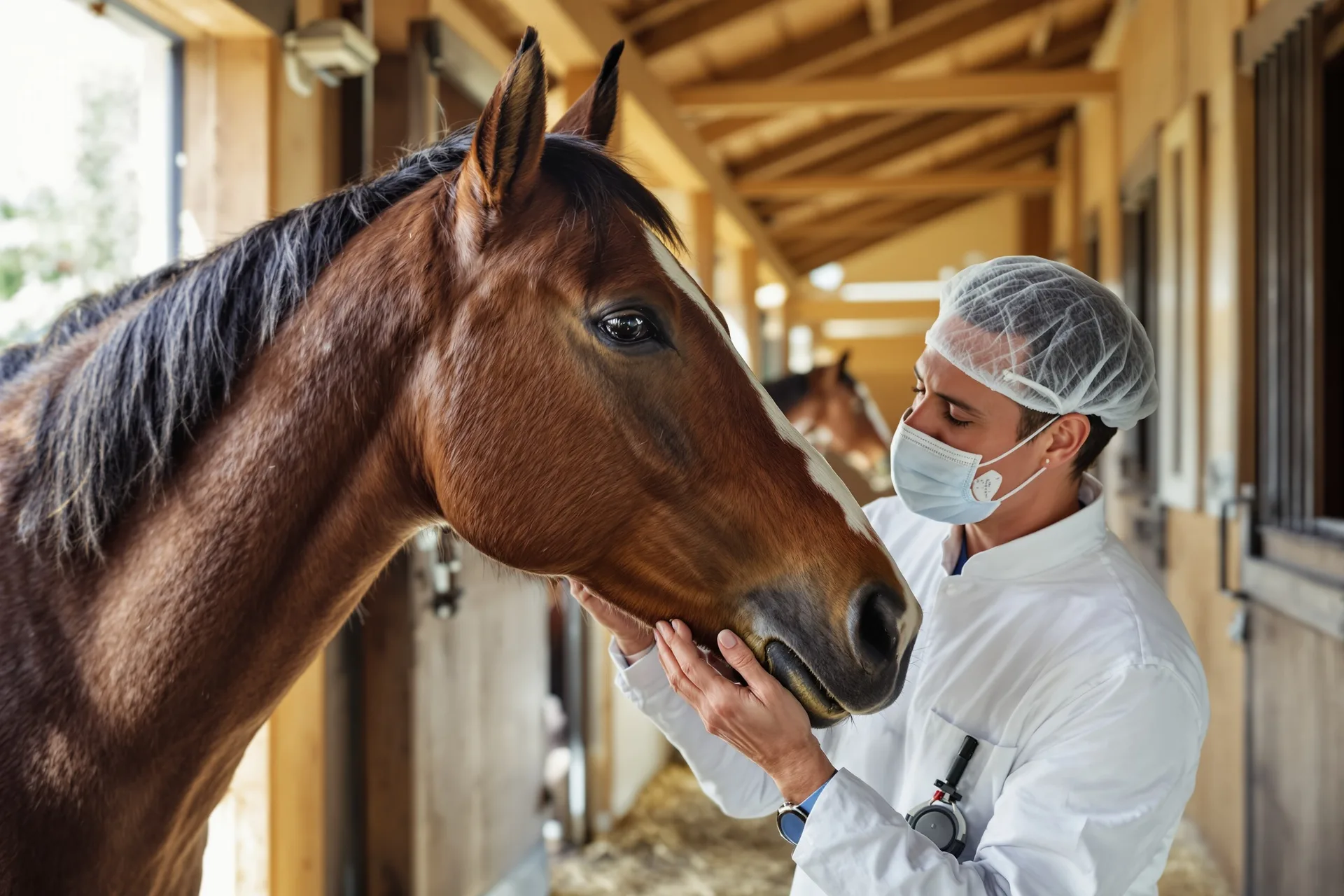
Horse health insurance
Protect yourself against high veterinary costs with the right horse health insurance. Have your risk situation checked free of charge now.
All details are taken from the provider's linked product page and the contract documents (IPID/policy conditions) published there; the insurer's documents prevail. Premiums, benefits and the insurance product itself may change – please verify the details directly with the partner before signing up; only the information provided there is binding.
 Katrin StraubManaging DirectorInsurance expert with over 20 years of experience in the insurance industry.
Published on
Last updated on
3 min read
Table of Contents
Colic surgery can quickly cost more than 10,000 euros. Without the right cover, the financial pressure on horse owners becomes enormous. Well-considered horse health insurance protects your assets and ensures the best medical care for your animal.
Equine surgery insurance
Horse surgery insurance via nextsure: Three flexible tariffs, reimbursement up to twice the GOT rate, and free choice of clinic worldwide. Protect your horse from high surgery costs – digital, transparent and uncomplicated.
Learn moreCost explosion in an emergency: budgeting realistically for vet bills
The cost of veterinary treatment for horses is a significant factor. Emergency treatment for colic can quickly exceed 400 euros, even just for the initial care at the stable. If surgery is necessary, the costs increase dramatically. A colic operation costs between 7,500 and 15,000 euros, and in individual cases even up to 35,000 euros. These sums are based on the German fee schedule for veterinarians (GOT), which allows vets to charge up to four times the standard fee, depending on the effort involved. Without suitable horse insurance, such an emergency becomes a major financial strain for any owner. The right cover reliably absorbs these peak costs.
Full cover vs. surgical cover: defining the right level of benefits
When it comes to insuring your horse, there are basically two models to choose from. The basic horse surgical cover focuses on the most expensive cases: surgical procedures. It covers the costs surrounding an operation, often including a few days of aftercare. By contrast, there is comprehensive horse insurance. It includes surgical cover and expands it to cover outpatient and inpatient treatment. This includes, for example, lameness examinations, treatment for hoof abscesses or medicinal therapies. The decision depends on your individual risk appetite and your budget. Here is an overview of the core benefits:
- Surgery cover: Covers the costs of surgical procedures, pre- and post-operative examinations as well as accommodation in the clinic for up to ten days.
- Horse health insurance (full cover): Also covers outpatient treatment, diagnostics such as X-ray or MRI, medication and, in some cases, preventive measures.
- Preventive benefits: Some tariffs subsidise vaccinations or worming treatments with up to 100 euros per year.
- Regenerative therapies: Modern treatments such as stem cell therapy are often insured for up to a sum of 1,000 euros.
While surgery cover covers the potentially life-threatening costs, full cover provides broader financial relief in everyday life.
Case study: How colic surgery without insurance blows the budget
Imagine your horse shows severe colic symptoms in the evening. The vet comes out as an emergency call-out, which already means a flat fee of €50 net plus at least double the standard fee. The diagnosis at the clinic is a twisted intestine, and immediate surgery is unavoidable. The bill can quickly add up to more than €8,000. Without horse health insurance, you have to cover this amount yourself in full. With a good policy, the insurer covers the entire surgery costs, the aftercare for ten days and the necessary medication. Your financial burden is reduced to the monthly premium and any excess, for example twenty per cent. The difference between the types of insurance becomes particularly clear here.
Understanding the small print: GOT, waiting periods and exclusions
The devil is often in the detail of the insurance terms and conditions. A key point is the veterinary fee schedule (GOT). Your plan should cover at least double the GOT rate, as this is regularly incurred in the event of complications or during emergency out-of-hours treatment. Another important aspect is waiting periods. For most treatments, a general waiting period of three months from the start of the contract applies. For colic operations, this period is often shortened to five to seven days. Also note the exclusions. Here is a short list of typical cases:
- Pre-existing conditions: Diseases that were already known at the time of application are generally excluded from cover.
- Congenital malformations: There is often a special waiting period of up to one year for these.
- Routine measures: Costs for the farrier, special feed or cosmetic procedures are not covered.
- Planned procedures: Castrations or sterilisation procedures are often covered only through special allowances.
A careful review of these points before taking out the policy protects you from unpleasant surprises if the worst happens.
Additional benefits and special cases: From alternative medicine to older horses
Modern insurance policies offer more than just conventional medicine. Many policies also cover alternative treatments when they are carried out by a vet. These include acupuncture, homeopathy or physiotherapy, often with a budget of up to €300 per year. Insuring older horses is no longer a problem today. Some providers have no age limit for acceptance, which is particularly important for senior horses. Premiums for an older horse may be higher, but the risk of age-related illnesses such as Cushing’s also increases. Insurance for horses with pre-existing conditions is also worth considering, even though individual exclusions are often agreed here. This way, you can also find the right cover for specific needs.
Checklist: Four steps to the ideal policy
Choosing the right horse insurance requires a careful analysis. With the following four steps, you can make an informed decision. Always begin with an honest assessment of your financial risk-bearing capacity. This determines whether surgical cover is sufficient or whether comprehensive cover is necessary. Also take the realistic veterinary costs into account. Here is how to proceed systematically:
- Define the scope of cover: Decide between pure surgical cover and comprehensive horse insurance. Check whether additional benefits such as dental treatment or alternative therapies are important to you.
- Check the GOT rate: Choose a tariff that covers at least twice, preferably three times, the official fee schedule for veterinarians.
- Consider excess and limits: Set an excess that you can comfortably afford in the event of a claim. Pay attention to annual benefit limits, which in some tariffs are as high as 15,000 euros.
- Compare waiting periods and exclusions: Shorter waiting periods, especially for colic, are a sign of quality. Read the exclusions carefully to avoid later disappointment.
A careful review of these points will lead you to the right cover. Request an individual risk analysis now: have your insurance situation reviewed free of charge and receive concrete suggestions for optimisation.
Frequently asked questions
- What is the difference between horse surgery insurance and horse health insurance?
The horse surgery insurance covers only the costs that are directly related to a surgical procedure. The horse health insurance is comprehensive cover that also covers the costs of outpatient and inpatient treatments, diagnostics and medication without surgery.
- What does the GOT rate mean for my vet bill?
The fee schedule for veterinarians (GOT) sets the cost framework for veterinary services. Depending on the level of difficulty, time involved or emergency service, veterinarians can charge the simple, double, triple or even quadruple rate. Your insurance should reimburse at least the double rate.
- Are alternative therapies covered as well?
In many modern policies, alternative treatment methods such as acupuncture, homeopathy or physiotherapy are covered, provided they are carried out by a licensed veterinarian. There are often annual budget limits for this, for example €300.
- What happens if my horse already has a pre-existing condition?
If there are known pre-existing conditions, the insurer carries out a medical assessment. As a rule, the relevant illness or affected part of the body is excluded from cover. However, all other unrelated illnesses and accidents remain covered.
Sources
- [1]The Federal Veterinary Chamber provides information for pet owners on the German Veterinary Fee Schedule (GOT).
- [2]At gesetze-im-internet.de you can find the current version of the Veterinary Fee Schedule (GOT) from 2022 as legal text.
- [3]The German Equestrian Federation (FN) provides figures and facts that may be relevant to horse husbandry and health.
- [4]Statista presents a statistic on a survey of pet owners about health insurance for their animals.
- [5]cash-online.de offers an article on pet insurance and the plans, expectations and wishes of pet owners.
- [6]The Consumer Advice Centre provides information on the usefulness of health insurance for pets.
- [7]asscompact.de highlights the future prospects of pet health insurance in an article.
- [8]Nordlight Research has published a study on pet insurance showing the status quo, potential and prospects (2022).
Conclude directly online
Verified partner tariffs at no extra cost. The button takes you straight to the provider's calculator.
 Barmenia
Horse surgery insurance
Surgery cost cover for horses in case of illness and accidents, including diagnostics and after-care.
- Waiting period:
- 3 months (colic surgery: 5 days, accidents: none)
- Coverage abroad:
- worldwide, up to 12 months
- Maximum benefit:
- depends on the cover level, as stated in the policy
- Surgery costs for illness and accidents, including tooth extractions and root canal treatment
- Pre-surgical examination (X-ray, endoscopy, biopsy, lab work)
- After-care including acupuncture, homeopathy, physiotherapy, laser therapy
- Emergency veterinary service up to 4x the standard veterinary fee schedule (GOT) rate plus the emergency callout fee
- Premium cover: up to 5 physiotherapy sessions (max. 60 minutes each) after the after-care period ends
- Once per animal: surgery costs for a birth-related, medically necessary caesarean section
Key exclusions
- Illnesses and developmental abnormalities known at the time of application
- Hoof abscesses and hoof ulcers (exception: hoof cancer)
- Surgery due to cryptorchidism
- Neutering that isn't medically necessary
Service-Champions GOLD: Nr. 1 der Versicherer im Multikanalvertrieb (ServiceValue, 10/2024)
Barmenia (Anbieter der Pferde-OP-Versicherung)
Special waiting periods: 12 months for joint surgery (chip fragments, OC/OCD, Birkeland fractures), 6 months for medically necessary neutering; Premium cover includes a waiver of the insurer's right to cancel from the 7th insurance year.
Fact sheet: benefits, exclusions and waiting periods in detail
All details are taken from the provider's linked product page and the contract documents (IPID/policy conditions) published there; the insurer's documents prevail. Premiums, benefits and the insurance product itself may change – please verify the details directly with the partner before signing up; only the information provided there is binding.
Information last updated: July 2026 · Source: provider product information (IPID/policy conditions)