Dog Health Insurance for Cruciate Ligament Surgery: Costs
Does dog health insurance cover cruciate ligament surgery? TPLO costs, waiting periods, and pre-existing conditions explained.
All details are taken from the provider's linked product page and the contract documents (IPID/policy conditions) published there; the insurer's documents prevail. Premiums, benefits and the insurance product itself may change – please verify the details directly with the partner before signing up; only the information provided there is binding.
 Katrin StraubManaging DirectorInsurance expert with over 20 years of experience in the insurance industry.
Published on
12 min read
Table of Contents
Dog health insurance or pure surgery insurance covers the costs of cruciate ligament surgery, provided the waiting period has elapsed and there is no pre-existing condition. Surgical repair using TPLO costs an average of €1,600 to €3,500. High-quality tariffs reimburse the procedure up to the maximum rate of the German veterinary fee schedule (Gebührenordnung für Tierärzte, GOT). This includes the preliminary examination and post-operative aftercare for up to 42 days.
Dog Health Insurance
Comprehensive dog health insurance from nextsure: Optimally protect your loyal companion against vet costs, operations, and unforeseen treatments. Get informed now and calculate your rate!
Learn moreCost Structure of Cruciate Ligament Surgery
Surgical Procedures and Their Pricing
The cost structure for a torn cruciate ligament is complex and requires a detailed look. In the vast majority of cases, a torn cruciate ligament in a dog requires immediate surgery to prevent permanent arthritis. Modern veterinary medicine primarily uses the TPLO method (Tibial Plateau Leveling Osteotomy) for this. This biomechanical technique permanently stabilizes the knee joint by changing the angle of the bone. Vet costs have risen noticeably following the comprehensive GOT reform at the end of 2022 [1]. For a TPLO operation, specialized veterinary clinics today charge amounts between €1,600 and €3,500 [1]. This amount covers only the surgical procedure itself. Diagnostics and aftercare push the total bill up further. Dog owners absolutely need to factor in this financial burden. A strong dog health insurance policy cushions these sudden expenses. The market clearly shows that uninsured owners often reach their financial limits.
Additional Costs for Diagnostics and Medication
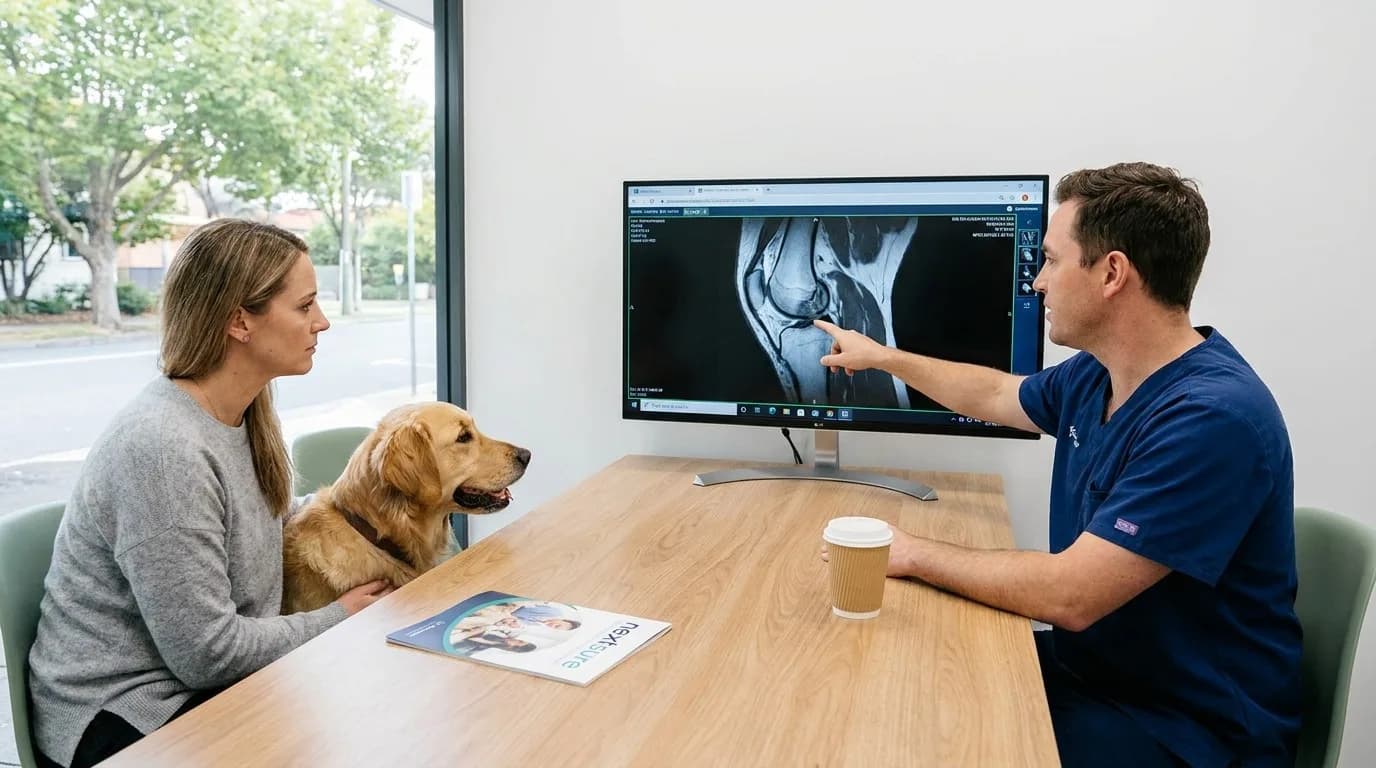
Besides the surgery itself, significant additional fees arise that strain the budget. Before the procedure, vets absolutely need X-rays or an MRI to precisely diagnose the joint structures. This imaging often costs several hundred euros and is billed at fixed rates. After the operation, the dog needs high-dose pain medication and antibiotics to prevent infection. Vets also bill this medication under the current fee schedule. A typical torn cruciate ligament comes to around €2,700 in total [2]. Complications during the sensitive healing phase can require further consultations. Every additional vet visit noticeably raises the total financial burden. The statistical risk for such procedures is very high. About 30 percent of all dogs need surgery at least once in their lives [1]. The data here is absolutely clear.
The Influence of Breed on the Surgical Method
The choice of surgical method has a major impact on the final price and depends heavily on anatomy. Besides TPLO, methods such as TTA (Tibial Tuberosity Advancement) or the classic extracapsular suture technique exist. Large, heavy breeds such as Labradors or Rottweilers absolutely need the more expensive bone-altering methods like TPLO. A simple suture repair is better suited to small dogs under 15 kilograms. The costs and benefits of health insurance for dogs vary depending on which surgical method is covered and the tariff structure. High-quality tariffs reimburse all common surgical procedures up to the maximum rate of the fee schedule. Cheap tariffs often only cover the standard rate. In an emergency, this leads to massive out-of-pocket costs for the owner. A careful review of the policy terms is essential. Owners need to analyze the fine print precisely.
Surgery Insurance vs. Full Coverage
A Systematic Distinction Between the Types of Cover
Surgery insurance differs conceptually quite a bit from classic full coverage. The difference between pure surgery insurance and full insurance lies in the defined scope of cover. A pure surgery policy only applies when a surgical procedure under anesthesia takes place. It covers the costs of the surgery as well as immediate preparation and defined aftercare. Full health insurance, by contrast, also covers purely conservative treatment without a scalpel. This includes outpatient vet visits, vaccinations, parasite protection, or treating chronic conditions such as diabetes. For a torn cruciate ligament, both variants pay out, provided surgery is medically necessary. The choice depends on the individual owner's need for security and their available monthly budget. Both models have their strategic place in the portfolio.
Financial Calculation and Risk Transfer
Financial calculation plays a central role in choosing between the models. Surgery tariffs are generally noticeably cheaper than full-coverage tariffs, since they exclude frequent, low-cost claims. They cover the existential risk of expensive surgical procedures that could ruin the owner financially. A torn cruciate ligament can quickly cost up to €3,500 [3]. Such sums often exceed the liquid reserves of many private households. Full insurance requires higher monthly premiums but offers a higher claims-interaction rate. In return, it also reimburses the regular costs of deworming, tick treatments, or minor injuries. General pet health insurance therefore offers a comprehensive, worry-free package. The dog owner needs to weigh analytically whether they can cover smaller bills themselves. The risk transfer needs to match their liquidity.
Contractual Definition of an Insured Event
The contractual details define the exact scope of cover in the event of a claim. At established providers, veterinarily necessary medical treatment resulting from surgery counts as a clear insured event. Reimbursement is based on the agreed maximum rate of the veterinary fee schedule, which is decisive for emergency service. Lab and imaging diagnostics are included as standard in full insurance. Medically necessary medication is also reimbursed under this scope. It is extremely important to check the exact definitions in the insurance policy. Some providers explicitly exclude certain diagnostic procedures such as MRI scans. A transparent comparison protects against nasty surprises when it comes to billing. nextsure helps with this detailed analysis of the terms and conditions. The nextsure team reads the fine print for its customers.
| Benefit | Pure Surgery Insurance | Full Health Insurance |
|---|---|---|
| Surgical procedure (TPLO) | Yes, full cover | Yes, full cover |
| Imaging diagnostics (MRI/X-ray) | Only immediately before surgery | Yes, even without subsequent surgery |
| Conservative pain management | No | Yes |
| Physiotherapy | Often limited to the aftercare window | Usually included with an annual budget |
The exact reimbursement limits depend on the chosen tariff and the GOT rate.
Waiting Periods and Contractual Exclusions
General and Special Blocking Periods
Waiting periods are a critical factor when taking out a new policy. Almost every dog health insurance policy sets an initial blocking period to prevent opportunistic sign-ups. The general waiting period is exactly 30 days at many providers [2]. If the cruciate ligament tears within this first month, the insurance does not pay out. For congenital malformations or breed-specific conditions, an extended waiting period of a full year often applies [2]. Some insurers set the waiting period for special joint conditions at 6 to 12 months [3]. These strict rules protect the community of policyholders from massive losses. Dog owners should therefore take out cover as early as possible. Signing up early secures the best terms.
Accidents as an Exception to the Waiting Period
Accidents are a very important exception to the strict waiting-period rule. For proven accidents, the waiting period does not apply at all under dog surgery insurance [3]. A torn cruciate ligament can happen traumatically, through an accident, or degeneratively, through wear. The precise veterinary diagnosis is absolutely decisive here for the company's assessment of the claim. If the dog unluckily steps into a hole while playing, many insurers count this as an accidental event. A purely degenerative tear, by contrast, falls under the regular waiting periods. Documentation by the treating vet must be precise and unambiguous. Only then does the claims team process cover without delay. Precision in the record is real money here.
Strict Exclusions in the Terms and Conditions
Contractual exclusions reduce cover in certain, clearly defined scenarios. Treatments already known, already started, or already recommended by a vet before the contract began are generally excluded. The same applies to the consequences of defects that arise clinically before the waiting period has elapsed. Damage from war, earthquakes, or global pandemics is also not covered, in line with industry standards. The terms consistently and without exception exclude harm deliberately caused to the animal's health. Insurance premiums must be paid in full and on time. Otherwise, cover only starts once payment is actually received. The policyholder must strictly comply with these contractual obligations. A breach puts the entire scope of cover at risk.
Typical Exclusions in Dog Surgery Insurance
- Treatment already recommended before the contract was taken out.
- Degenerative cruciate ligament tears occurring within the first 30 days.
- Costs for special diets or supplements to support joints.
- Physiotherapy taking place after the defined aftercare period has ended (e.g., 42 days).
- Procedures not carried out by a licensed veterinarian.
The exact exclusions vary depending on the general insurance terms (AKB) of the respective provider.
The Risk of a Second Torn Cruciate Ligament
Anatomical Predisposition and Overload
The risk of a bilateral cruciate ligament tear is statistically extremely high. If a dog tears the cruciate ligament in one hind leg, the second one very often follows. The severe strain of favoring one leg during the months-long healing phase puts enormous stress on the healthy joint. Many vets estimate the likelihood of a second tear at over 50 percent within a year. For dog health insurance, this strong correlation poses a particular actuarial challenge. If the first knee had already torn before the contract began, this counts as a manifest pre-existing condition. The affected joint is then permanently excluded from cover. This is a standard industry practice that limits the insurer's risk. Owners need to understand this dynamic.
How Insurers Assess the Healthy Knee
How the second knee is assessed varies depending on the insurance company's risk policy. Some providers preemptively exclude the right leg too after a cruciate ligament tear on the left. They argue based on anatomical predisposition and the mechanical overload to be expected. Other insurers assess the second knee as a completely independent risk. As long as the second ligament was verifiably healthy when the contract began, they cover the surgery costs. These subtle differences in policy terms are extremely important to the customer. A digital broker like nextsure examines these specific clauses in detail. nextsure specifically filters out tariffs that offer fair terms for the second joint. That's the operational added value.
Strategies for Existing Pre-Existing Conditions
The right strategy when signing up prevents costly coverage gaps in the future. Anyone wanting to insure a dog with an already operated-on cruciate ligament must answer the health questions precisely. False statements inevitably lead to loss of cover due to a breach of the pre-contractual duty of disclosure. It's worth looking for special tariffs that re-include pre-existing conditions after a certain symptom-free period. Alternatively, health insurance for cats can be checked in parallel for other pets in the household, to optimize the overall portfolio. Transparent disclosure of the medical history is absolutely essential. Only this creates a legally solid contract that really pays out when it matters. Honesty is the best policy here.
Pre-Treatment and Post-Operative Aftercare
Diagnostic Costs Before the Procedure
Pre-treatment covers all diagnostic steps immediately before the surgical procedure. An accurate diagnosis requires clinical examinations and high-resolution imaging. Surgery insurance reimburses operations including the pre-surgical examination that directly leads to the diagnosis. This includes digital X-rays, joint punctures, or expensive MRI scans. The cost of these essential preparations quickly adds up to €300 to €500 at veterinary clinics. Without this precise diagnostics, a properly performed TPLO operation simply cannot be planned. High-quality tariffs integrate these upfront costs directly into the total reimbursement. In these cases, the dog owner does not need to pay upfront. This considerably eases the strain on their finances.
The Contractual Aftercare Window
Post-operative aftercare is absolutely critical to long-term healing success. After the operation, the joint needs plenty of time and professional care to fully recover. Surgery insurance covers aftercare costs for up to 42 calendar days after the day of surgery [2]. During this defined period, regular bandage changes, suture removal, and follow-up X-rays are needed. Administering pain medication and anti-inflammatories also falls precisely within this contractual window. The 42-day limit is a very important contractual parameter to be aware of. Treatment taking place after this period must be paid for entirely by the owner. Managing deadlines here is part of processing the claim.
The Role of Physiotherapy in Rehabilitation
Physiotherapy significantly and lastingly speeds up rehabilitation after a torn cruciate ligament. Targeted underwater-treadmill training gently rebuilds the atrophied muscles in the hind leg. Not every surgery insurance policy covers these important physiotherapy measures. Some premium tariffs include a fixed budget for physiotherapy within the defined aftercare period. Others explicitly exclude physical therapy in their basic terms. Anyone who places great value on fully restoring mobility needs to prioritize this point highly when comparing tariffs. Investing in a tariff with a physiotherapy component almost always pays off for orthopedic procedures. The dog's quality of life benefits enormously from this professional muscle rebuilding. It's a measurable return on investment.
Phases of Cost Coverage for Cruciate Ligament Surgery
- Pre-operative diagnostics: clinical examination, X-ray, and blood work to assess fitness for anesthesia.
- Surgical procedure: the actual TPLO operation including anesthesia and monitoring.
- Immediate aftercare: inpatient stay at the veterinary clinic until the dog wakes up.
- Post-operative phase: medication and follow-up examinations within the 42-day period.
- Rehabilitation: physiotherapy and underwater treadmill (depending on the tariff).
Submit all invoices for these phases together to make it easier to match them to the insured event.
Cover Abroad and Contract Terms
Worldwide Protection While Traveling
Cover abroad reliably protects the dog on international trips too. A cruciate ligament tear can happen completely unexpectedly while hiking in the Alps or on the beach during a vacation. Good tariffs offer worldwide cover with no geographic restrictions. Abroad, the dog is often continuously covered for 12 months. Billing usually follows the German fee schedule, which simplifies calculation. Vet costs abroad, however, can vary considerably and blow the budget. In Scandinavia or Switzerland, veterinary treatment is often considerably more expensive than in Germany. The insurer reimburses up to the contractually agreed sum insured at most. It's worth checking the policy before setting off on a trip.
Notice Periods and Contract Renewal
Contract terms and notice periods give the policyholder a high degree of financial flexibility. Modern policies increasingly do without rigid, customer-unfriendly multi-year contracts. Some contracts can be canceled with just 14 days' notice to the end of the month. With a minimum term of one year, the contract automatically renews for another year. Cancellation is also possible for both parties after a settled claim. If the insured risk ceases to exist — for example, through the dog's death — the contract ends immediately and early. These customer-friendly terms make it easier to commit to the contract and build trust. Transparency around cancellation is a strong signal of quality.
Payment Arrangements and Premium Due Dates
Premium payment is handled flexibly according to the policyholder's individual preferences. The first premium is paid promptly after the agreed start of cover, to activate protection. Further premiums are due either monthly or annually, depending on the arrangement. Annual payment often saves internal administrative costs and reduces the premium by a few percent. Payment is made conveniently and securely by SEPA direct debit. In the event of late payment, cover legally lapses after a reminder. It is therefore highly advisable to ensure sufficient funds in the account on the direct-debit date. Uninterrupted cover is essential for unforeseeable events such as a torn cruciate ligament. Nobody wants to be left without cover in an emergency.
Tariff Comparison and Digital Processing
A Systematic Analysis of the Benefit Features
Comparing tariffs requires a systematic, data-driven analysis of the benefit features. The market for pet health insurance is confusing, fragmented, and hard for laypeople to see through. nextsure acts as a digital insurance broker and filters hand-picked tariffs for specific needs. The team examines reimbursement rates, waiting periods, and hidden exclusions in detail. A torn cruciate ligament causes high costs that require absolutely reliable cover. The comparison process takes into account the dog's specific breed, weight, and age. This way, nextsure identifies policies that offer real security and perform when a claim occurs. The focus is on measurable quality rather than a confusing grab bag of options. The result: clear recommendations.
Efficiency Through Digital Processes
Digital processing speeds up the entire insurance process enormously and saves valuable time. From the initial needs assessment to the final signed contract, often only a few minutes pass. In the event of a claim, invoices from the veterinary clinic can simply be uploaded digitally via the app or web portal. Review and reimbursement by the insurer happen digitally, automatically, and quickly. This considerably eases the burden on the dog owner in an already emotionally stressful situation. Long postal delays and tedious paperwork are eliminated entirely in this setup. nextsure's platform offers a central, secure place for all contract documents. Transparency and operational speed are absolutely front and center at nextsure. That's modern insurance management.
Personal Broker Advice as a Complement
Personal expert advice perfectly complements the digital convenience and closes knowledge gaps. Despite simple online processes, very specific questions about cover often come up. Does the complex TPLO method count as a standard procedure under the chosen tariff? What about reimbursement for physiotherapy after day 42? nextsure's qualified brokers answer these detailed questions with sound, legally reliable expertise. The team works independently of individual insurance companies and represents the customers' interests. Compensation comes through commissions from insurers; the service is entirely free for the end customer. This combination of digital efficiency and professional depth guarantees the best possible cover. The dog gets the optimal medical care as a result.
Frequently asked questions
- Does Dog Health Insurance Pay for Cruciate Ligament Surgery?
Yes, both full health insurance and pure surgery insurance cover the costs of cruciate ligament surgery. The contractual waiting period must have elapsed, and the tear must not already have existed before the contract began. Timing is decisive. Reimbursement is made up to the maximum rate of the veterinary fee schedule (Gebührenordnung für Tierärzte, GOT), depending on the tariff.
- What Does Cruciate Ligament Surgery Like TPLO Cost for a Dog?
The cost of a TPLO operation (Tibial Plateau Leveling Osteotomy) ranges between €1,600 and €3,500 under the current GOT reform. This amount covers the surgical procedure, anesthesia, and immediate monitoring. Additional costs often arise for pre-operative diagnostics such as X-rays or an MRI, as well as aftercare.
- Does a Torn Cruciate Ligament Count as a Pre-Existing Condition if the Other Knee Was Affected?
Yes, if a dog already had a torn cruciate ligament before the contract began, this counts as a pre-existing condition. The already-operated knee is excluded from cover. Some insurers, due to the high anatomical overload involved, also preemptively exclude the second, still-healthy knee from cover. A careful tariff comparison is essential here.
- Is There a Waiting Period for Cruciate Ligament Surgery?
The general waiting period is 30 days at most providers. For breed-specific or congenital malformations, the waiting period can be extended to 6 to 12 months. Accidents are an important exception: if the cruciate ligament tears due to a proven traumatic accident, the waiting period usually does not apply at all.
- Is Aftercare and Physiotherapy Covered?
Post-operative aftercare is usually covered by surgery insurance for a defined period, often up to 42 days after the operation. This includes bandage changes and pain medication. Physiotherapy such as underwater-treadmill training is not included in every basic tariff and often requires a special premium component or full health insurance.
- What GOT Rate Is Charged for an Emergency Operation on a Weekend?
If a torn cruciate ligament needs to be operated on as an absolute emergency on a weekend or at night, veterinary clinics often charge two to three times the rate of the veterinary fee schedule (GOT). A flat emergency-service fee is added on top. Strong tariffs cover these higher rates, while basic tariffs often only reimburse the standard rate.
Sources
Conclude directly online
Verified partner tariffs at no extra cost. The button takes you straight to the provider's calculator.
 Hepster
Dog health insurance
Full health coverage for dogs across five tariffs; the top tariff reimburses 100% with no annual maximum.
- Reimbursement:
- 50-100% depending on the tariff
- Deductible (Selbstbeteiligung):
- 0-50% depending on the tariff
- Waiting period:
- 1 month
- GOT rate:
- up to 4x (Premium/Superior)
- Treatment and surgery for illness and accidents, reimbursed at 50-100% depending on the tariff
- Veterinary clinic stays: up to 10, 15, or 20 days depending on the tariff
- Wellness allowance: €30 (Basis), €70 (Premium), €100/year (Superior)
- From Premium: physiotherapy (up to €200 without surgery, €500 after surgery), tooth extractions, homeopathy/acupuncture
- Superior: prosthetics/orthotics allowance of up to €650
- Vet fees covered up to 3x the standard veterinary fee schedule (GOT) rate on Basis, up to 4x on Premium/Superior
Key exclusions
- Known chronic or congenital conditions
- Pregnancy, false pregnancy, and birth
- Illnesses treated in the 6 months before the policy started
- Basis tariffs: neutering/spaying that isn't medically necessary
Trusted Shops: 4,5/5 „Sehr gut“ (2.600 Bewertungen)
hepster insgesamt (Anbieterbewertung, alle Versicherungen)
Monthly subscription: minimum term 12 months, notice period 3 business days before the end of the billing period; MRI/CT scans in the Basis tariffs are covered at 50%. Insurer: Towarzystwo Ubezpieczen Europa S.A.
Fact sheet: benefits, exclusions and waiting periods in detail
 Cleos Welt
Dog health insurance
Combined health and surgery cover for dogs, reimbursing vet costs up to the agreed maximum veterinary fee schedule (GOT) rate.
- Reimbursement:
- up to the agreed maximum GOT rate
- Coverage abroad:
- 12 months
- Notice period:
- 14 days before the end of the month
- Treatment for illness and accidents
- Surgery, including pre-surgical diagnostic examinations
- Pre- and post-treatment following a covered surgery
- Lab work and imaging diagnostics, plus medically necessary medication
- Coverage abroad: 12 months
Key exclusions
- Treatments and surgeries already known or recommended before the policy started
- Illnesses occurring before the waiting period ends
- War, earthquakes, floods, epidemics, and pandemics
- Damage caused intentionally
CHECK24 Tarifnote 1,0 „exzellent“
Cleos Welt Hundekrankenversicherung
FOCUS MONEY: Beste Tierkrankenversicherung (Premiumtarif), Ausgabe 14/2026
Cleos Welt Hundekrankenversicherung
ASCORE „Tarif des Monats“ 08/2025
Cleos Welt Tierkranken Hund, Rundum Plus Schutz inkl. Vorsorge & SOS-Schutz
CHECK24 Tarifnote 1,0 „exzellent“
Cleos Welt Hunde-OP-Schutz (Rundum Plus inkl. SOS-Schutz)
„Kundenfavorit“: über 50.000 geschützte Haustiere
Cleos Welt Tierversicherungen (Tierkranken Hund)
Google Rezensionen: 4,5/5 Sterne (210 Bewertungen)
Cleos Welt insgesamt (Anbieterbewertung, alle Versicherungen)
Contract term at least 1 year with automatic renewal; sum insured and deductible (Selbstbeteiligung) as stated in the policy. Insurer: Uelzener Allgemeine Versicherungs-Gesellschaft a.G.
Fact sheet: benefits, exclusions and waiting periods in detail
Hepster
Dog surgery insurance
Surgery-only cover for dogs across four tariffs; from year 2 or 3, depending on the tariff, there is no annual maximum.
- Reimbursement:
- 80-100% depending on the tariff
- Deductible (Selbstbeteiligung):
- 0-20% depending on the tariff
- Waiting period:
- 1 month
- Surgery under anesthesia or sedation for illness and accidents
- Post-treatment: up to day 14, 15, or 20 depending on the tariff
- Neutering/spaying: up to €250 on Basis, unlimited from Premium
- From Premium: tooth extractions, post-surgery physiotherapy (up to 20 days/€500), homeopathy/acupuncture
- Superior: prosthetics/orthotics allowance of up to €650
- Vet fees covered up to 3x the standard veterinary fee schedule (GOT) rate on Basis, up to 4x on Premium/Superior
Key exclusions
- Known chronic or congenital conditions
- Illnesses that required surgery in the 6 months before the policy started
- Surgery performed to meet breed-standard appearance
- Basis: tooth extractions, root canal treatment, and dental/jaw corrections
Trusted Shops: 4,5/5 „Sehr gut“ (2.600 Bewertungen)
hepster insgesamt (Anbieterbewertung, alle Versicherungen)
Monthly subscription: minimum term 12 months, notice period 3 business days before the end of the billing period; prosthetics/orthotics have a 12-month waiting period. Insurer: Towarzystwo Ubezpieczen Europa S.A.
Fact sheet: benefits, exclusions and waiting periods in detail
Hepster Dog health insurance: Dog health insurance tariff overview
| Tariff | Reimbursement | Deductible | Annual maximum |
|---|---|---|---|
| Basis20 | 80% | 20%, min. €250 per claim | €2,500 |
| Basis50 | 50% | 50%, min. €500 per insurance year | €2,500 |
| Premium | 80% | 20% per claim | Year 1: €10,000, year 2: €15,000, from year 3: unlimited |
| Superior10 | 90% | 10% per claim | none |
| Superior0 | 100% | none | none |
Hepster Dog surgery insurance: Dog surgery insurance tariff overview
| Tariff | Reimbursement | Deductible | Annual maximum |
|---|---|---|---|
| Basis | 80% | 20%, min. €250 per claim | €2,000 |
| Premium | 80% | 20% per claim | Year 1: €2,000, year 2: €5,000, from year 3: unlimited |
| Superior10 | 90% | 10% per claim | Year 1: €5,000, from year 2: unlimited |
| Superior0 | 100% | none | Year 1: €5,000, from year 2: unlimited |
All details are taken from the provider's linked product page and the contract documents (IPID/policy conditions) published there; the insurer's documents prevail. Premiums, benefits and the insurance product itself may change – please verify the details directly with the partner before signing up; only the information provided there is binding.
Information last updated: July 2026 · Source: provider product information (IPID/policy conditions)