Ferret Health Insurance: Costs, Benefits & Comparison
Ferret health insurance protects against high vet bills for adrenal disease and insulinoma. Compare tariffs and sign up online.
All details are taken from the provider's linked product page and the contract documents (IPID/policy conditions) published there; the insurer's documents prevail. Premiums, benefits and the insurance product itself may change – please verify the details directly with the partner before signing up; only the information provided there is binding.
 Katrin StraubManaging DirectorInsurance expert with over 20 years of experience in the insurance industry.
Published on
12 min read
Table of Contents
Ferret health insurance covers the vet costs for illnesses, operations, and medication. Common conditions like adrenal disease or insulinoma quickly rack up large bills under the German veterinary fee schedule. The right tariff protects owners from these financial risks. Policies differ considerably in waiting periods, benefit limits, and how they handle pre-existing conditions.
Dog Health Insurance
Comprehensive dog health insurance from nextsure: Optimally protect your loyal companion against vet costs, operations, and unforeseen treatments. Get informed now and calculate your rate!
Learn moreRisk Analysis for Ferrets
Common Conditions
A close risk analysis reveals the specific health weak points of these agile animals. Ferrets are especially prone to complex hormonal disorders. Adrenal disease (hyperadrenocorticism) is a hormonal condition that occurs very frequently in neutered ferrets [1]. This disease is triggered by overproduction of sex hormones in the adrenal cortex. The loss of the hormonal feedback mechanism after neutering is the primary trigger here. That's a fact. Owners often first notice severe hair loss, itching, or aggressive behavior in their animals. A prompt veterinary diagnosis using ultrasound and specific blood tests is then essential. Treatment costs quickly add up to several hundred euros, since specialized vets often need to be consulted. Health insurance for other exotic pets works on similar principles and offers comparable coverage models, see health insurance for other exotic pets.
Insulinoma as a Danger
Alongside adrenal issues, insulinoma poses another major threat. These are tumors of the pancreas that produce insulin uncontrollably. Life-threatening low blood sugar is the direct result of this overproduction. The animal appears lethargic, drools heavily, or has seizures in advanced stages. These two conditions are among the most common hormonal disorders in ferrets [2]. Veterinary intervention must happen immediately during an acute episode. Treating adrenal disease or insulinoma can involve either surgically removing the affected tissue or drug therapy. Both routes place an enormous burden on the owner's budget. Costs rise rapidly. Solid insurance cover effectively absorbs these financial spikes. Surgically removing pancreatic tumors requires the utmost precision and special inhalation anesthesia. The subsequent inpatient monitoring at a veterinary clinic drives the total bill up further.
Everyday Injuries
Ferrets are extremely curious and have a strong playful instinct that often puts them in danger. This instinct regularly leads to serious accidents at home. Swallowed rubber or plastic foreign objects cause life-threatening intestinal blockages that require immediate surgery. Falls from tall furniture result in complicated bone fractures or severe internal bruising. Emergency care at a veterinary clinic on a weekend is especially expensive. Emergency service fees and higher billing rates from vets apply here. This quickly blows the budget. Strong ferret health insurance covers exactly these unpredictable events. Financial worry fades into the background when an emergency happens. The focus is entirely on the animal's recovery. The right policy offers the owner absolute planning security. Diagnostics for accidents often require expensive imaging such as digital X-ray or CT scans. These examinations are essential for precisely locating internal injuries and determining the right surgical strategy.
The Vet and GOT Cost Trap
Billing by the Book
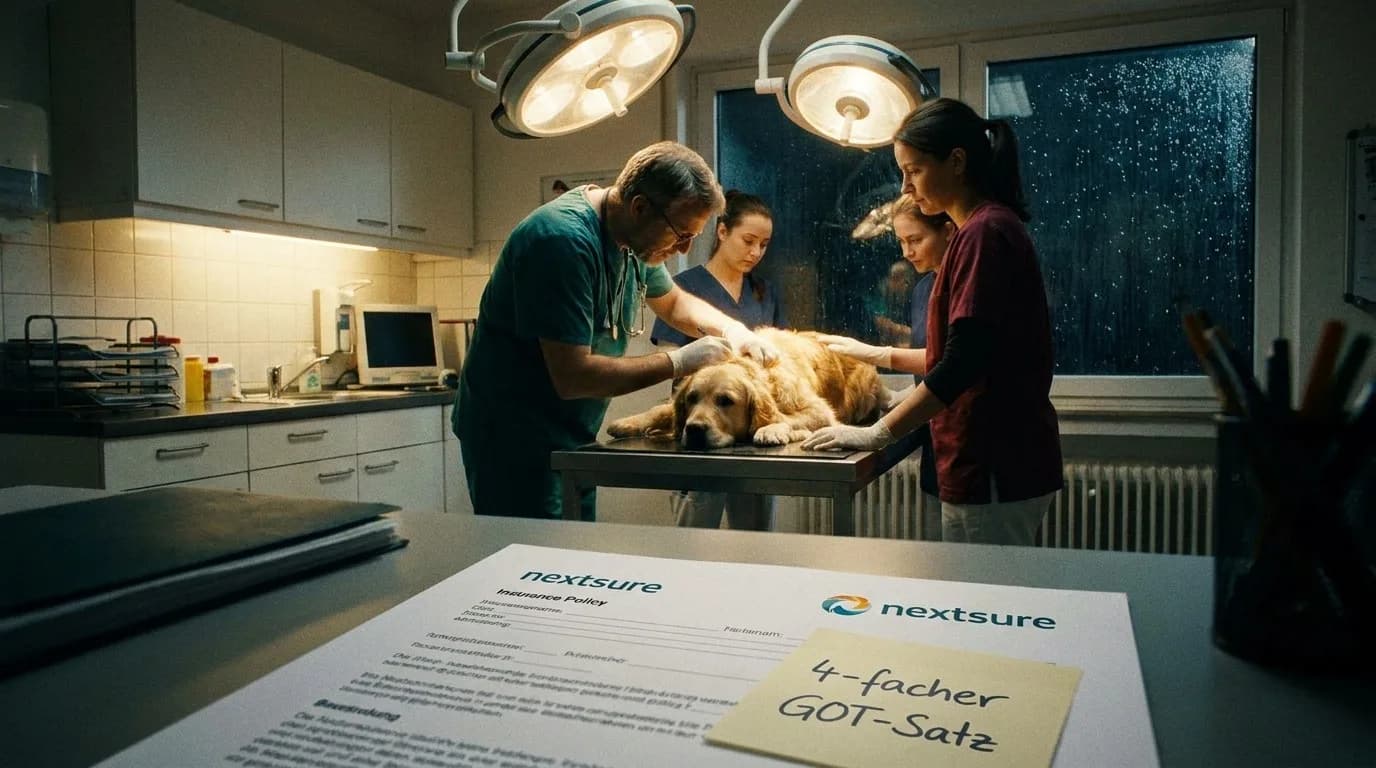
The feared cost trap often snaps shut unexpectedly during veterinary treatment. Vets in Germany must bill their services under the nationally binding German veterinary fee schedule (Gebührenordnung für Tierärzte, GOT) [3]. This regulation leaves no room for blanket discounts or individual price negotiations. The GOT sets a fee range from the standard rate up to three times that rate, varying by the difficulty and timing of the treatment. This is set by law. An emergency operation on a Sunday evening is billed by default at a considerably higher rate than a scheduled routine check-up on a Tuesday morning. Owners very often underestimate this pricing dynamic. A simple abdominal ultrasound can quickly cost three times the regular price during emergency service. The financial burden rises exponentially in emergency situations. The current version of the GOT has also noticeably raised the base prices for many standard veterinary services. This particularly affects modern diagnostic equipment and specialized surgical procedures for small animals.
Calculating the Cost of Surgery
Surgically removing a diseased adrenal gland is a complex, time-consuming procedure in a ferret. The pure surgical fee under the GOT is only part of the total bill. On top of that come mandatory costs for inhalation anesthesia, continuous monitoring of vital signs, sterile materials, and inpatient accommodation. Preliminary examinations by ultrasound and a full blood panel also add up significantly. The sum grows quickly. Such a procedure quickly adds up to over a thousand euros. Good ferret health insurance reimburses these vet costs based on the agreed maximum rate of the fee schedule. This protects the owner from financial ruin from a single necessary operation. The GOT's cost transparency helps insurers calculate premiums for these specific risks precisely. Specialized veterinary clinics almost always bill at two or three times the GOT rate for complicated procedures on hormone-producing organs. The surgeon's specialist expertise justifies this higher billing factor.
Medication and Aftercare
After successful surgery, the important and often lengthy aftercare phase begins. Wound checks, removing stitches, and administering antibiotics and painkillers all generate further costs under the GOT. Chronic conditions such as insulinoma also require ongoing drug therapy with cortisone or diazoxide. The monthly cost of these prescription drugs adds up considerably over the animal's lifespan. It all adds up. Continuous monitoring of blood sugar levels is also essential. Comprehensive insurance cover includes this pre- and aftercare surrounding an insured operation. This makes the financial burden predictable and takes away its sting for the owner. The policy covers the bills for life-sustaining medication and regular check-ups at the vet's practice. Without appropriate cover, owners have to fund these ongoing costs entirely from their own savings. Given a life expectancy of eight to ten years, this leads to a substantial ongoing financial burden.
| Treatment | GOT Rate (Example) | Estimated Cost |
|---|---|---|
| General examination | 1x rate | approx. €30 - 50 |
| Abdominal ultrasound | 2x rate | approx. €100 - 150 |
| Adrenal surgery (incl. anesthesia) | 2x to 3x rate | approx. €800 - 1,500 |
Costs vary depending on complexity and emergency service times.
Scope of the Health Insurance Cover
Comprehensive Full Cover
The scope of a good policy defines the real value of the insurance cover for the ferret. Full insurance comprehensively covers veterinarily necessary medical treatment due to a health impairment. This includes both outpatient consultations and inpatient stays at the veterinary clinic. The cost of lab tests and imaging diagnostics such as X-ray, ultrasound, or MRI is covered. That's hugely important. Medically necessary medication is also covered under standard insurance. This broad approach sets the specific policy apart from general pet health insurance, see general pet health insurance. The owner shouldn't have to hesitate over diagnostic measures for financial reasons. Uelzener Allgemeine Versicherungs-Gesellschaft, for example, offers products that guarantee exactly this broad coverage for small pets. A fast diagnosis can save the animal's life in an emergency. Reimbursement for lab panels is especially essential for diagnosing hormonal disorders. Specific hormone tests in the blood are expensive but essential for precise treatment planning.
Focus on Surgery
A central component of any strong policy is covering surgical procedures. Covered are operations, including the pre-surgery examinations that ultimately lead to a diagnosis. This is a crucial point, since finding the underlying cause in ferrets is often expensive. The subsequent pre- and aftercare following an insured operation is also included under the contract. That provides real security. If a ferret swallows a foreign object, the insurance covers the entire process, from the first X-ray to the final wound check. The financial burden is fully carried by the insurer, provided the benefit limits aren't exceeded. Inpatient care after major abdominal surgery is also reimbursed until the patient is fully stabilized. Modern tariffs also cover the cost of minimally invasive procedures and endoscopic methods. These gentler surgical techniques considerably reduce the ferret's recovery time, but the equipment is very costly for the vet to acquire.
Watch the Benefit Limits
Despite the comprehensive cover, every contract has clearly defined upper limits. Insurers pay out up to the agreed maximum sum insured per insurance year. This sum varies considerably depending on the tariff and provider chosen. Some providers offer unlimited cover, while others cap reimbursement at a fixed amount, for example two thousand euros. This needs to be checked. Detailed information on this is always available in the relevant insurance policy. Comparing annual maximum benefits is essential for ferret owners. A sum insured set too low is quickly used up by an expensive adrenal operation. Transparency around these limits protects against nasty surprises in an emergency. Once the annual maximum is reached, the owner must bear all further vet costs themselves until the new insurance year begins. A tariff with no annual limit offers the highest security but is priced correspondingly higher in the monthly premium. Choosing the sum insured is the most important strategic decision when taking out the policy.
Key benefits of full ferret insurance
- Covering surgery costs including anesthesia and monitoring.
- Reimbursing imaging diagnostics such as ultrasound and X-ray.
- Paying for medically necessary medication and dressing materials.
- Covering pre- and aftercare around a procedure.
The exact benefits vary depending on the tariff and provider.
Exclusions and Waiting Periods
Strict Exclusions
The contractual exclusions clearly define which risks the insurer doesn't cover. Pre-existing conditions already known in the animal are generally excluded from cover [4]. Examinations already begun or recommended by a vet also aren't covered. This is standard in the industry. If the ferret already shows symptoms of insulinoma, the insurance won't reimburse costs for this specific illness. The consequences of defects and illnesses known when the policy was taken out remain permanently excluded. Taking out cover early, while the animal is healthy, is therefore the only strategically sound decision. Insurers often require answering health questions or providing a veterinary certificate when the policy is taken out. If pre-existing conditions are concealed here, the entire insurance cover risks being lost due to a breach of the pre-contractual duty of disclosure. Chronic conditions diagnosed before the contract began usually lead to a specific exclusion noted in the policy. The animal is then insured, but not for the already existing issue.
Waiting Periods as a Hurdle
Another critical factor when choosing a tariff is the contractually agreed waiting period. With Cleos Welt's small pet insurance, waiting periods of up to six months can apply [4]. If an illness occurs before the respective waiting period has elapsed, there's no entitlement to reimbursement of treatment costs. This rule protects insurers from bad-faith sign-ups by owners whose animals are already acutely ill. That's entirely logical. Accidents are usually exempt from this waiting period and covered immediately from day one. The exact length of the waiting period for specific illnesses must be checked in detail before signing up. A tariff with a short waiting period of just thirty days offers considerably faster and more effective cover for the animal. Some insurers waive waiting periods entirely if a current, complete veterinary health certificate is submitted when the policy is taken out. This option should always be actively checked when applying for the policy.
General Restrictions
Alongside pre-existing conditions and waiting periods, there are general coverage restrictions in the policy terms. Events such as war, earthquakes, or floods are fundamentally excluded from cover. Epidemics and pandemics also generally fall outside the insurer's obligation to pay. This is standard. Damage the owner caused deliberately is, of course, not covered. Consequences of illnesses that arise after the contract ends are likewise excluded. These clear limits help keep premiums calculable for the entire community of policyholders. A transparent approach to these exclusions is what sets reputable insurance providers apart in the specialty pet insurance market. Dietary food, preventive dental cleanings, or routine vaccinations also aren't reimbursable under many basic tariffs and must be separately insured as an add-on. A careful read of the insurance product information document (IPID) reveals all specific exclusions at a glance. This standardized document must be given to the customer before the contract is taken out.
Cost of Ferret Insurance
Calculating the Premium
The monthly cost of a policy depends on various risk factors. The premium for small pet insurance is largely based on the type of animal and its age when the contract is taken out [5]. Ferrets are often considered a higher risk than rabbits or guinea pigs, given their specific susceptibility to tumors. This drives up the price. A young, healthy ferret can be insured considerably more cheaply than an older animal with an extensive medical history. Premiums must be paid on time and in full to maintain cover. The choice between pure surgery insurance and full cover also has a major effect on the premium amount. A 20 percent deductible per bill noticeably lowers the monthly premium but requires a degree of personal financial contribution in the event of a claim. Some insurers dynamically adjust premiums once the ferret reaches a certain age. These age-related premium adjustments must be factored into the owner's long-term budget planning.
Payment Terms in Detail
Premium payment is handled simply and digitally by modern insurers. The owner pays the first premium immediately after the agreed start date of the insurance. Otherwise, insurance cover only begins once payment is received by the insurer. This is extremely important. Premium payment is usually made by direct debit from an account based on a granted SEPA mandate. Depending on the contractual arrangement, monthly, quarterly, or annual payment is possible. Annual advance payment is often rewarded with a small discount of up to five percent. The exact due dates are transparently listed in the insurance policy and give the owner clear financial planning security. If payment is overdue, insurance cover is suspended until the outstanding premiums are paid in full. Reminder fees and the temporary loss of cover are the direct consequences of a failed direct debit. Owners should therefore always ensure sufficient funds in their account at the time premiums are collected.
Cost and Benefit
Weighing premium costs against the potential benefit is essential. A monthly premium of twenty to forty euros seems high at first glance for a small pet. A single adrenal operation, however, quickly exceeds the sum of several years of premiums. This pays off quickly. The insurance offers not just financial protection but also enormous emotional relief. The owner doesn't have to make medical decisions based on their current bank balance. This freedom is the true value of strong ferret health insurance. Investing in the policy is an investment in the best possible medical care for the animal. If expensive diagnostics like an MRI become necessary, the insurance covers the bill without question. The certainty of being able to choose the best available veterinary care in an emergency justifies the monthly expense. A well-insured ferret statistically has access to higher-quality and faster treatment.
Cover Abroad and Termination
Protection While Traveling
Cover abroad is an important criterion for ferret owners who like to travel when choosing a tariff. The insured animal primarily has insurance cover within the Federal Republic of Germany. Abroad, however, the animal is often covered for up to twelve months. That's very generous. This applies to temporary stays such as holidays or temporary work assignments for the owner. If a medical emergency occurs elsewhere in Europe, the insurance covers the costs under the contract terms. Billing is usually based on the German veterinary fee schedule. This worldwide cover guarantees that the ferret can receive optimal veterinary care even far from home. Vet bills in foreign currencies are converted by the insurer into euros at the current exchange rate and reimbursed. Before a longer trip, the owner should check whether specific travel-related diseases in the destination country are covered by the insurance. Some tariffs exclude exotic infectious diseases not native to Germany.
Notice Periods and Contract Terms
Contract terms and termination conditions are designed to be consumer-friendly under modern tariffs. The insurance initially applies for the duration agreed in the application. With a term of at least one year, the contract automatically renews for another year. This ensures uninterrupted cover. Termination is often possible with fourteen days' notice to the end of the month. Both parties can also terminate the contract on an extraordinary basis after a settled claim. If the insured risk permanently ceases to exist, for instance through the animal's death or being given up, the contract ends immediately. This flexibility protects the owner from unnecessary premium payments when life circumstances change. Termination usually must be made in text form, for example by email or through the insurer's customer portal. A special right of termination also exists if the insurer raises the premium without a corresponding increase in benefits. The owner can then respond within one month of being notified.
Owner's Obligations
Insurance cover is tied to certain contractual obligations on the owner's part. The questions in the quote request must be answered completely and truthfully. False statements about pre-existing conditions lead to immediate loss of insurance cover. This is fixed by contract. Vet-recommended vaccinations and preventive measures must be carried out regularly and documented. In the event of a claim, the owner is obliged to give the insurer complete and truthful information about the course of the accident or illness. Complying with these obligations guarantees smooth and fast claims handling by the insurer. Transparency and honesty are the basis for a functioning partnership between owner and insurer. Bills often have to be submitted to the insurer within a certain period, usually four weeks after treatment. If these deadlines are missed, or veterinary treatment reports aren't submitted on request, the insurer can reduce the payout or refuse it entirely. Careful documentation of every vet visit is therefore essential.
Comparison: Surgery Cover vs. Full Insurance
Pure Surgery Cover
A detailed comparison of the tariff variants helps in making the right decision. Pure small pet surgery insurance focuses exclusively on surgical procedures under anesthesia. Claims here are defined as veterinarily necessary medical treatment due to an operation. Premiums for this basic cover are considerably cheaper than for full insurance. That's easy on the wallet. For owners who can comfortably pay for routine check-ups and medication out of pocket, this is a solid safeguard against existentially threatening surgery costs. Similar models are also found with dog health insurance, see dog health insurance. Surgery cover is the absolute minimum in financial provision for a ferret. The cost of removing an insulinoma is fully covered by this tariff component, provided the waiting periods have been met. The preliminary examinations that directly lead to the diagnosis and the decision to operate are also included in good surgery tariffs. Purely routine check-ups with no surgical consequence, however, remain unpaid.
Comprehensive Full Insurance
Full insurance goes far beyond pure surgery cover in its scope of benefits. It includes outpatient medical treatment, expensive diagnostic equipment, and prescription medication. Especially with chronic conditions like insulinoma, this comprehensive cover is worth its weight in gold. Lifelong medication costs are borne by the policy. That's an enormous relief. Cat health insurance, too, see cat health insurance, shows that full-cover tariffs are often the more economical choice in the long run. The higher monthly premium quickly puts itself into perspective if the ferret needs regular veterinary care. Full cover offers the highest level of financial security in everyday life. Even alternative treatment methods or physiotherapy after an accident are often covered under premium tariffs up to a certain annual limit. Reimbursement for homeopathic remedies or acupuncture treatments by specialized vets is being integrated by more and more insurers as an additional benefit within full insurance.
Individual Needs Analysis
Choosing between surgery cover and full insurance requires an honest and realistic needs analysis. Owners need to critically assess their own financial buffer. Anyone with no savings for unexpected vet costs of several hundred euros should definitely choose full cover. That's advisable. Anyone who can comfortably cover smaller bills, on the other hand, does well with the cheaper surgery insurance. The ferret's age when the contract is taken out also plays a decisive role. Young animals benefit enormously in the long run from full insurance taken out early, before the first chronic conditions arise. A well-founded decision protects both animal and owner from stress in equal measure. Combining an affordable surgery tariff with a monthly savings plan for outpatient costs is another strategic option for disciplined pet owners. Ultimately, the owner's personal need for security determines which tariff model offers the best balance between monthly premium burden and the promise of cover in an emergency.
Decision aid: which tariff fits?
- Check your financial buffer: is your savings enough for diagnostics and medication?
- Assess the animal's age: young ferrets should ideally be fully insured.
- Assess your risk tolerance: pure surgery cover only covers the most extreme cost spikes.
Comparing tariffs helps you find the best value for money.
The nextsure Approach for Exotic Pets
Specialized Brokerage
The nextsure approach focuses on tailored solutions for niche risks in the insurance market. Standard portals often fail to present adequate tariffs for unusual pets like ferrets in a clear way. nextsure acts as a digital insurance broker and filters the market for the best offers. That saves a lot of time. The platform gives access to hand-picked tariffs precisely tailored to the needs of small pet owners. Specialty exotic pet insurance, see specialty exotic pet insurance, can be transparently compared here and taken out directly online. The focus is on quality rather than a confusing jumble of policies. iMatch GmbH operates the nextsure platform and is officially licensed as an insurance broker under § 34d para. 1 GewO (German Trade Regulation Act). Its entry in the broker register at the DIHK (German Chamber of Commerce), under registration number D-4ZF9-E88H6-53, guarantees the highest regulatory standards and full legal certainty for the end customer.
Transparency and Advice
The digital platform combines technological efficiency with expert knowledge across more than seven categories. Customers don't just get a list of prices but a clear comparison of benefits, waiting periods, and exclusions. That creates real added value. If questions arise about coverage for specific ferret conditions, personal expert advice is available. nextsure operates independently of individual insurance companies and, as a broker, represents solely the interests of pet owners. This transparent way of working guarantees that the chosen tariff actually pays out in an emergency and that no nasty surprises arise during claims handling. The broker model works entirely free of charge for end customers. Compensation comes exclusively via commission from the insurance companies whose products are placed. With over seventy curated products in its portfolio, nextsure ensures that even highly specific risks, like keeping ferrets, find precisely matched cover.
Simple Online Sign-up
The entire process, from needs analysis to taking out the contract, is fully digital. Owners can enter their ferret's details and receive a suitable quote within minutes. That's extremely convenient. The tedious paperwork is eliminated entirely. The policy is stored digitally and can be accessed at any time through the customer portal. In the event of a claim, the platform allows fast and straightforward reporting of the vet bill by upload. nextsure proves that insuring special risks like keeping a ferret can be made modern, secure, and customer-friendly. The focus is on maximum relief for the pet owner. The combination of digital self-service and personal broker support redefines the standard for taking out niche insurance in the DACH region. Tariff premiums are billed directly by the respective insurer after the contract is successfully taken out, which minimizes the administrative burden for everyone involved.
Frequently asked questions
- Is there health insurance for ferrets?
Yes, specialized small pet and exotic pet insurance offers tailored cover for ferrets. These policies cover vet costs for outpatient and inpatient treatment, surgery, and medication. Taking out cover early, while the animal is young, is advisable to avoid pre-existing conditions.
- Are typical ferret conditions like adrenal disease or insulinoma covered?
Generally yes, as long as these hormonal disorders didn't already exist before the contract was taken out or weren't diagnosed during the contractual waiting period. Full insurance covers the expensive diagnostics, necessary surgery, and often lifelong drug therapy for these typical conditions.
- What does insurance for a ferret cost?
Monthly premiums vary depending on the scope of cover chosen. Pure surgery cover is often available for a low double-digit amount. Comprehensive full insurance, which also covers diagnostics and medication, costs correspondingly more. The animal's age when the policy is taken out also affects the price.
- Do chronic conditions count as pre-existing conditions?
Yes, if a chronic condition is already known or being treated by a vet when the contract is taken out, it counts as a pre-existing condition. The cost of treating that specific illness is then permanently excluded from cover. This makes taking out cover early important.
- From what age can I insure a ferret?
Most insurers offer cover for ferrets from just a few weeks old. There's often a maximum age for enrollment, which varies by provider. Taking out cover in the animal's first year of life guarantees the best terms and avoids exclusions from age-related pre-existing conditions.
- Does the insurance cover apply abroad too?
Many good tariffs offer worldwide cover abroad for temporary stays, often for up to twelve months. If a medical emergency occurs on holiday, the insurance covers the treatment costs. Billing is usually based on the German veterinary fee schedule.
Sources
Conclude directly online
Verified partner tariffs at no extra cost. The button takes you straight to the provider's calculator.
 Hepster
Dog health insurance
Full health coverage for dogs across five tariffs; the top tariff reimburses 100% with no annual maximum.
- Reimbursement:
- 50-100% depending on the tariff
- Deductible (Selbstbeteiligung):
- 0-50% depending on the tariff
- Waiting period:
- 1 month
- GOT rate:
- up to 4x (Premium/Superior)
- Treatment and surgery for illness and accidents, reimbursed at 50-100% depending on the tariff
- Veterinary clinic stays: up to 10, 15, or 20 days depending on the tariff
- Wellness allowance: €30 (Basis), €70 (Premium), €100/year (Superior)
- From Premium: physiotherapy (up to €200 without surgery, €500 after surgery), tooth extractions, homeopathy/acupuncture
- Superior: prosthetics/orthotics allowance of up to €650
- Vet fees covered up to 3x the standard veterinary fee schedule (GOT) rate on Basis, up to 4x on Premium/Superior
Key exclusions
- Known chronic or congenital conditions
- Pregnancy, false pregnancy, and birth
- Illnesses treated in the 6 months before the policy started
- Basis tariffs: neutering/spaying that isn't medically necessary
Trusted Shops: 4,5/5 „Sehr gut“ (2.600 Bewertungen)
hepster insgesamt (Anbieterbewertung, alle Versicherungen)
Monthly subscription: minimum term 12 months, notice period 3 business days before the end of the billing period; MRI/CT scans in the Basis tariffs are covered at 50%. Insurer: Towarzystwo Ubezpieczen Europa S.A.
Fact sheet: benefits, exclusions and waiting periods in detail
 Cleos Welt
Dog health insurance
Combined health and surgery cover for dogs, reimbursing vet costs up to the agreed maximum veterinary fee schedule (GOT) rate.
- Reimbursement:
- up to the agreed maximum GOT rate
- Coverage abroad:
- 12 months
- Notice period:
- 14 days before the end of the month
- Treatment for illness and accidents
- Surgery, including pre-surgical diagnostic examinations
- Pre- and post-treatment following a covered surgery
- Lab work and imaging diagnostics, plus medically necessary medication
- Coverage abroad: 12 months
Key exclusions
- Treatments and surgeries already known or recommended before the policy started
- Illnesses occurring before the waiting period ends
- War, earthquakes, floods, epidemics, and pandemics
- Damage caused intentionally
CHECK24 Tarifnote 1,0 „exzellent“
Cleos Welt Hundekrankenversicherung
FOCUS MONEY: Beste Tierkrankenversicherung (Premiumtarif), Ausgabe 14/2026
Cleos Welt Hundekrankenversicherung
ASCORE „Tarif des Monats“ 08/2025
Cleos Welt Tierkranken Hund, Rundum Plus Schutz inkl. Vorsorge & SOS-Schutz
CHECK24 Tarifnote 1,0 „exzellent“
Cleos Welt Hunde-OP-Schutz (Rundum Plus inkl. SOS-Schutz)
„Kundenfavorit“: über 50.000 geschützte Haustiere
Cleos Welt Tierversicherungen (Tierkranken Hund)
Google Rezensionen: 4,5/5 Sterne (210 Bewertungen)
Cleos Welt insgesamt (Anbieterbewertung, alle Versicherungen)
Contract term at least 1 year with automatic renewal; sum insured and deductible (Selbstbeteiligung) as stated in the policy. Insurer: Uelzener Allgemeine Versicherungs-Gesellschaft a.G.
Fact sheet: benefits, exclusions and waiting periods in detail
Hepster
Dog surgery insurance
Surgery-only cover for dogs across four tariffs; from year 2 or 3, depending on the tariff, there is no annual maximum.
- Reimbursement:
- 80-100% depending on the tariff
- Deductible (Selbstbeteiligung):
- 0-20% depending on the tariff
- Waiting period:
- 1 month
- Surgery under anesthesia or sedation for illness and accidents
- Post-treatment: up to day 14, 15, or 20 depending on the tariff
- Neutering/spaying: up to €250 on Basis, unlimited from Premium
- From Premium: tooth extractions, post-surgery physiotherapy (up to 20 days/€500), homeopathy/acupuncture
- Superior: prosthetics/orthotics allowance of up to €650
- Vet fees covered up to 3x the standard veterinary fee schedule (GOT) rate on Basis, up to 4x on Premium/Superior
Key exclusions
- Known chronic or congenital conditions
- Illnesses that required surgery in the 6 months before the policy started
- Surgery performed to meet breed-standard appearance
- Basis: tooth extractions, root canal treatment, and dental/jaw corrections
Trusted Shops: 4,5/5 „Sehr gut“ (2.600 Bewertungen)
hepster insgesamt (Anbieterbewertung, alle Versicherungen)
Monthly subscription: minimum term 12 months, notice period 3 business days before the end of the billing period; prosthetics/orthotics have a 12-month waiting period. Insurer: Towarzystwo Ubezpieczen Europa S.A.
Fact sheet: benefits, exclusions and waiting periods in detail
Hepster Dog health insurance: Dog health insurance tariff overview
| Tariff | Reimbursement | Deductible | Annual maximum |
|---|---|---|---|
| Basis20 | 80% | 20%, min. €250 per claim | €2,500 |
| Basis50 | 50% | 50%, min. €500 per insurance year | €2,500 |
| Premium | 80% | 20% per claim | Year 1: €10,000, year 2: €15,000, from year 3: unlimited |
| Superior10 | 90% | 10% per claim | none |
| Superior0 | 100% | none | none |
Hepster Dog surgery insurance: Dog surgery insurance tariff overview
| Tariff | Reimbursement | Deductible | Annual maximum |
|---|---|---|---|
| Basis | 80% | 20%, min. €250 per claim | €2,000 |
| Premium | 80% | 20% per claim | Year 1: €2,000, year 2: €5,000, from year 3: unlimited |
| Superior10 | 90% | 10% per claim | Year 1: €5,000, from year 2: unlimited |
| Superior0 | 100% | none | Year 1: €5,000, from year 2: unlimited |
All details are taken from the provider's linked product page and the contract documents (IPID/policy conditions) published there; the insurer's documents prevail. Premiums, benefits and the insurance product itself may change – please verify the details directly with the partner before signing up; only the information provided there is binding.
Information last updated: July 2026 · Source: provider product information (IPID/policy conditions)