Rabbit Health Insurance & Dental Surgery: Costs & Tariffs
Does rabbit health insurance cover dental surgery? A tariff comparison for chronic dental problems and waiting periods.
All details are taken from the provider's linked product page and the contract documents (IPID/policy conditions) published there; the insurer's documents prevail. Premiums, benefits and the insurance product itself may change – please verify the details directly with the partner before signing up; only the information provided there is binding.
 Katrin StraubManaging DirectorInsurance expert with over 20 years of experience in the insurance industry.
Published on
12 min read
Table of Contents
Rabbit health insurance covers the cost of dental surgery, as long as the dental condition didn't already exist before the contract was signed. Pure surgery plans cover surgical procedures under anesthesia, while full health plans also reimburse diagnostics and follow-up treatment. Choosing the right plan matters. Chronic dental misalignments often require special plans, since some providers cap reimbursement for recurring treatments at an annual budget.

Small pet insurance
Small pet insurance for rabbits, guinea pigs, parrots and reptiles: Cleos Welt from 6.99 EUR a month, up to 4x the GOT rate, no waiting period for accidents.
Learn moreDental Problems in Rabbits as a Financial Risk
How Common Dental Disease Is
Dental problems are a significant medical and financial risk for rabbits. These animals' teeth grow continuously throughout their lives. Incorrect feeding or genetic predisposition quickly leads to misalignment. Such misalignments require regular veterinary intervention. Without timely treatment, painful abscesses form in the jaw. The costs of such treatments add up quickly. General pet health insurance provides basic financial protection here. Owners often underestimate the long-term financial burden. Recurring vet visits put serious strain on the household budget. Getting cover early is therefore economically sound. The risk is measurable. Rabbit health insurance protects owners from unpredictable, four-figure vet bills in the case of serious illness [4]. Investing in the right plan guards against sudden cash-flow crunches.
Cost Factors of Dental Surgery
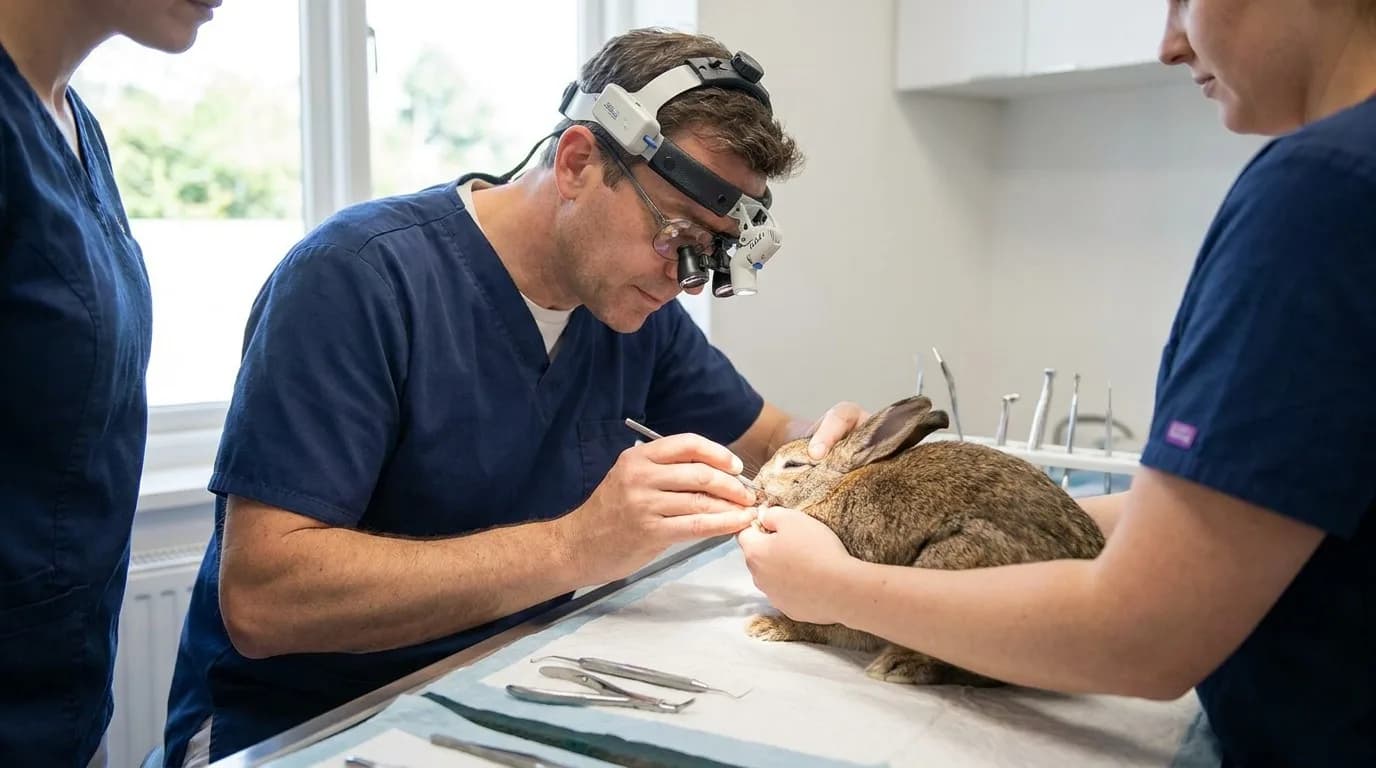
A surgical procedure on the jaw involves high costs from various medical line items. A preliminary examination using digital X-ray or CT scanning is essential. These imaging methods allow an exact diagnosis of the tooth roots. The surgery itself requires special inhalation anesthesia for small pets. This type of anesthesia is safer but also more expensive than standard methods. After surgery, there are costs for painkillers and antibiotics. Rabbit health insurance for dental surgery cushions these expenses. The total cost of a single complex treatment quickly reaches the mid three-figure range. Multiple procedures a year are not uncommon — it adds up. The veterinary fee schedule (GOT) forms the binding billing basis for every practice.
Chronic Cases and Follow-On Costs
Chronic dental disease is especially common in certain breeds. Lop-eared and dwarf rabbits are anatomically more prone to jaw misalignment. Dental misalignment in rabbits often leads to recurring corrections that stretch over years and can cost thousands of euros [5]. Regularly filing down the molars under anesthesia becomes a lifelong necessity. Every procedure carries a renewed anesthesia risk and generates new costs. Insurance for exotic and special small pets can help here if taken out early. Long-term financial planning is essential for owners. Without insurance cover, serious financial strain looms. Prevention matters. Choosing a plan without strict annual limits is a strategic advantage for these breeds.
Health Insurance vs. Surgery-Only Cover
Scope of Full Health Insurance
Health insurance provides comprehensive cover for outpatient and inpatient treatment. This plan covers not just the surgery itself. General diagnostics, blood tests, and medication are included too. Rabbit health insurance protects owners from unpredictable, four-figure vet bills for serious illness [4]. The pre-operative phase is often just as expensive as the procedure itself. A full-cover plan generally pays for these preparatory costs without dispute. For owners looking for insurance for exotic and special small pets, this is the safest route. Monthly premiums are naturally higher than for pure surgery plans. Comprehensive cover justifies this investment — security has its price. The insurance reimburses up to 100% of the costs for medical treatment and surgery [2].
Specific Benefits of Surgery-Only Insurance
A pure surgery plan focuses exclusively on surgical procedures under anesthesia. Extracting teeth or draining jaw abscesses fall under this cover. Purely routine treatments without anesthesia are strictly excluded. Simply clipping incisors while the animal is awake isn't reimbursed. Uelzener's small pet health insurance, for example, offers a subsidy for beak, tooth, and jaw treatments [2]. The costs of anesthesia and immediate aftercare are usually covered. For owners on a limited budget, this plan is a solid basic safeguard. It protects against the extreme peak costs of a surgery. Diagnostics remain a co-payment — that's the trade-off. However, the pre-surgical examination that leads to the diagnosis is included in good surgery-only plans.
Decision Criteria for Rabbit Owners
The choice between full cover and surgery-only cover depends on individual risk tolerance. Owners of susceptible breeds benefit significantly more in the long run from full health insurance. Constant preliminary exams and medication add up considerably for chronic patients. A surgery-only plan suits unforeseen accidents or acute emergencies better. A careful look at your own financial reserves is essential before signing up. Cover for hobby farm animals follows similar economic logic. Transparently comparing annual premiums against potential vet costs makes the decision easier. nextsure offers detailed comparison calculators for exactly this. The data basis matters — comparing pays off. With over 70 products across 7 categories, the platform delivers hand-picked plans instead of a confusing jumble.
| Type of benefit | Full health insurance | Surgery-only insurance |
|---|---|---|
| X-ray and CT diagnostics | Yes, usually up to 100% | Only immediately before surgery |
| Tooth extraction under anesthesia | Yes | Yes |
| Routine tooth trimming (no anesthesia) | Partially (plan-dependent) | No |
| Medication (painkillers) | Yes | Only as direct post-surgery aftercare |
Exact reimbursement rates vary depending on the provider and plan tier chosen.
Pre-Existing Conditions and Waiting Periods for Dental Surgery
Defining Pre-Existing Conditions
Pre-existing conditions play a central, and often decisive, role in the application review. Conditions that already existed before the policy was taken out, or during the waiting period, are generally excluded from cover [1]. This applies in particular to congenital jaw abnormalities or dental misalignments already on record. Insurers scrutinize the veterinary history very closely when a claim is filed. If the owner conceals pre-existing conditions when signing up, the entire insurance cover is at risk of being voided. Dental and jaw misalignments count as a pre-existing condition if they were known before the contract began [1]. Honestly answering the health questions is therefore the top priority — it effectively prevents later disputes. Honesty pays off in the long run. Health problems that existed before the Petcover policy began are excluded as pre-existing conditions [3].
Why Waiting Periods Matter
Contractual waiting periods protect the community of policyholders from opportunistic sign-ups. The general waiting period for illness is usually thirty days. Longer periods of several months can apply for specific procedures like dental surgery. If the dental condition occurs within this blocking period, the insurance doesn't pay. Accidents are usually exempt from these waiting periods and covered immediately — the insurance settles a tooth broken in a fall right away. Reading the policy terms carefully reveals the exact deadlines for each plan. Signing up early, while the animal is healthy, is essential. Waiting is risky. Acting in good time protects against coverage gaps. Consequences of defects and illnesses that occur before the respective waiting period ends remain uninsured.
Handling Chronic Findings
A chronic condition that first appears after the waiting period ends is generally covered. Insurers treat the date of the first veterinary diagnosis as decisive. If the first dental correction happens in the second year of the policy, full cover applies. Some providers require a current veterinary health certificate before signing the contract. This document confirms dental and jaw health at the time of application. Similar to health insurance for cats, this approach protects both parties to the contract. It creates a clear evidentiary basis for future claims. Documentation from the treating vet must be precise and complete — details matter here. Solid evidence is essential. Cover for the animal abroad is often also available for up to 12 months.
Key Points on the Health Questions
- Full disclosure of all previous vet visits.
- Explicit mention of any known dental or jaw abnormalities.
- Submitting existing X-rays on request.
- Confirming regular preventive check-ups.
False statements lead to the loss of insurance cover.
Reimbursement Limits and the Veterinary Fee Schedule
Billing According to the GOT
Reimbursement limits follow strictly from the official veterinary fee schedule (GOT). The GOT sets the binding framework for all veterinary services. Depending on effort and difficulty, vets can bill up to four times the base rate. A good rabbit health insurance policy for dental surgery reimburses at least three times the GOT base rate. Emergency services on weekends or public holidays often justify higher billing rates. If the plan only covers the single rate, a large co-payment remains. Checking the maximum reimbursement rates is a key criterion when comparing plans. High-quality plans offer comprehensive cover here with no hidden gaps. The GOT is the yardstick — plans below three times the base rate carry co-payment risk. Reimbursement is always based on the agreed maximum rate under the fee schedule.
Annual Maximum Reimbursement Limits
Most insurance plans set an absolute cap on annual payouts. This maximum reimbursement limit varies by provider, from €500 up to unlimited cover. For recurring dental surgeries, a high annual limit is critically important. A single complex jaw surgery can already exhaust a basic plan's budget. Some insurers tier the maximum limits over the first years of the contract, with the full sum insured only available from the third or fourth year onward. These staged benefit limits must be factored into long-term financial planning. A plan with no annual limit offers the highest level of financial security. Limits restrict cover — an exact calculation of annual budgets is a must. Detailed information on the maximum sum insured can be found in the respective policy.
Deductibles as a Control Lever
Agreeing to a deductible noticeably lowers the monthly insurance premium. Owners can choose between percentage deductions or fixed amounts per insurance year. A 20 percent deductible means the owner bears a fifth of every bill. For an expensive €1,000 dental surgery, that leaves the owner with €200. Fixed deductibles of, say, €150 per year are often easier to plan around; once that amount is reached, the insurance covers all further costs at 100 percent. Similar models exist for dog health cover. Which model to choose depends on personal cash flow. The options require careful calculation. Flexibility around the deductible is a strategic advantage. Premiums must be paid in full and on time.
Chronic Dental Disease and Recurring Treatment
Handling Long-Term Patients
The chronic nature of many dental conditions poses calculation challenges for insurers. Chronic or long-lasting illnesses such as dental disease are paid for only 12 months, or until the annual budget is used up, under some plans [1]. This means cost coverage can end after a year, creating substantial financial risk for the owner afterward. Premium plans forgo such time limits for chronic conditions, reimbursing necessary treatment for a rabbit's whole life as long as the contract runs. The exact definition of a chronic condition in the policy terms is decisive — reading the fine print is a must. Ongoing cover with no annual limits is essential for chronic findings. Vet-recommended vaccinations and preventive measures must always be carried out regardless.
Interval Treatment Under Anesthesia
Recurring interval treatments are often the only medical solution for severe jaw misalignment. Regularly grinding down the molars requires a short anesthetic every few weeks. These constant procedures strain not just the animal but the budget too. A strong rabbit health insurance policy for dental surgery covers these recurring anesthesia costs. It's important to check whether the plan caps the maximum number of anesthetics per year. Some providers limit the number of reimbursable procedures per insurance year. An open conversation with the insurer before signing up clarifies such details. Transparency prevents nasty surprises later when filing a claim. Asking specific questions before signing up pays off — anesthesia limits are tricky. Medically necessary medication for aftercare is included in full health cover.
Right to Terminate After a Claim
Both parties to the contract have a special right to terminate after a claim has been settled. When a rabbit becomes a chronic dental patient, many owners fear the insurer will cancel the policy. Reputable providers, however, rarely use this right for small pets. Still, the risk of contract termination after high payouts is latent. Signing up with another provider afterward is practically impossible because of the pre-existing condition. Choosing an established, fair insurer is therefore strategically important. nextsure only brokers hand-picked plans from reliable risk carriers. The quality of the provider shows in a claim — trust matters. Choosing an established risk carrier guards against nasty surprises. At Uelzener, the contract can be terminated with 14 days' notice to the end of any given month.
Exclusions and Uninsured Services
Routine Procedures Without Medical Indication
The exclusions in the policy terms clearly define the limits of cover. Routine dental treatments, such as regularly trimming healthy teeth, aren't included in standard policies [3]. A procedure must be medically necessary to remain reimbursable. The insurance doesn't pay for cosmetic corrections or preventive measures without a concrete finding. The treating vet must document the medical necessity in detail on the invoice. If this justification is missing, the claims department usually rejects reimbursement. Clean documentation from the vet practice is worth real money to the owner — the indication is the key. Detailed veterinary justification secures reimbursement. Consequences of illnesses arising after the contract ends are also consistently excluded from cover.
Specific Exclusions for Dental Treatment
Some plans explicitly exclude certain specialized dental treatments from cover. Root canal treatment or implants are unusual for rabbits, but theoretically possible. Such highly specialized procedures are almost always excluded in basic plans. Petcover covers non-routine dental treatments such as tooth extractions or jaw surgery [3]. This shows that surgical procedures are the focus of the cover. Treatment for dental disease grossly negligently caused by incorrect feeding can also be declined, though proving this is difficult for the insurer in practice. Still, owners should make sure of species-appropriate feeding — prevention avoids disputes. Species-appropriate feeding minimizes the risk of exclusions. Damage caused intentionally is exempt from the duty to pay in any case.
Waiting Periods and Congenital Malformations
Congenital jaw malformations are a frequent point of dispute in claims assessment. If the misalignment is genetic and appears early, special exclusion clauses often apply. Some insurers fully exclude hereditary conditions in the first months of life. The exact definition of what counts as congenital varies considerably between providers. A veterinary report can, in case of doubt, prove that the dental condition was acquired rather than congenital. Support from an independent broker helps in asserting legitimate claims. nextsure advises its customers on complex claims. The expertise of a specialist is worth its weight in gold here — expert reports create clarity. Persistence in a claims review pays off. General risks such as war, earthquake, flood, and epidemics or pandemics are also standardly excluded.
Typical Exclusions for Dental Treatment
- Treatment for dental misalignment already known before the contract was signed.
- Preventive tooth trimming without an acute medical need.
- Procedures within the contractually agreed waiting period.
- Costs exceeding the agreed maximum GOT rate.
Policy terms require careful review for specific breed exclusions.
Choosing a Plan and Contract Terms in Detail
Analyzing the Policy Terms
Choosing a plan requires a precise analysis of the underlying policy terms. The insurance product information sheet provides a first, important overview. Uelzener's small pet health insurance, for example, covers surgery including the pre-surgical examination. Pre- and post-treatment following an insured surgery is also covered. These details separate a good plan from an inadequate one. The exact legal definition of "surgery" is binding: a procedure must cut through skin or mucous membrane to count as surgery. Simply filing teeth often doesn't meet this definition. Reading the definitions carefully is a must — legal wording carries weight. iMatch GmbH operates the nextsure platform and provides these detailed comparisons transparently.
Terms and Notice Periods
Contract terms and notice periods determine how much flexibility the policyholder has. Many contracts have an initial minimum term of twelve months. After that, the contract renews automatically unless cancelled on time. Under Uelzener's Cleos Welt small pet insurance, the contract can be terminated with 14 days' notice to the end of any given month. This level of flexibility is more the exception than the rule in the market. If the insured risk permanently ceases to exist — for example, if the animal dies — the contract ends early. A copy of the veterinary certificate is enough for this kind of special termination. Flexibility is a mark of quality — checking notice periods is part of comparing plans. Premiums are usually collected by direct debit from an account.
Signing Up Digitally via nextsure
Signing up for rabbit health insurance for dental surgery digitally is now standard. The nextsure platform enables a transparent comparison of hand-picked plans. Customers benefit from a simple online needs assessment that accounts for specific risks like dental problems. The entire process, from comparison to policy issuance, is paperless and efficient. In a claim, the digital customer portal makes it quick to submit vet invoices. Personal expert advice through insurance brokers ensures the chosen plan fits the exact need. nextsure acts here as an independent intermediary in the customer's interest. Digital management saves time and hassle — technology meets expertise. A digital sign-up process saves time and hassle. Licensing as an insurance intermediary under Section 34d (1) GewO guarantees the highest quality of advice.
Economic Assessment of Rabbit Insurance
Cost-Benefit Analysis for Owners
Assessing the economics of pet health insurance calls for a sober cost-benefit analysis. Cumulative premium payments over an average rabbit lifespan of eight years must be weighed against potential vet costs. At a monthly premium of €20, the owner invests around €1,920 over the animal's lifetime. A single severe jaw abscess surgery with inpatient stay and aftercare often exceeds that amount with ease. Depending on the plan, insurance also reimburses costs for preventive measures like vaccinations or deworming [4]. These included preventive-care budgets further improve the plan's economics. The insurance acts as a financial airbag for unforeseeable medical crises. Long-term calculation is decisive — the right plan makes security something you can plan for. nextsure's broker model charges no fee to end customers.
Risk Transfer and Predictability
The key benefit of insurance lies in transferring unpredictable financial risk. Owners trade the risk of a sudden four-figure vet bill for a fixed, predictable monthly premium. This predictability protects the household budget from major shocks. This protection is especially valuable at a time of rising veterinary fees under the new GOT. The decision to proceed with surgery no longer has to depend on your current bank balance. The animal's medical care takes priority, not financial feasibility. This emotional value is hard to put a euro figure on, but it matters enormously to animal lovers — peace of mind in an emergency is priceless. Forward-looking planning protects the household budget. Premiums are billed directly by the respective insurer, ensuring maximum transparency.
Conclusion on Insuring Dental Surgery
In summary, insuring dental surgery is a highly relevant topic for every rabbit owner. The animals' anatomical characteristics make dental procedures extremely likely. A strong rabbit health insurance policy for dental surgery is the best strategy against high vet costs. The choice between surgery-only cover and full health insurance depends on individual risk tolerance. Signing up early, before the first symptoms or diagnoses appear, is what matters. nextsure offers the ideal platform to find the right, curated plan and sign up directly. Investing in a good policy always pays off in an emergency. Proactive action protects both the animal and the budget. Registration in the intermediary register under number D-4ZF9-E88H6-53 confirms the platform's regulatory standing.
Literature
Frequently asked questions
- Does Rabbit Health Insurance Cover Recurring Dental Surgery?
Yes, strong plans cover recurring dental surgery, as long as the condition didn't exist before the contract was signed. Some providers, however, cap reimbursement for chronic cases at a fixed annual budget or pay only for a period of 12 months. A close look at the policy terms is essential here.
- What Does Trimming a Rabbit's Molars Cost?
Trimming molars under anesthesia costs between €150 and €300 per procedure, depending on effort and the GOT rate billed. On top of that come costs for the preceding X-ray and follow-up medication. For chronic patients, these costs occur several times a year.
- Do Dental Misalignments Count as a Pre-Existing Condition?
Yes, congenital dental misalignments, or ones already documented by a vet before the contract was signed, count as a pre-existing condition. Treatment stemming from these known misalignments is excluded from cover. Signing up should therefore happen while the rabbit is completely healthy.
- Are Anesthesia and Aftercare Covered for Dental Surgery?
Generally, both full health insurance and pure surgery plans cover the costs of anesthesia and immediate aftercare directly related to the surgery. The exact duration of reimbursable follow-up treatment (e.g., 10 or 15 days) varies by plan.
- How Often Does the Insurance Pay for Chronic Dental Problems?
That depends on the plan chosen. Premium plans pay an unlimited number of times up to the agreed annual maximum reimbursement limit. Basic plans sometimes limit the number of reimbursable anesthetics per year or exclude ongoing treatment of chronic dental disease after a certain period.
- Does a Pure Surgery Plan Also Cover Tooth Trimming Without Anesthesia?
No, a pure surgery plan only pays for surgical procedures performed under sedation or general anesthesia. Routine trimming or clipping of teeth on an awake animal counts as simple medical treatment and is only reimbursed by full health insurance.
Sources
Conclude directly online
Verified partner tariffs at no extra cost. The button takes you straight to the provider's calculator.
 Cleos Welt
Small pet health insurance
Health insurance for small mammals, birds and reptiles in three tariffs: surgery, treatment, diagnostics and medication up to 3 or 4 times the GOT rate.
- Premium:
- from 6.99 EUR a month
- Annual benefit:
- 3,000 EUR, 5,000 EUR or unlimited
- GOT rate:
- 3 times, Rundum 4 times
- Deductible:
- 0 EUR
- Waiting period:
- 30 days, 6 months for specific surgeries
- Cover abroad:
- up to 12 months
- Surgery, treatment and after-care up to the agreed maximum GOT rate
- Laboratory and imaging diagnostics, medication, boarding and feeding in the clinic
- Specific surgeries (egg binding, otitis, malocclusion) after a 6-month waiting period
- Remote diagnostics and consultation with a veterinarian
- Rundum tariff: unlimited annual benefit, 4 times the GOT rate, 200 EUR preventive-care budget
- Accidents without a waiting period, previous insurance counts towards it
Key exclusions
- Pre-existing conditions and treatments begun or recommended before the policy started
- Preventive care, vaccinations and parasite products unless agreed as an add-on
- Neutering/spaying without a separate agreement
- Routine dental work in mammals without the dental add-on
- Travel and transport costs, reports, and the emergency fee when no operation follows
- Epidemics, pandemics, war, earthquake and flood
Google Rezensionen: 4,5/5 Sterne (210 Bewertungen)
Cleos Welt insgesamt (Anbieterbewertung, alle Versicherungen)
Annual age adjustment of 3% of the premium; cancel monthly with 14 days' notice; sum insured and deductible as stated in the policy. Insurer: Uelzener Allgemeine Versicherungs-Gesellschaft a.G.
Fact sheet: benefits, exclusions and waiting periods in detail
Cleos Welt
Rabbit insurance
The same small pet health insurance with rabbit premiums and the dental add-on that makes the difference for teeth that grow for life.
- Premium:
- from 34.99 EUR a month
- Rundum:
- from 62.99 EUR a month
- Dental add-on:
- from 20.00 EUR a month
- Deductible:
- 0 EUR
- Waiting period:
- 30 days, malocclusion 6 months
- Malocclusion surgery (tooth misalignment) covered after a 6-month waiting period
- Dental add-on from 20 EUR a month: 500 EUR tooth extractions and corrections plus 200 EUR dental prevention a year
- Rundum: unlimited annual benefit, 4 times the GOT rate, 200 EUR preventive-care budget
- Myxomatosis and RHD covered if vaccination is proven by an international vaccination certificate
- E. cuniculi covered if a negative test from no more than one year before the start of cover exists
- Accidents without a waiting period, cancel monthly with 14 days' notice
Key exclusions
- Myxomatosis/RHD without proof of vaccination in the international vaccination certificate
- Damage from Encephalitozoon cuniculi without a negative test that is at most one year old
- Tooth trimming, extractions and dental prevention without the dental add-on
- Neutering/spaying without a separate agreement
- Pre-existing conditions and treatment during the waiting period
Google Rezensionen: 4,5/5 Sterne (210 Bewertungen)
Cleos Welt insgesamt (Anbieterbewertung, alle Versicherungen)
Husbandry duty under the terms: rabbits per section 35 of the German animal welfare livestock husbandry ordinance. Annual age adjustment of 3%. Insurer: Uelzener Allgemeine Versicherungs-Gesellschaft a.G.
Fact sheet: benefits, exclusions and waiting periods in detail
Cleos Welt
Parrot insurance
The same small pet health insurance with bird premiums: egg binding and beak treatment are the cases that matter for parrots.
- Premium:
- from 10.49 EUR a month
- Rundum:
- from 20.99 EUR a month
- Deductible:
- 0 EUR
- Waiting period:
- 30 days, egg binding 6 months
- Egg-binding surgery with diagnostics and after-care covered after a 6-month waiting period
- Beak treatment included in all tariffs according to the product page
- Treatment, diagnostics and medication up to the agreed GOT rate
- Rundum: unlimited annual benefit, 4 times the GOT rate, 200 EUR preventive-care budget
- Accidents without a waiting period, cover abroad up to 12 months
- Also insurable for finches, chickens and pigeons as well as reptiles
Key exclusions
- Cosmetic beak and tooth trimming to breed or show standard
- Examination and treatment of young animals after hatching
- Preventive care, vaccinations and parasite products unless agreed as an add-on
- Pre-existing conditions and treatment during the waiting period
Google Rezensionen: 4,5/5 Sterne (210 Bewertungen)
Cleos Welt insgesamt (Anbieterbewertung, alle Versicherungen)
Species-appropriate husbandry (housing, temperature, rest periods) is a policyholder duty. Annual age adjustment of 3%. Insurer: Uelzener Allgemeine Versicherungs-Gesellschaft a.G.
Fact sheet: benefits, exclusions and waiting periods in detail
Cleos Welt Small pet health insurance: Monthly premium by species and tariff (product pages, as of July 2026)
| Species | Basis (up to 3,000 EUR/year, 3x GOT rate) | Standard (up to 5,000 EUR/year, 3x GOT rate) | Rundum (unlimited, 4x GOT rate) |
|---|---|---|---|
| Cheapest species | from 6.99 EUR | from 13.99 EUR | from 17.49 EUR |
| Parrot | from 10.49 EUR | from 17.49 EUR | from 20.99 EUR |
| Guinea pig | from 20.99 EUR | from 31.49 EUR | from 34.99 EUR |
| Rabbit | from 34.99 EUR | from 48.99 EUR | from 62.99 EUR |
All details are taken from the provider's linked product page and the contract documents (IPID/policy conditions) published there; the insurer's documents prevail. Premiums, benefits and the insurance product itself may change – please verify the details directly with the partner before signing up; only the information provided there is binding.
Information last updated: July 2026 · Source: provider product information (IPID/policy conditions)