Joint surgery in horses: what the sublimit really covers
The sublimit on equine joint surgery: why MRI, X-rays and follow-up checks fall outside Barmenia's daily cap on operation costs.
All details are taken from the provider's linked product page and the contract documents (IPID/policy conditions) published there; the insurer's documents prevail. Premiums, benefits and the insurance product itself may change – please verify the details directly with the partner before signing up; only the information provided there is binding.
 Katrin StraubManaging DirectorInsurance expert with over 20 years of experience in the insurance industry.
Published on
6 min read
Table of Contents
Joint surgery is expensive. For chips or OCD, the Barmenia horse surgery policy does cap the pure operation costs per day. Expensive pre-operative examinations such as an MRI, and the follow-up treatment, are untouched by that cap and reimbursed as normal.
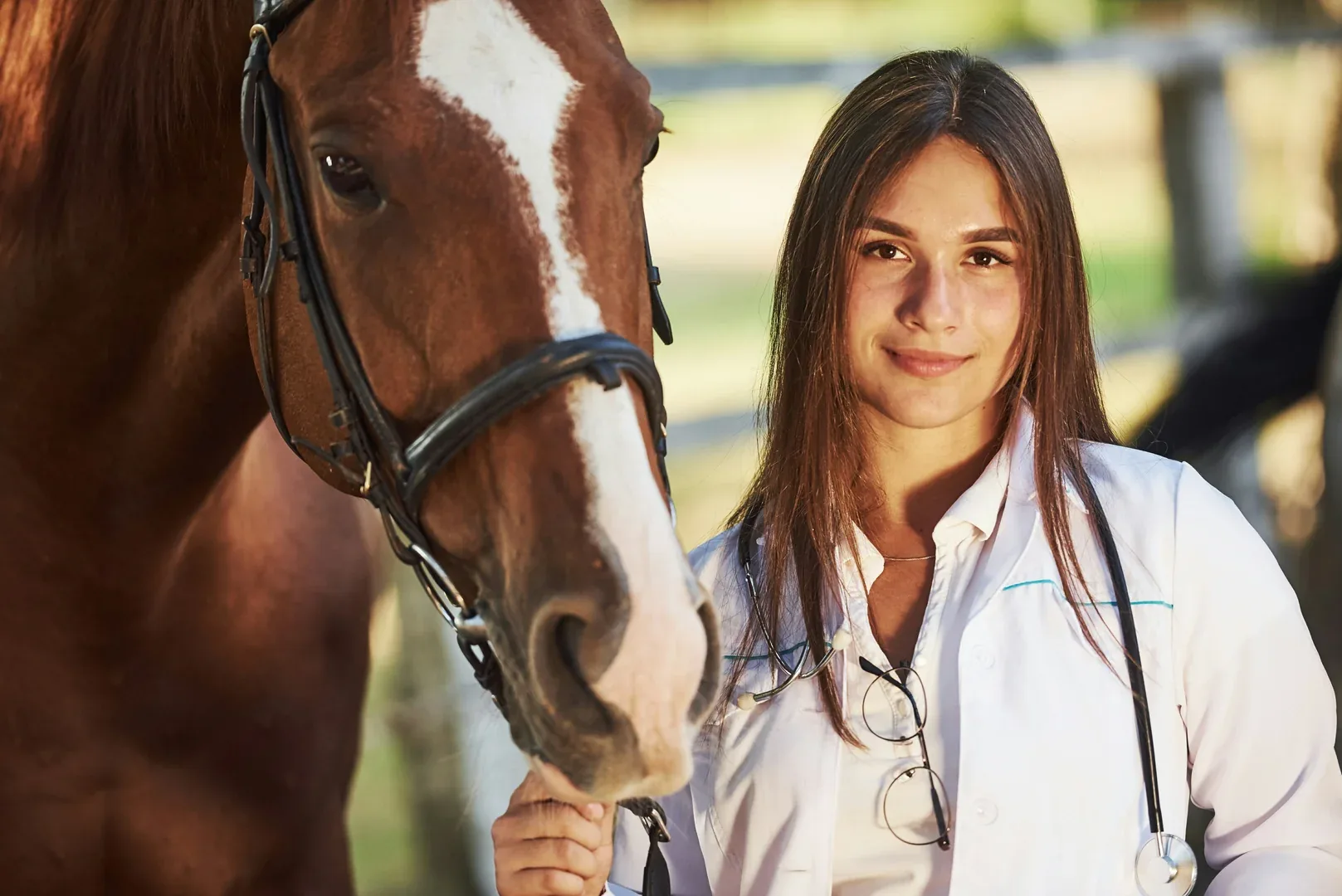
Equine surgery insurance
Horse surgery insurance via nextsure: Three flexible tariffs, reimbursement up to twice the GOT rate, and free choice of clinic worldwide. Protect your horse from high surgery costs – digital, transparent and uncomplicated.
Learn moreOCD and chips: why horses often need joint surgery
Joint conditions are among the most frequent causes of recurring lameness and restricted movement in horses. Especially during the foal's intensive growth phase, the conversion of cartilage into bone tissue is quite often disturbed. In veterinary medicine this developmental disorder is called osteochondrosis dissecans (OCD).
If fragments of cartilage or bone later detach into the joint space, so-called free joint bodies or chips form. These free-floating particles cause mechanical irritation of the joint lining, inflammation of the capsule and, in the long run, irreversible cartilage damage. Studies show that around 25 percent of the European warmblood and thoroughbred population suffers from osteochondrosis dissecans.
Since a detached joint chip cannot be resorbed by the body, a surgical procedure usually remains the only way to stop painful inflammation and secure the horse's athletic capacity for the long term.
- Mechanical irritation of the joint lining by free particles
- Lasting risk of chronic cartilage damage and arthrosis
- The need for minimally invasive chip surgery to restore joint function
The cost trap of joint surgery: a look at the GOT
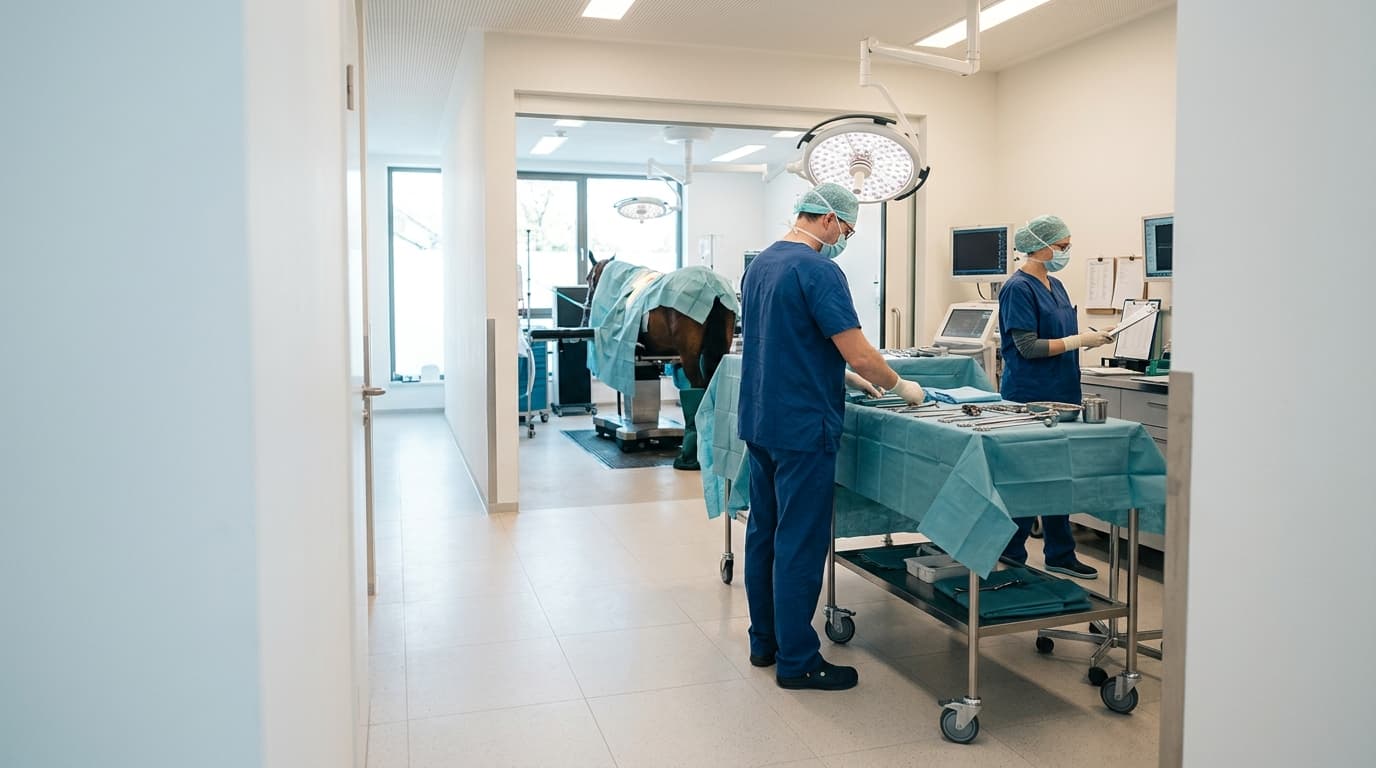
A surgical procedure on a horse's joint is performed minimally invasively by arthroscopy in most specialist clinics today. The vet introduces a slim special camera and fine instruments into the affected joint through small incisions to remove fragments and smooth cartilage surfaces.
Veterinary services are billed strictly under the official scale of fees for veterinary surgeons (GOT). Even a simple arthroscopic joint lavage comes to 551.23 euros at the single GOT rate.
In practice, however, animal clinics typically charge two to three times the rate for surgical procedures under general anaesthesia. Depending on the scope of the procedure, the length of the anaesthetic and the medication used, the pure operation costs of chip surgery run between 1,000 and 3,500 euros.
| Treatment step | Single GOT rate | Possible total |
|---|---|---|
| Arthroscopy / joint lavage | €551.23 | Considerably higher at 2 to 3 times the rate |
| Clinical lameness examination | Billed by the scope of the examination | Flexion tests and anaesthesia are billed on top |
| Joint injection / lavage | €20.53 | May be billed more than once |
Without a well-fitting horse surgery policy, such treatment confronts horse owners with substantial financial hurdles.
Barmenia's sublimit: what the cap means
Anyone examining the conditions of specialist tariffs will find concrete clauses on joint conditions. In the conditions of Barmenia Allgemeine Versicherungs-AG (AVB Pferde-OP-Kosten, as at 01.01.2024, document A 3726-02 01/2024), clause 2.3.2 a) governs the benefit limits for joint operations.
The provision states that for joint operations due to isolated shadowing, OC, OCD, chips and Birkeland fractures a cap applies: expressly affected are only the pure operation costs per day, including the anaesthesia.
This sublimit deliberately caps the actual surgical effort on the day of the operation. Since in an arthroscopy the operation and anaesthesia form the main cost block, the clause limits precisely that core benefit while leaving the adjacent phases of treatment untouched.
- Covered by the daily limit: the operation itself (incision, fragment removal and so on)
- Covered by the daily limit: the anaesthesia on the day of surgery
- Not covered by the daily limit: diagnostic pre-operative examinations and later follow-up checks
X-ray and MRI: why pre-operative examinations stay outside the cap
The decisive advantage of the rule in clause 2.3.2 a) lies in its precise demarcation: pre-operative examinations, including all imaging, expressly do not count towards the daily limit for joint surgery.
That contractual clarification protects owners from high out-of-pocket diagnostic costs. Before any procedure, the finding must be localised. A single X-ray image comes to 26.53 euros at the single rate under the fee schedule, and a reliable assessment always needs several images.
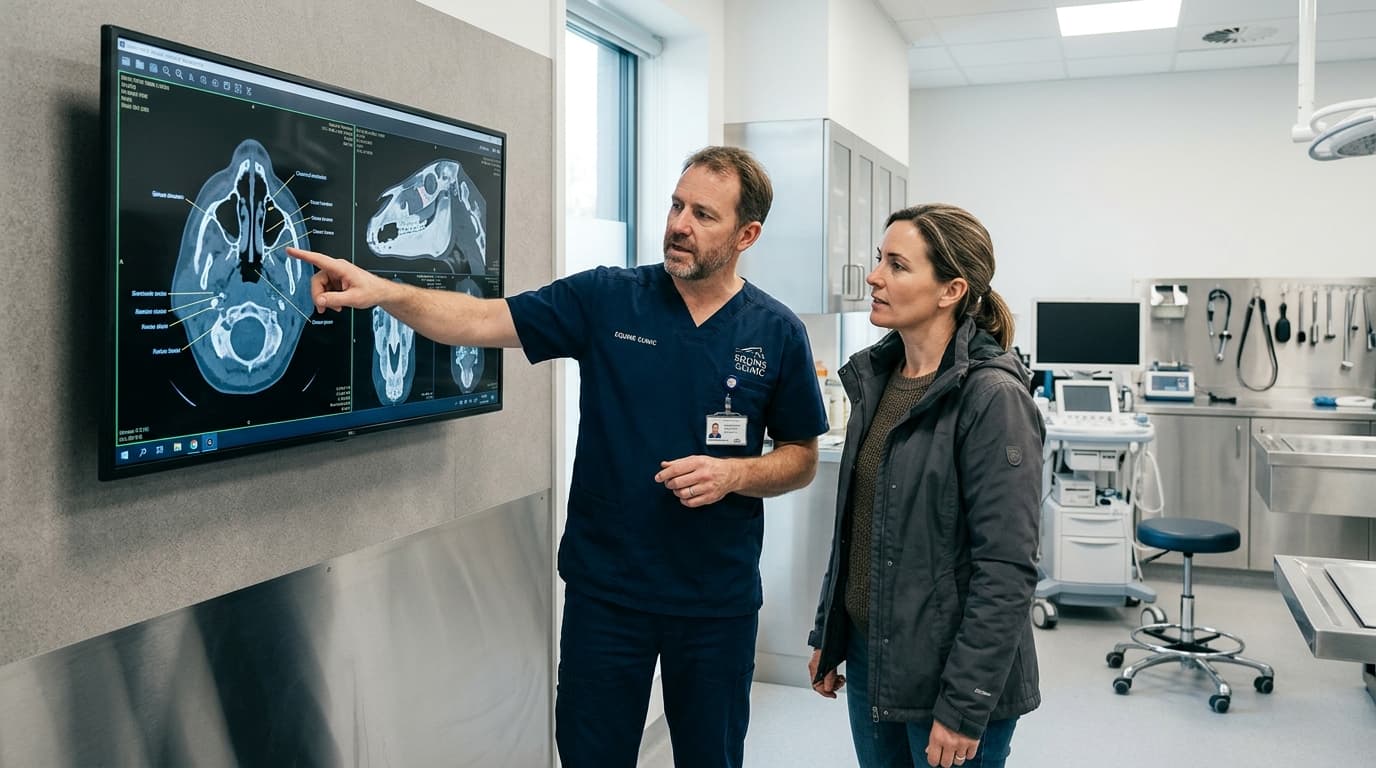
Where the X-ray is not enough for complex joint processes, specialist clinics use an MRI examination. For a three-dimensional magnetic resonance scan on the standing horse, specialist clinics quote around 1,500 euros per examination.
Because imaging diagnostics are reimbursed separately under clause 2.3.2 a), without counting towards the joint-surgery daily limit, even elaborate MRI scans remain fully covered within the agreed tariff frame.
The follow-up examination: financial security after the procedure
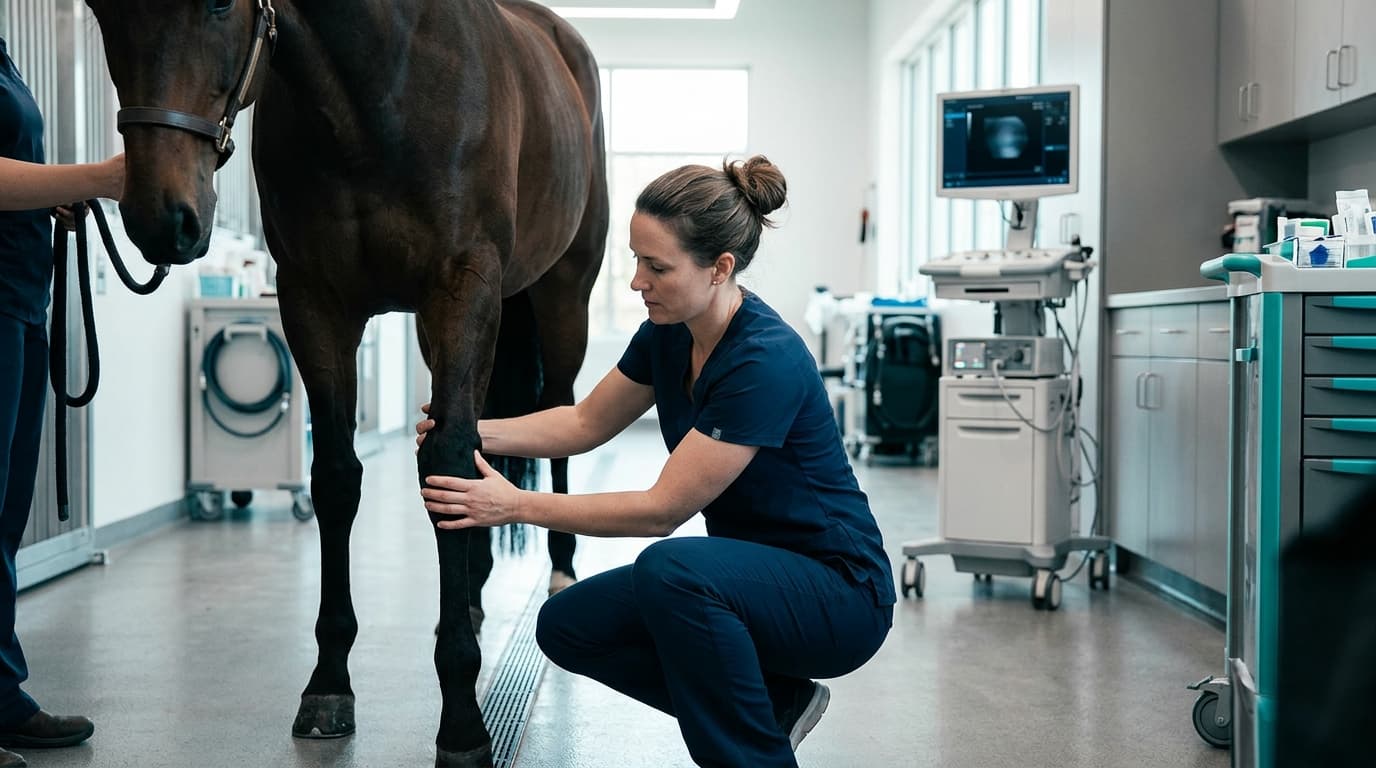
Besides the diagnostics before the procedure, the rehab phase after joint surgery also requires regular veterinary checks. Here too the exact wording of the conditions protects you: the follow-up examination expressly does not count towards the operation's sublimit.
After the day of surgery, treatment continues on an ongoing basis — dressing changes, suture removal, wound checks and lameness assessments. Each of those services is billed individually under the scale of fees for veterinary surgeons, so the aftercare adds up to a cost block of its own over several weeks.
That treatments and follow-up examinations after the day of surgery do not count into the sublimit for joint procedures spares horse owners unforeseen extra costs during the healing phase.
- Reimbursement of dressing changes and suture removal outside the surgery-day limit
- Cover of follow-up examinations and movement checks
- Financial transparency across the whole course of treatment
Waiting periods for joint conditions: deadlines that matter
Alongside the benefit limits on the day of surgery, insured owners must watch the contractual waiting periods. Under clause 2.2.3.1 of Barmenia's conditions, a 12-month waiting period applies to insured events arising from joint operations for isolated shadowing, OC, OCD, chips and Birkeland fractures.
The background to that deadline is how widespread developmental disorders are: radiographic studies have found that 25 percent of the European warmblood and thoroughbred population suffers from osteochondrosis dissecans. Insurers therefore limit the risk in the first year of the contract to exclude pre-existing findings.
If first clinical symptoms are found, or a diagnosis is made, within that 12-month waiting period, those conditions and their consequences are permanently excluded from cover.
Taking out cover early, straight after purchase or raising, is therefore advisable. Anyone examining the conditions of the Barmenia horse surgery policy should keep the liability side in view at the same time: there, horse liability insurance for non-commercial animal keepers governs who answers for damage caused by the horse, while the surgery policy carries the treatment costs alone.
Frequently asked questions
- What exactly falls under Barmenia's daily limit for joint surgery?
Under the conditions, for procedures due to OCD, chips or Birkeland fractures Barmenia caps exclusively the operation costs per day including the anaesthesia. Pre-operative and follow-up examinations are untouched.
- Does an arthroscopy of both joints count as one day?
Clause 2.3.2 a) ties the cap to the day of surgery, not to the individual joint. If both joints are arthroscoped in one session on the same day under one anaesthetic, the daily limit applies once for that day. If the clinic spreads the procedures over two surgery days, the limit governs each day. Before scheduling, it is worth checking with the clinic and the insurer.
- Are pre-operative examinations such as MRI or X-ray affected by the sublimit?
No. Imaging expressly does not belong to the capped operation costs. An MRI, which often costs around 1,500 euros, or X-ray images are reimbursed independently of the surgery sublimit.
- Does the horse's follow-up examination count into the sublimit?
The follow-up examination itself does not fall under the daily cap on operation costs according to the conditions. The costs of medical aftercare following an arthroscopy are treated separately.
- How much does an arthroscopy on a horse cost?
The surgical removal of joint chips usually costs between 1,000 and 3,500 euros under the current scale of fees for veterinary surgeons (GOT). Without good horse surgery insurance, owners carry those costs themselves.
- Which waiting period applies to joint operations for OCD or chips?
Because conditions such as OCD are widespread and affect around 25 percent of warmbloods and thoroughbreds, Barmenia applies a special 12-month waiting period to isolated shadowing, OC, OCD, chips and Birkeland fractures.
Sources
Conclude directly online
Verified partner tariffs at no extra cost. The button takes you straight to the provider's calculator.
 Barmenia
Horse surgery insurance
Surgery cost cover for horses in case of illness and accidents, including diagnostics and after-care.
- Waiting period:
- 3 months (colic surgery: 5 days, accidents: none)
- Coverage abroad:
- worldwide, up to 12 months
- Maximum benefit:
- depends on the cover level, as stated in the policy
- Surgery costs for illness and accidents, including tooth extractions and root canal treatment
- Pre-surgical examination (X-ray, endoscopy, biopsy, lab work)
- After-care including acupuncture, homeopathy, physiotherapy, laser therapy
- Emergency veterinary service up to 4x the standard veterinary fee schedule (GOT) rate plus the emergency callout fee
- Premium cover: up to 5 physiotherapy sessions (max. 60 minutes each) after the after-care period ends
- Once per animal: surgery costs for a birth-related, medically necessary caesarean section
Key exclusions
- Illnesses and developmental abnormalities known at the time of application
- Hoof abscesses and hoof ulcers (exception: hoof cancer)
- Surgery due to cryptorchidism
- Neutering that isn't medically necessary
Service-Champions GOLD: Nr. 1 der Versicherer im Multikanalvertrieb (ServiceValue, 10/2024)
Barmenia (Anbieter der Pferde-OP-Versicherung)
Special waiting periods: 12 months for joint surgery (chip fragments, OC/OCD, Birkeland fractures), 6 months for medically necessary neutering; Premium cover includes a waiver of the insurer's right to cancel from the 7th insurance year.
Fact sheet: benefits, exclusions and waiting periods in detail
All details are taken from the provider's linked product page and the contract documents (IPID/policy conditions) published there; the insurer's documents prevail. Premiums, benefits and the insurance product itself may change – please verify the details directly with the partner before signing up; only the information provided there is binding.
Information last updated: July 2026 · Source: provider product information (IPID/policy conditions)