Which surgery insurance for horses is the best?
Horse surgery insurance compared: which policies offer the best cover for colic and operation costs? Check the differences transparently now.
All details are taken from the provider's linked product page and the contract documents (IPID/policy conditions) published there; the insurer's documents prevail. Premiums, benefits and the insurance product itself may change – please verify the details directly with the partner before signing up; only the information provided there is binding.
 Katrin StraubManaging DirectorInsurance expert with over 20 years of experience in the insurance industry.
Published on
10 min read
Table of Contents
Horse surgery insurance protects owners against the high cost of operations after colic or an accident. This transparent comparison shows which type of policy really convinces on GOT fee rates, waiting periods and annual maximums.
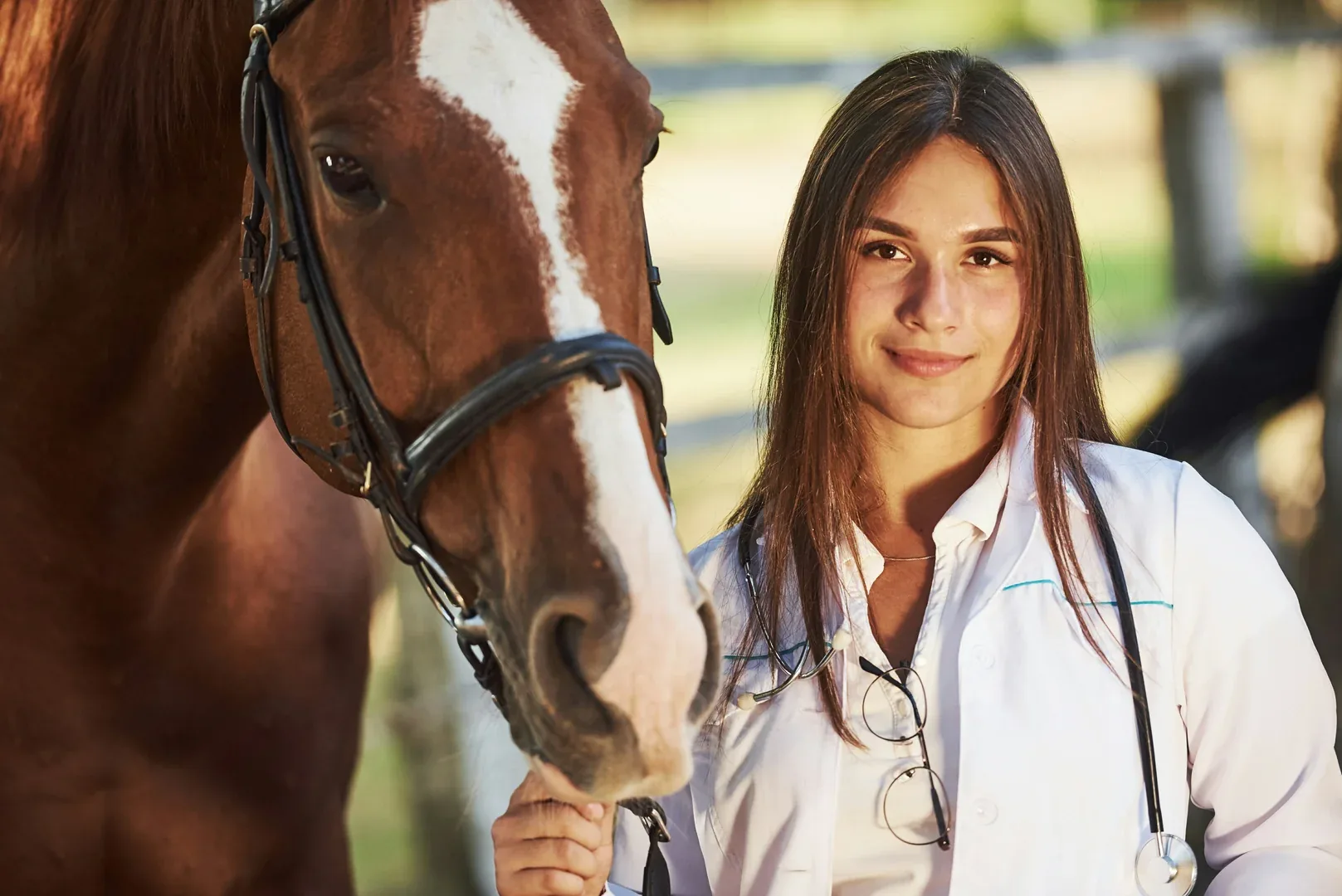
Equine surgery insurance
Horse surgery insurance via nextsure: Three flexible tariffs, reimbursement up to twice the GOT rate, and free choice of clinic worldwide. Protect your horse from high surgery costs – digital, transparent and uncomplicated.
Learn moreWhy horse surgery insurance is indispensable: the colic risk in focus
Painful colic usually catches horse owners and share riders completely unprepared. What begins as mild restlessness in the stable can develop into a life-threatening emergency within a few hours. When conservative treatment fails, the only option is often a swift admission to an animal hospital. A life-saving abdominal operation is enormously expensive, though: depending on how the case develops, the GOT fee multiple applied and the length of after-care, the total cost of colic surgery typically lies between €5,000 and €12,000 — and even higher in complicated emergencies. Without financial cover, owners face a dramatic decision at that moment.
Breaking down the emergency costs: where the amounts arise
- Initial care and emergency diagnostics: emergency call-out fees, ultrasound, blood count and a stomach tube on site and on admission to the hospital.
- The surgical procedure and anaesthesia: the surgical team's fees under the scale of fees for veterinary surgeons (GOT), anaesthetic monitoring, medication and consumables.
- Inpatient after-care: several days of intensive care at the animal hospital, infusion therapy, changes of dressing and check-ups before discharge.
The final hospital bill is made up of many individual items that quickly add up to a four- or five-figure sum. Strong horse surgery insurance reliably absorbs that acute financial burden. When choosing a policy, we particularly recommend paying attention to short waiting periods: while general illnesses often carry qualifying periods of several months, first-class policies provide cover for abdominal operations due to colic after a shortened waiting period of just a few days. That leaves your mind free in an emergency for what really counts: your horse's swift recovery.
The key criteria when comparing policies: what really matters
When choosing horse surgery insurance, fine details in the small print decide whether the entire hospital bill is covered when it matters. Alongside the monthly premium, the focus falls on the contractual cover limits and on exactly what is included around the surgical procedure. An incomplete policy can leave you with a noticeable contribution of your own on demanding treatment, if essential elements such as pre-operative diagnostics or modern anaesthetic techniques are excluded or capped.
| Criterion | Recommended cover | Practical relevance when an operation is needed |
|---|---|---|
| Annual maximum | Unlimited or high ceilings (€15,000 to €50,000) | Rigid limits of around €5,000 are often not enough for complicated colic operations including intensive care. |
| Diagnostics & imaging | Full reimbursement of X-rays, CT scans, ultrasound and blood counts | Comprehensive imaging and laboratory values before the procedure are medically necessary to establish the problem. |
| Types of anaesthesia & wound closure | General and standing anaesthesia, sedation, and primary and secondary wound closure | Many operations, such as tooth extractions or wound care, are carried out on the standing horse under local anaesthetic. |
When comparing conditions, also make sure the reimbursement rate under the scale of fees for veterinary surgeons (GOT) is set high enough. At night-time emergencies or weekend operations in particular, animal hospitals frequently charge several times the GOT rate plus the emergency call-out fee. We at nextsure help you compare policies independently and choose straightforward, tailored cover for your horse.
The GOT fee multiple: why four times the rate matters on emergency call-out
Vets in Germany bill strictly according to the nationally uniform scale of fees for veterinary surgeons (GOT). The multiple applied depends on the individual effort involved, the medical complexity and the timing of treatment. Planned procedures at the practice are usually billed at one to two times the rate, but considerably higher multiples apply to life-threatening emergencies outside regular consulting hours. Skimping on the underlying GOT multiple in horse surgery insurance risks a large uncovered contribution in an emergency.
Minimum rate versus emergency service: how the fee multiples are staggered
- One to two times the rate (standard care): applies to standard examinations and scheduled operations during regular practice hours with ordinary effort.
- Three times the rate (increased effort): applies to difficult surgical procedures, more difficult conditions or the use of special instruments.
- Two to four times the rate (emergency service): for treatment at night, at weekends or on public holidays, the law permits at least twice and up to four times the rate on emergency call-out.
- Emergency call-out fee: outside regular consulting hours, a statutory flat fee of 50 euros net applies in addition.
Colic surgery on a Sunday evening, or a severe cut at night, means immediate admission to a specialist animal hospital. Because emergency services involve considerable staffing and technical effort, hospitals regularly use the full statutory range up to four times the GOT rate. If the policy only covers costs up to two or three times the rate, the difference of several thousand euros is left with the horse's owner. To make sure costs are covered without gaps, we recommend policies with full cover up to four times the GOT rate without exception.
Waiting periods and pre-existing conditions: what owners must watch when buying
Cover is generally not available in full immediately after a pet policy is taken out. Insurers use defined waiting periods to cushion unforeseen claims shortly after a contract is signed and to calculate risk reliably. The periods differ considerably, however, depending on the cause and the type of operation. Planned procedures require longer periods, while strong policies offer considerably shorter qualifying periods for acute emergencies.
| Scenario / type of operation | Waiting period | Points to note |
|---|---|---|
| Acute colic (abdominal surgery) | 5 days | A shortened qualifying period for life-saving emergency operations |
| Accidents & acute injuries | None (0 days) | Immediate cover from the first day of the contract |
| Ordinary illness & operations | 3 months | The standard waiting period for other conditions |
| Joint operations (e.g. bone chips, OCD) | 12 months | A special waiting period for developmental findings |
Alongside the rules on timing, existing conditions play a central part in assessing an application. Clinically relevant symptoms or diagnoses identified before the agreed start of cover, or during the waiting period, remain permanently excluded from cover. Clean documentation of the horse's state of health — the report from a recent pre-purchase examination (AKU), for instance — creates complete clarity here. Taking out cover in good time while the horse is in the best of health therefore protects owners against unexpected gaps.
When switching to another provider, an interruption in cover can usually be avoided: many policies credit periods already served, provided there was a seamless previous contract with comparable benefits. A transparent comparison of horse surgery insurance identifies offers that combine short colic waiting periods with favourable terms for the previously insured.
Policies for older horses and share riders: myths and facts checked
Stubborn prejudices persist about taking out horse surgery insurance for older horses. Many owners fear that animals from around 16 years old can no longer be insured at all, or that unaffordable premium surcharges apply. Practice looks different: some insurers do charge an age surcharge from a certain entry age or set a maximum acceptance age, but modern policies offer lifelong cover with no acceptance limit. Signing up early secures favourable terms before any age-related adjustments and provides lasting protection against expensive operations.
Share riders and other riders: where the risks really lie
- Age limits and acceptance: some companies limit new policies to horses up to 16 or 19 years old, while existing contracts continue into old age.
- Share riders under surgery insurance: cover for surgery costs applies as a matter of principle to the insured horse, regardless of who transports or looks after it in an emergency.
- Third-party rider risk and liability: if the horse causes harm to a third party while being ridden by a share rider, or the rider is injured, it is not surgery cover that applies but animal owner's liability insurance.
A transparent comparison quickly shows which specialist policies remain affordable for older horses and which additional clauses are essential for share riders. We at nextsure help you analyse the conditions closely and put together the cover that best suits your horse.
Barmenia, Uelzener and others compared directly: which model suits whom?
When choosing cover, horse owners usually face the question of whether an established direct insurer or a flexible market comparison delivers the best value for money. Traditional providers such as Barmenia or Uelzener Versicherung offer proven fixed policies, but they differ considerably in scope of cover and flexibility. Colic-only policies serve as an affordable entry point, while only comprehensive premium policies also cover planned procedures such as dental or joint operations. An independent broker comparison lets you filter these variants against your individual needs.
| Type of policy | Scope of cover | Recommended for | Colic waiting period |
|---|---|---|---|
| Colic-only cover | Focused on acute abdominal operations | Owners on a tight budget or with older horses | 5 days |
| Comfort policy | Colic plus common surgical procedures | Leisure riders wanting a solid safety net | 5 days |
| Premium policy | Comprehensive surgery cover incl. tendon and bone-chip operations | Demanding owners and sport horses | 5 days |
One central lever for reducing the monthly premium is choosing to contribute part of the cost yourself. An agreed excess per claim or policy year noticeably lowers the ongoing premium without losing the financial protection that matters in an expensive colic operation. For details of individual providers, it is worth looking at the Barmenia fact sheet.
Rather than tying yourself to the rigid policy models of individual companies, tailored horse surgery insurance lets you set every solution on the market side by side transparently. That way you find exactly the variant that suits your horse and your budget.
Which policy is the best? How to find a tailored solution with nextsure
Finding the best cover requires a clear view of your horse's individual circumstances. Age, pre-existing conditions, whether it is a leisure or sport horse and your own budget priorities all determine which type of policy offers the right benefits. Basic cover mainly handles calculable risks such as colic operations, while unforeseeable complications at an animal hospital often call for a broader safety net. For solid cover, experts recommend a reimbursement limit of at least 5,000 euros per claim as well as cover for several days of after-care. Rather than tying yourself to the rigid terms of a single provider, nextsure's digital marketplace gives you direct access to transparent policy comparisons from established insurers.
Criteria for your personal policy comparison
- The horse's age and state of health: many policies differentiate by the animal's age at entry. Arranging cover early secures favourable terms and protects you against exclusions for pre-existing conditions.
- Maximum limits and GOT reimbursement rate: check whether insurers such as Barmenia pay up to two times or four times the GOT rate and whether limits per policy year are agreed.
- Special modules and additional insured parties: for riders with a share rider or other riders, covering those risks precisely in the contract and coordinating with liability cover is essential.
- Waiting periods and when cover begins: check the contractual waiting periods for colic operations and planned procedures in order to avoid unwelcome gaps in cover.
Through nextsure's online portal you compare tailored offers independently of one another. Once you have chosen the right cover, the contract is concluded fully digitally with no bureaucratic paperwork. That is how you cover your horse against peaks in financial risk when it falls ill, with horse surgery insurance that matches its needs, and without any fuss.
Frequently asked questions
- What does horse surgery insurance cost per month?
Premiums for horse surgery insurance start at around 20 to 30 euros a month for basic and colic policies. Strong premium policies with no annual maximum and reimbursement up to four times the GOT rate usually cost between 35 and 60 euros a month.
- Does horse surgery insurance cover every colic operation?
Comprehensive policies cover emergency abdominal operations such as colic surgery in full, including preliminary examination and after-care. Basic policies alone may, however, have annual maximums of 5,000 euros, for example, which can be tight for a demanding colic operation with a hospital stay.
- How long is the waiting period on horse surgery insurance?
The standard waiting period for illness is 3 months with most providers. For life-threatening abdominal operations due to acute colic, however, the best policies apply a much shorter waiting period of just 5 days. For accidents, the waiting period is waived entirely.
- Are vet costs at four times the GOT rate covered?
At animal hospitals and in emergencies outside regular consulting hours, three or four times the rate is often billed under the scale of fees for veterinary surgeons (GOT). High-quality policies reimburse vet costs up to four times the GOT rate, so owners are not left carrying the difference.
- Can I still insure an older horse?
Yes, horse surgery insurance can be taken out for older horses too. Some insurers require a premium surcharge or a contractual excess from the age of 16, but they by no means exclude surgery cover across the board.
- Are share riders covered by horse surgery insurance?
In a good horse surgery policy, cover relates to the insured horse. Operations are therefore covered regardless of who is looking after the horse in an emergency, as long as they are medically necessary. In an animal owner's liability policy, the share rider should be expressly included.
Sources
- [1]deinpferdeschutz.de
- [2]amba-versicherungen.de
- [3]tieraerztekammer-berlin.de
- [4]gesetze-im-internet.de
- [5]barmeniagothaer.de
- [6]tierversicherung-uelzener.de
- [7]uelzener.de
- [8]finanztip.de
- [9]media.barmenia.de
- [10]amba-versicherungen.de
- [11]verivox.de
- [12]gesetze-im-internet.de
- [13]nextsure.de
- [14]Dependable cover for equine operations
Conclude directly online
Verified partner tariffs at no extra cost. The button takes you straight to the provider's calculator.
 Barmenia
Horse surgery insurance
Surgery cost cover for horses in case of illness and accidents, including diagnostics and after-care.
- Waiting period:
- 3 months (colic surgery: 5 days, accidents: none)
- Coverage abroad:
- worldwide, up to 12 months
- Maximum benefit:
- depends on the cover level, as stated in the policy
- Surgery costs for illness and accidents, including tooth extractions and root canal treatment
- Pre-surgical examination (X-ray, endoscopy, biopsy, lab work)
- After-care including acupuncture, homeopathy, physiotherapy, laser therapy
- Emergency veterinary service up to 4x the standard veterinary fee schedule (GOT) rate plus the emergency callout fee
- Premium cover: up to 5 physiotherapy sessions (max. 60 minutes each) after the after-care period ends
- Once per animal: surgery costs for a birth-related, medically necessary caesarean section
Key exclusions
- Illnesses and developmental abnormalities known at the time of application
- Hoof abscesses and hoof ulcers (exception: hoof cancer)
- Surgery due to cryptorchidism
- Neutering that isn't medically necessary
Service-Champions GOLD: Nr. 1 der Versicherer im Multikanalvertrieb (ServiceValue, 10/2024)
Barmenia (Anbieter der Pferde-OP-Versicherung)
Special waiting periods: 12 months for joint surgery (chip fragments, OC/OCD, Birkeland fractures), 6 months for medically necessary neutering; Premium cover includes a waiver of the insurer's right to cancel from the 7th insurance year.
Fact sheet: benefits, exclusions and waiting periods in detail
All details are taken from the provider's linked product page and the contract documents (IPID/policy conditions) published there; the insurer's documents prevail. Premiums, benefits and the insurance product itself may change – please verify the details directly with the partner before signing up; only the information provided there is binding.
Information last updated: July 2026 · Source: provider product information (IPID/policy conditions)