
Dental supplementary insurance braces for adults
Find out how supplementary dental insurance for braces in adults can reduce costs. Get in touch with nextsure now for information and advice!
All details are taken from the provider's linked product page and the contract documents (IPID/policy conditions) published there; the insurer's documents prevail. Premiums, benefits and the insurance product itself may change – please verify the details directly with the partner before signing up; only the information provided there is binding.
 Katrin StraubManaging DirectorInsurance expert with over 20 years of experience in the insurance industry.
Published on
Last updated on
10 min read
Table of Contents
Braces in adulthood can transform your smile, but the cost is often a challenge. Discover how dental insurance for adults can provide financial security.
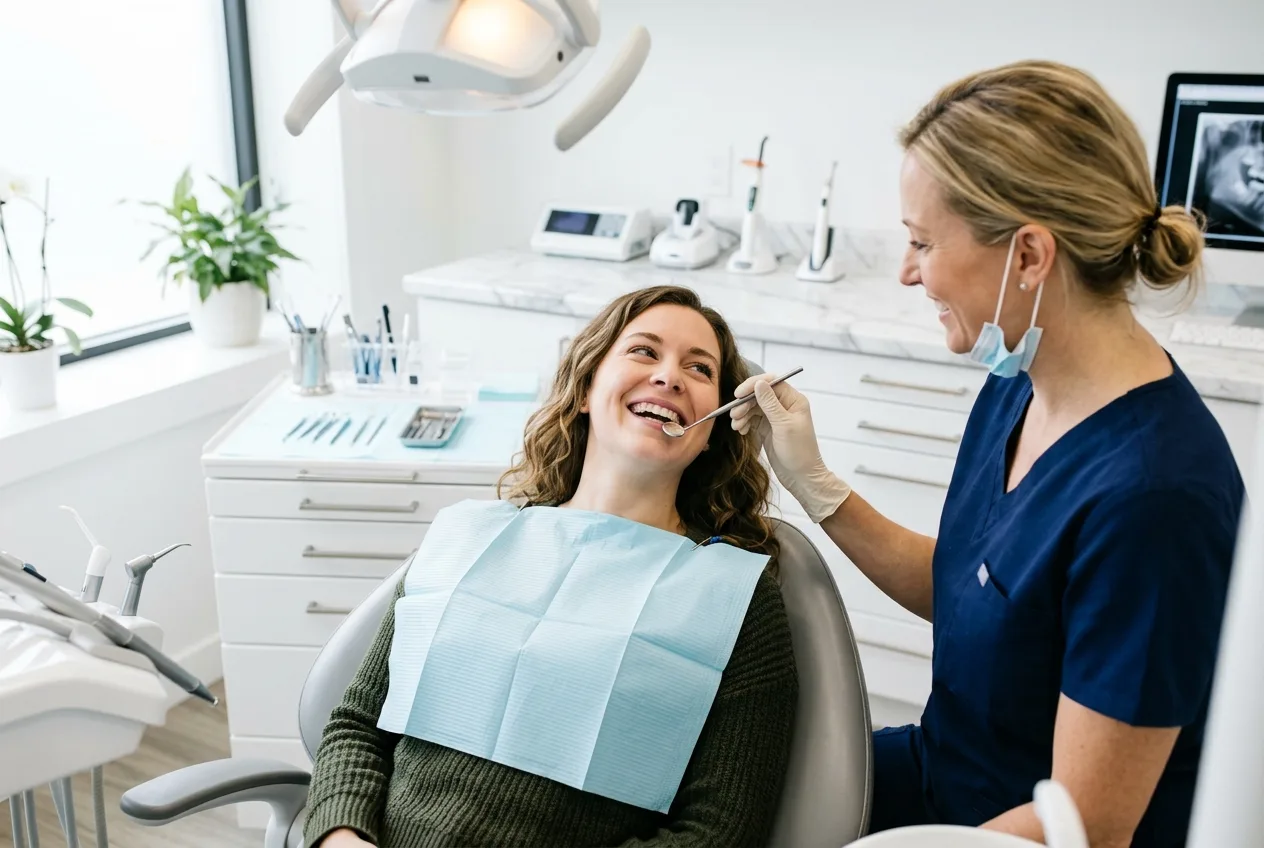
dental supplementary insurance
Find the right dental supplementary insurance at nextsure. Comprehensive protection, digital processing, and tailor-made rates for your most beautiful smile.
Learn moreThe cost trap of braces in adulthood: An overview
The decision to get braces as an adult is often associated with high costs. Prices vary greatly depending on the type of braces and the extent of treatment. For example, fixed braces can cost between €2,500 and €8,000. For invisible aligners, you should expect to pay between €3,500 and €6,500. [4,10] Statutory health insurance (GKV) usually does not provide a subsidy for adults over eighteen. [2,3] Only in cases of severe jaw anomalies that require an operation is partial cost coverage possible. [3,7] Therefore, private cover through a supplementary dental insurance policy for braces for adults is often the only way to offset these costs. Without such cover, you usually have to bear the cost of several thousand euros in full yourself. [4] This financial barrier prevents many people from undergoing necessary or desired treatment.
Range of benefits provided by statutory health insurance: What is covered for adults?
Statutory health insurance (GKV) is very reluctant to cover orthodontic treatment for adults. Costs are usually only covered if there are serious jaw anomalies. [3,7,8] This applies, for example, to congenital malformations or tooth misalignments caused by accidents that require combined oral surgery and orthodontic treatment. [3,14] Even in these exceptional cases, GKV often only covers the costs of standard care, i.e. the simplest medically adequate treatment. [15] Cosmetic wishes or more modern treatment methods such as invisible braces are not subsidised. [3] Most adults who want teeth straightening for aesthetic or functional reasons without a severe anomaly receive no benefits from their GKV. [9] Early information about the low level of cost coverage from GKV is crucial for adults. This allows you to consider a private dental supplementary insurance policy in good time.
Quick Facts: Dental insurance for braces for adults
Supplementary dental insurance can significantly reduce the financial burden of orthodontic treatment for adults. Here are the key points in brief:
- Cost coverage: Many tariffs cover a significant portion of the costs, often between eighty and one hundred per cent, for orthodontic treatment. [13]
- Scope of benefits: Good policies also cover modern treatment methods such as lingual braces or aligners. [13,19]
- Waiting periods: Waiting periods of around eight months are common before benefits can be claimed. [1,10]
- Health check: A health assessment is often required; treatment already recommended or underway is usually excluded. [13,16,19]
- Statutory health insurance advance payment: Look for tariffs that pay regardless of prior statutory health insurance advance payment, as this is rare for adults. [13,19]
- KIG stages: Ideally, treatment for milder misalignments (KIG stages one and two) is also covered. [13,19]
Careful selection of the tariff is crucial to ensure the best possible protection for your dental health. The cost of braces can quickly exceed 6,000 euros. [4]
Practical section: How to find the right tariff
Choosing the right supplementary dental insurance for braces for adults requires careful consideration. Compare the policies closely, as the benefits can vary significantly. Pay attention to the level of reimbursement rates; some tariffs offer up to 100 per cent cost coverage. [2,5] Check the benefit limits; there are often annual maximum amounts or overall limits over the entire term of the contract, for example €2,000. [3] An important point is whether treatments already recommended are insured – this is rarely the case. [16,19] Our expert tip: take out the insurance before the dentist identifies a specific need for treatment. Many insurers will not pay if the misalignment was already known before the contract was concluded. [13] Also consider the waiting periods, which are often eight months. [1,10] A comparison of supplementary dental insurance policies helps you find the plan that best meets your individual needs. The cost of lingual braces can be as much as €10,000. [4]
In-depth expertise: legal aspects and recent rulings
In insurance law concerning supplementary dental insurance for braces in adults, there are a few pitfalls. A key point is the pre-contractual duty of disclosure. You must answer all health questions truthfully. If you fail to disclose orthodontic treatment that has already been diagnosed or recommended, the insurer may refuse to pay benefits or withdraw from the contract. Recent judgments repeatedly confirm the importance of providing accurate information. For example, in the past the Federal Court of Justice (BGH) has strengthened patients' rights when treatments fail; however, this concerns the practitioner's liability rather than the insurer's benefits. [20] What matters for supplementary dental insurance benefits is what has been agreed in the contract.
Pay attention to clauses on maximum reimbursement limits and exclusions. Some policies only provide cover for adults in the event of accidents. [2,17] Our expert tip: Keep a precise record of all doctor visits and diagnoses before signing the contract. This can be decisive when a claim arises. A supplementary health insurance policy can close further gaps. Treatment for adults can take up to three years. [5]
Invisible braces: Aesthetics come at a price
Invisible braces, such as aligner systems (e.g. Invisalign) or lingual orthodontics (brackets on the inside of the teeth), are particularly popular among adults. They enable discreet tooth correction. However, the costs for this are often higher than for conventional methods. Aligners can cost between €3,500 and €6,500. [4,10,18] Lingual braces often cost between €6,000 and €10,000. [4,10,18] Statutory health insurance usually does not cover these additional costs, not even for children. [10] A good dental supplementary insurance policy for braces for adults should therefore explicitly also cover these modern, aesthetic procedures. Check the small print to see whether there are any specific limitations or exclusions for such treatments. Many plans limit reimbursement for orthodontics for adults to a maximum amount, for example €2,500. [10] A dental supplementary insurance policy can be an important financial support here. Treatment with aligners can take nine to eighteen months. [9]
Plan ahead: When is the right time to take out the policy?
The ideal time to take out supplementary dental insurance for adult braces is before a specific treatment need has been identified or recommended by the dentist. [16,19] Many insurers exclude benefits for treatments that are already under way, planned or recommended. [13,19] If you have already received a treatment and cost plan or the treatment has been noted in your patient record, it is often too late for a high-performance tariff. Some providers advertise immediate cover even for recommended treatments, but these often come with benefit restrictions or higher premiums. [11,22] Also bear in mind the general waiting periods, which in many tariffs can be eight months. [1,10] So plan ahead. Even if you do not currently need braces, misalignment of the teeth can develop over the years or become necessary as a result of an accident. [2,13] A policy taken out early for supplementary dental insurance protects you in case the worst happens.
The cost of an initial examination and diagnostics can already amount to €150. [21]
nextsure: Your partner for tailored protection
The complexity of tariffs and conditions makes choosing a suitable supplementary dental insurance policy for adult braces a challenge. At nextsure, we understand your needs and support you in finding the optimal cover. Our mission is to offer you tailored and easy-to-understand insurance solutions. We help you compare plans that also cover orthodontic services for adults without excessive restrictions. Good cover can save you several thousand euros in out-of-pocket costs. [4] Benefit from our expertise in the niche insurance sector. We offer personalised advice to ensure that your insurance cover is tailored precisely to your situation. Supplementary dental insurance can be taken out from around thirteen euros per month, although costs vary considerably. [5,17] Request your individual risk analysis now.
Frequently asked questions
- How much does supplementary dental insurance for orthodontics for adults cost?
Costs vary significantly depending on the provider, scope of benefits and age at entry. Low-cost tariffs can start at around €13 per month; more comprehensive tariffs are correspondingly more expensive. [5,17]
- Is there dental supplementary insurance for adults with no waiting period for braces?
Yes, some insurers offer plans with no waiting period. However, these are often associated with higher premiums or other restrictions. It is important to check the terms and conditions carefully. [1,10,11]
- What does KIG mean for braces?
KIG stands for orthodontic indication groups. It is a system for classifying the severity of dental and jaw misalignments into five groups. Statutory health insurance usually only covers treatment for children from KIG 3 onwards. [4,5]
- Does dental supplementary insurance also cover invisible braces (aligners) for adults?
Many good dental supplementary insurance policies also cover the cost of invisible braces such as aligners or lingual braces, although often with limits on the reimbursement amount. Check the plan details. [10,13,19]
- Can I take out supplementary dental insurance if orthodontic treatment with braces has already been recommended?
In most cases, this is not possible or cover for this already recommended treatment is excluded. A few specialist tariffs provide cover, but often with restrictions. [13,16,19]
- How long do you have to wear braces as an adult?
The duration of treatment in adults varies depending on the complexity of the misalignment and the method used. It can range from a few months to two or three years. [5,17]
Sources
- [1]Federal Ministry of Health offers a report on the topic of orthodontics.
- [2]Consumer Advice Centre provides information on personal contributions, statutory health insurance benefits and additional costs in orthodontic treatment.
- [3]German Dental Association provides a position paper on the limits of self-treatment, especially in orthodontics.
- [4]Joint Federal Committee (G-BA) offers guidelines on various medical services that are relevant to cost coverage.
- [5]National Association of Statutory Health Insurance Dentists (KZBV) provides a guide to orthodontics.
- [6]Federal Statistical Office (Destatis) publishes press releases that may contain relevant statistics, including in the healthcare sector.
- [7]Federal Statistical Office (Destatis) provides quality reports on the cost structure in the medical sector.
- [8]German Society of Orthodontics (DGKFO) is the scientific specialist society for orthodontics in Germany and provides information on research and practice in this field.
Conclude directly online
Verified partner tariffs at no extra cost. The button takes you straight to the provider's calculator.
 Advigon
Supplemental dental insurance
Four supplemental dental tariffs ranging from basic cover to full protection, including children's tariffs with orthodontics.
- Dental Medium premium:
- €5.69-32.30/month depending on age
- Dental Luxus premium:
- €9.20-54.50/month depending on age
- Waiting period:
- none (AZM/AZL)
- Dental treatment: 75% (Dental Medium) or 100% (Dental Luxus)
- Dentures/crowns (Zahnersatz): 75% (AZM; 100% for standard care) or 100% (AZL)
- Preventive dental care: 100% up to €90/year (AZM) or up to €140/year (AZL)
- No waiting periods in Dental Medium and Dental Luxus
- Children's tariffs with orthodontics (KFO): Dental Clever €9.68/month, Dental Premium €18.76/month
- Stiftung Warentest rated Dental Premium "very good" (1.5) (Finanztest 2/25)
Key exclusions
- Reimbursement caps in the first 48 months: AZM €600-2,400, AZL €1,000-4,000 (tiered)
- No explicit benefit exclusions are stated in the available documentation
Stiftung Warentest „SEHR GUT (0,6)“, Finanzen 07/2025 (285 Tarife im Test)
Advigon Zahnzusatzversicherung Dental Luxus (AZL)
MORGEN & MORGEN M&M Rating Zahnzusatz: 5 Sterne „Ausgezeichnet“ (08/2023)
Advigon Versicherung AG, Dental Luxus (AZL)
Reimbursement caps do not apply in the case of an accident, after month 48, or with a recognized prior policy.
Fact sheet: benefits, exclusions and waiting periods in detail
 die Bayerische
Supplemental dental insurance
Supplemental dental cover in three tariffs (Smart, Komfort, Prestige) with no waiting period; the top tariff reimburses 100%.
- Reimbursement:
- 75-100% depending on the tariff
- Waiting period:
- none
- Teeth cleaning:
- €80-200/year depending on the tariff
- Zahn Sofort module:
- €29.90/month, ends after 2 years
- Dentures/crowns and dental treatment: Smart 75%, Komfort 80-100%, Prestige 100%
- Professional teeth cleaning in all tariffs (€80-200 per calendar year)
- No waiting periods in any of the three tariffs
- Orthodontics: €1,500 (including statutory health insurance benefit) or €2,000 (without statutory health insurance benefit) in Komfort and Prestige
- Prestige includes teeth whitening and a Happybrush sonic toothbrush
- Stiftung Warentest 07/2025: Zahn Prestige rated test winner with "very good" (0.5)
Key exclusions
- Treatments recommended or started before the policy began (only covered via the Zahn Sofort module)
- A flat 40% deduction for dentists without statutory-insurance accreditation
- Reimbursement capped at up to 3.5x the dental fee schedule (GOZ) rate
- Abroad, reimbursement is capped at the domestic benefit level
Stiftung Warentest „SEHR GUT (0,5)“, Ausgabe 07/2025 (285 Tarife im Test)
die Bayerische, Tarif ZAHN Prestige
ASCORE „Tarif des Jahres 2024“ (Krankenzusatz Zahn)
die Bayerische, Zahn Prestige 2023
Levelnine Rating „EXZELLENT“ (Stand 11/2024, gültig bis 11/2025)
die Bayerische, Tarif ZAHN Prestige
Benefit tiering: €500 in year 1 (Smart), €1,250 (Komfort), or €1,500 (Prestige); unlimited from calendar year 5; caps also do not apply in the case of an accident.
Fact sheet: benefits, exclusions and waiting periods in detail
Advigon Supplemental dental insurance: Benefits: Dental Medium (AZM) and Dental Luxus (AZL)
| Benefit | Dental Medium (AZM) | Dental Luxus (AZL) |
|---|---|---|
| Dental treatment | 75% | 100% |
| Pain therapy | 75% | 100% |
| Preventive dental care | 100% up to €90/year | 100% up to €70 per treatment, up to €140/year |
| Dentures/crowns | 75% (100% for standard care) | 100% |
| Monthly premium by age | €5.69-32.30 | €9.20-54.50 |
die Bayerische Supplemental dental insurance: Tariff comparison: Smart, Komfort, Prestige
| Benefit | Smart | Komfort | Prestige |
|---|---|---|---|
| Dentures/crowns (above standard care) | 75% | 80-90% | 100% |
| Dentures/crowns (up to standard care) | 75% | 100% | 100% |
| Dental treatment | 75% | 100% | 100% |
| Professional teeth cleaning | €80/calendar year | €100 per treatment, max. €150/year | €100 per treatment, max. €200/year |
| Orthodontics | not included | €1,500 (incl. statutory insurance) / €2,000 (excl. statutory insurance) | €1,500 (incl. statutory insurance) / €2,000 (excl. statutory insurance) |
| Teeth whitening | not included | not included | included |
| Example annual premium (age 33) | €152.40 | €244.80 (rural) / €321.60 (urban) | €405.60 (rural) / €529.20 (urban) |
All details are taken from the provider's linked product page and the contract documents (IPID/policy conditions) published there; the insurer's documents prevail. Premiums, benefits and the insurance product itself may change – please verify the details directly with the partner before signing up; only the information provided there is binding.
Information last updated: July 2026 · Source: provider product information (IPID/policy conditions)