
Dental supplementary insurance: Optimal protection
Dental supplementary insurance: Protect yourself against high dental costs. Request your personalised risk analysis from nextsure now!
All details are taken from the provider's linked product page and the contract documents (IPID/policy conditions) published there; the insurer's documents prevail. Premiums, benefits and the insurance product itself may change – please verify the details directly with the partner before signing up; only the information provided there is binding.
 Katrin StraubManaging DirectorInsurance expert with over 20 years of experience in the insurance industry.
Published on
Last updated on
7 min read
Table of Contents
High dental costs can become an unexpected burden, as statutory health insurance often covers only a fraction. A well-chosen dental supplementary insurance policy closes this gap and gives you access to modern dental care without financial worries. Find out how to choose the right cover and benefit in the long term.
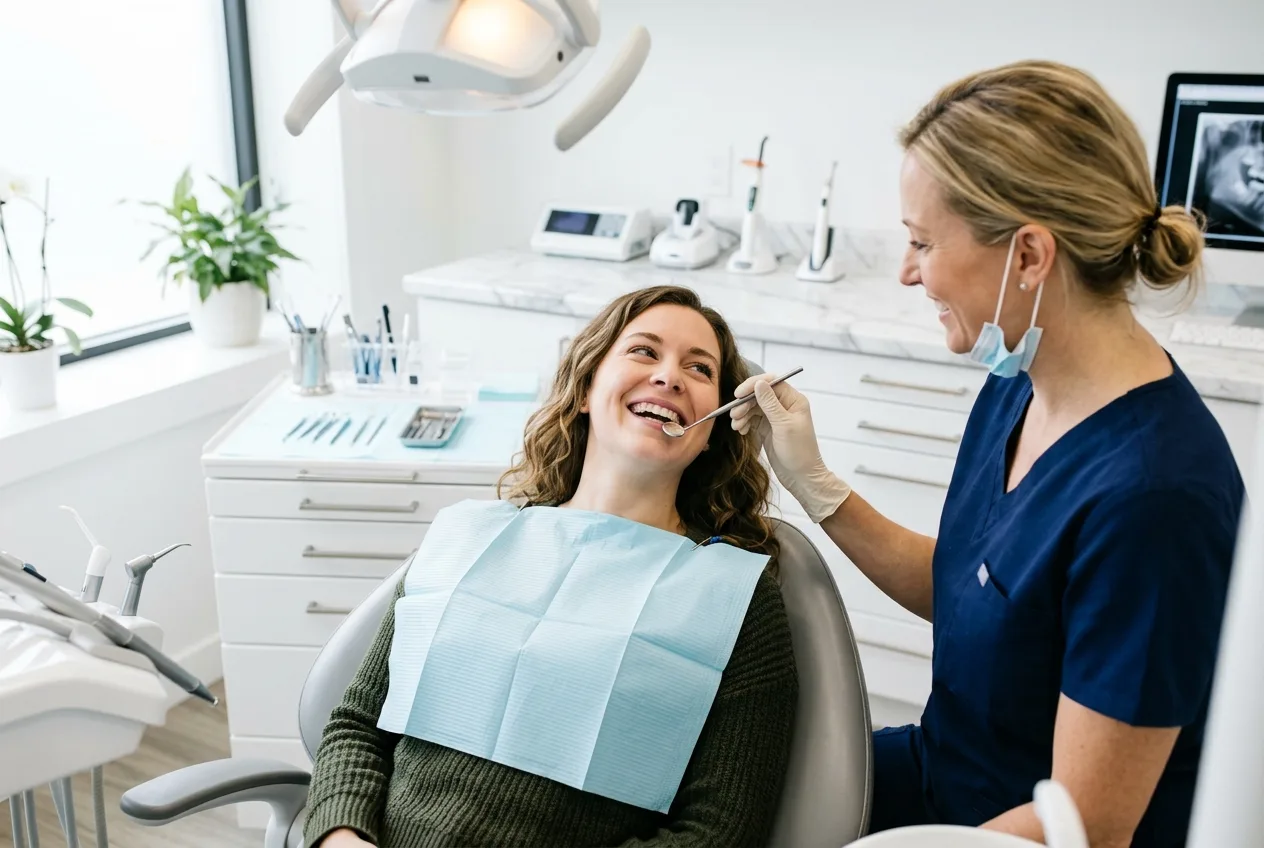
dental supplementary insurance
Find the right dental supplementary insurance at nextsure. Comprehensive protection, digital processing, and tailor-made rates for your most beautiful smile.
Learn moreCleverly avoid cost traps with dentures and the like
Statutory health insurance (GKV) often only covers basic dental treatment. For example, an implant with a ceramic crown can quickly cost between three thousand and three thousand five hundred euros. Here, GKV often only provides a fixed allowance of around six hundred euros. A dental supplementary insurance policy can cover this significant difference of more than two thousand euros. Without additional cover, patients bear these costs themselves. Find out early about a suitable dental supplementary insurance policy. This protection saves you from unpleasant surprises and secures high-quality treatment.
Analysing the range of benefits of a good supplementary dental insurance policy
A comprehensive dental supplementary insurance policy covers costs in various areas. These include dental prostheses such as crowns, bridges and implants, often at 80 to 100 per cent. Dental treatments such as high-quality composite fillings or root canal treatments are also often covered. Many plans also include professional teeth cleanings, sometimes up to twice a year. For children and young people, coverage for orthodontics is an important aspect. Look for plans that also provide benefits for higher orthodontic indication groups (KIG). A comparison of dental supplementary insurance policies helps you find the optimal plan. This secures you comprehensive care that goes beyond the basic benefits of the GKV.
Understanding and making the most of waiting periods and benefit tiers
Many dental supplementary insurance policies initially include waiting periods, usually three to eight months. During this time, you are generally not yet able to claim benefits for dentures or extensive treatments. However, some tariffs also offer immediate cover with no waiting period, which can be particularly advantageous in cases of urgent need. In addition, benefit limits are often applied in the first few years. This means that the maximum reimbursement amount is, for example, limited to one thousand five hundred euros in the first year and then increases annually. Check these conditions carefully to avoid any surprises. Careful planning when taking out the policy can save you real money here. This ensures that your insurance cover applies when you really need it.
Show cost examples and potential savings with supplementary dental insurance
The cost of dental treatment can vary considerably. A ceramic inlay can cost between five hundred and one thousand euros. Statutory health insurance often only covers a small proportion here. With a good dental supplementary insurance policy, you can reduce your own contribution to between zero and twenty per cent. For a professional dental cleaning, which costs around eighty to one hundred and twenty euros, many policies cover the full cost. An example calculation illustrates the savings potential:
- Cost of an implant: 3,200 euros
- Statutory health insurance fixed subsidy: approx. 650 euros
- Your out-of-pocket cost without supplementary insurance: 2,550 euros
- Your out-of-pocket cost with 90% supplementary insurance: 320 euros
- Your savings: 2,230 euros
These figures show how dental supplementary insurance can significantly reduce costs. This keeps high-quality dental treatments affordable for you.
Dental supplementary insurance for children: Start early to help ensure healthy teeth
A dental supplement insurance policy can also often make sense for children. Around half of all children need orthodontic treatment. The cost of braces can quickly run to several thousand euros. GKV often only contributes in cases of severe misalignments (KIG three to five), and even then only for standard treatment. A dental supplementary insurance for braces can cover the additional costs for modern brackets or fixed braces fitted on the inside. Look for tariffs that also provide benefits at lower KIG levels. In addition, benefits such as fissure sealing or professional teeth cleaning are important for children. Taking out cover early often secures lower premiums. This is how you make a lasting investment in your child's dental health.
Expert tips: Understand tax aspects and legal basics
You can claim contributions to supplementary dental insurance for tax purposes under certain conditions. They count as other precautionary expenses. The deductible maximum amount for employees is limited to EUR 1,900 per year. This amount is often already used up by contributions to health and long-term care insurance. Self-employed people have a higher maximum amount of EUR 2,800. Dental costs you pay yourself can be deducted as extraordinary expenses if the reasonable burden threshold is exceeded. Our expert tip: keep all invoices and proof of contributions carefully. A tax deductibility can further reduce your financial burden. Also find out about current rulings, as case law can change, for example regarding the necessity of treatments under Section 1(2) GOZ (Schedule of Fees for Dentists). This secures all benefits for you.
Choosing the right dental insurance: What matters
When choosing your dental supplementary insurance, you should consider several criteria. The level of reimbursement for dental prosthetics should be at least eighty per cent. Pay attention to the benefits for dental treatment and preventive care. Clarify whether estimates must be submitted before treatment. The following points are important when making your choice:
- Reimbursement level for dental prosthetics (e.g. implants, crowns)
- Benefits for dental treatment (e.g. fillings, root canal treatment)
- Coverage of the costs for professional teeth cleaning
- Waiting periods and benefit limits in the first few years
- Benefits for orthodontics (especially for children)
- Health questions and acceptance criteria
- Contribution level and premium stability in old age
Compare different offers carefully. Sometimes it is also relevant whether you may have two dental supplementary insurance policies in order to close gaps in cover, although this is rarely sensible. A well-informed decision will secure you the best protection in the long term.
Your next step towards optimal dental protection
Dental supplementary insurance is an important investment in your health and financial security. It protects you from high costs and gives you access to high-quality dental care. With the right information and a careful comparison, you can find the plan that best suits your needs. Take charge of your dental health. Request your personalised risk analysis now: Have your insurance situation reviewed free of charge and receive specific suggestions for optimisation.
Frequently asked questions
- What are the most important benefits of a dental supplementary insurance?
Particularly important are high reimbursements for dental prostheses (at least 80-90%), dental treatments (e.g. root canal treatments, periodontal treatment) and professional teeth cleaning. For children, orthodontic services are crucial.
- What does standard care mean under statutory health insurance?
The standard treatment is the medically necessary and most economical basic treatment subsidised by the statutory health insurance fund. Higher-quality treatments result in additional costs for the patient.
- Can I switch my dental supplementary insurance?
Yes, a change is generally possible. Please observe notice periods and any renewed waiting periods or health checks with the new insurer. A switch can be worthwhile if another tariff offers better benefits or lower premiums.
- What happens if I answer the health questions incorrectly?
False or incomplete information in the health questions may result in the insurer withdrawing from the contract, terminating it or refusing benefits. Therefore, always answer truthfully and in full.
- Is there supplementary dental insurance that covers everything 100%?
There are policies that offer 100% cost coverage in many areas, particularly for dental prostheses and dental treatments. However, there are often annual maximum limits for certain services such as preventive care or restrictions in the first few years (dental benefit scale).
- How do I find the best dental supplementary insurance for my needs?
Compare tariffs in terms of scope of benefits, premium amount, waiting periods and customer reviews. Use independent comparison portals and, where appropriate, consider professional advice to find the optimal cover.
Sources
- [1]German Wikipedia offers comprehensive information on supplementary dental insurance.
- [2]National Association of Statutory Health Insurance Dentists (KZBV) provides detailed information on dental prostheses.
- [3]Destatis (Federal Statistical Office) provides official data and statistics on healthcare expenditure in Germany.
- [4]German Society for Dental, Oral and Maxillofacial Medicine (DGZMK) offers well-founded patient information on various dental topics.
Conclude directly online
Verified partner tariffs at no extra cost. The button takes you straight to the provider's calculator.
 Advigon
Supplemental dental insurance
Four supplemental dental tariffs ranging from basic cover to full protection, including children's tariffs with orthodontics.
- Dental Medium premium:
- €5.69-32.30/month depending on age
- Dental Luxus premium:
- €9.20-54.50/month depending on age
- Waiting period:
- none (AZM/AZL)
- Dental treatment: 75% (Dental Medium) or 100% (Dental Luxus)
- Dentures/crowns (Zahnersatz): 75% (AZM; 100% for standard care) or 100% (AZL)
- Preventive dental care: 100% up to €90/year (AZM) or up to €140/year (AZL)
- No waiting periods in Dental Medium and Dental Luxus
- Children's tariffs with orthodontics (KFO): Dental Clever €9.68/month, Dental Premium €18.76/month
- Stiftung Warentest rated Dental Premium "very good" (1.5) (Finanztest 2/25)
Key exclusions
- Reimbursement caps in the first 48 months: AZM €600-2,400, AZL €1,000-4,000 (tiered)
- No explicit benefit exclusions are stated in the available documentation
Stiftung Warentest „SEHR GUT (0,6)“, Finanzen 07/2025 (285 Tarife im Test)
Advigon Zahnzusatzversicherung Dental Luxus (AZL)
MORGEN & MORGEN M&M Rating Zahnzusatz: 5 Sterne „Ausgezeichnet“ (08/2023)
Advigon Versicherung AG, Dental Luxus (AZL)
Reimbursement caps do not apply in the case of an accident, after month 48, or with a recognized prior policy.
Fact sheet: benefits, exclusions and waiting periods in detail
 die Bayerische
Supplemental dental insurance
Supplemental dental cover in three tariffs (Smart, Komfort, Prestige) with no waiting period; the top tariff reimburses 100%.
- Reimbursement:
- 75-100% depending on the tariff
- Waiting period:
- none
- Teeth cleaning:
- €80-200/year depending on the tariff
- Zahn Sofort module:
- €29.90/month, ends after 2 years
- Dentures/crowns and dental treatment: Smart 75%, Komfort 80-100%, Prestige 100%
- Professional teeth cleaning in all tariffs (€80-200 per calendar year)
- No waiting periods in any of the three tariffs
- Orthodontics: €1,500 (including statutory health insurance benefit) or €2,000 (without statutory health insurance benefit) in Komfort and Prestige
- Prestige includes teeth whitening and a Happybrush sonic toothbrush
- Stiftung Warentest 07/2025: Zahn Prestige rated test winner with "very good" (0.5)
Key exclusions
- Treatments recommended or started before the policy began (only covered via the Zahn Sofort module)
- A flat 40% deduction for dentists without statutory-insurance accreditation
- Reimbursement capped at up to 3.5x the dental fee schedule (GOZ) rate
- Abroad, reimbursement is capped at the domestic benefit level
Stiftung Warentest „SEHR GUT (0,5)“, Ausgabe 07/2025 (285 Tarife im Test)
die Bayerische, Tarif ZAHN Prestige
ASCORE „Tarif des Jahres 2024“ (Krankenzusatz Zahn)
die Bayerische, Zahn Prestige 2023
Levelnine Rating „EXZELLENT“ (Stand 11/2024, gültig bis 11/2025)
die Bayerische, Tarif ZAHN Prestige
Benefit tiering: €500 in year 1 (Smart), €1,250 (Komfort), or €1,500 (Prestige); unlimited from calendar year 5; caps also do not apply in the case of an accident.
Fact sheet: benefits, exclusions and waiting periods in detail
Advigon Supplemental dental insurance: Benefits: Dental Medium (AZM) and Dental Luxus (AZL)
| Benefit | Dental Medium (AZM) | Dental Luxus (AZL) |
|---|---|---|
| Dental treatment | 75% | 100% |
| Pain therapy | 75% | 100% |
| Preventive dental care | 100% up to €90/year | 100% up to €70 per treatment, up to €140/year |
| Dentures/crowns | 75% (100% for standard care) | 100% |
| Monthly premium by age | €5.69-32.30 | €9.20-54.50 |
die Bayerische Supplemental dental insurance: Tariff comparison: Smart, Komfort, Prestige
| Benefit | Smart | Komfort | Prestige |
|---|---|---|---|
| Dentures/crowns (above standard care) | 75% | 80-90% | 100% |
| Dentures/crowns (up to standard care) | 75% | 100% | 100% |
| Dental treatment | 75% | 100% | 100% |
| Professional teeth cleaning | €80/calendar year | €100 per treatment, max. €150/year | €100 per treatment, max. €200/year |
| Orthodontics | not included | €1,500 (incl. statutory insurance) / €2,000 (excl. statutory insurance) | €1,500 (incl. statutory insurance) / €2,000 (excl. statutory insurance) |
| Teeth whitening | not included | not included | included |
| Example annual premium (age 33) | €152.40 | €244.80 (rural) / €321.60 (urban) | €405.60 (rural) / €529.20 (urban) |
All details are taken from the provider's linked product page and the contract documents (IPID/policy conditions) published there; the insurer's documents prevail. Premiums, benefits and the insurance product itself may change – please verify the details directly with the partner before signing up; only the information provided there is binding.
Information last updated: July 2026 · Source: provider product information (IPID/policy conditions)