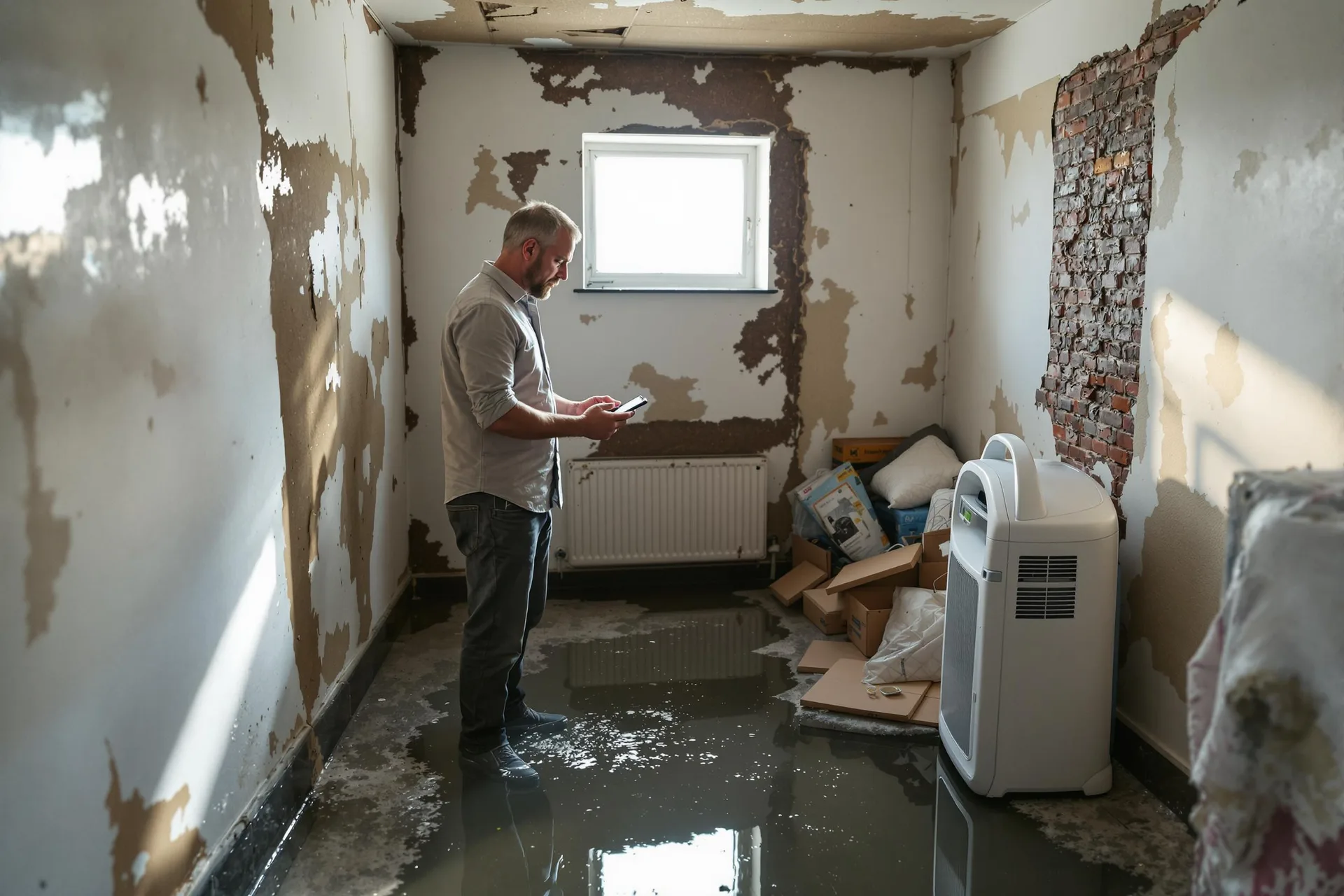
Renovation loan for a listed building
Find the right renovation loan for your listed building. Our guide explains KfW funding, heritage depreciation and more. Find out more now!
 Katrin StraubManaging DirectorInsurance expert with over 20 years of experience in the insurance industry.
Published on
Last updated on
8 min read
Table of Contents
A listed building has a unique charm, but renovation brings financial challenges. Costs can be up to 25 per cent higher than for a standard building. Find out how, with the right strategy, you can find a suitable renovation loan for a listed building online and make the most of government support.
Realistically assessing costs and requirements in listed building renovation
The renovation of a listed building often costs 20 to 25 per cent more than a non-listed property. These additional costs arise from specialist, historically accurate materials and qualified tradespeople. Any structural alteration also requires approval from the relevant heritage conservation authority. Without this consent, you risk fines and, in the worst case, an obligation to reverse the work, with significant associated costs. Early contact with the authority is therefore the first and most important step in any renovation project. The good news is that the state supports these efforts with extensive grants and tax benefits. These forms of support are crucial to reducing the financial burden and setting the course for the future.
Use government grants as a financial foundation
The Kreditanstalt für Wiederaufbau (KfW) is the central contact for funding listed buildings. The “Residential Buildings – Loan 261” programme offers loans of up to EUR 150,000 per residential unit for refurbishment to a heritage efficiency house. In addition, you benefit from a repayment subsidy that can reduce the amount of the loan to be repaid by up to EUR 15,000. For individual measures such as replacing the heating system or windows, there is also attractive funding from the Federal Office for Economic Affairs and Export Control (BAFA). As a rule, you must apply for these grants before the measures begin. A combination of different funding pots is often possible and can make financing considerably easier, for example in the case of financing for a roof renovation.
The involvement of a certified energy efficiency expert is a mandatory requirement for applying for most KfW funds. This expert ensures that the planned measures meet the funding guidelines and the requirements of listed building protection.
Use tax advantages from listed-building depreciation to reduce costs
A key financial advantage is the heritage building depreciation allowance (AfA) under the Income Tax Act. It allows you to claim a large proportion of the renovation costs for tax purposes. The amount of the deduction depends on how you use the property. Owner-occupiers can deduct nine per cent of the renovation costs each year over ten years, i.e. 90 per cent in total. Property investors who let the property can even depreciate 100 per cent of the costs over a period of twelve years. In the first eight years, this is nine per cent each year, and in the following four years seven per cent each year. It is important that only measures that serve to preserve the listed building and have been approved by the authorities are deductible. These typically include:
- Renovation of the façade or roof
- Replacement of historic windows and doors
- Installation of a modern heating system
- Repair of the roof structure or timber framing
- Basic modernisation work in the interior, such as bathrooms
The heritage building AfA is a powerful tool for reducing the financial burden and can be combined with a building society savings contract for renovations. This gives you a solid basis for preserving the long-term value of your property.
Find the right renovation loan for your listed historic house online
Once you have the funding approvals and the listed building consent in hand, you can apply to a bank for the actual renovation loan. A well-prepared application increases your chances of success many times over. For listed buildings, banks assess not only your creditworthiness, but also the plausibility and financial viability of the entire project. Therefore, always submit a detailed cost breakdown, the architect’s plans and the approval from the heritage protection authority. Compare the terms and conditions of at least three different lending institutions to find the best offer. Some banks have specialist departments for construction finance that have experience with heritage properties. A competitive construction loan with current interest rates is often the key to success. The combination of a KfW loan and a bank loan is a common and very effective way of financing it.
Expert tips for smooth financing and renovation
The restoration of a listed building is a complex project with many pitfalls. With the right preparation, however, many problems can be avoided. Our expert tip: bring all those involved – the architect, energy consultant, tradespeople and the heritage conservation authority – together as early as possible. A joint on-site inspection can minimise misunderstandings and lead to pragmatic solutions. Please note that heritage conservation laws are a matter for the individual states and the requirements can vary depending on the state. A permit once granted is also often valid for only a limited period, usually four years. To keep track, you should note the following points:
- Obtain written approval from the heritage conservation authority before signing contracts with tradespeople.
- Always apply for public funding before work begins.
- Have an architect or energy consultant specialising in listed buildings support you.
- Carefully document all work and costs for later tax deductions.
- Allow for a financial buffer of at least 15 per cent for unforeseen expenses.
This careful planning helps you not only with financing, but also with the long-term preservation of the historic value, much like a conversion for accessible living. This ensures that your project is built on a solid foundation.
Frequently asked questions
- What is the first step if I want to renovate a listed building?
The first and most important step is to contact the relevant monument protection authority. Clarify with them which measures require approval and what conditions apply before you begin any further planning or financing enquiries.
- How do I find the right renovation loan for a listed building?
To find the right renovation loan, you should first apply for all possible government subsidies (KfW, BAFA). With these approvals and a detailed breakdown of costs, you can then obtain and compare offers from several banks.
- Which costs are deductible under the listed building depreciation allowance?
All costs necessary for the preservation and appropriate use of the listed building, and approved by the authority, are deductible. These typically include work on the façade, roof, windows, heating and general modernisation.
- Do I need to hire an expert for KfW funding?
Yes, for most KfW programmes for energy-efficient refurbishment, involving a certified energy efficiency expert who is listed in the Federal Expert List at the dena is a mandatory requirement.
- Is buying a listed building financially worthwhile?
Despite the high renovation costs, the purchase can be financially worthwhile thanks to the combination of KfW funding, generous tax depreciation allowances (heritage property depreciation) and the potentially high resale value. Careful calculation, however, is essential.
Sources
- [1]Federal Ministry of Finance offers detailed information on tax incentives for heritage conservation measures that are relevant for owners of listed properties.