Horse liability insurance for crop damage in agriculture
Find out how horse liability insurance can protect you against costly damage to fields and crops in agriculture. Including liability and tips.
 Katrin StraubManaging DirectorInsurance expert with over 20 years of experience in the insurance industry.
Published on
Last updated on
10 min read
Table of Contents
An escaped horse in someone else’s field can quickly cost the keeper more than €7,500. Statutory liability is strict, but suitable horse liability insurance protects you from financial ruin. Understand the risks and make sure you are properly covered.
The legal basis: Why horse owners are almost always liable
German law clearly regulates liability for damage caused by animals in the German Civil Code (BGB). Under Section 833 of the BGB, the so-called strict liability applies, which imposes liability on owners of luxury animals such as horses irrespective of fault. This means you are liable for the damage even if you checked the fence ten minutes earlier. A ruling by the Cologne Higher Regional Court illustrates this, in which a horse owner was ordered to pay €12,000 in damages due to inadequate fence maintenance. Your duty of care does not exempt you from basic liability. This strict rule underlines the need for comprehensive horse liability insurance. Liability is not limited to a specific amount, highlighting the financial implications of such incidents.
Defining the amount of damage: how crop damage is calculated in practice
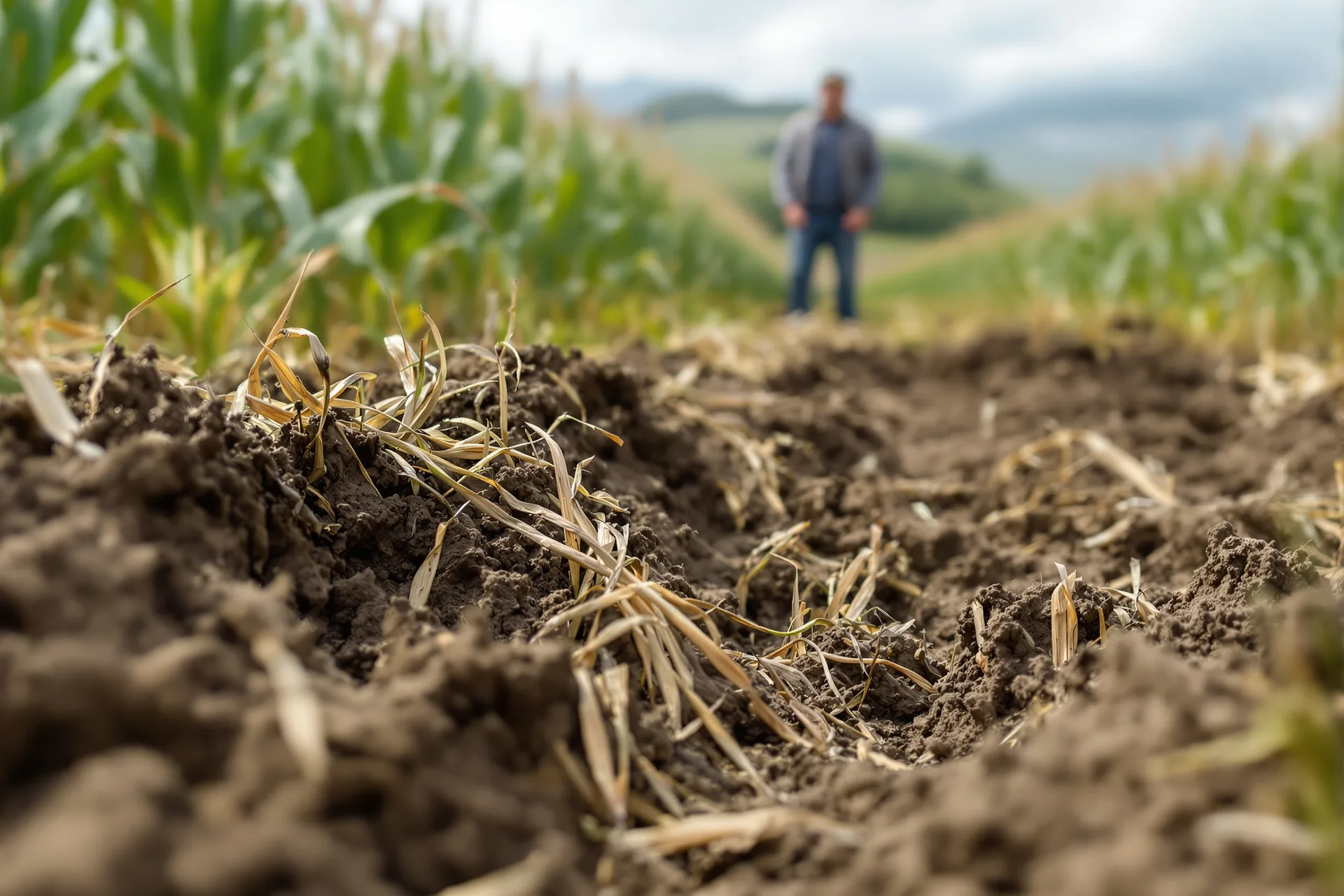
Damage to land encompasses more than just trampled grass; it affects agricultural land, gardens or even golf courses. The calculation of the damage is based on the crop loss suffered by the farmer. Associations such as the Bavarian Farmers' Association publish annual estimation guidelines, which serve as the basis for assessing the damage. A practical example from Uelzener Insurance puts damage to a seed grain field at EUR 7,500. The costs of restoring a destroyed golf green can even amount to as much as EUR 15,000. Compensation must cover the following items:
- The value of the destroyed crop at market price.
- Costs for restoring the area (e.g. ploughing, reseeding).
- Possible reductions in yield in subsequent years.
- A flat-rate allowance for effort of at least EUR 80 for the injured party.
This detailed calculation shows how quickly the costs add up and justifies an appropriate sum insured.
The role of insurance: How equine liability insurance protects against field damage
A horse liability insurance policy is the crucial shield against the financial consequences of damage to fields and crops. It first checks the question of liability and defends against unjustified claims, which is akin to a passive legal protection function. For justified claims, the insurer covers the costs up to the agreed sum insured, usually amounting to several million euros. It is important that damage to fields and crops is explicitly included in the scope of cover, which is usually the case with high-performance tariffs. Damage to a leased pasture or stable building, by contrast, falls under damage to rented property, another important component of your insurance policy. The insurance therefore not only covers the direct loss, but also manages the entire process with the affected farmer.
Check contract details: These are the clauses that matter
Not every policy is the same, so a careful look at the insurance terms and conditions is essential. Make sure that damage to fields and crops is not just mentioned in general terms, but covered in detail. An adequate level of cover of at least ten million euros is advisable, as personal injury claims in an accident can be considerably more expensive. Check too whether there is an excess, which lowers your premium but increases your risk in the event of a claim. Our expert tip: clarify whether your insurer specifies requirements for the condition of the pasture fence, as some providers set specific requirements here. A comprehensive horse liability insurance comparison helps you find the right cover for your individual situation.
Risk minimisation in practice: How to actively prevent field damage
Although liability is strict, you can significantly reduce the risk of an escape and any subsequent damage to fields by taking preventive measures. Careful and regular inspection of the pasture fencing is the most important measure. Experience shows that there are many ways to create secure fencing that go beyond a simple wire. The following points should be noted:
- Daily inspection of the fences for damage, especially after storms.
- Ensuring a functioning power supply for electric fences.
- Using at least two clearly visible safety fastenings on the pasture gate.
- Adjusting the fence height to the jumping ability of the horses being kept.
- Particular caution when introducing new horses to a herd, as this can cause unrest.
These measures not only minimise the risk, but in the event of a dispute also demonstrate your care as the keeper, which makes dealing with the horse insurance easier.
Special case: livery yard – who is liable for boarded horses?
If your horse is boarded at a livery yard, legal responsibility shifts in part. The stable operator acts as a keeper of the animal and is liable under Section 834 of the German Civil Code (BGB). Unlike the horse owner, the keeper of the animal can be exonerated if they prove that they took the necessary care. If the cause of the escape cannot be determined, a reversal of the burden of proof often applies: the stable must prove that it was not at fault. Typical mistakes made by livery yards include poorly maintained fences or untrained staff. Nevertheless, you remain in the chain of liability as the horse owner. Private horse liability insurance is also essential for boarders, as the stable’s public liability insurance does not always cover all damage caused by your specific horse. Clarify liability issues in the boarding agreement to avoid duplicate insurance or gaps.
Frequently asked questions
- Who is liable for damage to fields or crops when my horse is kept at a livery stable?
In principle, the stable operator is initially liable as the animal keeper if they have breached their duty of care (e.g. a defective fence). However, as the horse owner, you remain liable under what is known as secondary liability. Therefore, your own horse liability insurance is also essential for livery clients.
- How is the extent of damage to the field determined?
The amount is usually determined by an expert or on the basis of valuation guidelines issued by agricultural associations. The value of the crop, the cost of restoring the area and any consequential damage are taken into account.
- Are damages to rented pastures also considered land damage?
No, damage to rented or leased premises is regarded as damage to rented property. This is a separate component of horse liability insurance that you should pay attention to if you do not own the paddocks or stables yourself.
- What happens if it is not clear which horse in a herd caused the damage?
In such cases, all horse owners involved may be jointly and severally liable under Section 830 of the German Civil Code (BGB). This means that the injured party can turn to any one of the owners, who must then settle the full loss and recover the money proportionately from the others.
Sources
- [1]Laws on the Internet provides the full text of Section 833 of the German Civil Code (BGB), which regulates liability for animal keepers.
- [2]The Federal Statistical Office provides comprehensive statistics on animals and animal production in agriculture.
- [3]The Consumer Advice Centre provides detailed information on liability insurance for pets and its importance.
- [4]The Chamber of Agriculture publishes guideline rates that can serve as a basis for assessing damage in the agricultural sector.
- [5]The Federal Ministry of Food and Agriculture (BMEL) offers up-to-date statistics on livestock numbers in Germany.
- [6]The Bavarian State Research Centre for Agriculture (LfL) provides specialist information on crop production, which is relevant for understanding damage to fields.