Equine Surgery Insurance & Sarcoid Removal: Costs & Tariffs
Does equine surgery insurance cover sarcoid removal? Coverage, waiting periods, recurrence risk, and skin tumor exclusions explained.
All details are taken from the provider's linked product page and the contract documents (IPID/policy conditions) published there; the insurer's documents prevail. Premiums, benefits and the insurance product itself may change – please verify the details directly with the partner before signing up; only the information provided there is binding.
 Katrin StraubManaging DirectorInsurance expert with over 20 years of experience in the insurance industry.
Published on
Last updated on
12 min read
Table of Contents
Equine surgery insurance covers the costs of surgically removing a sarcoid, provided the skin tumor was not yet known when the contract was signed and the general waiting period has elapsed. Procedures under standing sedation or general anesthesia, including pre-examination and aftercare, are reimbursable. Because sarcoids carry a high risk of recurrence, insurers often treat repeated operations on the same tumor as one connected claim.
Equine surgery insurance
Horse surgery insurance via nextsure: Three flexible tariffs, reimbursement up to twice the GOT rate, and free choice of clinic worldwide. Protect your horse from high surgery costs – digital, transparent and uncomplicated.
Learn moreThe equine sarcoid as a surgical procedure
Medical basics and frequency
Surgery to remove an equine sarcoid is a significant cost risk for every horse owner. The equine sarcoid, accounting for around 40 percent of all cases, is the most common skin tumor in horses [1]. Caused by bovine papillomavirus (BPV), which is presumably transmitted by insects or direct contact, this tumor grows locally and aggressively and often spreads unnoticed. Veterinary medicine classifies these skin changes as semi-malignant, since they don't form metastases in internal organs but can severely damage and destroy the surrounding tissue [2]. Early diagnosis by the veterinarian is therefore absolutely crucial for treatment success. Surgical removal is, in many cases, the only way to permanently stop the uncontrolled growth. Prompt excision minimizes tissue loss. The horse must always be clearly identified via a life number or chip number to ensure insurance cover applies.
Diagnostics and surgical planning
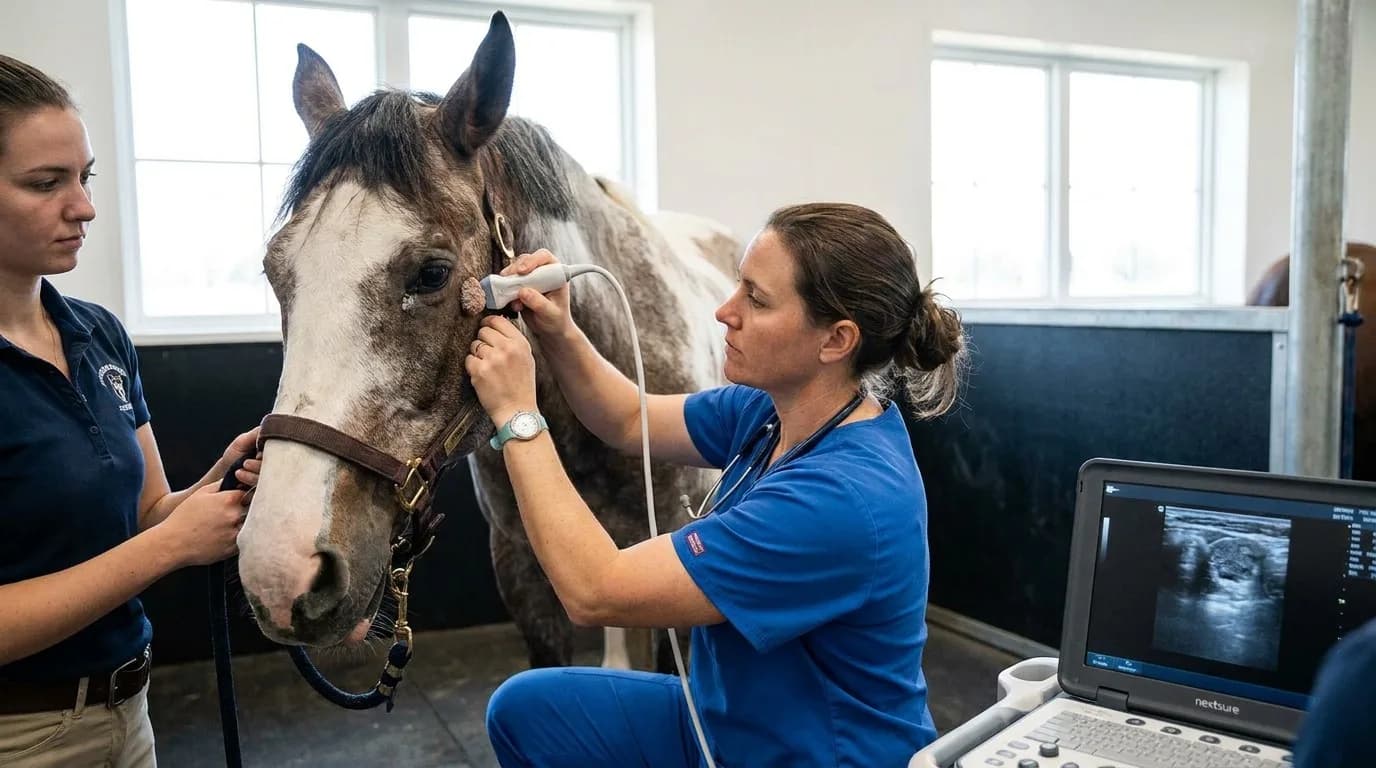
The decision to operate depends heavily on the tumor's exact location and rate of growth. Sarcoids significantly impair the horse's usability and wellbeing, especially in sensitive and mechanically stressed spots such as the head, neck, or girth area. The veterinary examination usually includes a tissue sample or a detailed visual assessment to determine the exact type of tumor beyond doubt. These preparatory diagnostic measures are essential for planning the optimal type of anesthesia and the safest surgical method. Precise diagnostics beforehand prevent unnecessary medical complications during the procedure. The costs of these pre-examinations quickly add up to several hundred euros. Precise diagnostics define surgical success. Special diagnostic procedures such as ultrasound or X-rays may also be necessary and must be provided to the insurer on request.
Requirements for cost reimbursement
Reimbursement through equine surgery insurance requires a clear and undisputed veterinary necessity for the procedure. Purely cosmetic procedures for visual improvement are consistently excluded from the scope of benefits in all providers' general insurance terms. However, once the sarcoid restricts the animal's health, pain-free movement, or normal function, the contractually agreed insurance cover applies. Under the terms of Barmenia Allgemeine Versicherungs-AG, a procedure counts as an operation if the skin or underlying tissue is cut more than just superficially. Complete documentation by the treating veterinarian is the indispensable basis for the insurer's later assessment of the claim. A detailed surgery report with precise justification ensures smooth and fast processing with the insurer. Clean documentation secures the benefit commitment. The invoice must be submitted no later than one month after treatment ends.
Cost coverage through equine surgery insurance
Billing according to the fee schedule (GOT)
Cost coverage through equine surgery insurance follows strict contractual guidelines that precisely define the scope of reimbursement. As a rule, the policy reimburses the veterinarian's fees according to the applicable veterinary fee schedule (GOT). Depending on the chosen tariff, cover extends to two, three, or even four times the GOT rate. The latter is especially relevant for emergency operations at night or on weekends, since an additional emergency call-out fee applies here. Barmenia, for example, reimburses fees up to four times the standard rate plus the emergency call-out fee if a veterinarian-confirmed emergency exists. Choosing the right fee rate protects against high out-of-pocket costs for complex procedures at specialist clinics. A solid tariff covers these peak costs. Comparing tariffs is always worthwhile.
Definition of the operation and types of anesthesia
A key aspect of reimbursement is the contractual definition of the operation itself and the approved anesthesia methods. A surgical procedure to restore health is covered regardless of whether it is performed under general anesthesia, deep sedation, local anesthesia, or standing sedation. Flexibility in choosing the type of anesthesia is extremely advantageous for sarcoid operations, since smaller tumors can often be removed while the horse is standing. This significantly reduces the life-threatening anesthesia risk for the horse while also lowering the overall cost. Insurers view these gentler methods favorably. Safety comes first. Also covered under this scope are primary and secondary wound sutures as well as stapling the wound after tumor removal.
Pre-examination and exceptional situations
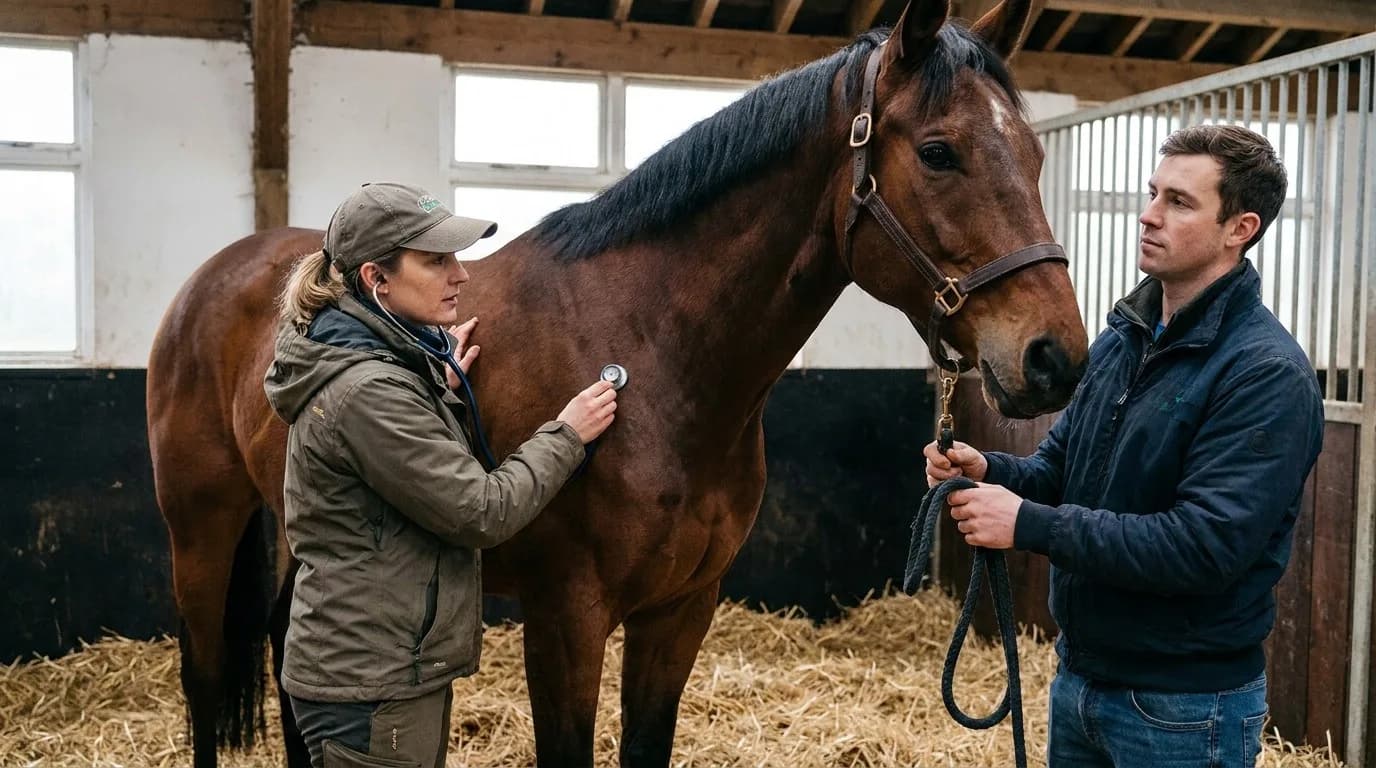
Besides the surgical procedure itself, the obligation to pay also covers the pre-operative examination. If the operation is actually carried out, the insurer reimburses the costs of the diagnostics that directly led to the procedure. This includes clinical examinations, biopsies, and expensive imaging procedures. If the horse tragically dies after anesthesia has begun, the operation is still treated as having been carried out for insurance purposes, even if the surgical procedure itself had not yet started. This rule provides financial security in extreme exceptional situations. However, the exclusions in equine surgery insurance must always be checked beforehand to avoid coverage gaps when billing. Contract details are decisive. If the operation is not carried out, the pre-examination is not covered under pure surgery tariffs.
Requirements for cost coverage of sarcoid surgery
- Veterinary necessity of the procedure is documented by the veterinarian.
- The sarcoid was not known as a pre-existing condition when the contract was signed.
- The tariff's general waiting period (usually 3 months) has fully elapsed.
- The skin or tissue is cut more than just superficially during the procedure.
- Billing is transparent according to the veterinary fee schedule (GOT).
Cosmetic procedures without a medical indication are generally excluded from insurance cover.
Pre-existing conditions and waiting periods for skin tumors
Handling known pre-existing conditions
Pre-existing conditions play an absolutely central role for later insurance cover when applying for a policy. Illnesses or congenital, genetically caused developmental defects that were already known to the owner at the time of application are permanently and without exception excluded from cover. This explicitly also applies to sarcoids already diagnosed or visible on the animal's body. Anyone wanting to insure a horse with a pre-existing condition must truthfully disclose these skin changes on the application without fail. The insurer will then generally document the specific risk through an individual exclusion for this condition and its consequences. Honesty on the application protects against losing all insurance cover. Transparency at application is mandatory. Fraudulent misrepresentation leads to immediate contestation of the contract.
General and special waiting periods
A general waiting period applies to newly occurring illnesses, which is three months for most providers on the market. If the point of the first clinically relevant symptoms or the veterinary diagnosis falls within this waiting period, the illness is likewise not covered. So if a sarcoid appears in the second month after the policy starts, the owner must bear the entire surgery cost themselves. Special waiting periods apply to other procedures: five days for colic surgery, six months for certain castrations, and twelve months for joint operations involving isolated shadowing or chips. Precisely calculating the contractual deadlines is essential for financial planning. Immediate cover usually only applies to accidents. Watch the deadlines.
Waiver of the waiting period with prior insurance
A waiver of the waiting period is possible under certain circumstances if prior insurance existed that transitions seamlessly into the new contract. This requires that the previous tariff offered a comparable scope of benefits for surgical procedures and that the benefit was part of the prior policy. When switching providers, the new insurer credits the existing prior insurance period toward the new waiting period. This is a decisive strategic advantage for horse owners who want to optimize their tariff without risking a dangerous coverage gap. Documenting the unbroken history is the policyholder's responsibility. A careful comparison of terms ensures continuous cover. Avoid gaps. However, higher reimbursement rates under the new tariff are often still subject to the waiting period.
Surgical methods and reimbursement eligibility
Modern laser surgery in focus
Surgical methods for removing sarcoids have technologically advanced and improved significantly in recent years. Besides classic surgical excision with a scalpel, modern laser surgery is increasingly used. A long-term scientific study shows that laser surgical removal has a very high success rate, with 83 percent of treated sites remaining recurrence-free long-term [3]. Such modern methods are generally reimbursable without issue, provided they are carried out according to the strict standards of veterinary practice and billed according to GOT. The choice of method rests with the treating veterinarian. Modern technology minimizes the risk of recurrence. Progress pays off. Insurers accept these methods because they significantly reduce the likelihood of costly follow-up procedures.
Exclusion of alternative treatment methods
Certain alternative treatment methods, however, are explicitly excluded in many insurers' terms and conditions. Providers such as Barmenia, for example, do not cover the costs of gold acupuncture or gold wire implants for pain therapy. Purely experimental therapies whose effectiveness has not been scientifically verified and documented in veterinary medicine are also completely excluded from the scope of benefits. Reimbursement of regenerative therapies such as stem cell treatments (PRP, IRAP) is often only included in expensive premium tariffs or up to a certain maximum limit. The difference between equine surgery insurance and health insurance is very clear here, since pure surgery tariffs are strictly focused on the surgical procedure. Alternative routes cost extra. Operations due to hoof abscesses are also often excluded, unless it is a diagnosed case of hoof cancer.
Medication and consumables
Reimbursement eligibility for medication and consumables is strictly tied to the veterinary prescription. Preparations administered during the operation or in the immediate clinical aftercare phase are fully covered. Special dietary feed, supplementary feed, or preventive vitamin supplements, on the other hand, are generally excluded, even if intended to support the horse's healing process. Transport costs for the horse to the clinic as well as travel and waiting fees for the treating veterinarian are likewise not covered by the policy. The clear distinction between medically necessary medication and general care products is a firm standard in the insurance industry. The veterinary clinic's invoice must clearly and verifiably itemize these costs. Transparency is mandatory. A detailed invoice significantly speeds up claims assessment.
Recurrence risk and repeated procedures
High recurrence risk with sarcoids
Recurrence risk is a key cost driver for insurers and owners with equine sarcoids. After surgical removal, there is a very high risk that the tumor will return at exactly the same spot [1]. Sarcoids on the head and neck in particular show a statistically much higher risk of recurrence [3]. If a horse needs to be operated on multiple times for the same tumor, special tariff rules apply at insurers. Insurers often do not treat these follow-up procedures as new, isolated claims but combine them administratively. A close review of the contract terms is essential here. Recurrences are expensive. Clearly identifying the horse via its chip number is essential for repeated claims.
The connected insurance claim
If multiple operations are medically necessary for the same sarcoid, these procedures count, under Barmenia's terms, as a single connected insurance claim. This has a direct and noticeable effect on how follow-up treatment periods and any annual maximum compensation limits are calculated. In this scenario, the claim only ends once the follow-up treatment period after the last operation performed has elapsed. For the horse owner, this means that annual benefit limits or deductibles may be calculated differently than for independent illnesses. A tariff with no annual maximum limit offers the greatest financial security for recurring tumors. Long-term planning is crucial. Check the limits. The pre-operative examinations for each of these follow-up procedures, however, remain part of the connected claim.
Documentation for new tumors
Ongoing, precise documentation by the veterinarian is absolutely essential for repeated procedures. The insurer needs detailed medical reports to assess exactly how the operations are connected. If a completely new sarcoid appears at a different location on the body, this can be treated as a new claim, provided no systemic underlying condition is used as grounds for exclusion. Communication with the claims department should always be proactive and transparent. Transparency when submitting documents prevents unnecessary delays in payment of the reimbursement. An experienced broker helps report such complex cases correctly. Professionals help here. The invoice must without fail include the diagnosis and the billed service item according to the applicable GOT.
Aftercare and further treatment
Duration of covered aftercare
Aftercare following sarcoid surgery is of the utmost importance for lasting healing success and preventing infections. Equine surgery insurance covers the costs of follow-up treatment within a contractually fixed period. This period varies considerably between providers and tariffs on the market. R+V's surgery cost insurance reimburses aftercare, depending on the tariff, for up to 14 or 15 days from the day of surgery [4]. Uelzener insurance, by contrast, offers coverage for up to 17 days after the procedure [5]. A longer aftercare period is a major advantage for complicated wound healing. Days count. If the insurance contract ends before follow-up treatment is complete, ongoing follow-up treatment often remains covered.
Scope of follow-up treatment measures
Follow-up treatment includes all medical measures necessary to restore the horse's health or prevent acute deterioration. This covers regular wound checks, extensive dressing changes, and the administration of painkillers or antibiotics. Inpatient accommodation costs at the veterinary clinic are also covered during this critical phase, provided they are medically indicated. Premium tariffs, such as Barmenia's, even include up to five physiotherapy sessions of up to 60 minutes each after the regular period has ended. Such valuable additional benefits greatly promote the horse's fast rehabilitation. The quality of aftercare determines long-term success. Care is expensive. Physiotherapy can be carried out by a veterinarian or a certified equine physiotherapist following referral.
Limits of surgery insurance
If wound healing after sarcoid removal is very prolonged and exceeds the covered aftercare period, the owner must bear the further costs entirely themselves. This is where the strategic importance of comprehensive equine health insurance becomes clear, since it also permanently covers conservative treatment independent of a surgical procedure. Alternative healing methods such as acupuncture, homeopathy, or magnetic field therapy are often included in the aftercare phase of surgery tariffs, provided their effectiveness is documented in veterinary science and they are billed according to GOT. Precisely coordinating the treatment plan with the tariff terms saves real money. Forward-looking planning is essential. Spot the gaps. Reimbursement for regenerative therapies, however, is often limited to special premium modules.
Tariff comparison and strategic contract selection
Reimbursement rates and emergency call-out fees
A detailed tariff comparison is the indispensable basis for a strategic choice of contract in animal insurance. The significant differences between providers are often hidden deep in the details of the general insurance terms and conditions. A key criterion is the maximum reimbursement rate under the veterinary fee schedule. While cheap basic tariffs often only cover twice the rate, strong premium tariffs pay out up to four times the rate, including the expensive emergency call-out fee. R+V even reimburses costs in certain tariffs independently of the GOT rate [4]. This flexibility is a hard strategic advantage for specialized procedures at specialist clinics. A strong tariff protects against co-payments. Comparing pays off. Nextsure acts here as a licensed insurance broker under Section 34d of the German Trade Regulation Act (GewO) and offers hand-picked tariffs.
Cancellation waiver in the event of a claim
Another decisive differentiator is how the insurer handles the right of termination in the event of a claim. Some customer-friendly insurers waive their ordinary right of termination entirely after a certain contract term. Barmenia, for example, waives its right of termination after a claim from the seventh policy year onward in its premium cover, provided the horse was no older than seven at the start of the contract. This clause provides enormous, lasting planning security for the owner. Especially with chronic tendencies such as sarcoid formation, protection against termination by the insurer is a decisive lever. Long-term security beats short-term premium savings. Check contracts carefully. A right of termination due to breach of the pre-contractual duty of disclosure, however, always remains available to the insurer.
Deductibles and cost-effectiveness
The choice of deductible directly and noticeably affects the monthly premium. A tariff with no deductible is usually more expensive but covers costs incurred from the very first euro. With a percentage-based deductible, the owner bears a fixed share of the total bill, which is risky for expensive operations. For removing a sarcoid, which can quickly reach mid four-figure amounts, a fixed deductible of, say, €250 per policy year is often the more economical choice. Analyzing the horse's individual risk profile leads to the optimal tariff structure. Nextsure provides the data basis for this decision. Advice brings clarity. Insurers review premiums annually based on statistical findings from the German Insurance Association (Gesamtverband der Deutschen Versicherungswirtschaft) to ensure contracts remain sustainable long-term.
| Provider / tariff feature | Max. GOT rate | Aftercare period | Cancellation waiver |
|---|---|---|---|
| Barmenia premium cover | Up to 4x incl. emergency service | Depends on tariff + 5x physio | Yes, from the 7th policy year |
| Uelzener surgery cover | Depends on tariff | Up to 17 days | Depends on tariff |
| R+V surgery costs | Independent of GOT rate | 14 to 15 days | Depends on tariff |
The exact benefits vary depending on the chosen tariff module. Data as of 2024/2026.
Frequently asked questions
- Does equine surgery insurance cover sarcoid removal?
Yes, provided there is veterinary necessity, the tumor was not known as a pre-existing condition when the contract was signed, and the general waiting period has elapsed.
Sources
Conclude directly online
Verified partner tariffs at no extra cost. The button takes you straight to the provider's calculator.
 Barmenia
Horse surgery insurance
Surgery cost cover for horses in case of illness and accidents, including diagnostics and after-care.
- Waiting period:
- 3 months (colic surgery: 5 days, accidents: none)
- Coverage abroad:
- worldwide, up to 12 months
- Maximum benefit:
- depends on the cover level, as stated in the policy
- Surgery costs for illness and accidents, including tooth extractions and root canal treatment
- Pre-surgical examination (X-ray, endoscopy, biopsy, lab work)
- After-care including acupuncture, homeopathy, physiotherapy, laser therapy
- Emergency veterinary service up to 4x the standard veterinary fee schedule (GOT) rate plus the emergency callout fee
- Premium cover: up to 5 physiotherapy sessions (max. 60 minutes each) after the after-care period ends
- Once per animal: surgery costs for a birth-related, medically necessary caesarean section
Key exclusions
- Illnesses and developmental abnormalities known at the time of application
- Hoof abscesses and hoof ulcers (exception: hoof cancer)
- Surgery due to cryptorchidism
- Neutering that isn't medically necessary
Service-Champions GOLD: Nr. 1 der Versicherer im Multikanalvertrieb (ServiceValue, 10/2024)
Barmenia (Anbieter der Pferde-OP-Versicherung)
Special waiting periods: 12 months for joint surgery (chip fragments, OC/OCD, Birkeland fractures), 6 months for medically necessary neutering; Premium cover includes a waiver of the insurer's right to cancel from the 7th insurance year.
Fact sheet: benefits, exclusions and waiting periods in detail
All details are taken from the provider's linked product page and the contract documents (IPID/policy conditions) published there; the insurer's documents prevail. Premiums, benefits and the insurance product itself may change – please verify the details directly with the partner before signing up; only the information provided there is binding.
Information last updated: July 2026 · Source: provider product information (IPID/policy conditions)