Dog Health Insurance for Hip Dysplasia: Costs & Tariffs
Does dog health insurance cover hip dysplasia? Surgery costs, TEP implants, waiting periods, and cover for at-risk breeds.
All details are taken from the provider's linked product page and the contract documents (IPID/policy conditions) published there; the insurer's documents prevail. Premiums, benefits and the insurance product itself may change – please verify the details directly with the partner before signing up; only the information provided there is binding.
 Katrin StraubManaging DirectorInsurance expert with over 20 years of experience in the insurance industry.
Published on
12 min read
Table of Contents
Dog health insurance covers the costs of treatment and surgery for hip dysplasia (HD), provided the condition was not yet known when the contract was taken out. For breeds prone to it, such as the German Shepherd or the Labrador, taking out a policy early is crucial. Tariffs differ in reimbursement limits, waiting periods for implants, and cover for artificial hip joints. Comparing tariffs in good time protects against high surgery costs.
Dog Health Insurance
Comprehensive dog health insurance from nextsure: Optimally protect your loyal companion against vet costs, operations, and unforeseen treatments. Get informed now and calculate your rate!
Learn moreThe Basics of Hip Dysplasia and Why Cover Matters
Medical Definition and Causes
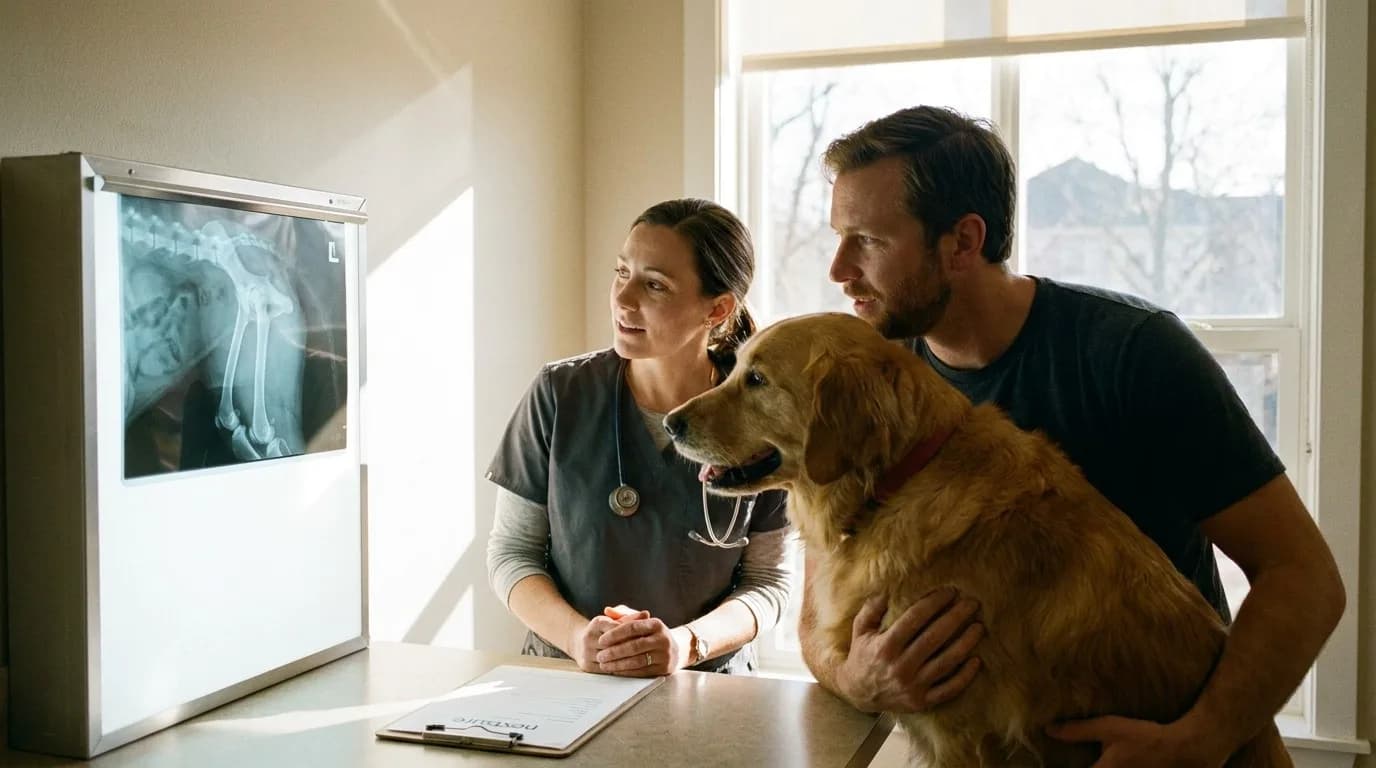
Hip dysplasia is one of the most commonly diagnosed joint conditions in dogs. This genetically caused malformation of the hip joint leads to painful arthritis and severely limits the animal's mobility. [5] Breeds especially prone to it include the German Shepherd, the Golden Retriever, and the Bernese Mountain Dog, among others. Early diagnosis is crucial to successful treatment. Vets use imaging methods such as X-rays under anesthesia or computed tomography to precisely classify the severity of the malformation. The exact Norberg angle measurement determines the degree of dysplasia. Treatment costs quickly add up to several thousand euros. A strong dog health insurance policy cushions these unpredictable financial burdens. This cover is essential. Without a suitable policy, owners bear the full financial risk of this complex joint condition.
The Influence of Environmental Factors
Genetic predisposition alone does not necessarily lead to the immediate onset of severe symptoms. [1] Environmental factors such as too-rapid weight gain in puppyhood, poor diet, or excessive physical strain encourage the condition to develop. An incorrect calcium-to-phosphorus ratio in food significantly speeds up uneven bone growth. Preventive measures can delay the progression, but a full cure is not possible with conservative treatment. Painkillers and physiotherapy ease the symptoms in early stages. But once the arthritis progresses, surgery becomes unavoidable. Surgery is often the only way to give the dog a pain-free life. This is where solid cover shows its value. Prevention alone is not enough. In severe cases, surgical intervention remains the only medical way out.
The Financial Scale of the Diagnosis
Many dog owners underestimate the financial scale of such a diagnosis. Besides the pure surgery costs, there are expenses for the preliminary examination, anesthesia, and intensive aftercare. The Gebührenordnung für Tierärzte (GOT), Germany's veterinary fee schedule, regulates billing rates, and clinics often charge three or four times the standard rate for complicated procedures. Comprehensive cover covers these cost blocks. Choosing the right tariff requires a precise analysis of the individual risks. Specialized platforms such as nextsure offer a transparent way to compare hand-picked tariffs. iMatch GmbH acts as a licensed insurance broker under Section 34d(1) of the German Trade Regulation Act (GewO). Transparency is crucial here. A detailed look at the policy terms reveals the real strength of each provider's cover.
Dog Breeds at Higher Risk of Hip Dysplasia
- German Shepherd
- Labrador Retriever
- Golden Retriever
- Bernese Mountain Dog
- Rottweiler
- Boxer
- Saint Bernard
Owners of these breeds should think about cover especially early.
The Cost of HD Surgery and Hip Replacement in Dogs
Total Hip Replacement as the Gold Standard
The costs of surgical intervention for joint problems vary widely. Simple pain management is inexpensive, while complex procedures strain the budget. For advanced arthritis, the artificial hip joint, known as total hip replacement (Totalendoprothese, TEP), is considered the gold standard in veterinary medicine. [4] Implanting such a TEP, including preliminary examinations, anesthesia, and aftercare, quickly costs between €3,500 and €5,000 per hip. Modern implants are made of titanium and anchored in the bone without cement. This amount exceeds the financial reserves of many pet owners. The exact costs of health insurance for dogs depend on the scope of cover chosen. Comparing reimbursement limits is therefore essential. A TEP is expensive.
Alternative Surgical Procedures
Besides the TEP, other surgical procedures exist for treating hip dysplasia. Femoral head resection, in which the head of the thigh bone is removed, is a cheaper alternative for lighter dogs. Here, muscle and connective tissue form a replacement joint. The cost of this procedure is usually between €1,000 and €1,800. Another option is triple pelvic osteotomy (TPO), used mainly in young dogs without existing arthritis. In a TPO, the pelvis is cut in three places and rescrewed. Here too, owners must expect costs of around €1,500 to €2,500. Each procedure requires specific aftercare. Alternatives have their limits.
Rehabilitation and Aftercare Costs
Aftercare is a major cost factor that is often forgotten in the calculation. Physiotherapy, an underwater treadmill, and specific pain medication are essential for successful rehabilitation. These measures often span several months and cause additional costs of several hundred euros. A good policy covers not just the surgery itself, but also these essential aftercare costs. The general terms of the tariffs regulate the exact duration of reimbursable aftercare. Usually, periods of 15 to 30 days after the procedure are covered. Some premium tariffs extend this period to up to 120 days. Aftercare is a cost driver.
What Dog Health Insurance Covers for Joint Conditions
Scope of Basic Medical Cover
The benefits of a modern policy go far beyond basic cover. General pet health insurance reimburses veterinarily necessary medical treatment resulting from a health impairment. This includes imaging diagnostics such as X-rays or MRI, which are essential for diagnosing hip dysplasia. Cover also includes pre-surgical examinations and medication. Billing is based on the Gebührenordnung für Tierärzte (GOT). High-quality tariffs pay out up to four times the GOT rate, which is especially important for emergency service or specialized veterinary clinics. Uelzener's information sheet confirms reimbursement based on the agreed maximum GOT rate. The GOT is decisive.
Reimbursement Limits and Material Costs
A crucial criterion when choosing a tariff is the maximum sum insured per year. Some providers cap reimbursement at fixed amounts such as €2,000 or €3,000 a year. For a bilateral TEP operation, this amount is not enough. Premium tariffs, by contrast, offer an unlimited annual maximum. This means no coverage gap arises even in complicated cases or with complications. In addition, cover for prostheses and implants is a critical point. Not every basic tariff fully includes the material costs for an artificial hip joint. Checking the material-cost clause carefully before signing up is essential. Limits carry financial risks.
Alternative Treatments and Pain Management
Reimbursement of alternative treatments is becoming increasingly important. Many owners turn to gentle methods for chronic joint pain. Gold-bead acupuncture is a recognized method for lasting pain relief in arthritis. [2] Some insurers cover these costs as part of their premium packages. Homeopathic treatments or laser therapy can also be part of the benefits catalog. nextsure precisely analyzes these specific benefit components when selecting tariffs. This gives customers a transparent overview of the actual strength of cover from different providers. Including physiotherapy in the benefits catalog is another quality marker. Alternative methods are in demand.
Waiting Periods and Special Rules for Hereditary Conditions
Extended Periods for Joint Conditions
Waiting periods are a central aspect of insuring hereditary conditions. As a rule, most providers apply a general waiting period of 30 days after the contract begins. For breed-specific hereditary conditions such as hip dysplasia or elbow dysplasia (ED), however, many insurers define different periods. These special waiting periods can run up to 12 months. [2] If the condition occurs within this blocking period, there is no entitlement to reimbursement for the resulting treatment. This protects the community of policyholders from opportunistic sign-ups. Uelzener excludes the consequences of conditions that occur before the respective waiting period has elapsed. Waiting periods are strictly regulated.
Defining the Onset of the Condition
The exact definition of when a condition begins is often a matter of debate. The onset is not considered to be the day of surgery, but rather the first vet visit at which symptoms are documented. If a dog shows lameness within the waiting period and the vet raises a suspicion of HD, cover does not apply. This is why taking out a policy in puppyhood, long before the first clinical signs appear, is enormously important. Only then does cover reliably apply when it matters. Documentation in the patient record is the decisive criterion for the insurer. The first suspicion counts.
Exceptions and Immediate Cover
A few tariffs on the market do without extended waiting periods for hereditary conditions or offer special puppy tariffs with immediate cover. However, these offers are rare and are often tied to strict health checks at the time of application. The digital platform nextsure analyzes policy terms in detail and transparently flags such clauses. A close look at the Insurance Product Information Document (IPID) is essential. All exclusions and time limits are clearly documented there. Uelzener defines the start of cover in the insurance policy, provided the first premium was paid on time. The IPID provides clarity.
Exclusion Criteria and Pre-Existing Conditions in Detail
Handling Known Diagnoses
Exclusion criteria define the limits of contractual cover very precisely. Treatments already known, already started, or already recommended by a vet before the contract began are generally excluded from the duty to pay benefits. The same applies to the consequences of defects and conditions that already existed when the insurance was taken out. So if a dog already has diagnosed hip dysplasia, the new insurer excludes this specific condition. Other, unrelated conditions, however, remain covered. Answering the health questions honestly is essential. Uelzener states this exclusion unambiguously in its terms. Pre-existing conditions are always excluded.
Consequences of Concealed Symptoms
If an owner conceals pre-existing conditions when applying, they put their entire cover at risk. In the event of a claim, the insurer has the right to request the patient record from the treating vet. If it turns out that symptoms were already documented before the contract began, the company can refuse to pay and terminate the contract. This also applies to seemingly harmless signs such as an uneven gait that is later identified as an early stage of HD. Transparency is the basis of reliable cover. False statements inevitably lead to the loss of cover. Honesty is a contractual duty.
Later Diagnoses in Dogs Insured While Healthy
A special case is congenital malformations that were still completely symptom-free and undiagnosed when the contract was taken out. If a young Labrador is insured and the HD diagnosis is only made two years later, this counts as a regular insured event. The insurer covers the costs under the tariff terms. For households with multiple pets, health insurance for cats is also a sensible addition. The same principles for pre-existing conditions and health questions apply here. The clean distinction between a congenital predisposition and a diagnosed condition is legally decisive. Later diagnoses are covered.
Tariff Comparison: Surgery Cover vs. Full Insurance
The Focus of Surgery Cost Insurance
A tariff comparison reveals the conceptual differences between the available cover models. The market essentially offers two variants: pure surgery cost insurance and full health insurance. Surgery insurance covers only veterinarily necessary medical treatment directly connected to a surgical procedure. This includes the surgery itself, anesthesia, and immediate pre- and aftercare. Conservative treatments such as ongoing pain management without surgery are not reimbursed here. This variant has a noticeably lower monthly premium. Uelzener strictly defines insured events under surgery insurance as medical treatment resulting from an operation. Surgery cover is focused.
The Comprehensive Protection of Full Insurance
Full health insurance offers a much broader safety net for the animal. Besides surgery costs, it also covers outpatient and inpatient medical treatment for illness. This includes diagnostics, medication, dressing materials, and often preventive measures such as vaccinations or deworming up to a certain budget. For a chronic condition like hip dysplasia, treated conservatively over years with medication and physiotherapy, full insurance shows its strengths in full. The higher premiums pay for themselves quickly for chronically ill animals. Lab tests and imaging diagnostics are included as standard here. Full insurance offers all-round protection.
Decision Criteria for Pet Owners
The choice between the two models depends on the owner's individual need for security and their financial scope. Anyone primarily wanting to insure against the risk of surgery costs running into several thousand euros is well served by a strong surgery tariff. Anyone who also wants to cover ongoing vet costs for diagnostics and medication should choose full insurance. nextsure supports this decision with detailed model calculations. A needs-based choice prevents over-insuring while closing critical coverage gaps. Analyzing the individual breed predisposition should be factored into this decision. The choice requires foresight.
| Benefit | Surgery Insurance | Full Health Insurance |
|---|---|---|
| Costs for surgical procedures (e.g., TEP) | Yes, per tariff limits | Yes, per tariff limits |
| Diagnostics before surgery (X-ray, MRI) | Yes, if surgery follows | Yes, even without subsequent surgery |
| Conservative pain management (without surgery) | No | Yes |
| Physiotherapy | Only as direct aftercare | Yes, often long-term too |
| Monthly premium | Cheaper | Higher |
Exact reimbursement limits vary by the chosen insurer and tariff tier.
Breed-Typical Risks: Labrador, German Shepherd, and Others
Genetic Predisposition of Large Breeds
The risks for certain joint conditions are unevenly distributed across the dog population. Large, heavy breeds show a significantly higher prevalence of hip and elbow dysplasia. The most common breed-typical patients include the Labrador Retriever, the German Shepherd, the Rottweiler, and the Boxer. [3] Breeding efforts have reduced the incidence in recent years, but the underlying genetic risk remains. Insurers know these statistics precisely and calculate their premiums accordingly. Claims rates for these breeds have historically been above average. Genetics determine the risk.
Effects on Tariff Design
Some companies charge specific premium surcharges for defined risk breeds or exclude certain hereditary conditions entirely in basic tariffs. It is therefore essential to check the fine print. A tariff that suits a mixed breed perfectly may be inadequate for a purebred Bernese Mountain Dog if HD surgery is excluded. nextsure carefully checks the platform's hand-picked tariffs for exactly these hidden exclusions. This ensures that even at-risk breeds get reliable insurance cover. Correctly stating the breed when applying is essential for premium calculation. Breed surcharges are standard industry practice.
Prevention and Living Conditions
Besides dogs, there are also specific insurance solutions for other animals. Cover for hobby farm animals follows similar risk-assessment principles. For dogs, education about breed-typical conditions is the first step toward proper prevention. Owners of at-risk breeds should pay particular attention to their animal's weight and joint-friendly rearing. These preventive measures don't replace insurance, but they significantly reduce the likelihood of an early, severe disease course. Climbing stairs and abrupt stops should be strictly avoided in the first year of life. Prevention protects the joints.
The Optimal Time to Take Out a Policy
Advantages of Signing Up Early, in Puppyhood
The timing of the contract decisively determines the scope of cover. The golden rule is: as early as possible. The optimal time to sign up is in puppyhood, right after the dog moves in. At this point, no pre-existing conditions are usually documented yet. The dog goes through the waiting periods healthy and is then fully covered afterward. Young animals also often benefit from cheaper starting premiums, which offer financial advantages over the long term. The health check is usually completely unproblematic for an eight-week-old puppy. Signing up early secures benefits.
Risks of a Delayed Sign-Up
If you wait to sign up until the first symptoms, such as a stiff gait after getting up, appear, it is usually too late for full cover of HD. The diagnosis is then treated as a pre-existing condition and excluded from cover. Even if the dog is already older but still healthy at the time of signing up, premiums rise noticeably with a higher entry age. Some insurers refuse to accept new dogs entirely from a certain age, for example from the seventh year of life onward. The risk for the insurer simply becomes too high with age. Delay costs real money.
Long-Term Commitment and Switching Providers
Switching insurance companies later is also problematic for older dogs. With a new policy, waiting periods start over, and all conditions that arose in the meantime count as pre-existing with the new provider. Choosing the right partner from the start is therefore crucial. nextsure supports this long-term decision with objective comparisons and data-driven expertise. A well-chosen tariff accompanies the dog for life and secures the best possible medical care when it matters. Uelzener allows cancellation with 14 days' notice to the end of the month. Switching carries risks.
Frequently asked questions
- Does Dog Health Insurance Pay for HD Surgery for Hip Dysplasia?
Yes, most strong dog health and surgery insurance policies cover the costs of surgery for hip dysplasia. The condition must not have been known when the contract was taken out, and the tariff's waiting period must have elapsed. The exact reimbursement amount depends on the agreed maximum limits of the respective tariff.
- Does HD Count as a Pre-Existing Condition in At-Risk Breeds Like the German Shepherd or Labrador?
Simply belonging to an at-risk breed does not automatically make HD a pre-existing condition. Hip dysplasia only counts as pre-existing once it has been diagnosed by a vet, or if early symptoms were already documented before the contract began. A healthy German Shepherd or Labrador can be fully insured without any problem.
- What Does Hip Surgery Cost for a Dog?
Costs depend heavily on the surgical procedure chosen. Femoral head resection usually costs between €1,000 and €1,800. Implanting an artificial hip joint (total hip replacement) is considerably more expensive and can cost between €3,500 and €5,000 per treated hip, including preliminary examinations, anesthesia, and aftercare.
- Is an Artificial Hip Joint (TEP) Covered?
Whether a total hip replacement (TEP) is covered depends on the chosen tariff. Premium tariffs usually cover both the surgery costs and the material costs for the implant. Basic tariffs often exclude expensive prostheses or cap the reimbursement amount at a level that isn't enough for a TEP.
- Is There a Waiting Period for Joint Conditions?
Yes, many insurers define special waiting periods for breed-specific hereditary conditions such as hip dysplasia (HD) or elbow dysplasia (ED). These can be considerably longer than the general 30-day waiting period and range between 6 and 12 months, depending on the provider. Signing up early is therefore important.
- Can a Dog With Already Diagnosed HD Still Be Insured?
A dog with already diagnosed hip dysplasia can generally still be insured. However, the existing HD is treated as a pre-existing condition and excluded from the duty to pay benefits. Surgery or treatment resulting from this specific condition must then be paid for by the owner themselves. Other conditions remain covered.
Sources
Conclude directly online
Verified partner tariffs at no extra cost. The button takes you straight to the provider's calculator.
 Hepster
Dog health insurance
Full health coverage for dogs across five tariffs; the top tariff reimburses 100% with no annual maximum.
- Reimbursement:
- 50-100% depending on the tariff
- Deductible (Selbstbeteiligung):
- 0-50% depending on the tariff
- Waiting period:
- 1 month
- GOT rate:
- up to 4x (Premium/Superior)
- Treatment and surgery for illness and accidents, reimbursed at 50-100% depending on the tariff
- Veterinary clinic stays: up to 10, 15, or 20 days depending on the tariff
- Wellness allowance: €30 (Basis), €70 (Premium), €100/year (Superior)
- From Premium: physiotherapy (up to €200 without surgery, €500 after surgery), tooth extractions, homeopathy/acupuncture
- Superior: prosthetics/orthotics allowance of up to €650
- Vet fees covered up to 3x the standard veterinary fee schedule (GOT) rate on Basis, up to 4x on Premium/Superior
Key exclusions
- Known chronic or congenital conditions
- Pregnancy, false pregnancy, and birth
- Illnesses treated in the 6 months before the policy started
- Basis tariffs: neutering/spaying that isn't medically necessary
Trusted Shops: 4,5/5 „Sehr gut“ (2.600 Bewertungen)
hepster insgesamt (Anbieterbewertung, alle Versicherungen)
Monthly subscription: minimum term 12 months, notice period 3 business days before the end of the billing period; MRI/CT scans in the Basis tariffs are covered at 50%. Insurer: Towarzystwo Ubezpieczen Europa S.A.
Fact sheet: benefits, exclusions and waiting periods in detail
 Cleos Welt
Dog health insurance
Combined health and surgery cover for dogs, reimbursing vet costs up to the agreed maximum veterinary fee schedule (GOT) rate.
- Reimbursement:
- up to the agreed maximum GOT rate
- Coverage abroad:
- 12 months
- Notice period:
- 14 days before the end of the month
- Treatment for illness and accidents
- Surgery, including pre-surgical diagnostic examinations
- Pre- and post-treatment following a covered surgery
- Lab work and imaging diagnostics, plus medically necessary medication
- Coverage abroad: 12 months
Key exclusions
- Treatments and surgeries already known or recommended before the policy started
- Illnesses occurring before the waiting period ends
- War, earthquakes, floods, epidemics, and pandemics
- Damage caused intentionally
CHECK24 Tarifnote 1,0 „exzellent“
Cleos Welt Hundekrankenversicherung
FOCUS MONEY: Beste Tierkrankenversicherung (Premiumtarif), Ausgabe 14/2026
Cleos Welt Hundekrankenversicherung
ASCORE „Tarif des Monats“ 08/2025
Cleos Welt Tierkranken Hund, Rundum Plus Schutz inkl. Vorsorge & SOS-Schutz
CHECK24 Tarifnote 1,0 „exzellent“
Cleos Welt Hunde-OP-Schutz (Rundum Plus inkl. SOS-Schutz)
„Kundenfavorit“: über 50.000 geschützte Haustiere
Cleos Welt Tierversicherungen (Tierkranken Hund)
Google Rezensionen: 4,5/5 Sterne (210 Bewertungen)
Cleos Welt insgesamt (Anbieterbewertung, alle Versicherungen)
Contract term at least 1 year with automatic renewal; sum insured and deductible (Selbstbeteiligung) as stated in the policy. Insurer: Uelzener Allgemeine Versicherungs-Gesellschaft a.G.
Fact sheet: benefits, exclusions and waiting periods in detail
Hepster
Dog surgery insurance
Surgery-only cover for dogs across four tariffs; from year 2 or 3, depending on the tariff, there is no annual maximum.
- Reimbursement:
- 80-100% depending on the tariff
- Deductible (Selbstbeteiligung):
- 0-20% depending on the tariff
- Waiting period:
- 1 month
- Surgery under anesthesia or sedation for illness and accidents
- Post-treatment: up to day 14, 15, or 20 depending on the tariff
- Neutering/spaying: up to €250 on Basis, unlimited from Premium
- From Premium: tooth extractions, post-surgery physiotherapy (up to 20 days/€500), homeopathy/acupuncture
- Superior: prosthetics/orthotics allowance of up to €650
- Vet fees covered up to 3x the standard veterinary fee schedule (GOT) rate on Basis, up to 4x on Premium/Superior
Key exclusions
- Known chronic or congenital conditions
- Illnesses that required surgery in the 6 months before the policy started
- Surgery performed to meet breed-standard appearance
- Basis: tooth extractions, root canal treatment, and dental/jaw corrections
Trusted Shops: 4,5/5 „Sehr gut“ (2.600 Bewertungen)
hepster insgesamt (Anbieterbewertung, alle Versicherungen)
Monthly subscription: minimum term 12 months, notice period 3 business days before the end of the billing period; prosthetics/orthotics have a 12-month waiting period. Insurer: Towarzystwo Ubezpieczen Europa S.A.
Fact sheet: benefits, exclusions and waiting periods in detail
Hepster Dog health insurance: Dog health insurance tariff overview
| Tariff | Reimbursement | Deductible | Annual maximum |
|---|---|---|---|
| Basis20 | 80% | 20%, min. €250 per claim | €2,500 |
| Basis50 | 50% | 50%, min. €500 per insurance year | €2,500 |
| Premium | 80% | 20% per claim | Year 1: €10,000, year 2: €15,000, from year 3: unlimited |
| Superior10 | 90% | 10% per claim | none |
| Superior0 | 100% | none | none |
Hepster Dog surgery insurance: Dog surgery insurance tariff overview
| Tariff | Reimbursement | Deductible | Annual maximum |
|---|---|---|---|
| Basis | 80% | 20%, min. €250 per claim | €2,000 |
| Premium | 80% | 20% per claim | Year 1: €2,000, year 2: €5,000, from year 3: unlimited |
| Superior10 | 90% | 10% per claim | Year 1: €5,000, from year 2: unlimited |
| Superior0 | 100% | none | Year 1: €5,000, from year 2: unlimited |
All details are taken from the provider's linked product page and the contract documents (IPID/policy conditions) published there; the insurer's documents prevail. Premiums, benefits and the insurance product itself may change – please verify the details directly with the partner before signing up; only the information provided there is binding.
Information last updated: July 2026 · Source: provider product information (IPID/policy conditions)