Borrowed film equipment insurance: costs & cover
Protect your film project from high costs caused by damage to borrowed equipment. Compare options and request your risk analysis.
All details are taken from the provider's linked product page and the contract documents (IPID/policy conditions) published there; the insurer's documents prevail. Premiums, benefits and the insurance product itself may change – please verify the details directly with the partner before signing up; only the information provided there is binding.
 Katrin StraubManaging DirectorInsurance expert with over 20 years of experience in the insurance industry.
Published on
Last updated on
10 min read
Table of Contents
A moment’s inattention on set, and the hired camera worth €10,000 is damaged. Without the right cover, that can mean the financial end of a project. Find out how to calculate the cost of insurance for borrowed film equipment and avoid liability pitfalls.
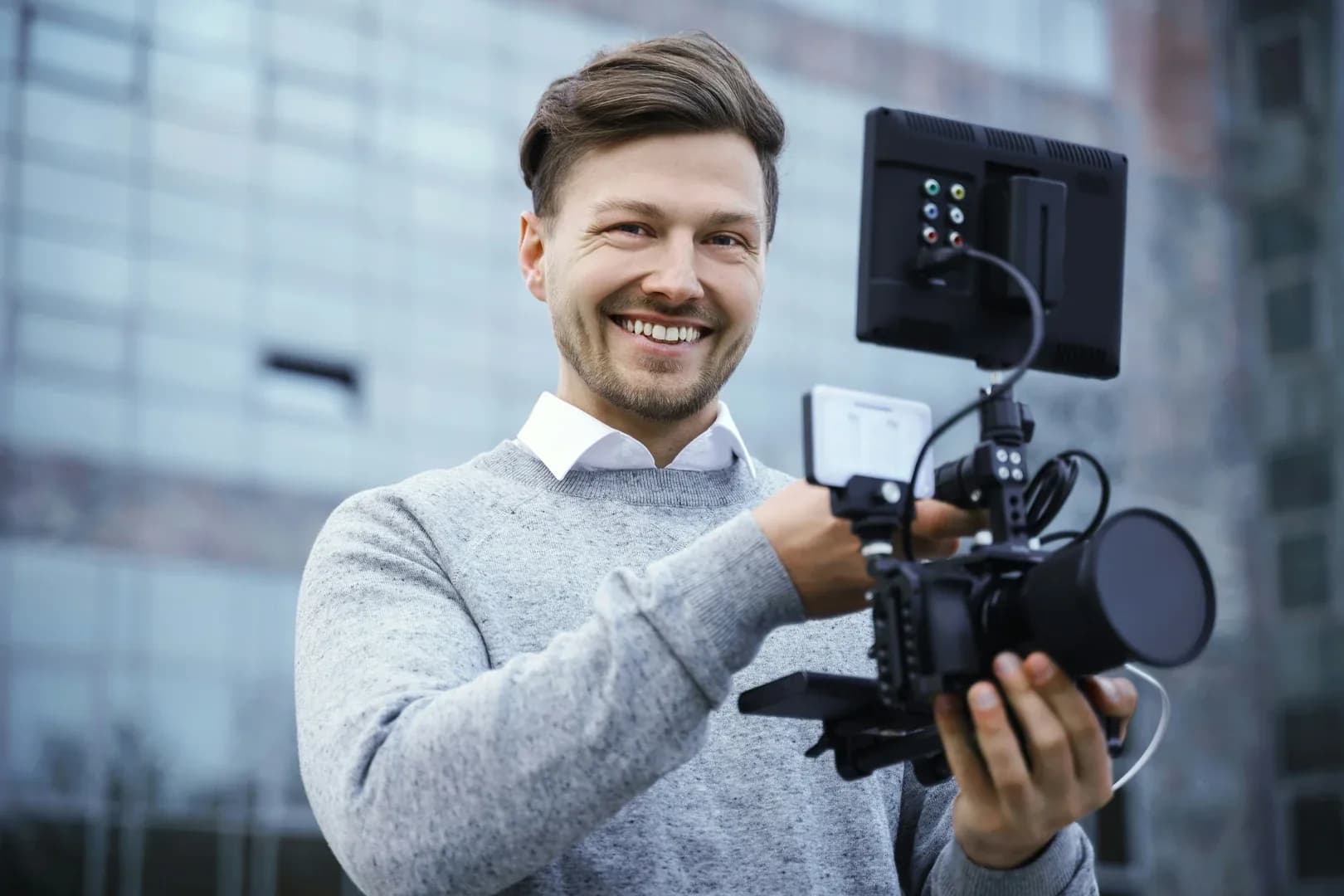
Camera Equipment Insurance
Secure your valuable camera equipment thoroughly against damage, theft, and loss with the camera equipment insurance from nextsure. Tailored protection for professionals and hobby photographers.
Learn moreRisk analysis: Typical losses and their financial consequences
A camera falling from a tripod can quickly cause damage of more than €3,000. Moisture can destroy sensitive electronics worth €5,000. Theft from the vehicle is another common risk, often resulting in the total loss of equipment worth more than €15,000. These scenarios illustrate that even a single incident can blow the budget of an entire production. Liability for such damage almost always lies with the equipment hirer. A professional camera equipment insurance policy covers precisely these risks and protects against financial ruin. Analysing the potential hazards on set is the first step towards minimising risk. This quickly makes the need for cover clear.
Cost factors: What determines insurance for rental equipment
The premium for insurance for rented film equipment depends on several factors. The key factor is the total value of the rented equipment; insuring equipment worth €50,000 naturally costs more than equipment worth €10,000. The rental period, whether just for three days or for four weeks, also has a direct impact on the price. Another factor is the excess: a higher excess of, for example, €500 can reduce annual costs by up to 20 per cent. For borrowed equipment worth €20,000, insurance costs can be around €250 to €400 per year. The exact costs depend on the following points:
- Insured sum (replacement value of the equipment)
- Duration of the rental (short-term or annual policy)
- Selected excess in the event of a claim
- Geographical scope (Germany only or worldwide)
- Scope of cover (e.g. with or without gross negligence)
A detailed comparison of different offers, as professional photographers often carry out, is therefore essential in order to find the optimal balance between cost and cover. This lays the foundation for a well-informed decision about which policy is the right one.
Coverage options: Finding the right policy for your needs
It is a common misconception that personal liability insurance covers damage to expensive hired equipment. Most standard policies explicitly exclude damage to rented and borrowed items or limit cover to a few thousand euros. Therefore, a special equipment insurance policy, often also called electronics insurance, is necessary. This covers damage caused by operating errors, carelessness, drops, liquids and often theft as well. Many hire companies already require proof of such insurance in the rental agreement. Alternatively, some rental companies offer their own insurance for an additional charge of around five to ten per cent of the rental price. This option is convenient, but often more expensive than an annual policy if you hire equipment several times a year. A separate drone comprehensive insurance policy, for example, may be cheaper than repeated short-term insurance. Carefully checking the contract terms is crucial in order to avoid gaps in cover.
Legal basis: Who is liable in the event of damage?
According to the German Civil Code (BGB), once the rented item has been handed over, the so-called “risk” passes to the tenant. This means that from that point on, you are responsible for the integrity of the equipment. Your main contractual obligation is to return the equipment in its original condition, apart from normal wear and tear (§ 538 BGB). In the event of damage caused by your own fault, liability for damages under § 280(1) and § 823 BGB applies. You have a duty of care (“Obhutspflicht”), which requires you to handle the equipment carefully and protect it from foreseeable hazards. A court would examine whether you exercised the required care. For example, leaving camera equipment worth €20,000 on the front passenger seat of an unlocked car would be considered grossly negligent.
Good insurance, such as is also important for a worldwide cover for content creators, ideally covers such cases too. Understanding this legal framework helps to recognise the need for insurance.
Optimisation strategies: maximise protection and reduce costs
To optimise the cost of your film equipment insurance without compromising on cover, there are several approaches. An annual policy is often cheaper than several short-term policies from the second or third rental per year onwards. Consider choosing an excess of 250 or 500 euros to noticeably reduce the premium. You should also define the scope of cover precisely: if you are only filming in Germany, you do not need more expensive worldwide cover. Our expert tip: keep an exact list of all borrowed equipment with serial numbers and replacement values. This significantly speeds up the claims process in the event of a loss and is often a prerequisite for insurance cover. Such detailed preparation is also a decisive factor when planning a event cancellation insurance. This ensures that, in the event of a claim, you are compensated quickly and without hassle.
Frequently asked questions
- Is my borrowed film equipment also insured abroad?
That depends on your policy. Many insurers offer worldwide cover, sometimes for an additional premium. Check the geographical scope in your policy documents before renting, especially for shoots outside the EU.
- Does the insurance also cover damage caused by gross negligence?
Some insurers exclude damage caused by gross negligence, while others cover it up to a certain amount. Leaving equipment unattended in a public place is a classic example. A careful look at the small print is crucial here.
- What is the difference between replacement cost compensation and actual cash value compensation?
A good equipment insurance policy reimburses the replacement value, i.e. the cost of replacing it with an equivalent new device. An indemnity based on market value takes age and wear and tear into account, which results in a significantly lower payout. Look out for a clause providing for replacement value compensation.
- Do I need to report every little scratch?
Normal signs of wear and tear and minor cosmetic defects fall under contractually agreed wear and tear and are not an insured event. Damage that impairs functionality or requires a repair, however, must be reported immediately to the lessor and the insurer.
- Can I take out insurance for just one day?
Yes, many providers offer short-term insurance policies that can be arranged on a project basis for a few days or weeks. However, if you hire equipment several times a year, an annual policy is usually the more cost-effective solution.
- What happens if accessories such as batteries or memory cards are stolen?
Comprehensive policies cover all equipment, including accessories such as batteries, memory cards, filters and bags. Create a detailed list of all borrowed items so that, in the event of a claim, you can prove their full value.
Sources
- [1]The Producers Alliance is an advocacy organisation for film and television producers and offers insights into the industry.
- [2]The Civil Code (BGB) provides the legal basis for contracts and liability issues in Germany.
- [3]The IHK Munich and Upper Bavaria provides information about the film and TV industry and relevant economic aspects.
- [4]The German Film Academy promotes German film art and provides information on current developments and awards.
Conclude directly online
Verified partner tariffs at no extra cost. The button takes you straight to the provider's calculator.
 Hepster
Camera insurance
Worldwide cover for new and used cameras, including original accessories.
- Coverage area:
- worldwide
- Battery-wear threshold:
- up to 60% remaining capacity, device max. 4 years old
- Minimum term:
- 3 months (monthly subscription)
- Drop, breakage, sand, and liquid damage
- Fire, explosion, power surge, short circuit, sabotage, vandalism
- Battery and screen damage, plus battery wear (where not covered by warranty)
- Operating errors and improper handling
- Theft module: theft, burglary from a car or home, robbery
Key exclusions
- Loss and forgetting outside the insured theft scenarios
- Devices without a known serial/IMEI number
- Damage covered under warranty or manufacturer's guarantee
- Gross negligence or intentional acts
Trusted Shops: 4,5/5 „Sehr gut“ (2.600 Bewertungen)
hepster insgesamt (Anbieterbewertung, alle Versicherungen)
Claims must be reported online within 14 days; theft must be reported to the police within 24 hours. Insurer: Hiscox SA, Niederlassung für Deutschland
Fact sheet: benefits, exclusions and waiting periods in detail
All details are taken from the provider's linked product page and the contract documents (IPID/policy conditions) published there; the insurer's documents prevail. Premiums, benefits and the insurance product itself may change – please verify the details directly with the partner before signing up; only the information provided there is binding.
Information last updated: July 2026 · Source: provider product information (IPID/policy conditions)