Chinchilla Health Insurance: Costs & Benefits
Is chinchilla health insurance worth it? Vet costs, dental problems, tariffs and surgery cover for exotic small pets.
All details are taken from the provider's linked product page and the contract documents (IPID/policy conditions) published there; the insurer's documents prevail. Premiums, benefits and the insurance product itself may change – please verify the details directly with the partner before signing up; only the information provided there is binding.
 Katrin StraubManaging DirectorInsurance expert with over 20 years of experience in the insurance industry.
Published on
12 min read
Table of Contents
Chinchilla health insurance protects owners from the high vet bills that can quickly arise with these exotic rodents. Specialized small-pet tariffs cover surgeries, diagnostics, and medication. Including typical dental problems is especially important, since regular tooth grinding under anesthesia causes substantial costs. Signing up early locks in affordable premiums and avoids exclusions for pre-existing conditions.
Exotenversicherung
Find personalised tariffs, compare services, and benefit from transparent information and personal advice – digital and straightforward.
Learn moreFinancial Risks and Vet Costs of Keeping Chinchillas
Underestimated Costs From Illness
The risks of keeping chinchillas include substantial financial burdens from unforeseen vet costs, which many new owners initially underestimate badly. Chinchillas are considered hardy, long-lived animals, but with acute illnesses, sudden accidents, or genetically caused developmental problems, the necessary treatment costs rise rapidly. Veterinary emergencies with these sensitive rodents often require highly specialized diagnostics and immediate surgery under special anesthesia conditions. Gastrointestinal stasis or complicated bone fractures require immediate action. The bills for such intensive treatments quickly add up to several hundred euros. In complex cases requiring extended inpatient monitoring, costs not infrequently exceed the €1,000 mark [1]. This confronts many owners with unexpected financial challenges. Forward planning is absolutely essential. Without a financial buffer, dramatic shortfalls loom. Veterinary care for exotic pets is simply cost-intensive.
Specialists and the Fee Schedule
A key factor behind these above-average costs is the mandatory need to see vets who specialize in exotic and small pets. Not every regular small-animal practice has the necessary microsurgical equipment or the specific expertise to treat chinchillas. Recognized specialists quite legitimately bill their demanding services under the fee schedule for veterinarians (GOT) often at higher rates, usually two or three times the standard rate. Imaging procedures such as high-resolution X-rays, ultrasound, or CT scans further drive up the total cost of finding the cause. Subsequent inpatient stays at a well-equipped veterinary clinic also incur substantial daily fees. Without suitable cover, owners bear this immense cost risk entirely on their own. Specialist expertise has its rightful price. The GOT regulates this billing uniformly and transparently across the country.
The Need for Financial Reserves
To cushion these massive expenses, experts recommend strict, disciplined financial provision from the very first day of ownership. Anyone who forgoes a formal insurance policy needs a dedicated emergency fund from day one. A monthly savings rate of €25 to €50 is considered the absolute minimum for building a solid financial buffer for veterinary emergencies [1]. This amount does accumulate over the years, but it's often not enough for early, unexpectedly serious illness in the first year of life. Scaling €50 up over twelve months gives you only €600. That doesn't cover a major surgery. This is where the structural advantage of a genuine risk-transfer solution through a specialized policy becomes clear. Cover applies immediately once the waiting period ends. Insurance provides instant liquidity.
Dental Problems as the Main Cost Driver for Chinchillas
Symptoms and Dangers of Dental Anomalies
Dental problems are by far the most common reason for veterinary consultations and surgical procedures in chinchillas. These particular rodents' teeth grow continuously throughout life, which in the wild is regulated by constant gnawing on hard materials. Insufficient wear from an improper diet, a lack of gnawing material, or genetic jaw misalignment inevitably leads to massive health complications. Typical symptoms of such dental problems include markedly slowed eating, heavy drooling with a permanently wet chin, excessive empty chewing motions, and rapid weight loss [4]. The wet chin occurs because the animal can no longer swallow saliva due to the misalignment. These serious signs require immediate veterinary attention. Delaying treatment dramatically worsens the prognosis. Dental health is a matter of survival.
Diagnosis Through Imaging Procedures
A correct and thorough diagnosis of dental anomalies mandatorily requires the use of modern imaging procedures. A sound dental assessment is simply impossible without a thorough X-ray of the entire skull from multiple angles [3]. Unfortunately, many general vets receive only inadequate training on the highly specific dentition of chinchillas during their veterinary studies. Consulting a recognized dental specialist for small pets is therefore essential for successful treatment. These specialists use high-resolution dental X-ray equipment to reliably identify even hidden root problems, retrograde tooth growth, or dangerous abscesses deep in the jawbone. Precise diagnostics save animals' lives. Without an X-ray, there's no serious diagnosis. The costs for these imaging procedures add up quickly.
Proper Dental Treatment
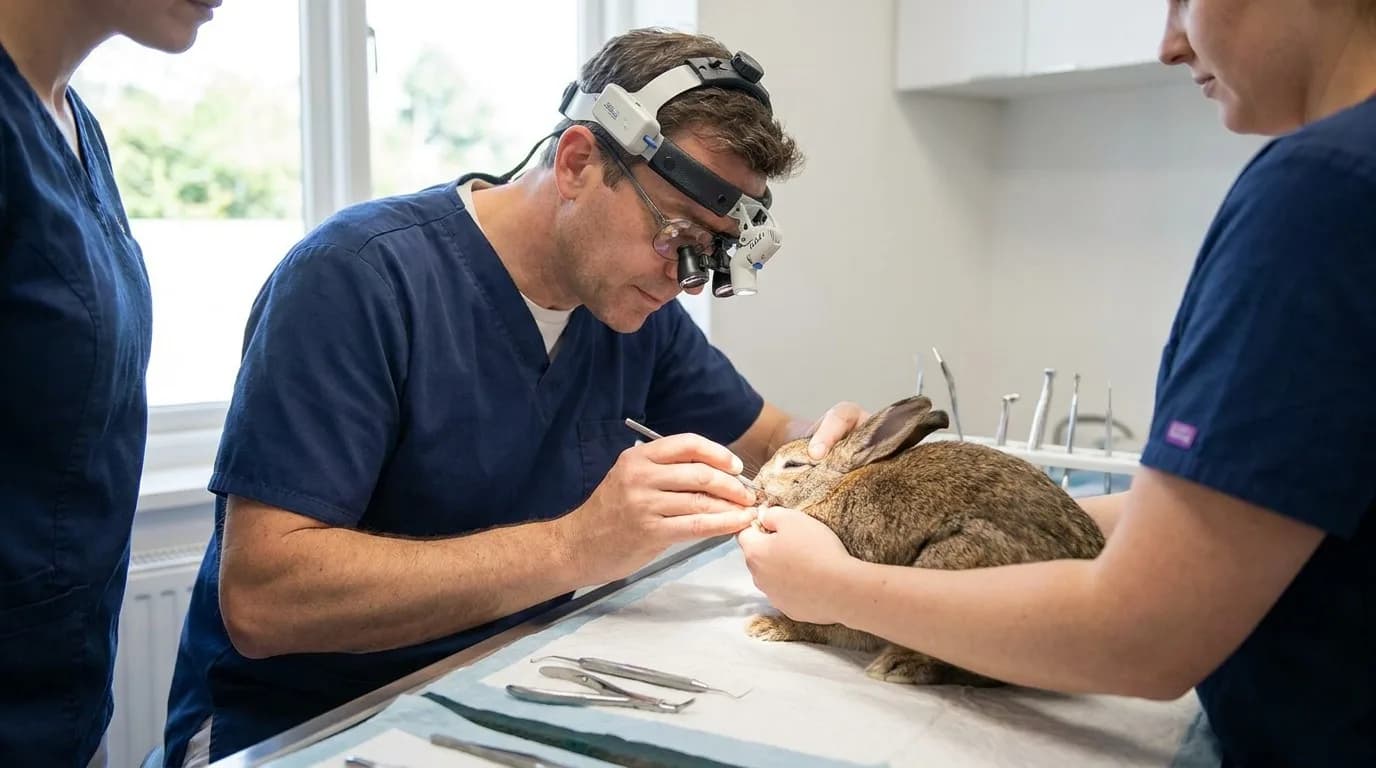
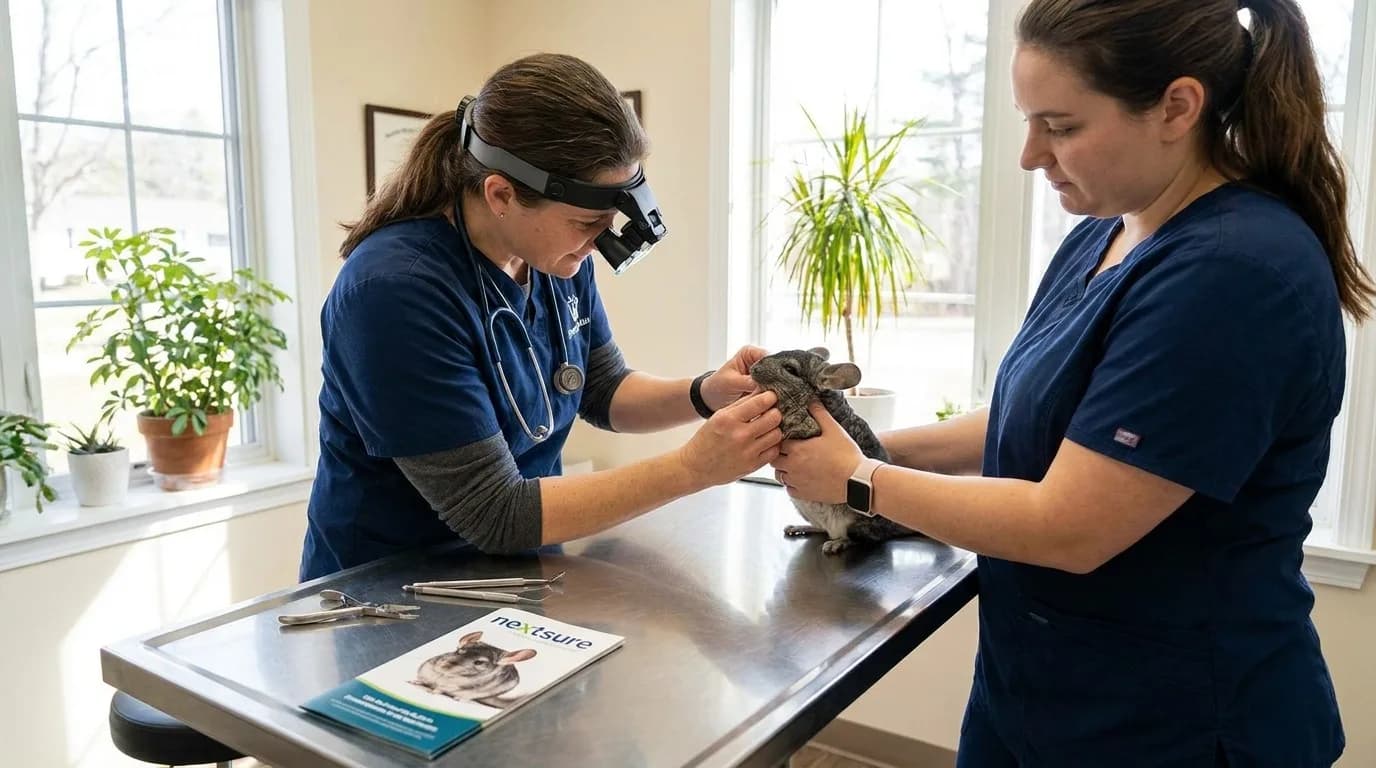
Actually treating dental disease is extremely complex and requires special microsurgical instruments. Simply clipping the teeth with pliers is obsolete, since it causes painful splintering deep into the tooth root [4]. The only proper method is precisely grinding down the teeth under well-monitored, light inhalation anesthesia. With chronic misalignment, such procedures often have to be repeated at regular intervals. This generates recurring costs on an ongoing basis, which should be reliably covered by strong chinchilla health insurance or specialized insurance for exotic small pets. Anesthesia always carries some residual risk. Specialized vets minimize this risk through modern monitoring.
Scope of Cover and Coverage Concepts for Chinchilla Health Insurance
Covering Medical Treatment and Surgery
The scope of cover in modern chinchilla health insurance is precisely geared to the specific medical needs of this demanding species. Specialized providers on the market offer tailored health and surgery insurance for small pets that explicitly include chinchillas in their coverage concepts [5]. These dedicated tariffs comprehensively cover medically necessary treatment, complex surgical procedures, and essential pre- and aftercare. The substantial costs of vet-prescribed medication, dressing materials, and necessary diagnostics such as blood panels are also covered. An excellent tariff also covers the expensive, frequently recurring dental treatments. Cover has to be gap-free. Good tariffs also reimburse expensive aftercare. This prevents unpleasant surprises on the final bill.
Structural Similarities With Dog Insurance
A detailed comparison with traditional dog insurance illustrates the structural similarities between different policies on the insurance market. Documents such as Uelzener Allgemeine Versicherungs-Gesellschaft's Cleos-Welt-HundeKV-OP show, as an example, that reimbursements are always based on the binding fee schedule for veterinarians (GOT). While dog insurance often provides for extremely high coverage sums for orthopedic joint surgery, small-pet tariffs specifically focus on typical risks such as severe gastrointestinal disease or extensive dental work. Many strong policies also offer worldwide cover abroad for up to 12 months. This is especially relevant if the animal is taken along on longer trips. The basic contractual framework is very similar. The GOT always forms the fundamental billing framework.
Full Cover vs. Pure Surgery Insurance
Making the final choice of the right tariff requires a very close analysis of the included benefits and contractual exclusions. Some providers strictly distinguish between pure surgery insurance and comprehensive full health cover. Pure surgery insurance only applies to surgical procedures under anesthesia, while full cover also covers outpatient treatment, general diagnostics, and medication. For a comprehensive overview of the general costs and benefits of pet health insurance, a detailed comparison of tariff terms is worthwhile. nextsure professionally helps owners transparently compare the exact coverage sums, benefit limits, and deductibles. This way, the optimal cover is found. Full cover offers the highest level of financial security.
Core benefits of good small-pet insurance
- Cost coverage for outpatient and inpatient medical treatment
- Reimbursement of surgical procedures including anesthesia
- Coverage of imaging diagnostics (X-ray, ultrasound)
- Payment for prescribed medication and dressing materials
- Inclusion of dental corrections and tooth grinding
The tariff must cover at least twice the GOT rate, without exception.
Exclusions and Waiting Periods for Chinchilla Health Insurance
Pre-Existing Conditions and Exclusions
Exclusions are a core part of the policy terms that every owner has to review in detail before signing up. Examinations and treatments already known, begun, or recommended by a vet before the contract is signed are strictly excluded from cover. This also applies to consequences of defects and illnesses that arise before the contractual waiting period ends. Chronic pre-existing conditions already documented by a vet generally lead to a permanent exclusion for that specific diagnosis. Transparency during the health assessment is therefore the top priority. False statements jeopardize your entire cover. Honesty when applying is absolutely essential. Later treatments after the contract ends are likewise not reimbursed.
Regular and Special Waiting Periods
Contractual waiting periods vary considerably by provider and tariff structure on the market. A general waiting period of 30 days for illnesses is common, while accident damage is often covered immediately or after a very short period of a few days. For specific treatments, such as extensive dental work or certain breed-specific conditions, extended waiting periods of up to six months can apply. These periods protect the pool of policyholders from opportunistic sign-ups, where policies are only taken out once an animal is already acutely ill. Owners should therefore insure their animal while it's healthy. Waiting periods protect the pool of policyholders. Anyone who signs up too late pays the first bill themselves.
Termination Rights and Contractual Flexibility
Besides the medical exclusions, the terms also define contractual flexibility and termination rights. Modern insurance products offer customer-friendly notice periods that soften long-term commitment. For example, the structure of the Cleos-Welt-HundeKV-OP allows termination with 14 days' notice to the end of the month. An extraordinary right of termination also exists after a settled claim, or once the insured risk permanently ceases to exist, for example through the animal's unfortunate death. This flexibility is increasingly found in cover for hobby and small pets too. Contracts adapt to life circumstances. Today, customer loyalty comes from good service, not rigid terms.
Premium Calculation and Cost Factors for Chinchilla Health Insurance
Age at Entry as the Main Factor
Premium calculation for chinchilla health insurance is based on a precise risk calculation by the insurance companies. A decisive factor for the level of the monthly premium is the animal's exact age at the time the contract is signed [2]. Young chinchillas statistically show a significantly lower risk of chronic illness and therefore benefit from very favorable entry-level tariffs. As age increases, premiums rise, since the probability of age-related conditions and necessary surgeries increases significantly. Signing up early locks in the best terms long-term. Waiting costs real money. Insurers factor in age very precisely. Anyone who insures their animal while young benefits permanently from lower rates.
Deductibles and Benefit Limits
Another key cost factor is the contractually chosen deductible. Tariffs without a deductible offer full cost coverage but are noticeably more expensive on the monthly premium. Agreeing to a percentage-based share, for example 10% or 20% per claim, significantly lowers ongoing costs and makes the policy more affordable. The maximum annual reimbursement limit also significantly affects the price. Policies with an unlimited coverage sum naturally require higher premiums than tariffs that strictly cap reimbursement at €1,000 or €2,000 per insurance year. Weighing the trade-offs is called for here. A smart mix of deductible and a high coverage sum is often ideal.
Range of Tariffs and Market Comparison
The specific form of keeping the animal and any pre-existing conditions also feed into insurers' detailed risk assessment. Chinchillas are explicitly listed as insurable animals in specialized small-pet tariffs, confirming their acceptance on the market [2]. The growing range of tariffs makes a structured comparison essential. Similar to health insurance for other exotic pets, premiums vary widely between providers. nextsure systematically analyzes these price differences and presents owners with transparent offers that provide the optimal ratio between premium and scope of cover for the individual animal. The market for specialized insurance keeps growing. A professional comparison saves hundreds of euros over the years.
Cost-Effectiveness Analysis: Save Yourself or Take Out Chinchilla Health Insurance?
The Limits of Your Own Savings Plan
A cost-effectiveness analysis helps make a rational decision between your own savings plan and a formal insurance solution. The recommendation to set aside €25 to €50 a month for emergencies forms a solid base for responsible owners [1]. At a savings rate of €30, you accumulate a respectable €720 over two years. But if a serious medical emergency occurs during that time, requiring surgery and inpatient stays, this saved capital is instantly used up completely. A single complicated bone fracture or serious gastrointestinal illness effortlessly blows through this budget. Saving alone is often not enough. Inflation also eats into part of the savings. Vet costs, meanwhile, keep rising continuously through GOT adjustments.
Instant Risk Transfer Through Insurance
Insurance, by contrast, offers the invaluable advantage of instant risk transfer once the contractual waiting period ends. Even if only a few monthly premiums have been paid, the company covers the full contractually agreed costs up to the benefit limit. This protects the owner from sudden liquidity shortfalls and ensures medical decisions don't have to be made out of financial necessity. Especially with chronic dental conditions requiring lifelong, regular treatment, cumulative vet costs generally clearly exceed the premiums paid in. The leverage effect of the policy is enormous. Risk transfer is the core principle of any insurance. You trade an incalculable risk for a fixed monthly premium.
Planning Certainty for Pet Owners
The final decision ultimately depends on individual risk appetite and financial reserves. Anyone with sufficient financial reserves can bear the risk of a total loss themselves. For most owners, however, insurance offers invaluable everyday planning certainty. This economic logic doesn't just apply to exotic rodents. With health insurance for cats too, the predictability of monthly premiums proves clearly superior to the incalculable cost spikes of sudden vet bills. nextsure advises objectively and with data on both strategies. Financial security calms the nerves enormously. This lets you focus fully on the animal's recovery.
The Role of nextsure in Brokering Specialized Insurance
Curated Tariffs Instead of a Confusing Grab Bag
Specialized insurance for exotic pets requires deep market knowledge, which nextsure consistently provides as a digital insurance platform. The market for niche products is often confusing and shaped by opaque tariff structures. Large comparison portals mostly focus on standardized mass-market products and completely neglect the specific needs of small-pet owners. nextsure closes this gap with hand-picked tariffs across seven categories with over 70 products, tailored precisely to the requirements of chinchillas and other exotic animals. Quality comes before quantity here. Every tariff is rigorously vetted before being added to the portfolio. A grab bag of tariffs only confuses customers. Curation is the key to the right cover.
Independent Advice From Experts
nextsure's advisory process is based on a detailed, individual needs analysis. As a licensed insurance broker under Section 34d GewO, the company operates completely independently of individual insurance companies. The platform is operated by iMatch GmbH, officially registered in the intermediary register at the DIHK under registration number D-4ZF9-E88H6-53. This guarantees an objective comparison of the available small-pet tariffs. nextsure's experts check the policy terms for hidden exclusions, assess whether the coverage sums are adequate, and analyze reimbursement rates against the current fee schedule for veterinarians. This curated approach protects owners from costly mistakes and inadequate cover in a claim. Expertise protects against unpleasant surprises. A broker always works for the client.
Digital Efficiency and Personal Support
nextsure's modern digital infrastructure enables a fully paperless sign-up in just a few minutes. Clients benefit from an intuitive interface that presents complex policy terms clearly and understandably. That creates clarity. After signing up, a personal contact is available for claims handling, on hand for any questions. This combination of technological efficiency and specialist expertise makes nextsure the leading platform for niche insurance in the DACH region. Transparently presenting all costs and benefits builds the trust needed for long-term cover of your beloved pet. The service is completely free for end clients. Compensation comes transparently through insurer commissions.
Advantages of the nextsure platform
- Hand-picked specialized tariffs for exotic small pets
- Independent broker advice under Section 34d GewO
- Transparent comparison of benefits and exclusions
- Fully digital, paperless sign-up process
- Personal support when filing a claim
nextsure's service is completely free for end clients.
Practical Steps to Taking Out Chinchilla Health Insurance
Preparation and Gathering Data
Taking out the right chinchilla health insurance requires a structured, careful approach. First, all relevant health data for the animal has to be gathered. This includes the exact date of birth, breed, weight, and complete documentation of any pre-existing conditions from the treating vet. This information is essential for answering the health questions on the application truthfully. False or incomplete statements inevitably lead to the complete loss of cover in the event of a claim. Care when gathering the data is therefore essential. A clean history speeds up the application review enormously. Vets are happy to provide an extract of the patient file on request.
Comparing Tariffs and Reviewing Benefits
The next step is a detailed comparison of the curated tariffs via the nextsure platform. Owners should pay particular attention to the reimbursement rates for dental treatment, since this represents the biggest financial risk for chinchillas. It's strongly advisable to choose tariffs that cover at least twice, ideally three times, the rate under the fee schedule for veterinarians (GOT). The annual benefit limit and the rules on deductibles also have to be critically reviewed and matched to your personal budget. A cheap premium is of little use with poor benefits. The GOT rates determine the actual reimbursement amount. Skimping here means paying extra at the vet.
Digital Application and Policy Issuance
Once the optimal tariff has been carefully chosen, the digital application process follows. Confirmation of cover is usually conveniently delivered by email within a few hours. It's important to note the exact contractual waiting periods for when cover starts. Routine check-ups or vaccinations, where included in the tariff, are often subject to different, shorter rules. Once they receive the policy, owners have the certainty that their chinchilla will receive the best possible veterinary care for future health problems, without financial worries taking center stage. Digital processes save time and nerves. The policy should always be kept within easy reach.
Frequently asked questions
- Can I get health insurance for a chinchilla?
Yes, chinchillas can be health-insured through special small-pet or exotic-pet tariffs. These policies are tailored precisely to the needs of small pets and cover both outpatient treatment and surgical procedures. Signing up early, while the animal is young, is advisable to lock in favorable premiums.
- Are typical chinchilla dental problems covered?
Good small-pet tariffs cover the treatment of dental problems, as long as they didn't already exist before the contract was signed. This includes the necessary X-ray diagnostics as well as regular tooth grinding under anesthesia. That's crucial. When comparing tariffs, make sure dental procedures aren't excluded by special clauses.
- What does chinchilla health insurance cost?
Monthly costs vary by provider, scope of cover, and the animal's age at signing. Tariffs with a deductible and a capped annual maximum benefit are cheaper, while premium full-cover policies with no cost limit are more expensive. A careful comparison via a broker platform helps find the best value for money.
- Is there a waiting period for pet health insurance?
Yes, almost all insurers apply a waiting period to prevent opportunistic sign-ups. For general illnesses, this is usually 30 days. For accidents, the waiting period is often waived or shortened to a few days. Longer periods of up to six months can apply for specific treatments.
- Do known conditions count as pre-existing?
Yes, all illnesses, symptoms, or developmental problems diagnosed by a vet before the contract was signed or during the waiting period count as pre-existing conditions. These are excluded from cover. The health questions on the application have to be answered truthfully without exception, so as not to jeopardize cover.
- Does pure surgery insurance make sense for chinchillas?
Pure surgery insurance is cheaper and protects against the extreme costs of surgical procedures under anesthesia. Since extensive diagnostics and outpatient treatment can also become expensive for chinchillas, though, full health cover offers more comprehensive protection. The choice depends on your individual need for security.
Sources
Conclude directly online
Verified partner tariffs at no extra cost. The button takes you straight to the provider's calculator.
 Cleos Welt
Liability insurance for exotic animals
Liability cover for owners of exotic animals such as snakes, spiders, or alpacas, with coverage of up to €10 million.
- Sum insured:
- up to €10 million
- Number of animals:
- up to 200 smaller animals or a maximum of 5 larger animals
- Events:
- covered (e.g. trade fairs)
- Personal injury, property damage, and financial loss: up to €10 million
- Search, rescue, and recovery operations: up to €1.5 million
- Damage to rented premises up to €300,000; up to €5,000 in vacation accommodation
- Commercial use covered up to €22,000 in annual revenue
- Young animals up to 12 months old are covered
- Meets the mandatory insurance requirement under the NRW Venomous Animals Act (Gifttiergesetz, €1 million)
Key exclusions
- Animals subject to a keeping ban
- Herds of more than 5 larger animals (e.g. alpacas, donkeys)
Google Rezensionen: 4,5/5 Sterne (210 Bewertungen)
Cleos Welt insgesamt (Anbieterbewertung, alle Versicherungen)
Includes an update guarantee and a grandfathering guarantee (Besitzstandsgarantie); proof for authorities is provided directly after the policy starts.
Fact sheet: benefits, exclusions and waiting periods in detail
Cleos Welt
Small pet insurance
Health insurance for small mammals, birds, and reptiles: reimburses surgery, treatment, and after-care costs up to the agreed maximum veterinary fee schedule (GOT) rate.
- Waiting period:
- 30 days, 6 months for specific surgeries
- Coverage abroad:
- up to 12 months
- Age-based adjustment:
- 3% premium increase per year
- Surgery, treatment, and after-care up to the agreed maximum GOT rate
- Medication as well as boarding and feeding during clinic stays
- Specific surgeries (egg binding, otitis, malocclusion) after a 6-month waiting period
- Remote diagnostics and consultation with a veterinarian
- Optional: vaccinations, neutering, physiotherapy, and supplemental dental cover
- Accidents are covered with no waiting period
Key exclusions
- Pre-existing conditions and treatments recommended before the policy started
- Myxomatosis/RHD in rabbits without proof of vaccination
- Neutering/spaying without a separate agreement
- Damage from Encephalitozoon cuniculi without a negative test (test max. 1 year old)
Google Rezensionen: 4,5/5 Sterne (210 Bewertungen)
Cleos Welt insgesamt (Anbieterbewertung, alle Versicherungen)
Cancellation possible at any time with 14 days' notice; sum insured and deductible (Selbstbeteiligung) as stated in the policy. Insurer: Uelzener Allgemeine Versicherungs-Gesellschaft a.G.
Fact sheet: benefits, exclusions and waiting periods in detail
All details are taken from the provider's linked product page and the contract documents (IPID/policy conditions) published there; the insurer's documents prevail. Premiums, benefits and the insurance product itself may change – please verify the details directly with the partner before signing up; only the information provided there is binding.
Information last updated: July 2026 · Source: provider product information (IPID/policy conditions)