
Dental Insurance With 100% Implant Cover: Tariffs & Costs
Which dental insurance plans pay 100% for implants? Reimbursement limits, prior policies, and tariffs with no waiting period.
All details are taken from the provider's linked product page and the contract documents (IPID/policy conditions) published there; the insurer's documents prevail. Premiums, benefits and the insurance product itself may change – please verify the details directly with the partner before signing up; only the information provided there is binding.
 Katrin StraubManaging DirectorInsurance expert with over 20 years of experience in the insurance industry.
Published on
12 min read
Table of Contents
Supplementary dental insurance with 100 percent reimbursement for an implant covers the entire cost of the surgical procedure and the dental prosthesis. Statutory health insurance only pays a fixed subsidy. Premium tariffs cover the remaining difference in full. In the first 48 months, a reimbursement limit usually applies. This so-called tiered scale (Zahnstaffel) caps the maximum payout amount in the early years.
dental supplementary insurance
Find the right dental supplementary insurance at nextsure. Comprehensive protection, digital processing, and tailor-made rates for your most beautiful smile.
Learn moreThe dental-implant cost trap and 100% cover
High out-of-pocket costs for surgical procedures
The dental-implant cost trap snaps shut quickly for patients who rely solely on statutory health insurance in an emergency. A single titanium implant including the crown costs, on average, between €1,400 and €2,200 [3]. Ceramic implants made of zirconium oxide are even more expensive, due to the more elaborate manufacturing process, and usually cost between €2,000 and €2,800 [3]. Additional procedures such as necessary bone grafting in the jaw can add a further €300 to €1,200 to the total cost [3]. Statutory health insurers generally do not cover the surgical cost of placing an implant [2]. They only pay a fixed, finding-based subsidy for the superstructure, i.e. the visible crown. This keeps the private out-of-pocket share high. Often €1,500 to €2,500 per tooth is due.
Full reimbursement through premium tariffs
Strong supplementary dental insurance effectively and permanently closes this huge gap in the healthcare system. Premium tariffs such as Advigon Dental Luxus offer full reimbursement for dentures and implantology [5]. In practice, this 100 percent cover means the insurer covers the entire difference between the dentist's total invoice and the statutory fund's fixed subsidy. Patients therefore don't have to make quality compromises when choosing materials. They can freely opt for biocompatible high-performance ceramics instead of simple, visually conspicuous metal alloys. The financial burden on the patient drops to zero. This protects personal wealth from unpredictable medical expenses. The Advigon Dental Luxus tariff, for example, costs only €9.20 a month for people up to age 25. For the 36-to-50 age group, the premium is €36.90 a month.
Bringing transparency to the tariff jungle
The German market for private supplementary insurance is highly fragmented and hard for laypeople to see through. Many providers advertise with eye-catching percentage figures but hide strict limitations in the detailed insurance conditions. A genuine 100 percent tariff must also fully cover the preparatory surgical procedures. This primarily includes bone grafting, which is almost always medically necessary for long-standing gaps in the teeth or periodontitis. nextsure analyzes these complex tariff details precisely, on an algorithmic basis. As a registered insurance intermediary under Section 34d(1) of the German Trade Regulation Act (Gewerbeordnung), iMatch GmbH, the company behind nextsure, operates entirely independently. nextsure specifically filters out tariffs that finance not just the crown, but the entire implant system. This creates real transparency in the tariff jungle.
Dentures and implants in the benefits catalog
The anatomical building blocks of reimbursement
Dentures have historically been the most expensive and complex area in the dental benefits catalog. Anatomically, a modern dental implant consists of the implant body, the abutment, and the superstructure [2]. The implant body acts as an artificial tooth root and is surgically screwed into the jawbone. The abutment is the precise connecting piece between the root and the crown. The superstructure is the actual, visible crown or bridge in the mouth. All three specific components must be explicitly listed as reimbursable under the insurance cover. If even one building block is missing from the conditions, the patient risks unexpected co-payments running into four figures. The precise definition in the small print is absolutely decisive here. Besides implants, post crowns, dentures, and veneers also need to be clearly covered.
Accompanying procedures and crowns
Besides the surgical implant itself, coverage for dental crowns is a key financial factor in restorative treatment. Often the neighboring, natural teeth also need crowns to statically support a larger bridge construction on the implants. Basic tariffs, for example, reimburse only 75 percent of the costs incurred in this area. Premium tariffs, by contrast, cover the full 100 percent of lab and material costs. This percentage difference adds up extremely quickly to several thousand euros in out-of-pocket costs for complex jaw restorations. A detailed comparison of reimbursement rates for accompanying treatment is therefore essential. A worked example from Advigon shows that five high-quality inlays can quickly cost €4,778. A premium tariff reduces this out-of-pocket cost to zero.
Innovative pain therapies for anxious patients
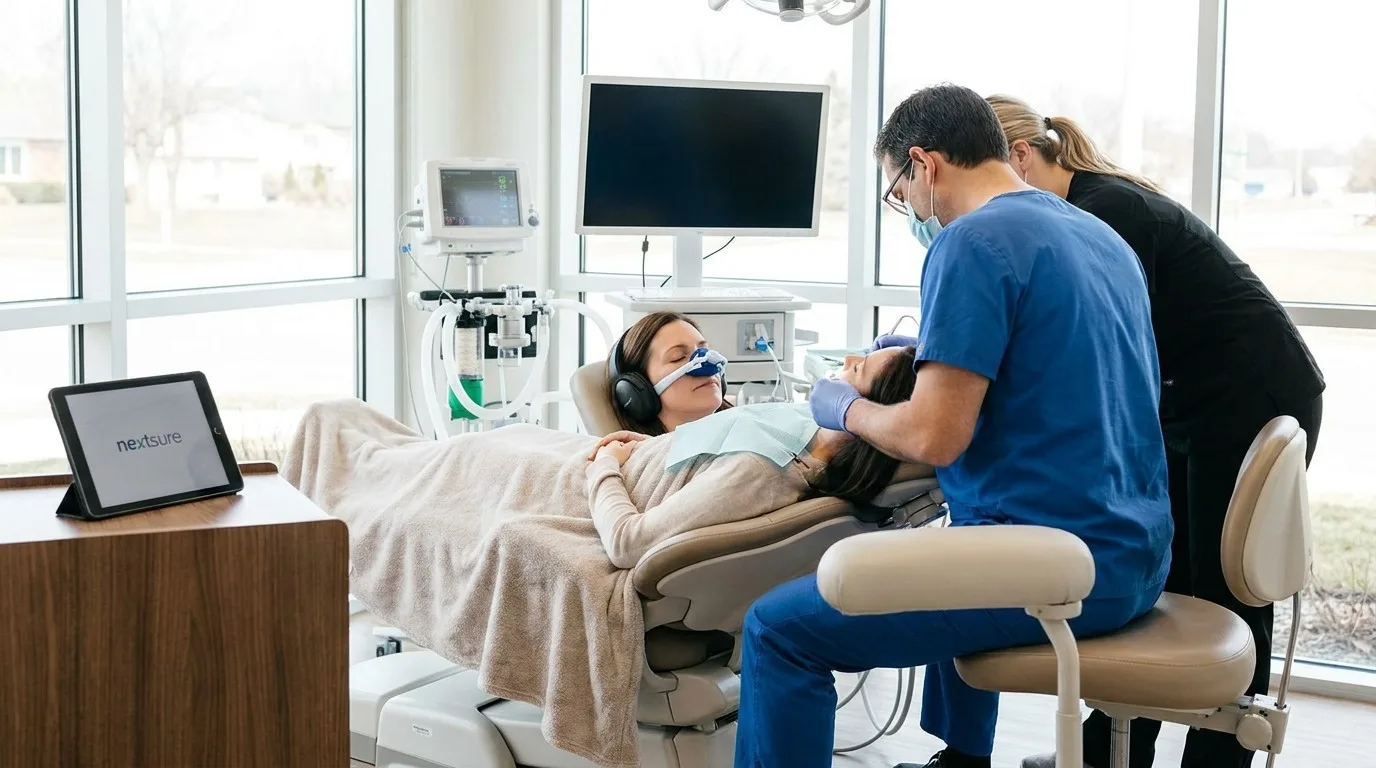
Modern dental treatment techniques go far beyond purely mechanical dentures. Statutory health insurance generally does not pay for innovative pain therapies such as acupuncture, laughing-gas sedation, or gentle twilight sleep. High-quality supplementary tariffs, however, firmly integrate these important accompanying benefits into their reimbursement catalog. This is a huge practical advantage, especially for patients with a pronounced dental phobia. Surgical treatment loses its psychological terror. In addition, top-tier tariffs cover the high cost of gnathological functional analysis. This computer-assisted measurement of the jaw ensures the new implant fits perfectly from a biomechanical standpoint. Premium providers such as Advigon also cover general anesthesia at 100 percent.
Key components of implant reimbursement
- Implant body as an artificial tooth root in the jawbone
- Abutment as the precise connecting piece
- Superstructure as the visible crown or bridge
- Bone grafting for insufficient jaw structure
- Functional analysis for biomechanical measurement
All of these points must be explicitly named in the insurance conditions.
Reimbursement limits in the first 48 months
How the tiered scale works
Contractual reimbursement limits in the first few years of insurance are the insurers' most important actuarial protection mechanism. Supplementary dental policies with no waiting period considerably limit the maximum reimbursement sum in the first few years [4]. This so-called tiered scale protects the pool of policyholders from people who only sign up for a policy because of an already imminent, major treatment. For most reputable providers, this benefit limit falls away after exactly 48 months [4]. After that, the full contractual sum insured is available without limit for all dental procedures. This requires consumers to plan their own dental health ahead of time and strategically. Anyone who signs up early benefits later from unlimited benefits.
Differences between basic and premium
The concrete financial structure of the tiered scale varies considerably depending on the tariff level chosen on the market. A high-performing premium tariff such as Advigon Dental Luxus offers a cumulative reimbursement volume of up to €4,000 in the first four years. €1,000 is already available in the first year here, and €2,000 in the second year. A cheaper basic tariff such as Advigon Dental Medium limits benefits over the exact same period to just €2,400. Anyone who needs an expensive implant right after signing up will, mathematically, hit these contractual limits very quickly. Tariffs with no waiting period do formally pay out from the very first day the application is accepted. However, the absolute payout amount remains strictly limited by the tiered cap.
Exceptions for accident-related damage
However, there are very important exceptions to this strict tiering rule in the insurance conditions. For accident-related dental treatment, the reimbursement limits fall away immediately and completely for almost all providers. If a policyholder, for example, loses a healthy tooth in a serious bicycle accident, the insurer immediately pays 100 percent for the necessary implant. The regular tiered scale explicitly does not apply in this specifically defined case. For regular, age-related tooth loss or the consequences of cavities, however, the tiering remains legally binding. nextsure therefore strongly recommends signing up for a policy early, while still in good dental health. Prevention is the best financial protection.
| Duration | Basic tariff (75%) | Premium tariff (100%) |
|---|---|---|
| Year 1 | max. €600 | max. €1,000 |
| Year 2 | max. €1,200 | max. €2,000 |
| Year 3 | max. €1,800 | max. €3,000 |
| Year 4 | max. €2,400 | max. €4,000 |
| From year 5 | unlimited | unlimited |
These amounts accumulate over the years. In the event of an accident, this limit falls away immediately.
How a prior policy can remove the sum limit
Strategic advantage when switching tariffs
Having the sum limit fall away immediately is a huge strategic advantage when planning a switch to a new tariff. Many policyholders shy away from switching to a considerably better provider because they don't want to go through the restrictive tiered scale from scratch again. Some innovative premium providers, however, fully credit the time already served under an existing prior policy. If the old policy with the previous insurer ran uninterrupted for 48 months, the benefit limit under the new tariff falls away immediately from day one. This enables an immediate upgrade to genuine 100 percent cover. However, the contractual conditions for this are strictly worded. A seamless transition is essential.
Strict criteria for crediting
For the prior insurance period to be credited directly, very specific criteria all have to be met. The transition in time from the old to the new insurer must be completely seamless, without a single day's gap. In addition, the receiving companies often require a comparable level of benefits under the prior policy being terminated. Anyone wanting to switch from a weak 30 percent basic tariff to a 100 percent premium tariff usually won't get the time credited. The old policy must have offered defined minimum benefits for dental treatment and dentures. For switching to Advigon Dental Luxus, for example, 100 percent prior cover is required. A professional broker checks these complex requirements in detail beforehand.
Limits for treatment already recommended
Signing up despite treatment already having been recommended is a completely different, far more difficult scenario. If the treating dentist has already documented the implant in the electronic patient file, it's usually too late for a regular new sign-up with cost coverage. Crediting the prior insurance period doesn't help here either, since ongoing or already recommended insured events remain categorically excluded. There are special tariffs on the market for treatment that has already been recommended. However, these are calculated to be extremely expensive and often cover only a small fraction of the actual lab costs. Prevention is the only reliable way. Always act before the first pain sets in.
Requirements for waiving the tiered scale
- The prior policy ran uninterrupted for at least 48 months.
- The switch happens seamlessly with no contractual gap.
- The old policy offered comparable minimum benefits for dentures.
- There is no ongoing or already recommended treatment.
Switching insurers should always be planned before the first dentist visit of the new calendar year.
Tariffs with no waiting period for immediate cover
Benefits from day one
Tariffs with no waiting period offer an immediate, contractual entitlement to benefits from the day the application is officially accepted. The Continentale CEZE tariff, for example, reimburses up to 100 percent of the cost of implants and crowns [1]. Advigon Dental Luxus also does away entirely with initial waiting periods. Classic policies block all benefits entirely for the first three to eight months after signing up. Modern immediate-cover tariffs do away with this absolute, customer-unfriendly blocking period. In theory, a professional teeth cleaning is possible right after the contract is signed. Smaller composite fillings are also paid for immediately, with no delay. This gives consumers extremely high flexibility.
High reimbursement limits as a buffer
However, the advertised immediate cover has its actuarial price in the form of the tiered scale already described in detail. The absolute reimbursement limit in the first four years under the CEZE tariff is a cumulative maximum of €6,000 [1]. From the fifth year of insurance onward, the sum limit for dentures then falls away entirely [1]. This €6,000 is an above-average, very customer-friendly figure in a direct market comparison. Advigon Dental Luxus offers €4,000 over the same period. For a single, straightforward implant, this amount is easily enough in the first year. For a complete, bilateral jaw restoration, however, even this budget reaches its limits. Precise calculation is essential.
Health questions as a bottleneck
The mandatory health questions in the digital application process are often worded especially precisely and restrictively for immediate-cover tariffs. Insurers check the financial risk of an immediate claim very closely before issuing the policy. Missing teeth that have not yet been replaced with a prosthesis almost always lead to hard exclusions or noticeable risk surcharges on the premium. nextsure digitizes this complex review process for its customers. nextsure matches individual health data, anonymized, against insurers' acceptance policies. This enables a reliably accurate choice of tariff with no nasty surprises. Honesty on the health questions is absolutely essential.
The treatment and cost plan as a prerequisite
The bureaucratic path to approval
The dentist's treatment and cost plan is the absolutely central document before any major surgical procedure in the jaw. Before the procedure, the treatment and cost plan must be submitted to the insurer. This standardized plan lists all planned medical procedures, the dental materials used, and the exact expected costs in extreme detail. Statutory health insurance first checks the document formally and enters its fixed subsidy amount. Only after that does the approved plan go to the private supplementary dental insurer for final review. This bureaucratic process must be strictly followed. Without prior approval, patients risk their insurance cover.
Checking against the fee schedule
The insurer's claims department checks the submitted cost estimate for medical necessity and conformity with the tariff. With a genuine 100 percent tariff, the insurer ideally confirms promptly that it will cover the remaining out-of-pocket amount in full. Sometimes, however, claims handlers reduce the reimbursement if the dentist's fee unjustifiably exceeds the maximum rate under the dentists' fee schedule (GOZ). Genuine premium tariffs contractually pay out even beyond 3.5 times the standard maximum rate. This is often the case with highly specialized implantologists and complex bone grafting. This detail is decisive when choosing a tariff. Watch for clauses on free fee agreements.
Planning certainty through a confirmed benefit
A binding confirmation of benefits from the insurer creates financial planning certainty. Without this confirmation, the patient bears the full cost risk. If unforeseen complications arise during the operation and additional procedures such as a sinus lift become necessary, the dentist must promptly draw up an amendment to the cost plan. This amendment, too, must be approved by the insurer before it is carried out. nextsure actively supports customers in submitting these important documents digitally. This considerably speeds up approval. A good broker is worth their weight in gold here.
Selection criteria for the right tariff
Free choice of dental lab
In practice, the relevant selection criteria for the perfect implant cover go far beyond the pure, advertising-friendly percentage figure. A tariff with nominally 100 percent reimbursement loses value if it prescribes a strict price and in-kind benefits list for dental labs. High-quality premium tariffs do away entirely with such restrictive price lists. They reimburse the actual, locally customary costs for the dental lab in full. This enables high-quality dentures from certified German master labs. Cheap imports from outside Europe are thus not strictly necessary. Quality has its price.
Inlays and innovative procedures
Another extremely critical criterion when choosing a tariff is the exact contractual treatment of inlays and onlays. These durable inlay fillings made of high-performance ceramic or gold are extremely expensive and, in the conditions, often fall into a gray area between dental treatment and dentures. An excellent tariff defines inlays with complete clarity as reimbursable and applies the full 100 percent rate here too. In addition, modern, tooth-preserving procedures such as micro-invasive caries infiltration should be explicitly covered. This innovative method stops cavities at an early stage completely without using a drill. Prevention saves substantial costs in the long run. Fissure sealants should also be listed in the benefits catalog.
Premium trends and age-related reserves
The long-term development of premiums in old age is a factor consumers often completely overlook, but it is essential. There are tariffs on the market with calculated age-related reserves and those without such reserves. Tariffs without reserves are extremely cheap at a young age but become gradually more expensive in fixed jumps as you get older. Tariffs with age-related reserves start with a higher monthly premium initially but keep it largely stable over the entire term. nextsure models these premium trajectories transparently and shows the real, cumulative costs. This protects against nasty surprises in retirement.
The role of preventive care in protecting implants
Protection against peri-implantitis
Regular dental preventive care plays an absolutely decisive role in the longevity of expensive dental implants. A titanium implant body can't get cavities, but the surrounding gum tissue is highly susceptible to bacterial inflammation. Untreated peri-implantitis can very quickly lead to the complete loss of the expensive implant. Regular professional teeth cleaning (PZR) drastically minimizes this medical risk. Premium tariffs often cover the cost of PZR up to €140 or more per calendar year. Advigon Dental Luxus offers exactly this budget. This is an immensely worthwhile investment.
Independence from the tiered scale
For most providers, reimbursement of preventive-care costs under the tariff is completely independent of the restrictive tiered scale. This benefit is usually available in full from day one. Some innovative insurers even tie the warranty benefits for dentures directly to proof of regular checkups. Anyone who keeps their dental bonus booklet (Bonusheft) complete with no gaps and gets a professional cleaning twice a year benefits from considerably extended warranty periods on their dentures. The system actively rewards health-conscious behavior by policyholders. Prevention always pays off.
The gold standard of cover
The intelligent combination of 100 percent implant cover and generous, flexible preventive-care budgets defines the absolute gold standard of modern supplementary dental insurance. The financial risk of major treatment is outsourced to the insurer, while at the same time a reliable budget for upkeep is created. nextsure curates these high-performing tariffs and does away with the grab-bag of inferior basic policies. The platform leads to optimal cover in just a few minutes. That's modern insurance distribution. Trust hand-picked tariffs.
Frequently asked questions
- Which dental insurance pays 100 percent for an implant?
Premium tariffs such as Advigon Dental Luxus or Continentale CEZE reimburse the full cost of implants. They cover the difference between the total invoice and the statutory health fund's fixed subsidy. The details matter. Comparing the exact tariff conditions is important, since some providers prescribe strict price lists for dental labs.
- How high are the reimbursement limits in the first 48 months?
In the first four years, a so-called tiered scale applies to almost all tariffs. This limits the maximum payout amount. High-performing tariffs offer a cumulative amount of up to €4,000 or even €6,000 here. After the 48 months have elapsed, this limit for dentures falls away entirely.
- Does the limit fall away if a prior policy is credited?
Yes, some insurers waive the tiered scale when switching directly from an equivalent tariff. The prior policy usually has to have run for at least 48 months. In addition, the companies require a comparable level of benefits for dentures in order to remove the waiting periods and sum limits entirely.
- How much does a dental implant cost on average?
A single titanium implant including the crown costs, on average, between €1,400 and €2,200. Ceramic implants are more elaborate and usually cost between €2,000 and €2,800. If bone grafting in the jaw is necessary, total costs rise by a further €300 to €1,200.
- Does the implant count as dentures under the conditions?
Yes, implants fall under the dentures category in the insurance conditions. It's important that the tariff not only reimburses the visible crown (superstructure), but also explicitly lists the surgically placed implant body and the connecting abutment in the benefits catalog.
- Does the insurance also pay if teeth are already missing?
If teeth are already missing and have not yet been replaced, signing up is difficult. Many insurers reject the application or demand high risk surcharges. If the dentist has already recommended or documented the treatment, regular insurance cover no longer applies to this specific procedure.
Sources
Conclude directly online
Verified partner tariffs at no extra cost. The button takes you straight to the provider's calculator.
 Advigon
Supplemental dental insurance
Four supplemental dental tariffs ranging from basic cover to full protection, including children's tariffs with orthodontics.
- Dental Medium premium:
- €5.69-32.30/month depending on age
- Dental Luxus premium:
- €9.20-54.50/month depending on age
- Waiting period:
- none (AZM/AZL)
- Dental treatment: 75% (Dental Medium) or 100% (Dental Luxus)
- Dentures/crowns (Zahnersatz): 75% (AZM; 100% for standard care) or 100% (AZL)
- Preventive dental care: 100% up to €90/year (AZM) or up to €140/year (AZL)
- No waiting periods in Dental Medium and Dental Luxus
- Children's tariffs with orthodontics (KFO): Dental Clever €9.68/month, Dental Premium €18.76/month
- Stiftung Warentest rated Dental Premium "very good" (1.5) (Finanztest 2/25)
Key exclusions
- Reimbursement caps in the first 48 months: AZM €600-2,400, AZL €1,000-4,000 (tiered)
- No explicit benefit exclusions are stated in the available documentation
Stiftung Warentest „SEHR GUT (0,6)“, Finanzen 07/2025 (285 Tarife im Test)
Advigon Zahnzusatzversicherung Dental Luxus (AZL)
MORGEN & MORGEN M&M Rating Zahnzusatz: 5 Sterne „Ausgezeichnet“ (08/2023)
Advigon Versicherung AG, Dental Luxus (AZL)
Reimbursement caps do not apply in the case of an accident, after month 48, or with a recognized prior policy.
Fact sheet: benefits, exclusions and waiting periods in detail
 die Bayerische
Supplemental dental insurance
Supplemental dental cover in three tariffs (Smart, Komfort, Prestige) with no waiting period; the top tariff reimburses 100%.
- Reimbursement:
- 75-100% depending on the tariff
- Waiting period:
- none
- Teeth cleaning:
- €80-200/year depending on the tariff
- Zahn Sofort module:
- €29.90/month, ends after 2 years
- Dentures/crowns and dental treatment: Smart 75%, Komfort 80-100%, Prestige 100%
- Professional teeth cleaning in all tariffs (€80-200 per calendar year)
- No waiting periods in any of the three tariffs
- Orthodontics: €1,500 (including statutory health insurance benefit) or €2,000 (without statutory health insurance benefit) in Komfort and Prestige
- Prestige includes teeth whitening and a Happybrush sonic toothbrush
- Stiftung Warentest 07/2025: Zahn Prestige rated test winner with "very good" (0.5)
Key exclusions
- Treatments recommended or started before the policy began (only covered via the Zahn Sofort module)
- A flat 40% deduction for dentists without statutory-insurance accreditation
- Reimbursement capped at up to 3.5x the dental fee schedule (GOZ) rate
- Abroad, reimbursement is capped at the domestic benefit level
Stiftung Warentest „SEHR GUT (0,5)“, Ausgabe 07/2025 (285 Tarife im Test)
die Bayerische, Tarif ZAHN Prestige
ASCORE „Tarif des Jahres 2024“ (Krankenzusatz Zahn)
die Bayerische, Zahn Prestige 2023
Levelnine Rating „EXZELLENT“ (Stand 11/2024, gültig bis 11/2025)
die Bayerische, Tarif ZAHN Prestige
Benefit tiering: €500 in year 1 (Smart), €1,250 (Komfort), or €1,500 (Prestige); unlimited from calendar year 5; caps also do not apply in the case of an accident.
Fact sheet: benefits, exclusions and waiting periods in detail
Advigon Supplemental dental insurance: Benefits: Dental Medium (AZM) and Dental Luxus (AZL)
| Benefit | Dental Medium (AZM) | Dental Luxus (AZL) |
|---|---|---|
| Dental treatment | 75% | 100% |
| Pain therapy | 75% | 100% |
| Preventive dental care | 100% up to €90/year | 100% up to €70 per treatment, up to €140/year |
| Dentures/crowns | 75% (100% for standard care) | 100% |
| Monthly premium by age | €5.69-32.30 | €9.20-54.50 |
die Bayerische Supplemental dental insurance: Tariff comparison: Smart, Komfort, Prestige
| Benefit | Smart | Komfort | Prestige |
|---|---|---|---|
| Dentures/crowns (above standard care) | 75% | 80-90% | 100% |
| Dentures/crowns (up to standard care) | 75% | 100% | 100% |
| Dental treatment | 75% | 100% | 100% |
| Professional teeth cleaning | €80/calendar year | €100 per treatment, max. €150/year | €100 per treatment, max. €200/year |
| Orthodontics | not included | €1,500 (incl. statutory insurance) / €2,000 (excl. statutory insurance) | €1,500 (incl. statutory insurance) / €2,000 (excl. statutory insurance) |
| Teeth whitening | not included | not included | included |
| Example annual premium (age 33) | €152.40 | €244.80 (rural) / €321.60 (urban) | €405.60 (rural) / €529.20 (urban) |
All details are taken from the provider's linked product page and the contract documents (IPID/policy conditions) published there; the insurer's documents prevail. Premiums, benefits and the insurance product itself may change – please verify the details directly with the partner before signing up; only the information provided there is binding.
Information last updated: July 2026 · Source: provider product information (IPID/policy conditions)