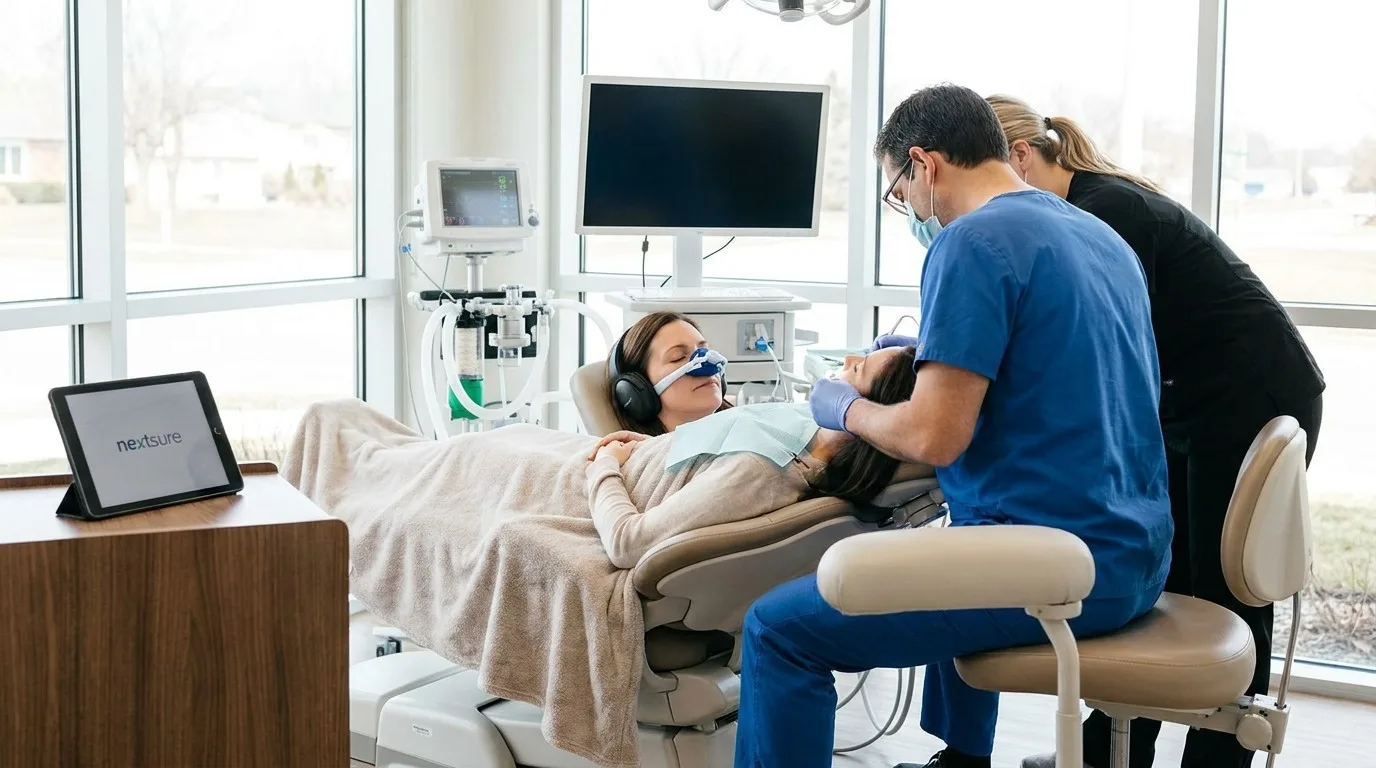
Dental Insurance for Adult Orthodontics: Costs & Tariffs
Which dental insurance covers adult orthodontics? Compare tariffs and coverage for braces and aligners with no age limit.
All details are taken from the provider's linked product page and the contract documents (IPID/policy conditions) published there; the insurer's documents prevail. Premiums, benefits and the insurance product itself may change – please verify the details directly with the partner before signing up; only the information provided there is binding.
 Katrin StraubManaging DirectorInsurance expert with over 20 years of experience in the insurance industry.
Published on
Last updated on
12 min read
Table of Contents
Dental supplementary insurance for adult orthodontics covers the high cost of braces or aligners, which statutory health insurance (GKV) usually doesn't pay for. Tariffs such as those from Die Bayerische reimburse up to €2,000 for orthodontic treatment with no age limit. It's essential to take out the policy before a dental diagnosis, to guarantee full coverage for your dental health. The ZAHN Sofort add-on module can change this.
dental supplementary insurance
Find the right dental supplementary insurance at nextsure. Comprehensive protection, digital processing, and tailor-made rates for your most beautiful smile.
Learn moreThe Starting Point for Adult Orthodontics
Limits of Statutory Health Insurance
For adult patients, orthodontic treatment is often a substantial financial burden. Statutory health insurance (GKV) covers the cost of braces for patients over 18 only in absolute exceptional cases. Under the strict guidelines, such an exception exists only for severe jaw abnormalities that require combined jaw surgery and orthodontic treatment [1]. For purely cosmetic corrections or minor misalignments, statutory health insurance provides no contribution at all. Patients must pay the full cost of such treatment out of pocket, which means high personal contributions. This restrictive rule affects millions of statutorily insured people in Germany who want orthodontic correction. The average cost of orthodontic treatment in adulthood varies widely depending on the method and duration, and often falls in the range of €3,000 to €6,000. A strong dental supplementary insurance policy is therefore an essential building block of private healthcare provision to cushion these enormous costs.
High Out-of-Pocket Costs for Modern Treatment Methods
In their professional lives, adults tend to prefer discreet treatment methods, which come with particularly high costs. Clear aligners or lingual braces (fitted on the inside of the teeth) aren't part of standard care and are billed privately. Material costs and the dental lab quickly drive up the total bill, and without adequate cover, the patient is left to pay these sums out of pocket, resulting in substantial personal contributions. Even where treatment is medically necessary but doesn't meet the criteria for a severe jaw abnormality, statutory health insurance refuses to pay. Many patients therefore delay important corrections, which can lead to further dental problems in the long run, such as jaw joint issues or premature tooth wear. Investing early in the right coverage protects against these unpredictable risks. Private cover closes exactly this gap in the healthcare system and provides access to state-of-the-art dentistry without financial worry.
The Right Time to Take Out a Policy
The timing of the policy purchase is the most critical factor when planning orthodontic treatment. Dental supplementary insurance must be taken out before a dentist or orthodontist officially diagnoses a misalignment or recommends treatment [1]. Once such a note exists in the patient file, standard tariffs refuse to cover that specific treatment—so caution is essential here. When the first treatment and cost plan is submitted, insurers check very closely when the diagnosis was made. Anyone who only looks for insurance after the consultation with a specialist loses out under standard tariffs. It's therefore advisable to take out coverage preventively, while the teeth are still officially considered healthy and untreated. Only this way do patients secure the full tariff benefit for future corrections.
Comparing Dental Supplementary Insurance Tariffs and Benefits
Die Bayerische's Tariff Structure
A good dental supplementary policy offers several tariff levels for different needs and budgets. Die Bayerische's dental tariffs come in three strong variants: Smart, Komfort, and Prestige. None of these tariffs have an initial waiting period, so coverage starts right after the policy takes effect. The Smart tariff offers solid basic cover with 75% reimbursement for dentures and dental treatment. The Komfort tariff raises this to up to 100% for dental treatment and up to 90% for dentures, which significantly reduces the out-of-pocket share. The premium Prestige tariff reimburses a full 100% in both areas and also includes extras such as teeth whitening and a Happybrush sonic toothbrush. All three variants also include an annual budget for professional teeth cleaning, which supports active cavity prevention.
Orthodontics in the Komfort and Prestige Tariffs
Special attention should go to the orthodontic benefits built into the higher-tier tariffs. Die Bayerische's Komfort and Prestige tariffs explicitly cover orthodontic treatment. These tariffs reimburse up to €1,500 if statutory health insurance makes a prior contribution [2]. If statutory insurance doesn't pay—which is the norm for adults—the maximum reimbursement even rises to €2,000, a meaningful lever for financing treatment. This amount is available for the entire contract term and helps significantly with financing braces or aligners. The Prestige tariff also stands out by offering these benefits with no age limit whatsoever, which makes it especially attractive for adult patients [3].
Watch for Regional Premium Differences
An important detail when choosing a tariff is the regional pricing that some insurers apply. For the Komfort and Prestige tariffs, Die Bayerische distinguishes between regional class 1 for rural areas and regional class 2 for urban areas. A 33-year-old customer in a rural area pays, for example, €244.80 a year for the Komfort tariff. In the city, this premium rises to €321.60 a year—a difference of around 30%. For the Prestige tariff, the annual premium is €405.60 in rural areas, while €529.20 is due in the city. The Smart tariff, by contrast, has no such regional differentiation and costs a flat €152.40 nationwide for a 33-year-old. These pricing structures must be factored into budget planning for private healthcare provision.
| Tariff variant | Regional class rural | Regional class urban | Orthodontics reimbursement (without GKV) |
|---|---|---|---|
| Smart | €152.40 | €152.40 | No benefit |
| Komfort | €244.80 | €321.60 | Up to €2,000 |
| Prestige | €405.60 | €529.20 | Up to €2,000 |
Premiums vary depending on the exact entry age and place of residence.
Specific Coverage for Invisible Braces and Aligners
Focus on Clear Aligners
Modern braces are often clear today and barely noticeable in a professional setting. So-called aligner therapies are extremely popular with adults because they look good and are comfortable to wear day to day. The cost of invisible braces is generally not covered by statutory health insurance, since it's considered a purely private service. A strong dental supplementary policy with an orthodontics module can, however, reimburse these costs up to the tariff's maximum limits. Tariffs such as Die Bayerische's Prestige pay up to €2,000 for such treatment, provided it's medically indicated and wasn't recommended before the policy was taken out. The insurer's careful review of the treatment and cost plan is mandatory here, and patients should always submit this plan before treatment begins.
The Importance of the Retainer Phase
After the active tooth movement phase comes the important stabilization phase, which secures the result permanently. This is done using retainers, either bonded as fixed wires to the inside of the teeth or worn as removable splints. Coverage for a retainer is an aspect that's often overlooked when planning total costs. Here too, statutory health insurance typically refuses to pay for adults. Good supplementary tariffs include this follow-up treatment in their orthodontics budget, as long as the tariff's maximum amount—for example, €2,000—hasn't yet been used up, which secures the treatment outcome. It's essential that the treating dentist lists the retainer costs transparently in the initial treatment and cost plan, to avoid surprises later when the insurer processes the claim.
Billing Under the Fee Schedule
In Germany, orthodontic services are billed strictly according to the fee schedule for dentists (Gebührenordnung für Zahnärzte, GOZ). When processing claims, insurers check whether the billed fee multiplier falls within the range agreed in the tariff. Die Bayerische's tariffs, for example, reimburse up to the maximum fee factor of 3.5 GOZ, which also covers specialized treatments. When patients use practitioners without statutory panel accreditation—that is, purely private dentists—many insurers apply a flat deduction. At Die Bayerische, this deduction is a flat 40% of the reimbursable cost. Patients need to know these contractual details before choosing a high-priced aligner therapy with a specialized private dentist, so they can correctly calculate their actual out-of-pocket share.
Waiting Periods and the Benefit Scale in the First Years
No Initial Waiting Periods
The benefit scale caps the reimbursement amount at fixed maximum sums in the first years of the contract. A major advantage of modern dental supplementary policies is that they generally do away with the waiting periods of three to eight months that used to be standard. Under Die Bayerische's Smart, Komfort, and Prestige tariffs, policyholders can in theory see a dentist immediately after receiving the policy, enabling immediate use. Still, doing away with waiting periods doesn't mean unlimited sums are immediately available for expensive treatment. Insurers protect themselves against extreme costs right after the policy starts by using so-called benefit scales (Zahnstaffeln). These scales define exact maximum amounts payable during the first one to four calendar years. Only once this phase has ended does unlimited coverage apply.
The Benefit Scale in Detail
The size of the benefit scale varies considerably between tariff variants and determines the actual reimbursement in the early years. Under Die Bayerische's Prestige tariff, a maximum of €1,500 is available in the first calendar year. Over the first two calendar years the total is €3,000, after three years €4,500, and over the first four calendar years a maximum of €6,000—enough to cover most typical aligner costs. Under the cheaper Komfort tariff, these limits are €1,250 in the first year, rising to €5,000 in the fourth year. From the fifth calendar year onward, these caps no longer apply, and the tariffs pay out without limit within their percentage reimbursement rates. This scaling requires forward planning for expensive orthodontic procedures.
Exceptions to the Benefit Cap
There are important exceptions where the strict limits of the benefit scale are lifted. The most important exception is treatment following an unforeseen accident. If the policyholder suffers a dental accident requiring extensive reconstruction or orthodontic treatment, the caps for the first four years no longer apply, and the insurer pays the full tariff percentage right away—protecting against unpredictable accident costs. This rule ensures that acute, no-fault emergencies aren't blocked by the initial budget limits. For planned, cosmetic corrections with aligners, however, this accident clause naturally doesn't apply, so the regular benefit scale strictly applies and limits reimbursement in the early years.
Benefit Scale for the Prestige Tariff (Die Bayerische)
- 1st calendar year: maximum reimbursement of €1,500
- 1st to 2nd calendar year: maximum reimbursement of €3,000
- 1st to 3rd calendar year: maximum reimbursement of €4,500
- 1st to 4th calendar year: maximum reimbursement of €6,000
- From the 5th calendar year: unlimited reimbursement
- In the event of an accident: caps no longer apply, immediately
These amounts apply to all dental services combined.
The Add-On Module for Already Recommended Treatment
A Lifeline for Existing Diagnoses
A special add-on module can help when a dentist has already officially recommended treatment. Under the standard Smart, Komfort, and Prestige tariffs, there's generally no coverage for treatment that had already begun or been recommended by a doctor when the policy was taken out. Anyone who ignores this rule is left paying the full cost. To solve this problem, Die Bayerische offers the Zahn Sofort add-on module. This module can be flexibly added to all three tariff variants, and it explicitly pays for treatment already noted in the patient file—a rare exception in the market. For patients who have just learned from their dentist that expensive restorative work or a correction is due, this module offers a last chance to get financial support.
Scope of Cover for the Sofort Module
The Zahn Sofort module is bound by clear financial and time limits, to keep the risk calculable for the insurer. The benefit scale for this special module provides for a maximum reimbursement of €1,500. In the second calendar year, the benefit is capped at €750, which cushions the initial cost burden. This add-on module's term automatically ends after exactly two years, so policyholders don't keep paying indefinitely for a benefit they no longer need once acute treatment is finished. The monthly cost for the Zahn Sofort module is a flat €29.90, regardless of the policyholder's age or regional class. This transparent pricing makes it easier to decide for or against the module.
Weighing Benefits Against Costs
Before taking out the Sofort module, patients should carefully weigh the cost against the expected benefit. At a monthly premium of €29.90 over a fixed term of 24 months, the total cost of this module comes to around €717. Against that stands a maximum reimbursement of €1,500 in the first year, which works out to a positive expected value. If the recommended treatment—for example, a complex inlay restoration or a special splint therapy—costs more than €1,000, the module makes clear economic sense. If the expected cost is lower than the cumulative premiums of €717, however, taking out the module doesn't pay off in pure arithmetic terms, and the patient is better off paying the bill directly out of pocket.
Age Limits and Special Provider Conditions
The Age-Limit Hurdle
Strict age limits are an exclusion criterion for orthodontic coverage at many insurers. While orthodontic benefits for children are built into almost every good supplementary tariff, the picture for adults is often bleak. Many providers categorically exclude coverage for braces from age 18 or 21 onward. Die Bayerische's Prestige tariff stands out positively here, as it explicitly offers orthodontic benefits with no age limit [2], making it an exception in the market. Adult patients can therefore start aligner therapy at 30, 40, or even 50 and rely on tariff reimbursement of up to €2,000, provided medical necessity is established.
The Accident Clause at Other Providers
A close look at the policy terms often reveals hidden restrictions on orthodontics for adults. Some tariffs advertise high reimbursement sums for adults but tie them to unrealistic conditions. A prominent example is Gothaer's MediGroup Z Duo tariff. This tariff does pay 100% up to €2,000 for adult orthodontics, but strictly only if the treatment becomes necessary as the result of a serious accident [4]—which effectively rules out ordinary corrections. For the classic correction of crooked teeth for cosmetic or functional reasons that developed over years, this tariff pays nothing at all. Clauses like this make the module completely worthless for most everyday cases.
Medical Necessity as a Basic Requirement
Regardless of the tariff chosen and its age limits, medical necessity remains the absolute basic requirement for any reimbursement. Purely cosmetic corrections, where teeth are only shifted slightly to meet an aesthetic ideal, are scrutinized critically by insurers. The treating dentist must clearly justify in the treatment and cost plan why the misalignment needs correcting—this is the precondition for approval. Possible medical reasons include problems chewing, impending tooth wear from uneven load, or difficulty with daily oral hygiene due to severe crowding. Only when this medical indication is documented beyond doubt do insurers' claims departments release the budget for expensive aligners or fixed braces in adulthood.
Tax Deductibility and Financing Alternatives for Patients
Medical Costs in the Tax Return
Deducting medical costs in the annual tax return is subject to strict statutory rules and reasonable-burden thresholds. If dental supplementary insurance doesn't cover the full cost of expensive orthodontic treatment, a personal share remains. Taxpayers can claim this personal share as an extraordinary burden (außergewöhnliche Belastung) in their income tax return. However, the tax office only recognizes these costs once they exceed the individual's reasonable burden threshold, which depends on marital status, number of children, and total income—limiting the tax effect. For a single person without children, this threshold is often several thousand euros. Only the amount exceeding this individual threshold actually reduces tax and results in a refund.
Deducting Supplementary Insurance Premiums
Beyond the treatment costs themselves, the monthly premiums for dental supplementary insurance can also be tax-relevant. They fall under other retirement and welfare expenses (sonstige Vorsorgeaufwendungen). But there's a catch here too, one many taxpayers overlook. The legislature has set maximum amounts for these expenses: €1,900 a year for employees and €2,800 a year for the self-employed. This allowance is usually already used up. Since this total already includes contributions to basic health insurance and mandatory long-term care insurance, the maximum amount is already fully exhausted for most employees. In practice, dental supplementary insurance premiums therefore very rarely reduce tax, even though they may formally be entered in the Anlage Vorsorgeaufwand (retirement provisions tax form).
Consumer Loans as a Financing Option
When neither insurance nor tax savings are enough to cover an expensive set of braces, patients look for alternatives. Many orthodontists now offer their own installment plans, often processed through external billing centers. These plans are convenient but can come with high interest rates or processing fees. A classic personal loan for free use is often a cheaper alternative, decoupling the treatment from immediate cash flow. Comparing different bank offers often gets significantly better terms than financing directly through the dental practice. A loan like this lets the patient settle the dentist's bill in full immediately and then repay the sum to the bank in predictable monthly installments.
Finding the Right Tariff for Dental Health
Needs Analysis Before Signing Up
Finding the optimal tariff for your teeth requires a detailed comparison of the policy terms on offer. Not every patient necessarily needs the most expensive premium tariff with every conceivable extra. Anyone who already has healthy, straight teeth and is simply worried about high costs for dentures such as implants or crowns is often well served by a solid mid-range tariff. But anyone specifically planning orthodontic treatment in adulthood can't avoid special tariffs like Die Bayerische's Prestige, which calls for a targeted tariff choice. An honest assessment of your own dental condition and family history helps realistically gauge the risk of future treatment and tailor coverage exactly to that individual need.
The Role of the Independent Broker
The insurance market is complex and often hard for laypeople to see through, since the fine print is what matters. An independent insurance broker like nextsure offers enormous added value here. Unlike tied agents, who may only sell one company's products, a broker compares the entire market, enabling a selection across all providers. nextsure's experts analyze specific requirements, such as the wish for orthodontic coverage with no age limit, and filter out the tariffs that fit. This service is free for the end customer, since the broker is paid through commissions from insurers. The broker also bears legal liability for their advice, which gives customers extra security when choosing a tariff.
Digital Sign-Up and Management
Modern insurance brokering is defined by fast, digital processes and transparent contract management. On platforms like nextsure, customers can calculate their preferred tariff online in a few minutes and take it out directly. Tedious paperwork and weeks of waiting for the policy are a thing of the past, which speeds up the whole process. After signing up, all contract documents can be viewed digitally, and submitting treatment and cost plans or invoices is also easy via app or web portal. This digital efficiency, combined with the personal availability of real experts for complex questions, makes managing your own healthcare provision easier and more secure than ever. Digital administration reduces the administrative burden.
Steps to the Optimal Dental Supplementary Tariff
- Check your dental status: has any treatment already been recommended?
- Define your needs: focus on dentures, preventive care, or orthodontics?
- Compare tariffs: check age limits and benefit scales carefully.
- Get expert advice: use an independent broker like nextsure.
- Sign up online: manage your policy digitally and submit invoices via app.
The policy must always be taken out before the first dental diagnosis.
Frequently asked questions
- Which Dental Supplementary Insurance Pays for Adult Orthodontics?
Tariffs such as Die Bayerische's Prestige cover up to €2,000 for orthodontics with no age limit. It's important that the treatment is medically necessary and hadn't already been recommended before the policy was taken out.
Sources
Conclude directly online
Verified partner tariffs at no extra cost. The button takes you straight to the provider's calculator.
 Advigon
Supplemental dental insurance
Four supplemental dental tariffs ranging from basic cover to full protection, including children's tariffs with orthodontics.
- Dental Medium premium:
- €5.69-32.30/month depending on age
- Dental Luxus premium:
- €9.20-54.50/month depending on age
- Waiting period:
- none (AZM/AZL)
- Dental treatment: 75% (Dental Medium) or 100% (Dental Luxus)
- Dentures/crowns (Zahnersatz): 75% (AZM; 100% for standard care) or 100% (AZL)
- Preventive dental care: 100% up to €90/year (AZM) or up to €140/year (AZL)
- No waiting periods in Dental Medium and Dental Luxus
- Children's tariffs with orthodontics (KFO): Dental Clever €9.68/month, Dental Premium €18.76/month
- Stiftung Warentest rated Dental Premium "very good" (1.5) (Finanztest 2/25)
Key exclusions
- Reimbursement caps in the first 48 months: AZM €600-2,400, AZL €1,000-4,000 (tiered)
- No explicit benefit exclusions are stated in the available documentation
Stiftung Warentest „SEHR GUT (0,6)“, Finanzen 07/2025 (285 Tarife im Test)
Advigon Zahnzusatzversicherung Dental Luxus (AZL)
MORGEN & MORGEN M&M Rating Zahnzusatz: 5 Sterne „Ausgezeichnet“ (08/2023)
Advigon Versicherung AG, Dental Luxus (AZL)
Reimbursement caps do not apply in the case of an accident, after month 48, or with a recognized prior policy.
Fact sheet: benefits, exclusions and waiting periods in detail
 die Bayerische
Supplemental dental insurance
Supplemental dental cover in three tariffs (Smart, Komfort, Prestige) with no waiting period; the top tariff reimburses 100%.
- Reimbursement:
- 75-100% depending on the tariff
- Waiting period:
- none
- Teeth cleaning:
- €80-200/year depending on the tariff
- Zahn Sofort module:
- €29.90/month, ends after 2 years
- Dentures/crowns and dental treatment: Smart 75%, Komfort 80-100%, Prestige 100%
- Professional teeth cleaning in all tariffs (€80-200 per calendar year)
- No waiting periods in any of the three tariffs
- Orthodontics: €1,500 (including statutory health insurance benefit) or €2,000 (without statutory health insurance benefit) in Komfort and Prestige
- Prestige includes teeth whitening and a Happybrush sonic toothbrush
- Stiftung Warentest 07/2025: Zahn Prestige rated test winner with "very good" (0.5)
Key exclusions
- Treatments recommended or started before the policy began (only covered via the Zahn Sofort module)
- A flat 40% deduction for dentists without statutory-insurance accreditation
- Reimbursement capped at up to 3.5x the dental fee schedule (GOZ) rate
- Abroad, reimbursement is capped at the domestic benefit level
Stiftung Warentest „SEHR GUT (0,5)“, Ausgabe 07/2025 (285 Tarife im Test)
die Bayerische, Tarif ZAHN Prestige
ASCORE „Tarif des Jahres 2024“ (Krankenzusatz Zahn)
die Bayerische, Zahn Prestige 2023
Levelnine Rating „EXZELLENT“ (Stand 11/2024, gültig bis 11/2025)
die Bayerische, Tarif ZAHN Prestige
Benefit tiering: €500 in year 1 (Smart), €1,250 (Komfort), or €1,500 (Prestige); unlimited from calendar year 5; caps also do not apply in the case of an accident.
Fact sheet: benefits, exclusions and waiting periods in detail
Advigon Supplemental dental insurance: Benefits: Dental Medium (AZM) and Dental Luxus (AZL)
| Benefit | Dental Medium (AZM) | Dental Luxus (AZL) |
|---|---|---|
| Dental treatment | 75% | 100% |
| Pain therapy | 75% | 100% |
| Preventive dental care | 100% up to €90/year | 100% up to €70 per treatment, up to €140/year |
| Dentures/crowns | 75% (100% for standard care) | 100% |
| Monthly premium by age | €5.69-32.30 | €9.20-54.50 |
die Bayerische Supplemental dental insurance: Tariff comparison: Smart, Komfort, Prestige
| Benefit | Smart | Komfort | Prestige |
|---|---|---|---|
| Dentures/crowns (above standard care) | 75% | 80-90% | 100% |
| Dentures/crowns (up to standard care) | 75% | 100% | 100% |
| Dental treatment | 75% | 100% | 100% |
| Professional teeth cleaning | €80/calendar year | €100 per treatment, max. €150/year | €100 per treatment, max. €200/year |
| Orthodontics | not included | €1,500 (incl. statutory insurance) / €2,000 (excl. statutory insurance) | €1,500 (incl. statutory insurance) / €2,000 (excl. statutory insurance) |
| Teeth whitening | not included | not included | included |
| Example annual premium (age 33) | €152.40 | €244.80 (rural) / €321.60 (urban) | €405.60 (rural) / €529.20 (urban) |
All details are taken from the provider's linked product page and the contract documents (IPID/policy conditions) published there; the insurer's documents prevail. Premiums, benefits and the insurance product itself may change – please verify the details directly with the partner before signing up; only the information provided there is binding.
Information last updated: July 2026 · Source: provider product information (IPID/policy conditions)