Water in the Basement: Groundwater Insurance
Groundwater in the basement? Find out which insurance pays and how you can prevent damage. Request a risk analysis from nextsure now!
 Katrin StraubManaging DirectorInsurance expert with over 20 years of experience in the insurance industry.
Published on
Last updated on
6 min read
Table of Contents
Water in the cellar caused by groundwater: Which insurance pays out and how to take the best precautions
Rising groundwater threatens many basements and can cause immense damage, often costing tens of thousands of euros. Find out when your insurance covers water in the basement caused by groundwater, and which steps you must definitely take.
Groundwater in the cellar: Understanding a frequently underestimated risk
Many homeowners experience an unpleasant surprise after heavy rain or when groundwater levels are high: water in the cellar. In winter 2023/2024 alone, numerous owners were affected, with rising groundwater often perceived only as a "damp cellar". The causes are varied, ranging from prolonged rainfall, which raises the groundwater level, to structural conditions. What is crucial is that ingressing groundwater is usually not covered by a standard residential buildings insurance policy. The remediation of such damage can quickly cost well over ten thousand euros. This section explains the basics and why swift action is essential.
Check insurance cover: when does which policy pay out?
The question "Which insurance pays out for water in the basement caused by groundwater?" is central. As a rule, neither buildings insurance nor contents insurance pays if groundwater enters from below through the walls or floor slab. Insurers often regard structural defects or inadequate sealing as the cause, comparable to a leaking roof. Cover is usually only possible if the groundwater rises to the surface and enters the building as flooding – in this case, natural hazard insurance may provide cover. You should therefore definitely check the terms of your natural hazard policy carefully. Only around fifty-four per cent of all private homes in Germany are insured against natural hazards such as flooding. The distinction between the cause is therefore crucial for insurance cover.
Natural hazard cover as a solution: What is covered?
Natural hazard insurance is an add-on to buildings or contents insurance and covers damage caused by certain natural events. These include flooding, sewer backflow, earthquakes, subsidence, landslides, snow pressure and avalanches. When it comes to groundwater, things get complicated: damage caused by groundwater seeping in from below without the property being flooded at the surface is usually excluded. As a rule, only groundwater that rises to the surface and then enters the house as flooding is covered. Another important aspect is protection against backflow, when water pushes into the house through the drainage pipes; installing a properly functioning backflow preventer may be a requirement for this. [3_3] The exact definitions and exclusions vary depending on the insurer and tariff, so it is essential to read the small print. More information about what natural hazard insurance includes can be found in our blog.
Practical case study: groundwater damage – costs and typical process
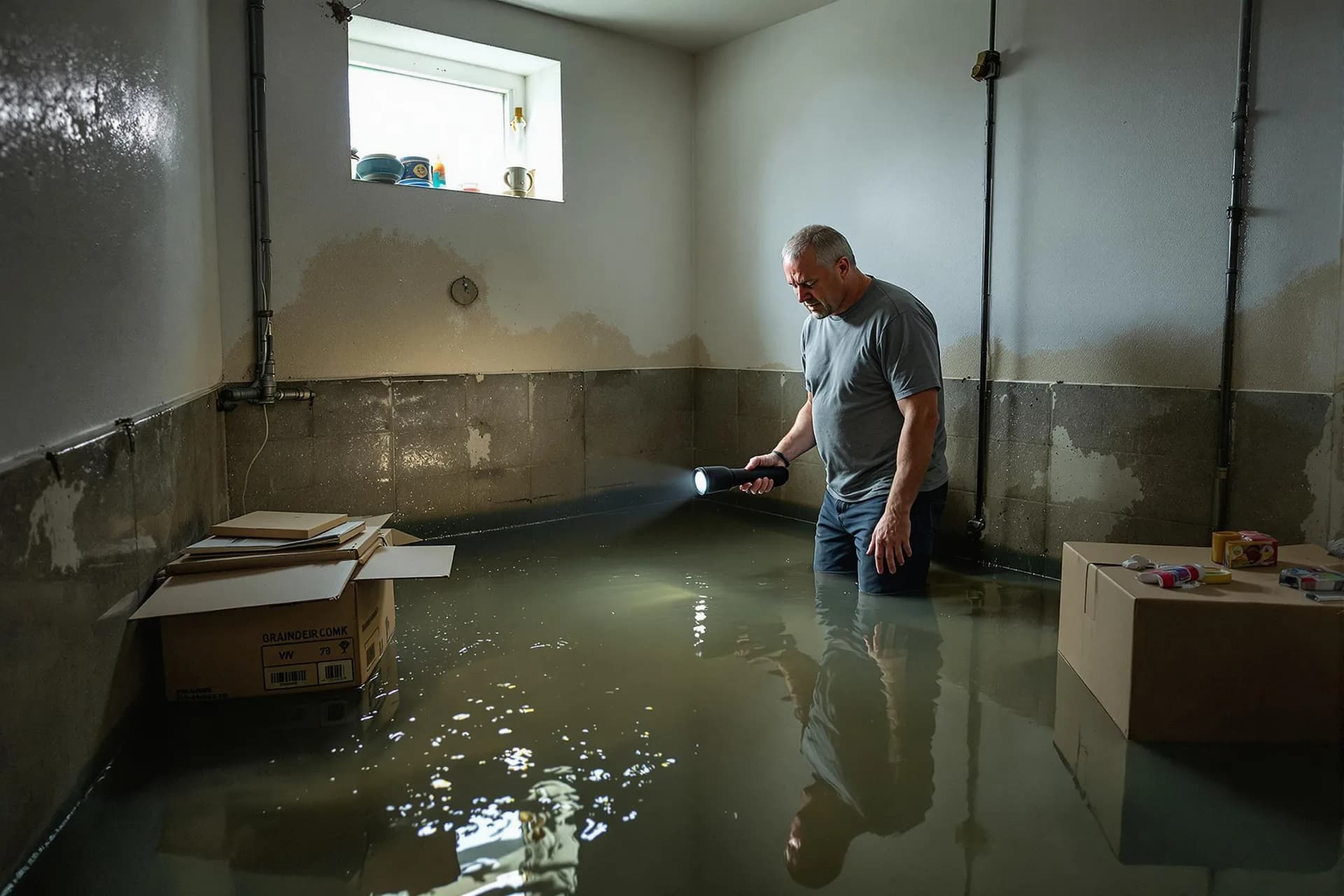
Imagine that after days of rain, your basement is ten centimetres under water. The first measure is pumping out the water, which can already cost between one hundred and two thousand euros. [1_2] This is followed by professional drying, which can cost between five hundred and three thousand euros. [1_2] If walls and floor are damp, remediation costs for waterproofing and repairs can quickly reach ten thousand to thirty thousand euros. [5_2] A building surveyor is often brought in to clarify the cause – an important step for the insurance payout. [3_1] Without the right insurance cover, especially the natural hazards cover in the event of surface flooding caused by groundwater, homeowners are left to foot these high costs. Prompt notification to the insurer and detailed documentation of the damage are crucial. The question, do you need buildings insurance, answers itself in the face of such sums.
The following steps are typical in the event of damage:
- Immediate measures: switch off the electricity, pump out the water (or have it pumped out), secure the danger area.
- Document the damage: take photos and videos, make notes about what happened.
- Inform the insurer: report the damage without delay.
- Determine the cause: bring in an expert if necessary.
- Coordinate and carry out drying and remediation measures.
- Collect invoices and receipts and submit them to the insurer.
A precise understanding of the process helps you respond correctly in an emergency.
In-depth expertise: legal aspects and recent rulings
From an insurance law perspective, the distinction in cases involving groundwater damage is often a key issue. Courts frequently have to clarify whether the loss is an insured flood damage claim or non-insured groundwater seeping in from below. The burden of proof often lies with the policyholder. A ruling by the Higher Regional Court of Hamm (ref. 20 U 212/08), for example, made it clear that flooding requires a build-up of water on the ground surface. Our expert tip: Keep a detailed damage log and secure evidence carefully. The Water Resources Act also requires homeowners to have their wastewater pipes tested for leaks in order to prevent groundwater contamination. [2_4] In disputes with the insurer, legal expenses insurance can be helpful. The exact conditions under which insurance covers water in the cellar caused by groundwater are crucial.
Prevention: How to effectively protect your cellar
The best protection against water in the basement caused by groundwater is effective prevention. The groundwater level should be taken into account already during the planning of the building. Professional basement waterproofing, such as a black tanking system (watertight concrete) or a thick bituminous coating, is essential. [2_5] These waterproofing measures should be inspected every ten to thirty years. [2_1] Drainage systems can help keep water away from the building. [1_5] The following measures are particularly important:
- Regular inspection and maintenance of the basement waterproofing (at least every ten years).
- Installation and maintenance of an effective backflow prevention device in the drainage pipes.
- Ensuring adequate drainage around the building.
- Avoiding cracks in the masonry and repairing them immediately.
- Flood-adapted storage of items in the basement (at least twelve centimetres above the floor). [3_2]
- Regular ventilation of the basement rooms to reduce humidity. [2_5]
Investing in prevention can prevent damage worth several tens of thousands of euros. Find out more about the difference between buildings insurance and contents insurance to optimise your protection.
Recommended actions in an emergency: step by step
If, despite all precautions, water ends up in the basement, quick and considered action is required. First, the power supply in the basement must be switched off to avoid life-threatening electric shocks – only enter the basement if it is safe to do so. [1_2] Pump out the water as quickly as possible or hire a specialist company; this often costs over one hundred euros. [1_2] Document the damage in detail with photos and videos for the insurance company. Report the damage to your insurer immediately and discuss the next steps. Remove damaged items only after agreeing this with the insurer. Ventilate the rooms thoroughly as soon as the water has been removed to help prevent mould growth. Hiring specialist companies for drying and restoration should also be coordinated with the insurer to ensure costs are covered. An overview of what buildings insurance covers can provide an initial guide here.
nextsure: Your partner for tailored protection
Given the complexity of damage caused by groundwater and the potentially high costs, an individual risk analysis is essential. At nextsure, we see ourselves as your digital insurance portal, helping you find tailored and easy-to-understand cover solutions. We offer you comprehensive advice on your home and living insurance. Our experts analyse your existing policies and identify opportunities for optimisation, so that you are as well protected as possible in the event of water in the cellar caused by groundwater. Use our expertise for your protection. We support you in finding the right cover for your home, including protection against special risks such as natural hazards. One call is all it takes for the first step.
Frequently asked questions
- Does my buildings insurance cover damage caused by groundwater?
No, standard residential buildings insurance generally does not cover damage caused by groundwater seeping in through the floor or walls from below. Additional natural hazard cover is required for this, which usually only pays out in the event of flooding on the property caused by groundwater that has risen to the surface.
- What is the difference between flooding and groundwater in insurance terms?
An insured flood usually exists when water floods the property above ground level (e.g. due to heavy rainfall, overflowed bodies of water or groundwater rising to the surface). Mere penetration of groundwater through cellar walls or the cellar floor from below is often not considered a flood.
- Do I need a backflow prevention device for the insurance to pay out?
Many natural hazard insurance policies require an existing, fully functional backflow prevention device to cover damage caused by backflow. Check your policy terms. [3_3]
- How quickly do I need to report groundwater damage to my insurer?
You should report the damage to your insurer without delay, i.e. as quickly as possible. Most insurance conditions provide for an immediate duty to notify.
- Does the insurance cover the cost of a surveyor in the event of groundwater damage?
Whether the insurer covers the costs of an expert you have commissioned depends on the contract and the individual case. The insurer often appoints its own expert. Clarify this in advance. [3_1]
- What can I do if my insurance company refuses to pay for groundwater damage?
Carefully check the reasons for the rejection and compare them with your insurance policy terms. If necessary, seek independent advice, e.g. from a consumer advice centre or a solicitor specialising in insurance law. Legal expenses insurance can provide support in this regard.
Sources
- [1]The Gesamtverband der Deutschen Versicherungswirtschaft (GDV) offers information on natural hazard insurance, which covers damage caused by groundwater and flooding.
- [2]The Verbraucherzentrale provides information about the often underestimated risk of groundwater flooding.
- [3]The Bundesinformationszentrum für technische Regeln (FIB) provides a flood protection guide that offers comprehensive information on protection against flooding.
- [4]The Versicherer, an initiative of the GDV, give tips on protecting houses from heavy rainfall.
- [5]The Umweltbundesamt offers general information on groundwater.
- [6]The Umweltbundesamt provides information on the quantitative status of groundwater in Germany.
- [7]The BUND (Bund für Umwelt und Naturschutz Deutschland) publishes a study on groundwater stress in Germany.
- [8]The Federal Ministry for the Environment, Nature Conservation, Nuclear Safety and Consumer Protection (BMUV) provides a report on low-water risk management.
- [9]The Verbraucherzentrale offers information on insurance cover against natural hazard damage.