

Horse insurance costs per month
How much does horse insurance cost per month? Get a cost analysis for liability, surgery and health insurance. Find out now!
All details are taken from the provider's linked product page and the contract documents (IPID/policy conditions) published there; the insurer's documents prevail. Premiums, benefits and the insurance product itself may change – please verify the details directly with the partner before signing up; only the information provided there is binding.
 Katrin StraubManaging DirectorInsurance expert with over 20 years of experience in the insurance industry.
Published on
Last updated on
12 min read
Table of Contents
A horse enriches life, but also carries financial risks that can quickly reach five-figure sums. Horse insurance protects your assets for a fraction of these costs. We show you how much horse insurance costs per month and how to find the right cover.
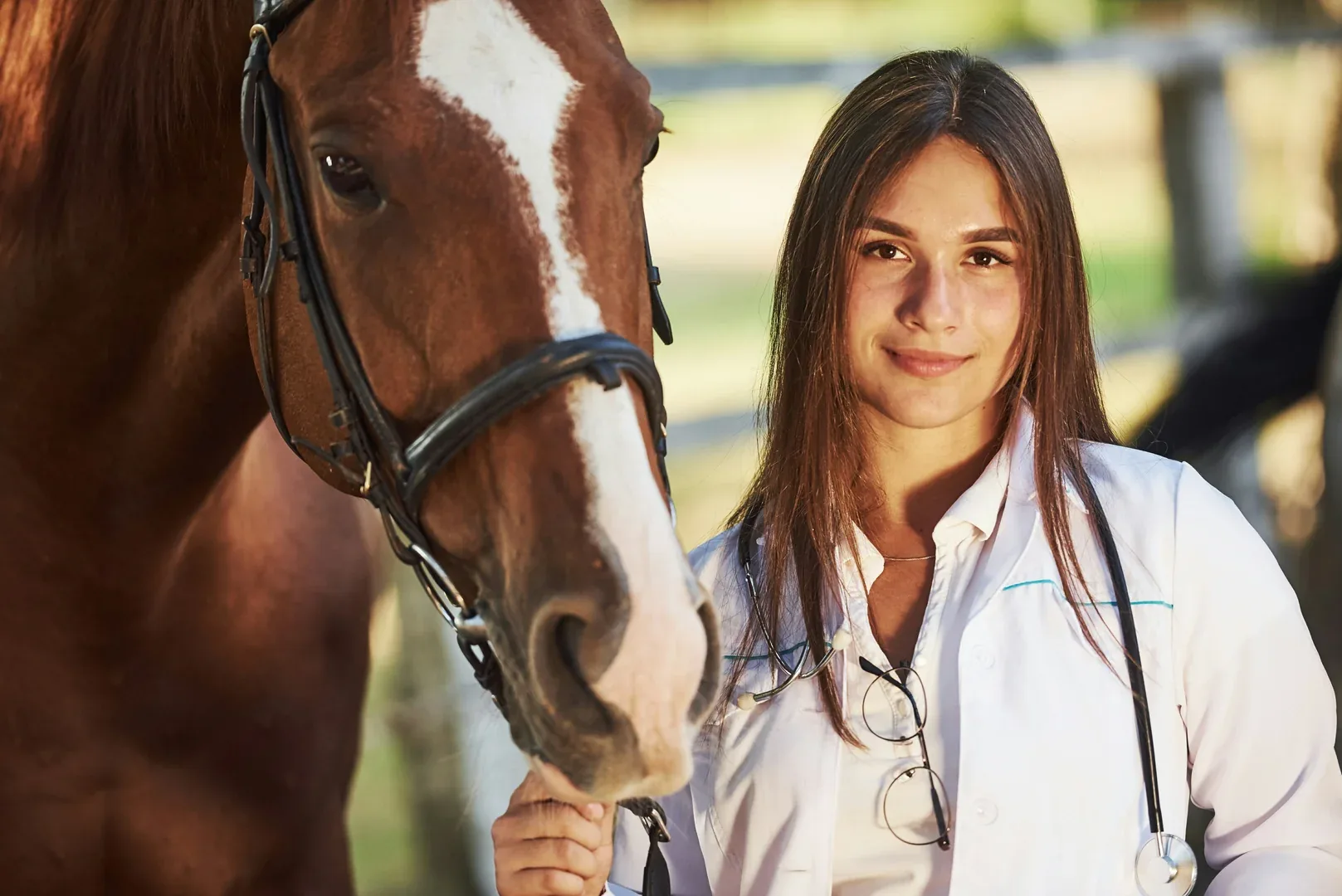
Equine surgery insurance
Horse surgery insurance via nextsure: Three flexible tariffs, reimbursement up to twice the GOT rate, and free choice of clinic worldwide. Protect your horse from high surgery costs – digital, transparent and uncomplicated.
Learn moreCost benchmark: The three core building blocks of horse insurance
The monthly cost of horse insurance depends directly on the level of cover chosen. Three main categories form the basis of protection, and their premiums differ significantly. Each covers a specific risk that horse owners should be aware of.
The most basic cover is the third-party horse owner liability insurance, which is available from around six euros per month. It covers personal injury, property damage and financial loss caused by your horse – a legally required form of protection for every horse owner. Without this cover, you are liable with your entire personal assets for damage that can quickly amount to more than 100,000 euros.
The next level is the horse surgery insurance, which starts at monthly premiums from 20 euros. It covers the costs of necessary operations, anaesthesia and hospitalisation up to a certain rate of the fee schedule for veterinarians (GOT). A colic operation alone can cost between 5,000 and 12,000 euros.
The most comprehensive protection is horse medical insurance, which starts at around 100 euros per month. It includes outpatient treatment, medication and preventive check-ups in addition to surgery costs. This policy makes veterinary costs predictable by reducing them to a fixed monthly premium. However, the exact premium amount is influenced by many factors, which we will now look at.
Analyse premium drivers and unlock savings potential
The final premium for your horse insurance is not a flat-rate amount, but the result of an individual risk assessment. Several factors influence how much horse insurance costs per month and at the same time offer levers for cost optimisation. Even small adjustments can result in savings of up to 30 per cent.
One of the most important levers is the excess. A tariff with no excess is convenient, but costs more. Even an excess of 150 euros per claim can reduce the annual premium by more than 20 per cent. The sum insured in liability cover also plays a role; experts recommend at least ten million euros here, with tariffs with 50 million euros often costing only a few euros more per month.
Other key factors are directly linked to your horse:
- Breed and size: Insuring a pony is often cheaper than insuring a large horse. Premiums for a pony can start at just four euros, while a riding horse is above seven euros. A cost comparison between pony and large horse is worthwhile.
- Age of the horse: Young horses up to around the age of five often benefit from more favourable tariffs. For older horses aged 15 and over, premiums for health and surgery cover usually rise.
- Use: A privately used leisure horse is cheaper to insure than a therapy horse or a horse that competes in tournaments.
- Payment method: An annual payment is on average five per cent cheaper than monthly direct debit.
These factors show how tailored the cover must be in order to truly work when it matters.
Two practical scenarios: When the worst-case scenario costs thousands of euros
Theoretical costs are one thing, actual claims are another. Two examples from practice show how quickly the financial burden can become existentially threatening without the right protection. The monthly cost of horse insurance is negligible compared with the potential damage.
Scenario one: The escaped horse. A horse breaks out of the paddock and runs onto a country road. A car driver swerves, leaves the carriageway and collides with a tree. This causes personal injury, with follow-up costs for treatment and loss of earnings of 80,000 euros, as well as property damage to the vehicle of 15,000 euros. Without a horse owners' liability insurance, the owner is liable for the full 95,000 euros. With insurance, their cost is just the monthly premium of around eight euros.
Scenario two: The emergency operation at the weekend. A horse shows severe colic symptoms on a Saturday evening. Immediate admission to a veterinary clinic and emergency surgery are unavoidable. The costs for the procedure, the medication and the subsequent five-day stay in the clinic add up to 9,500 euros. The horse medical insurance or a good surgery insurance policy covers these costs in full. Without insurance, the owner has to pay the amount themselves. These examples show the need to translate abstract risks into concrete financial consequences.
The legal basis: Why liability insurance is indispensable
Many horse owners underestimate the legal dimension of their responsibility. Unlike damage caused by people, a specific legal rule applies to animals. This makes comprehensive liability insurance an absolute must for every horse owner.
The key legal provision is Section 833 of the German Civil Code (BGB). It governs the so-called strict liability for animal owners. This means you are liable for damage caused by your horse, even if you were not at fault. It makes no difference whether you closed the paddock properly; if the horse still escapes and causes damage, you are fully liable.
Our expert tip: Make sure your policy also covers damage to rented property, such as stables or horse trailers, for at least €50,000. Many basic tariffs exclude such damage, even though it occurs frequently in practice. A kick against the stable wall can quickly lead to repair costs of over €1,000. A good policy should also explicitly include cover for third-party riders and riding shares, to avoid gaps in cover. How you correctly fine-tune protection for operations and illnesses is the next logical step.
Optimise your surgery and illness cover
While liability insurance protects against third-party claims, surgery or illness cover safeguards your horse’s health and your wallet. The right choice of tariff depends greatly on your personal risk tolerance. The Scale of Fees for Veterinarians (GOT) is a key factor here.
Veterinarians can charge their services at the simple, double or even triple rate of the GOT. A procedure that costs 1,000 euros at the simple rate can quickly come to 3,000 euros in weekend emergency duty. A good surgery cover should reimburse at least the double GOT rate. Premium tariffs often also cover the triple rate, which only slightly increases the monthly cost of horse insurance.
The following points will help you choose the right cover:
- Check the scope of cover: Clarify whether aftercare and the stay in a clinic after an operation are also covered for at least ten days.
- Observe waiting periods: Many tariffs have an initial waiting period of three months, and for colic often only seven days.
- Use the preventive care budget: Some comprehensive health insurance policies offer an annual budget of around 100 euros for vaccinations or deworming treatments.
- Free choice of veterinarian: Make sure the policy leaves you free to choose your vet and clinic.
A clear difference between surgery and health insurance lies in the detail, which can decide over thousands of euros. With these criteria, you will find the cover that suits you and your horse.
Frequently asked questions
- How much does horse liability insurance cost per month?
A good horse liability insurance policy costs between six and ten euros per month. The exact price depends on the desired cover amount (recommended: at least 10 million euros) and any excess.
- What costs are covered by horse surgery insurance?
It covers the cost of the operation itself, anaesthesia, medication related to the operation, the stay in the veterinary clinic (usually for a limited number of days) and aftercare. It is important to pay attention to the reimbursed rate of the scale of fees for veterinarians (GOT).
- Can I claim the cost of horse insurance as a tax deduction?
As a private horse owner, you can usually not claim the costs of horse insurance for tax purposes. The situation is different if the horse is part of an agricultural or commercial business. In this case, the premiums can be claimed as operating expenses.
- Is there horse insurance without a waiting period?
Horse liability insurance usually applies immediately from the start of the contract, with no waiting period. For surgical and health insurance policies, there is usually a general waiting period of three months. For certain events such as colic, a shorter waiting period of, for example, seven days may apply.
- What happens if my riding share causes an accident?
A good equine liability insurance policy includes cover for the risk posed by third-party riders and for damage caused by a shared rider. Check this point in your policy terms. The insurance then covers the damage that the shared rider causes to third parties while riding your horse.
- Is horse health insurance worthwhile for an old horse?
Taking out insurance for an older horse can be difficult and expensive, as many insurers have acceptance restrictions or demand high risk surcharges. However, surgical insurance is often still worthwhile and affordable for older horses too, as the risk of age-related operations increases.
Sources
- [1]The German Equestrian Federation (FN) provides comprehensive figures and facts about equestrian sport in Germany.
- [2]Statista presents a survey on personal horse ownership in Germany.
- [3]The Federal Ministry of Food and Agriculture (BMEL) publishes current livestock numbers in Germany.
- [4]The Federal Veterinary Chamber informs animal owners about the scale of fees for veterinarians (GOT).
- [5]Gesetze im Internet (Federal Ministry of Justice) provides the full legal text of the scale of fees for veterinarians (GOT).
- [6]The Federal Statistical Office (Destatis) provides a press release with relevant statistical data.
- [7]The Deutsche Bundesbank publishes a press release on the economic forecast for Germany.
- [8]The German Insurance Association (GDV) provides an overview of statistics on the German insurance industry.
Conclude directly online
Verified partner tariffs at no extra cost. The button takes you straight to the provider's calculator.
 Barmenia
Horse surgery insurance
Surgery cost cover for horses in case of illness and accidents, including diagnostics and after-care.
- Waiting period:
- 3 months (colic surgery: 5 days, accidents: none)
- Coverage abroad:
- worldwide, up to 12 months
- Maximum benefit:
- depends on the cover level, as stated in the policy
- Surgery costs for illness and accidents, including tooth extractions and root canal treatment
- Pre-surgical examination (X-ray, endoscopy, biopsy, lab work)
- After-care including acupuncture, homeopathy, physiotherapy, laser therapy
- Emergency veterinary service up to 4x the standard veterinary fee schedule (GOT) rate plus the emergency callout fee
- Premium cover: up to 5 physiotherapy sessions (max. 60 minutes each) after the after-care period ends
- Once per animal: surgery costs for a birth-related, medically necessary caesarean section
Key exclusions
- Illnesses and developmental abnormalities known at the time of application
- Hoof abscesses and hoof ulcers (exception: hoof cancer)
- Surgery due to cryptorchidism
- Neutering that isn't medically necessary
Service-Champions GOLD: Nr. 1 der Versicherer im Multikanalvertrieb (ServiceValue, 10/2024)
Barmenia (Anbieter der Pferde-OP-Versicherung)
Special waiting periods: 12 months for joint surgery (chip fragments, OC/OCD, Birkeland fractures), 6 months for medically necessary neutering; Premium cover includes a waiver of the insurer's right to cancel from the 7th insurance year.
Fact sheet: benefits, exclusions and waiting periods in detail
All details are taken from the provider's linked product page and the contract documents (IPID/policy conditions) published there; the insurer's documents prevail. Premiums, benefits and the insurance product itself may change – please verify the details directly with the partner before signing up; only the information provided there is binding.
Information last updated: July 2026 · Source: provider product information (IPID/policy conditions)