Pet Health Insurance for Dogs: Which Is the Best?
Compare pet health insurance for dogs: what policies cost, which criteria matter, and how to spot a good deal.
All details are taken from the provider's linked product page and the contract documents (IPID/policy conditions) published there; the insurer's documents prevail. Premiums, benefits and the insurance product itself may change – please verify the details directly with the partner before signing up; only the information provided there is binding.
 Katrin StraubManaging DirectorInsurance expert with over 20 years of experience in the insurance industry.
Published on
10 min read
Table of Contents
No, there is no single best pet health insurance: out of 121 dog surgery tariffs tested, Stiftung Warentest rates only one in four as recommendable. This comparison shows which criteria really matter, what cover costs, and whether it is also worthwhile for parrots and small animals.
Exotenversicherung
Find personalised tariffs, compare services, and benefit from transparent information and personal advice – digital and straightforward.
Learn moreThe honest answer: There is no single best pet health insurance
No, it is simply not possible to name one best pet health insurance across the board. In its issue 5/2025, Stiftung Warentest tested a total of 121 dog surgery tariffs, and only about one in four was rated “good” or “very good” and considered recommendable.[1][2] Whether taking out a policy is worthwhile for your pet therefore depends not on a test seal, but on species, age, health status and budget.
Why no single tariff fits everyone
A tariff that impresses for a young, small dog at a low premium may be unsuitable for an older animal or a different species. Age at the time of taking out the policy drives the premium, and for older dogs it is hard to still find a good tariff without a deductible: variants without a co-payment set a much stricter maximum entry age than tariffs with a deductible, which still accept older dogs. The breed feeds into the premium via the risk class, and the chosen tariff level determines whether only operations or also outpatient treatments are reimbursed.
- Reimbursement up to which GOT rate — that is, up to which rate of the fee schedule for veterinarians, including the out-of-hours service
- Amount of the deductible, the share you pay yourself per invoice or per year
- Annual maximum limit on reimbursement
- Waiting period, the time between the start of the policy and the first insurance cover
- Exclusions, such as pre-existing conditions and neutering without medical necessity
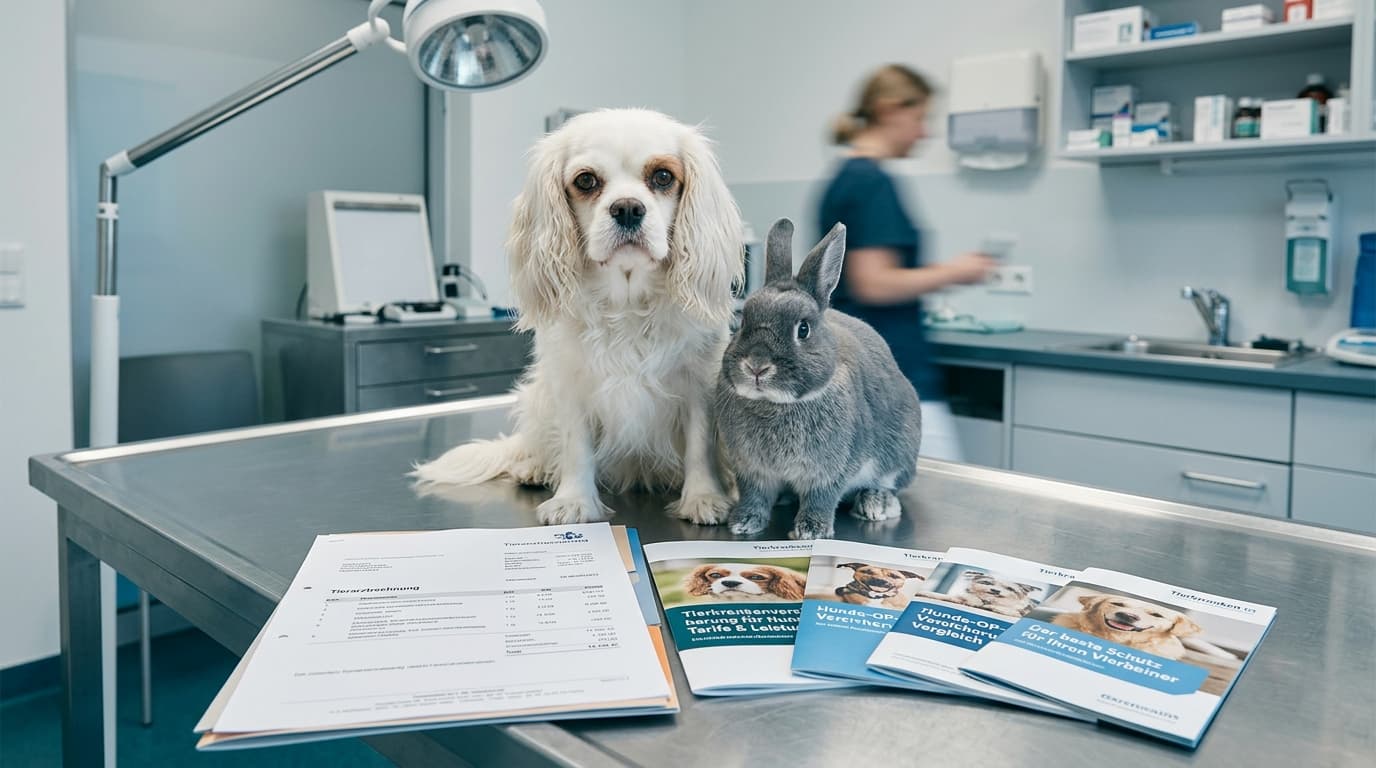
The most important difference upfront: a pure surgery insurance policy only pays out for operations and is significantly cheaper than full health cover, which also reimburses outpatient treatments. We explain in detail how surgery cover and full cover differ in a separate guide.
What pet health insurance costs
For a young, small dog, owners pay annual premiums of around 160 to almost 550 euros for surgery insurance according to the Verbraucherzentrale (as of January 2025); for larger dogs, the premium rises.[3] The more comprehensive full health insurance costs roughly three times as much. Small pets are significantly cheaper: the small pet insurance from Cleos Welt starts, according to the provider, at 6.99 euros per month in the Basis tariff.[4]
| Animal or tariff | Premium | Note |
|---|---|---|
| Dog, surgery insurance | [3]around 160 to 550 € per year | young, small dog; larger dogs cost more |
| Dog, full health cover | about three times the surgery insurance | also reimburses outpatient treatments |
| Small pet (Cleos Welt) | [4]from 6.99 € per month in the Basis tariff | higher tariff tiers reimburse more per year and up to 4 times the GOT rate |
Why the premium alone is not decisive
The premium alone says little about the value of a tariff. Dental treatments in small mammals are only covered in the entry-level tariff from Cleos Welt via an optional add-on module that reimburses tooth extractions up to 500 euros and tooth shortenings up to 200 euros.[4] The provider estimates a dental correction for a small pet at 400 to 1,200 euros, so a single procedure can amount to several annual premiums.[4] What remains decisive is how much the tariff actually reimburses in an emergency: the GOT rate, the deductible and the annual limit determine that.
- Age of the animal when the contract is taken out: the older, the more expensive
- Breed, size and weight
- Chosen deductible: a higher own share lowers the premium
- Scope of cover: pure surgery insurance or full health cover
Our premium comparison shows how premiums differ specifically between dogs, cats and rabbits.
Who benefits from pet health insurance
The rule of thumb from the Verbraucherzentrale is: only owners who insure their healthy animal as early as possible pay low premiums. In principle, only healthy animals are insurable; for pre-existing conditions, some insurers require a veterinary report or decline cover, and for dogs from around seven years of age the choice of offers becomes limited.
- For illnesses, a waiting period of three months usually applies; treatments during this period are not paid by the insurer
- For accidents, the waiting period does not apply; cover takes effect immediately
- Standard services such as vaccinations or neutering without medical necessity are often not included
- Alternative: those who build up a reserve fund for emergencies can also do without the policy entirely
The cost background: since the GOT was revised in November 2022, the costs of veterinary treatments have risen by around a third on average according to the Bundestierärztekammer, as NDR reported in September 2025.[5] The Vereinigung Deutscher Tierhalter presented bills there, including dental surgery on a cat that cost around 450 euros before the reform and almost 4,000 euros afterwards.[5]
Whether the insurance is worth it for your animal therefore depends on the risk: for small pets with expensive, typical procedures such as dental corrections, the financial risk weighs more heavily than for an animal with low treatment needs. There is no general answer, which is why the Verbraucherzentrale expressly recommends comparing the terms and conditions before taking out a policy.
The comparison criteria: GOT rate, deductible, maximum limits
The GOT, the fee schedule for veterinarians (Gebührenordnung für Tierärzte), is a federal legal ordinance that has been in force since 22 November 2022. It sets a fee framework from one to three times the standard rate; in emergency service, billing up to four times the rate is permitted. However, many insurers only reimburse twice the rate, while practices usually bill three times.[4] You pay the difference.[3]
| Criterion | Typical market feature | What matters |
|---|---|---|
| GOT rate | reimbursement often only up to 2x the rate | tariffs up to 3x or 4x the rate offer better protection |
| Deductible | a 20 percent co-payment is common | tariffs with a €0 deductible are more predictable |
| Annual maximum limit | [3]for example €2,500 per year | with major surgery the limit may be reached before reimbursement ends |
| Waiting period | usually 3 months for illness, immediate for accidents | [4]special conditions may be subject to a 6-month waiting period |
- Pre-existing conditions and ongoing treatments at the time of taking out the policy
- Neutering or spaying without medical necessity
- Vaccinations, preventive care and microchipping
- Dental services for small mammals, unless dental add-on cover has been agreed[4]
Pet health insurance for parrots, rabbits and other small animals
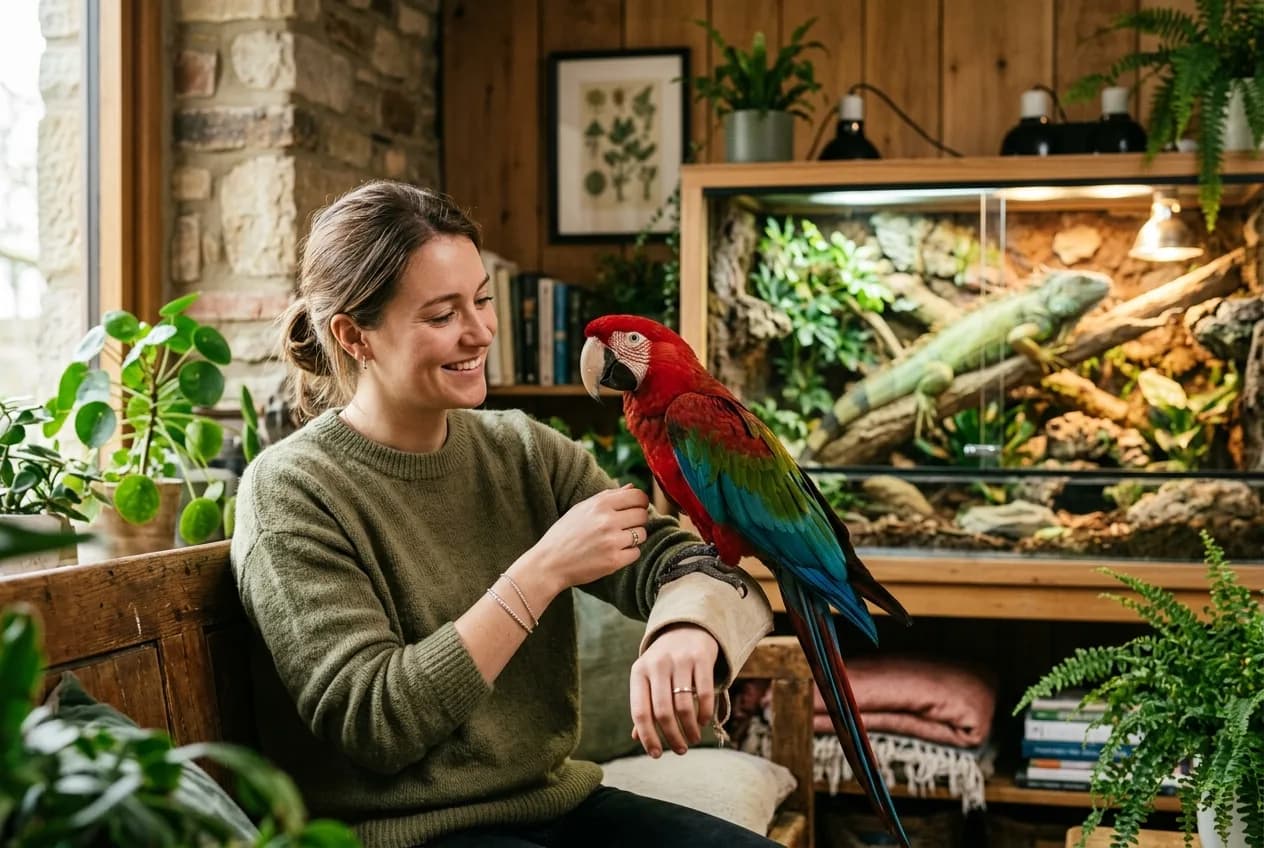
Yes, parrots can be insured, but not under a dog or cat tariff — instead through special small-animal insurance for small mammals, birds and reptiles. Such a policy is a pet health insurance for the animal named in the policy and protects you from the financial consequences of illness costs resulting from an insured event. Which husbandry and reporting obligations additionally apply to your animal, we summarise in a separate guide.
| Tariff (Cleos Welt) | Reimbursement per year | GOT rate |
|---|---|---|
| Basic (entry level) | [4]up to €3,000 | 3x rate |
| Standard | up to €5,000 | 3x rate |
| All-round | unlimited | 4x rate |
Dental and beak treatments are included for birds and reptiles in all tariffs at no extra cost; for small mammals such as rabbits and guinea pigs, a dental add-on cover can be booked on top.[4] For reptiles and other exotic animals, it is also worth taking a look at exotic animal insurance.
Two restrictions deserve attention: special conditions such as egg binding (an egg gets stuck in the oviduct, relevant for female birds and reptiles) and malocclusion (a misalignment of the jaw bite, common in rabbits and guinea pigs) are subject to a six-month waiting period, while the general waiting period is 30 days; for accidents, cover applies from day one.[4] For rabbits, the disease EC (Encephalitozoon cuniculi) is only covered if a negative test no more than one year old is available; without a test, EC-related treatments are excluded.[4]
Conclusion and next step: start your tariff comparison
The general rule is: there is no single best tariff, only the one that fits. The deciding factor is the distinction by species, age, state of health and budget, because it is precisely from these that the GOT rate, deductible, waiting period and exclusions that matter in your case are derived.
Whether your animal will be accepted with an existing special condition, or which tariff level suits your risk, a general article cannot answer. That depends on the health declaration and the insurer's acceptance decision.
This is exactly where nextsure comes in: as a marketplace and independent broker, we compare tariffs, advise independently and broker the contract. Via the pet health insurance page you can access the tariff comparison. The small-animal insurance reimburses surgery, treatment and aftercare for small mammals, birds and reptiles up to the agreed maximum GOT rate, including special conditions such as egg binding and malocclusion.[4]
Check now which tariff suits your animal: start the tariff comparison.
Frequently asked questions
- What is the best pet health insurance for dogs?
There is no single best one. In 2025, Stiftung Warentest examined a total of 121 tariff variants for dog surgery insurance and considers only about one in four recommendable. Which tariff fits depends on breed, age and the desired deductible.
- How much does pet health insurance for dogs cost?
Dog owners pay around 160 to 550 euros per year for a pure surgery insurance policy for a young, small dog, while the more comprehensive full health insurance costs about three times as much. Size, breed, age at the start of the contract and in some cases place of residence influence the premium.
- Is pet health insurance worthwhile?
Yes, if the animal is young and healthy: only healthy animals are insurable in principle, and only owners who take out cover early get low premiums. For illnesses, a waiting period of three months usually applies; for accidents, cover is often immediate. According to the Verbraucherzentrale, those who build up sufficient reserves can also do without it.
- Is pet health insurance suitable for parrots?
Yes, but not via every dog tariff: parrots can be insured through special small-animal insurance policies that cover small mammals, birds and reptiles. Beak and dental treatments for birds are often included there at no extra charge. For particular conditions such as egg binding, a waiting period of 6 months often applies.
- Up to which GOT rate does pet health insurance reimburse?
Under the GOT (Gebührenordnung für Tierärzte, in force since 22 November 2022), veterinarians may bill at 1 to 3 times the rate, and up to 4 times in emergency service. Practices usually charge the 3-fold rate; according to the Verbraucherzentrale, insurers usually pay only the 2-fold rate; tariffs on the market range up to the 3- or 4-fold rate. The reimbursed GOT rate is a central comparison criterion.
- What waiting periods apply to pet health insurance?
A three-month waiting period for illnesses from the start of the contract is common; for accidents it usually does not apply. For particular conditions such as egg binding in birds or malocclusion in rabbits, extended waiting periods of 6 months often apply. If an illness is diagnosed during the waiting period, cover for that illness and its consequences is permanently excluded.
- What is usually excluded from pet health insurance?
Usually not covered are preventive services such as vaccinations, non-medically necessary neutering, health certificates, and treatment of known pre-existing conditions and chronic illnesses. A 20 percent deductible is also common, as are annual caps of around 2,500 euros in some cases. The exact exclusions are set out in the insurance terms and conditions.
Sources
- [1]chip.de
- [2]test.de
- [3]verbraucherzentrale.de
- [4]cleos.de
- [5]ndr.de
Conclude directly online
Verified partner tariffs at no extra cost. The button takes you straight to the provider's calculator.
 Cleos Welt
Liability insurance for exotic animals
Liability cover for owners of exotic animals such as snakes, spiders, or alpacas, with coverage of up to €10 million.
- Sum insured:
- up to €10 million
- Number of animals:
- up to 200 smaller animals or a maximum of 5 larger animals
- Events:
- covered (e.g. trade fairs)
- Personal injury, property damage, and financial loss: up to €10 million
- Search, rescue, and recovery operations: up to €1.5 million
- Damage to rented premises up to €300,000; up to €5,000 in vacation accommodation
- Commercial use covered up to €22,000 in annual revenue
- Young animals up to 12 months old are covered
- Meets the mandatory insurance requirement under the NRW Venomous Animals Act (Gifttiergesetz, €1 million)
Key exclusions
- Animals subject to a keeping ban
- Herds of more than 5 larger animals (e.g. alpacas, donkeys)
Google Rezensionen: 4,5/5 Sterne (210 Bewertungen)
Cleos Welt insgesamt (Anbieterbewertung, alle Versicherungen)
Includes an update guarantee and a grandfathering guarantee (Besitzstandsgarantie); proof for authorities is provided directly after the policy starts.
Fact sheet: benefits, exclusions and waiting periods in detail
Cleos Welt
Small pet insurance
Health insurance for small mammals, birds, and reptiles: reimburses surgery, treatment, and after-care costs up to the agreed maximum veterinary fee schedule (GOT) rate.
- Waiting period:
- 30 days, 6 months for specific surgeries
- Coverage abroad:
- up to 12 months
- Age-based adjustment:
- 3% premium increase per year
- Surgery, treatment, and after-care up to the agreed maximum GOT rate
- Medication as well as boarding and feeding during clinic stays
- Specific surgeries (egg binding, otitis, malocclusion) after a 6-month waiting period
- Remote diagnostics and consultation with a veterinarian
- Optional: vaccinations, neutering, physiotherapy, and supplemental dental cover
- Accidents are covered with no waiting period
Key exclusions
- Pre-existing conditions and treatments recommended before the policy started
- Myxomatosis/RHD in rabbits without proof of vaccination
- Neutering/spaying without a separate agreement
- Damage from Encephalitozoon cuniculi without a negative test (test max. 1 year old)
Google Rezensionen: 4,5/5 Sterne (210 Bewertungen)
Cleos Welt insgesamt (Anbieterbewertung, alle Versicherungen)
Cancellation possible at any time with 14 days' notice; sum insured and deductible (Selbstbeteiligung) as stated in the policy. Insurer: Uelzener Allgemeine Versicherungs-Gesellschaft a.G.
Fact sheet: benefits, exclusions and waiting periods in detail
All details are taken from the provider's linked product page and the contract documents (IPID/policy conditions) published there; the insurer's documents prevail. Premiums, benefits and the insurance product itself may change – please verify the details directly with the partner before signing up; only the information provided there is binding.
Information last updated: July 2026 · Source: provider product information (IPID/policy conditions)