
Horse insurance costs 2025
How much does horse insurance cost? Get an overview of the costs of liability, surgery and health insurance. Find out now!
All details are taken from the provider's linked product page and the contract documents (IPID/policy conditions) published there; the insurer's documents prevail. Premiums, benefits and the insurance product itself may change – please verify the details directly with the partner before signing up; only the information provided there is binding.
 Katrin StraubManaging DirectorInsurance expert with over 20 years of experience in the insurance industry.
Published on
Last updated on
6 min read
Table of Contents
The veterinary bill for colic surgery can quickly reach €10,000. The right horse insurance protects you from such financial shocks. This guide shows you which costs you can really expect and how to find the right cover.

Equine surgery insurance
Horse surgery insurance via nextsure: Three flexible tariffs, reimbursement up to twice the GOT rate, and free choice of clinic worldwide. Protect your horse from high surgery costs – digital, transparent and uncomplicated.
Learn moreHorse insurance costs at a glance
The cost of horse insurance varies considerably depending on the level of cover and the provider. Basic horse liability insurance is already available for between €65 and €200 per year. Premiums for health cover are significantly higher. An operations insurance policy (surgery cover) can cost between €200 and €2,000 per year. Comprehensive horse health insurance, which also covers outpatient treatment, can cost €235 per month or more.
To better understand the cost structure, here is a breakdown of the typical types of insurance:
- Horse liability insurance: This essential insurance covers personal injury, property damage and financial loss and often costs less than ten euros per month.
- Horse surgery insurance: It covers the cost of surgical procedures and is available from around €22 per month.
- Horse health insurance: Comprehensive cover, which also includes regular vet visits, is the most expensive option, with premiums often exceeding €200 per month.
Choosing the right insurance depends heavily on your individual appetite for risk. Surgery cover protects against the most expensive individual risks, while liability insurance is an absolute must for every horse owner. The exact monthly cost of horse insurance is determined by a number of other factors.
The key drivers of insurance costs
The premium for horse insurance is not a flat rate, but is calculated individually. Several factors have a major influence on the final cost. The horse's age when the policy is taken out is one of the most important aspects; many insurers have an upper age limit for acceptance of 15 years. Breed and intended use, whether as a leisure or competition horse, also play a decisive role in the insurer's risk assessment. Another key point is the chosen scope of cover.
The following factors determine the amount of your insurance premium:
- Scope of cover: A higher sum insured, for example €50 million in liability cover, leads to higher premiums than basic cover.
- Excess: A higher deductible in the event of a claim, for example €500 per operation, noticeably reduces ongoing costs.
- Age and breed of the horse: Younger horses are often cheaper to insure, and there are sometimes differences in premiums for certain breeds.
- Method of payment: Annual payment is often a few per cent cheaper than monthly or quarterly direct debit.
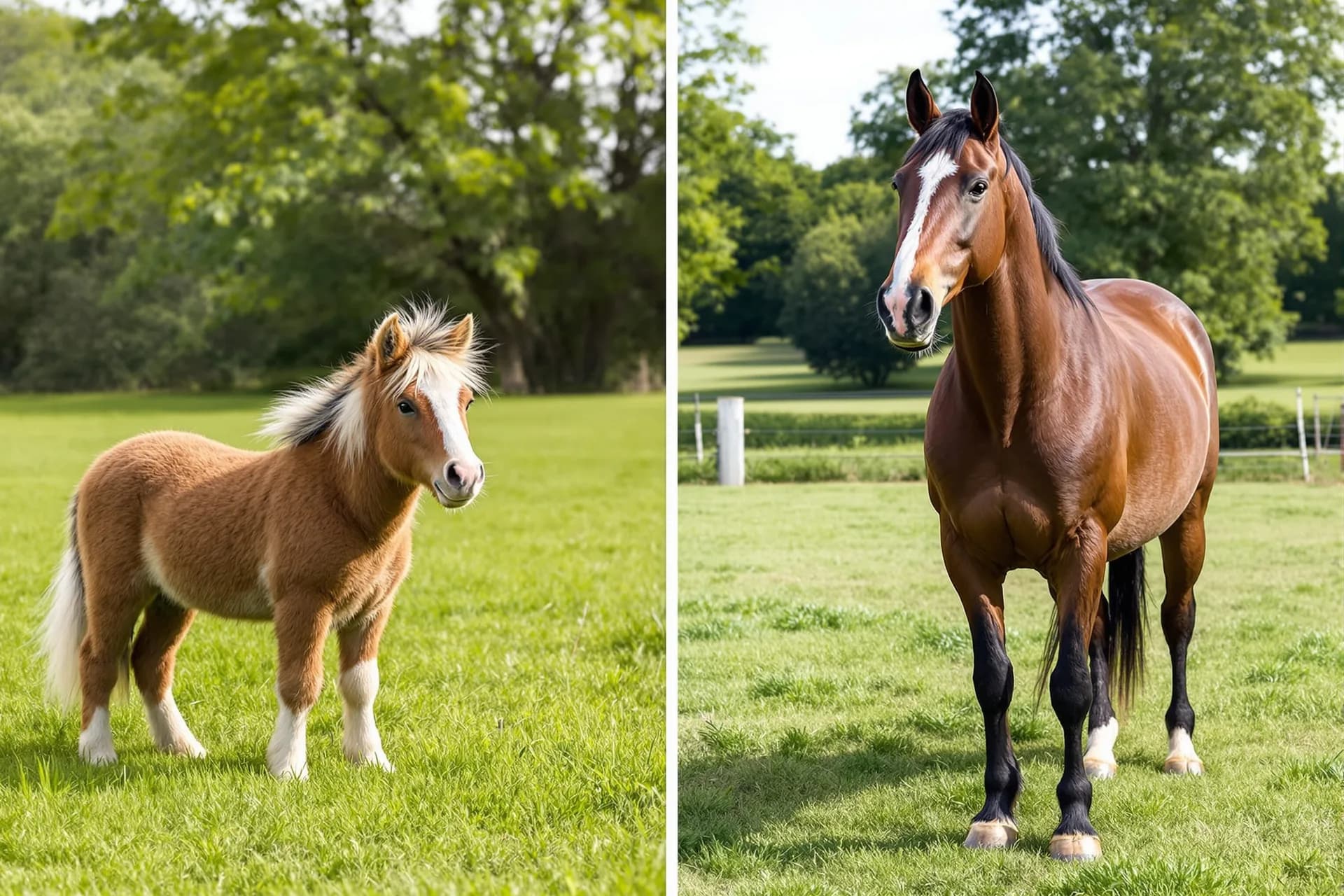
Even adjusting the excess can reduce the annual premium by more than a hundred euros. Knowing these factors allows you to tailor your insurance cover to your needs without paying for unnecessary benefits, which is particularly relevant for the costs for ponies and horses.
Why horse liability insurance is essential
Even the calmest horse can react unpredictably and cause damage worth several thousand euros. As a horse owner, you are liable without limit for all damage caused by your animal. This legal rule is known as strict liability and is set out in Section 833 of the German Civil Code (BGB). It means that you are liable even if you are not personally at fault. A typical example is a traffic accident caused by your horse, with resulting costs for repairs and compensation for pain and suffering that can quickly exceed 50,000 euros.
A horse liability insurance policy is therefore the most important protection for every owner. It examines third-party compensation claims and defends against unjustified demands, if necessary in court. Good policies cover damage up to a sum of 50 million euros. Without this protection, you risk your financial future. The cost of this cover is comparatively low at less than ten euros per month. By contrast, the consequences of lacking protection can result in lifelong financial burdens.
Surgery costs versus full cover: assessing your needs correctly
Medical care for a horse is expensive, especially when it comes to surgical procedures. For example, colic surgery can cost between €6,000 and €10,000. Surgery on a splint bone can cost between €2,500 and €4,000. Horse surgery insurance is designed to offset precisely these high one-off costs. It covers not only the procedure itself, but often also follow-up care for up to 17 days and imaging procedures such as CT or MRI.
Horse health insurance goes one step further and also covers outpatient treatments. The difference between surgical and health insurance lies in the detail:
- Surgical insurance: Focuses on expensive operations that take place either as inpatient treatment or as outpatient procedures under anaesthetic.
- Health insurance: Also includes lameness examinations, medication, vaccinations and, in some cases, preventive measures up to an annual limit of €500.
For many owners, surgical insurance is the ideal compromise between cost and benefits. It covers the biggest financial risks without requiring the high monthly premiums of comprehensive insurance. This is especially true when you consider the veterinary costs without insurance.
Expert tips for cost-effective cover
When choosing the right horse insurance, it comes down to the details in the policy. One important point is the waiting periods. For colic operations, this is often only five days, while three months is common for other procedures. For chip operations, the waiting period can even be twelve months. Another aspect is the scale of fees for veterinarians (GOT). Insurers often reimburse up to two or three times the standard rate; for emergencies, however, the policy should cover up to four times the standard rate.
Our expert tip: You can claim the premiums for horse liability insurance as special expenses in your tax return. This reduces your tax burden and makes the already inexpensive insurance even more attractive. Also check whether the tariff guarantees stable premiums even for older horses. A careful comparison of the policy terms can save you several thousand euros in the event of a claim. If you are wondering whether a horse insurance policy is tax-deductible, the answer for liability insurance is clearly yes. Request an individual risk analysis now: Have your insurance situation reviewed free of charge and receive concrete optimisation suggestions.
Frequently asked questions
- How are the costs of horse insurance calculated?
The cost is determined by the horse’s age and breed, the type of use (leisure/competition), the level of cover, the chosen excess, and the plan’s overall scope of benefits.
- What does horse surgery insurance cover?
It covers the costs of surgical procedures under anaesthetic, including the pre-operative examination on the day of surgery, follow-up care (often 10-17 days), medication and the clinic stay. Details vary depending on the tariff.
- Can I deduct the cost of horse insurance from my tax bill?
Yes, the premiums for horse liability insurance can be claimed as special expenses in the tax return. Premiums for health or surgical operation insurance are generally not tax-deductible.
- What does strict liability mean for horse owners?
Strict liability (BGB § 833) means that, as the keeper, you are liable for all damage caused by your horse – regardless of whether you are at fault. You are liable with your entire personal assets.
- Are there waiting periods for horse insurance?
Yes, most surgery and health insurance policies have waiting periods. These are often waived in the event of accidents, are usually just a few days for colic, and several months for general operations or certain diagnoses (e.g. chips).
- What is the difference between the 1x and 3x GOT rate?
The Schedule of Fees for Veterinarians (GOT) sets the cost framework for treatments. The 1x rate is the base fee. Depending on the complexity or timing (emergency service), the vet may charge the 2x, 3x or even 4x rate. Your insurance plan should ideally cover at least the 2x rate.
Sources
- [1]Federal Statistical Office provides statistics on organic farming and livestock in Germany.
- [2]Laws on the Internet provides the current 2022 fee schedule for veterinarians (GOT).
- [3]Consumer Advice Centre provides comprehensive information on liability insurance for pets.
- [4]Stiftung Warentest provides a detailed test report on horse health insurance and surgical cover policies.
- [5]German Equestrian Federation (FN) provides figures and facts about horses and equestrian sport in Germany.
- [6]Friedrich-Loeffler-Institut (FLI) provides information on notifiable animal epidemics and reportable animal diseases.
- [7]Chamber of Agriculture provides information on horse boarding.
- [8]Advisory Board for Agricultural Technology and Construction in Agriculture (KTBL) provides a sample extract from a document on horse husbandry, costs and economic viability.
Conclude directly online
Verified partner tariffs at no extra cost. The button takes you straight to the provider's calculator.
 Barmenia
Horse surgery insurance
Surgery cost cover for horses in case of illness and accidents, including diagnostics and after-care.
- Waiting period:
- 3 months (colic surgery: 5 days, accidents: none)
- Coverage abroad:
- worldwide, up to 12 months
- Maximum benefit:
- depends on the cover level, as stated in the policy
- Surgery costs for illness and accidents, including tooth extractions and root canal treatment
- Pre-surgical examination (X-ray, endoscopy, biopsy, lab work)
- After-care including acupuncture, homeopathy, physiotherapy, laser therapy
- Emergency veterinary service up to 4x the standard veterinary fee schedule (GOT) rate plus the emergency callout fee
- Premium cover: up to 5 physiotherapy sessions (max. 60 minutes each) after the after-care period ends
- Once per animal: surgery costs for a birth-related, medically necessary caesarean section
Key exclusions
- Illnesses and developmental abnormalities known at the time of application
- Hoof abscesses and hoof ulcers (exception: hoof cancer)
- Surgery due to cryptorchidism
- Neutering that isn't medically necessary
Service-Champions GOLD: Nr. 1 der Versicherer im Multikanalvertrieb (ServiceValue, 10/2024)
Barmenia (Anbieter der Pferde-OP-Versicherung)
Special waiting periods: 12 months for joint surgery (chip fragments, OC/OCD, Birkeland fractures), 6 months for medically necessary neutering; Premium cover includes a waiver of the insurer's right to cancel from the 7th insurance year.
Fact sheet: benefits, exclusions and waiting periods in detail
All details are taken from the provider's linked product page and the contract documents (IPID/policy conditions) published there; the insurer's documents prevail. Premiums, benefits and the insurance product itself may change – please verify the details directly with the partner before signing up; only the information provided there is binding.
Information last updated: July 2026 · Source: provider product information (IPID/policy conditions)