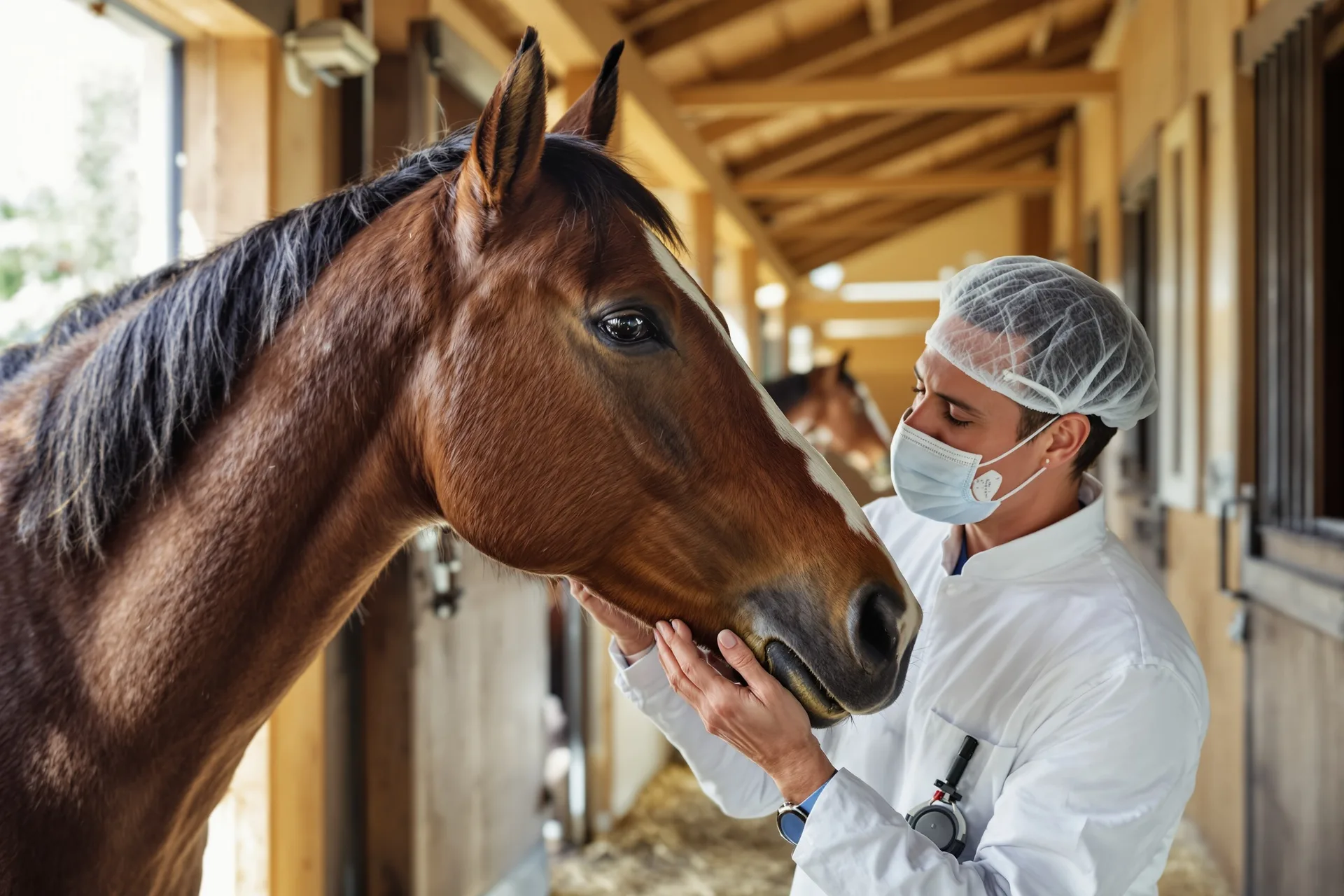
Horse health insurance teeth cost coverage
Protect yourself against high veterinary costs for dental treatment in horses. Our guide to horse health insurance and dental treatment cost coverage.
All details are taken from the provider's linked product page and the contract documents (IPID/policy conditions) published there; the insurer's documents prevail. Premiums, benefits and the insurance product itself may change – please verify the details directly with the partner before signing up; only the information provided there is binding.
 Katrin StraubManaging DirectorInsurance expert with over 20 years of experience in the insurance industry.
Published on
Last updated on
6 min read
Table of Contents

Equine surgery insurance
Horse surgery insurance via nextsure: Three flexible tariffs, reimbursement up to twice the GOT rate, and free choice of clinic worldwide. Protect your horse from high surgery costs – digital, transparent and uncomplicated.
Learn moreHorse health insurance for teeth: How to secure coverage for expensive dental treatments
Dental surgery for a horse can quickly cost several thousand euros. The right horse health insurance protects you from these financial burdens. Find out how to ensure full coverage of dental treatment.
Dental problems in horses: an underestimated cost risk
The dental health of your horse has a direct impact on its feed intake and overall wellbeing. Regular check-ups are therefore essential and involve predictable costs of around €255 per routine treatment. More complex procedures such as treatment for dental hooks or a necessary extraction can quickly drive costs up. Without adequate horse health insurance, a single dental operation can set your budget back by several thousand euros. Many horses require professional dental treatment at least once a year to prevent serious secondary conditions. This regularity makes cover for dental costs a key component of preventative healthcare. Investing in the right protection saves you from financial strain and ensures your horse receives the best possible care.
Range of services in detail: What horse dental insurance covers
A comprehensive horse health insurance policy covers far more than just emergencies. Many plans offer an annual preventive care allowance of up to €500, which can be used for routine procedures such as teeth rasping. This encourages regular care and helps identify more serious problems at an early stage. However, the core of cover for dental treatment lies in medically necessary procedures. Make sure your plan explicitly includes dental operations such as extractions or root canal treatments. A good policy clearly distinguishes between a pure horse surgery insurance policy and comprehensive health cover.
The following dental services are often covered:
- Medically necessary teeth rasping (occlusal correction)
- Extraction of incisors, cheek teeth or wolf teeth
- Root canal treatments to preserve the tooth
- Fillings for fractures or decay
- Treatment of jaw abscesses and fistulas
- Diagnostic procedures such as dental X-rays
Carefully reviewing the policy terms and conditions is essential to finding the right cover for your horse.
Cost trap GOT fee schedule: a calculation example from practice
The schedule of fees for veterinarians (GOT) regulates what a treatment may cost, but leaves room for flexibility. A complicated tooth extraction is listed there at a basic fee of €180.94. Depending on the amount of work involved, however, the vet can charge up to three times that rate, i.e. €542.82. Sedation, medication and aftercare costs are added, so the total bill quickly exceeds €700. Tariffs that reimburse services independently of the GOT rate, or up to four times the rate, offer the greatest security here. An insurance policy that only covers the basic rate would leave you to bear a large part of the costs. The difference between surgery and health insurance is also relevant here, as only the latter fully covers outpatient aftercare.
Pitfalls and waiting periods: what you need to watch out for in the fine print
When taking out equine dental insurance, cover is subject to certain conditions. A key point is the waiting period. As a rule, you must wait two months after the contract starts before you can claim benefits for most treatments. Particular caution is required with congenital conditions or conditions that already existed before the contract was taken out but were not known at the time; the waiting period here can be up to one year. This is intended to prevent an insurance policy being taken out at short notice for a problem that is already known.
Our expert tip: Document your horse’s dental health carefully before taking out the policy and disclose all findings to avoid later exclusions from cover. Also note the following points:
- Check the amount of the annual preventive allowance.
- Clarify up to which GOT rate costs are reimbursed.
- Find out about exclusions, for example for purely cosmetic dental corrections.
- Pay attention to the specific waiting periods for dental treatment.
A careful review of these details determines whether horse health insurance really pays off.
Find your personalised protection solution
Choosing the right horse health insurance to cover dental treatment effectively protects you from high financial burdens. It enables you to always provide your horse with the necessary medical care without having to worry about Vet costs without insurance. Compare the tariffs not only by price, but above all by the scope of cover for dental surgery and preventive care. A comprehensive analysis of your needs and your horse’s health is the first step towards tailored protection. This way, you can be sure that the insurance performs as expected in the event of a claim.
Frequently asked questions
- Which dental treatments are covered by horse health insurance?
Good plans cover a broad range. This includes surgical procedures such as tooth extractions and root canal treatments, as well as conservative treatments such as fillings and the treatment of abscesses. The annual routine check-up with teeth scaling is also often covered by a preventive allowance.
- How high should the coverage amount for dental treatment be?
As a single dental operation including a stay in hospital can cost several thousand euros, the insurance should offer a high or unlimited annual cover limit. Make sure that reimbursement is at least at three times the rate of the schedule of fees for veterinarians (GOT).
- What happens if my horse already had dental problems before the contract was signed?
Known pre-existing conditions must be declared when applying. The insurer can note an individual exclusion of benefits in the contract for this purpose. Treatments related to this pre-existing condition are then not reimbursed. Honesty is crucial here in order not to jeopardise insurance cover.
- Does the insurance also cover sedation and dental X-rays?
Yes, comprehensive equine health insurance covers the costs of diagnostic measures such as X-rays, as well as the necessary sedation or anaesthesia, as part of an insured treatment. These items are part of the total bill and are reimbursed according to the selected plan.
Sources
- [1]On the website of Tierzahnaerzte.de, you will find information on dental health in animals.
- [2]The Federal Veterinary Chamber provides comprehensive information on the fee schedule for veterinarians (GOT), specifically for pet owners.
- [3]You can find the full legal text of the fee schedule for veterinarians (GOT) from 2022 on the official platform Laws on the Internet.
- [4]The German Veterinary Association provides a PDF document with details on the fee schedule for veterinarians (GOT) 2022.
- [5]The German Equestrian Federation (FN) offers figures and facts on horse keeping and equestrian sport in Germany.
- [6]World Animal Protection provides information in a report on the current situation of horses in Germany.
- [7]The Friedrich-Loeffler-Institut (FLI) provides detailed information on notifiable and reportable animal diseases and illnesses.
- [8]Further information from the Federal Veterinary Chamber on various topics related to the veterinary profession.
Conclude directly online
Verified partner tariffs at no extra cost. The button takes you straight to the provider's calculator.
 Barmenia
Horse surgery insurance
Surgery cost cover for horses in case of illness and accidents, including diagnostics and after-care.
- Waiting period:
- 3 months (colic surgery: 5 days, accidents: none)
- Coverage abroad:
- worldwide, up to 12 months
- Maximum benefit:
- depends on the cover level, as stated in the policy
- Surgery costs for illness and accidents, including tooth extractions and root canal treatment
- Pre-surgical examination (X-ray, endoscopy, biopsy, lab work)
- After-care including acupuncture, homeopathy, physiotherapy, laser therapy
- Emergency veterinary service up to 4x the standard veterinary fee schedule (GOT) rate plus the emergency callout fee
- Premium cover: up to 5 physiotherapy sessions (max. 60 minutes each) after the after-care period ends
- Once per animal: surgery costs for a birth-related, medically necessary caesarean section
Key exclusions
- Illnesses and developmental abnormalities known at the time of application
- Hoof abscesses and hoof ulcers (exception: hoof cancer)
- Surgery due to cryptorchidism
- Neutering that isn't medically necessary
Service-Champions GOLD: Nr. 1 der Versicherer im Multikanalvertrieb (ServiceValue, 10/2024)
Barmenia (Anbieter der Pferde-OP-Versicherung)
Special waiting periods: 12 months for joint surgery (chip fragments, OC/OCD, Birkeland fractures), 6 months for medically necessary neutering; Premium cover includes a waiver of the insurer's right to cancel from the 7th insurance year.
Fact sheet: benefits, exclusions and waiting periods in detail
All details are taken from the provider's linked product page and the contract documents (IPID/policy conditions) published there; the insurer's documents prevail. Premiums, benefits and the insurance product itself may change – please verify the details directly with the partner before signing up; only the information provided there is binding.
Information last updated: July 2026 · Source: provider product information (IPID/policy conditions)