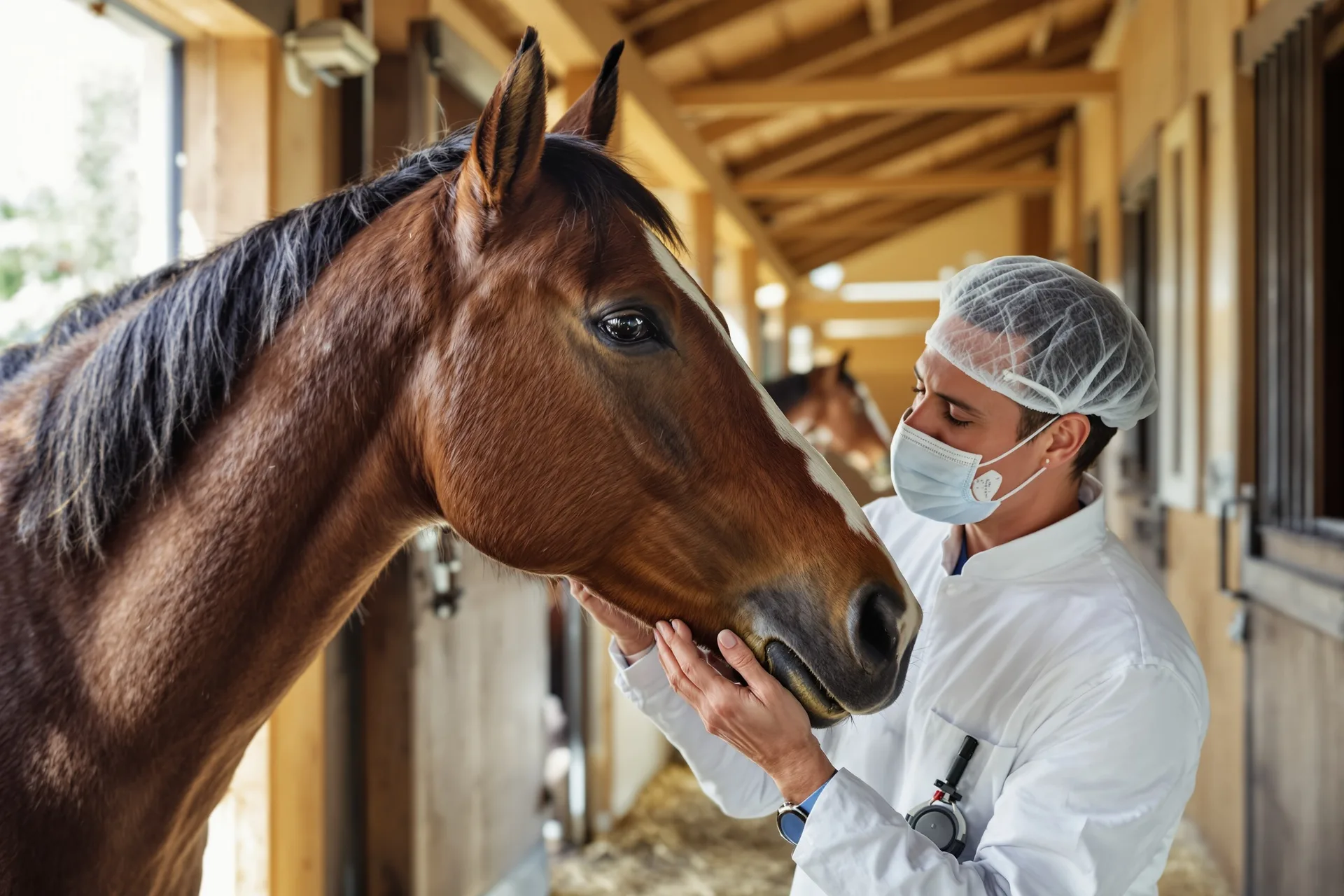

Horse health insurance alternative healing methods
Find out which horse health insurance covers alternative treatment methods such as osteopathy and how you can save money. Compare rates now!
All details are taken from the provider's linked product page and the contract documents (IPID/policy conditions) published there; the insurer's documents prevail. Premiums, benefits and the insurance product itself may change – please verify the details directly with the partner before signing up; only the information provided there is binding.
 Katrin StraubManaging DirectorInsurance expert with over 20 years of experience in the insurance industry.
Published on
Last updated on
4 min read
Table of Contents
Equine surgery insurance
Horse surgery insurance via nextsure: Three flexible tariffs, reimbursement up to twice the GOT rate, and free choice of clinic worldwide. Protect your horse from high surgery costs – digital, transparent and uncomplicated.
Learn moreEquine health insurance for alternative therapies: cost coverage and tariff secrets
Alternative treatment methods for horses are becoming more important, but insurance cover is often unclear. Many policies cover only a fraction of the costs or exclude important therapies altogether. Find out how to find the right cover for your horse and save four-figure sums.
Cost trap or worthwhile investment: The value of alternative healing methods
Demand for alternative treatments for horses has risen significantly over the past ten years. Many horse owners are seeking gentle complements to conventional veterinary medicine to alleviate chronic conditions. A single osteopathic treatment can quickly cost between 90 and 150 euros. Without suitable horse health insurance, these expenses soon add up to a considerable financial burden. The challenge is that not every policy covers these therapies, which can lead to unexpected costs of several hundred euros. This highlights the need to check the insurance terms carefully.
From acupuncture to physiotherapy: An overview of the most common methods
The range of alternative treatment methods is broad and offers suitable approaches for many conditions. A precise understanding of the procedures helps when choosing the right insurance cover. For horse owners, five methods are particularly relevant:
- Acupuncture: By placing fine needles at specific points, blockages are relieved. A session often costs between 70 and 120 euros.
- Osteopathy: Manual techniques for treating dysfunctions of the musculoskeletal system. Around 100 to 180 euros are charged per treatment.
- Physiotherapy: Targeted exercises for rehabilitation after injuries, often costing 60 to 100 euros per session.
- Homeopathy: Treatment with potentised active ingredients, the cost of which varies greatly, but which often require an initial consultation costing more than 150 euros.
- Phytotherapy (herbal medicine): The use of medicinal plants to relieve illnesses, with monthly costs of 30 to 80 euros for special blends.
The cost coverage for these treatments depends heavily on the details of the chosen insurance tariff.
Insurers’ benefits maze: How to find the right cover
The reimbursement for horse health insurance for alternative therapies is not standardised. Some insurers offer these benefits only in premium policies or as optional add-ons. For example, GHV Versicherung covers alternative therapies up to an annual limit of EUR 300 if they are performed by a veterinarian. Other providers, such as Uelzener, offer an optional „rehabilitation add-on“ for around EUR 15 per month. This add-on reimburses up to EUR 3,000 per year for therapies such as osteopathy or physiotherapy, even if they are provided by non-veterinarians, but requires a 20 per cent co-payment. So pay close attention to the annual maximum limit and any possible deductible. A standalone horse surgery insurance policy often covers such treatments only if they are carried out immediately after an operation.
Legal framework: The Scale of Fees for Veterinarians (GOT) as a benchmark
For billing and thus for reimbursement by an insurance provider, the scale of fees for veterinarians (GOT) is decisive. If a licensed veterinarian carries out an alternative treatment such as acupuncture, they can bill it in accordance with the GOT, which simplifies reimbursement. However, many therapists, such as equine osteopaths, are not veterinarians. In this case, many basic insurance policies do not pay out. Our expert tip: Before treatment begins, clarify whether your insurer also accepts invoices from non-veterinary therapists. Tariffs with special optional add-ons often provide the necessary flexibility here and prevent you from being left to cover costs of up to 1,000 euros. The GOT provides billing rates for veterinary services ranging from one to four times the standard rate, which can have a significant impact on costs.
Practical example: Billing an osteopathy treatment in detail
Imagine your horse is suffering from recurring back problems and needs a series of treatments. An equine osteopath who is not a veterinarian carries out four treatments over two months at €120 each. The total cost therefore comes to €480. Without suitable insurance cover, such as that provided by a specific add-on module, you would have to bear this amount in full yourself. If you have a tariff that reimburses eighty per cent of the costs up to an annual limit of €1,000, the insurance would cover €384. Your own contribution would be only €96. This shows how a well-considered choice of plan makes the veterinary costs for your horse predictable and avoids financial bottlenecks.
Checklist: Choosing the right insurance tariff for alternative methods
To find the best possible cover, you should ask targeted questions before signing the contract. The following list will help you separate the wheat from the chaff:
- Which treatment methods are explicitly insured? Check whether acupuncture, osteopathy and physiotherapy are named in the contract.
- How high is the annual budget? A limit of 300 euros is reached quickly; higher limits of around 1,500 euros offer more security.
- Is treatment by a veterinarian required? Clarify whether certified therapists without a veterinary qualification may also invoice.
- Is there an excess? A percentage contribution, for example twenty per cent per invoice, is common.
- Is it linked to an operation? Check whether the benefits are only provided after surgery or also in the case of chronic conditions.
- How high is the covered GOT rate? Reimbursement should at least be up to twice the fee schedule rate.
Carefully reviewing these six points will protect you from unpleasant surprises when it comes to making a claim.
Conclusion: Targeted protection is the key to success
Integrating alternative healing methods into a horse’s healthcare is a valuable but costly undertaking. A standard-horse health insurance policy covers alternative healing methods often only inadequately. The key is to choose a tariff that explicitly includes these benefits and provides an adequate budget of over 500 euros per year. Look out for details such as reimbursement for treatments by non-vets and a low excess. A good policy gives you the freedom to choose the best treatment for your horse without constantly having to think about the costs. In this way, you not only safeguard your horse’s health, but also your financial stability. Request an individual risk analysis now: Have your insurance situation reviewed free of charge and receive specific suggestions for optimisation.
Frequently asked questions
- Which horse health insurance covers alternative treatments?
Insurers such as GHV or Uelzener offer plans or additional modules that cover alternative healing methods. GHV often limits cover to 300 euros per year and requires treatment by a veterinarian. With the "rehab module", Uelzener offers reimbursement of up to 3,000 euros with a twenty per cent excess, also for treatments by non-veterinarians.
- Does an alternative treatment have to be carried out by a veterinarian for the insurance to pay?
This depends on the policy. Many basic plans require treatment by a licensed veterinarian so that billing can be carried out in accordance with the Schedule of Fees for Veterinarians (GOT). Flexible premium plans or special add-on modules often also reimburse the costs for certified therapists without veterinary authorisation.
- What is the difference in cost coverage between surgical insurance and comprehensive health insurance?
An operation insurance policy usually covers alternative methods only as part of the post-operative follow-up treatment after surgery. Full health insurance can also reimburse these therapies for the treatment of chronic illnesses or for general health promotion without a prior operation, provided the tariff allows it.
- Is there a waiting period for reimbursement of alternative therapies?
Yes, for most plans and optional extras, there is a general waiting period of two to three months. With some providers, a longer waiting period of up to one year may also apply for specific treatments or pre-existing conditions.
Sources
- [1]Statista provides statistics from a survey of pet owners on the topic of health insurance for their animals.
- [2]The Frankfurter Allgemeine Zeitung examines in an article when pet health insurance is worthwhile.
- [3]The Verbraucherzentrale provides comprehensive information on whether health insurance for pets makes sense or is unnecessary.
- [4]The Deutsche Reiterliche Vereinigung (FN) is the official website with up-to-date information on horses and equestrian sport.
- [5]The Universität München provides information on its website about research projects in the field of equine medicine.
- [6]The Deutsche Kuratorium für Therapeutisches Reiten provides scientific studies and expert reports on therapeutic riding.
- [7]The Tierärztekammer Nordrhein offers an information sheet on vaccination protection for horses.
Conclude directly online
Verified partner tariffs at no extra cost. The button takes you straight to the provider's calculator.
 Barmenia
Horse surgery insurance
Surgery cost cover for horses in case of illness and accidents, including diagnostics and after-care.
- Waiting period:
- 3 months (colic surgery: 5 days, accidents: none)
- Coverage abroad:
- worldwide, up to 12 months
- Maximum benefit:
- depends on the cover level, as stated in the policy
- Surgery costs for illness and accidents, including tooth extractions and root canal treatment
- Pre-surgical examination (X-ray, endoscopy, biopsy, lab work)
- After-care including acupuncture, homeopathy, physiotherapy, laser therapy
- Emergency veterinary service up to 4x the standard veterinary fee schedule (GOT) rate plus the emergency callout fee
- Premium cover: up to 5 physiotherapy sessions (max. 60 minutes each) after the after-care period ends
- Once per animal: surgery costs for a birth-related, medically necessary caesarean section
Key exclusions
- Illnesses and developmental abnormalities known at the time of application
- Hoof abscesses and hoof ulcers (exception: hoof cancer)
- Surgery due to cryptorchidism
- Neutering that isn't medically necessary
Service-Champions GOLD: Nr. 1 der Versicherer im Multikanalvertrieb (ServiceValue, 10/2024)
Barmenia (Anbieter der Pferde-OP-Versicherung)
Special waiting periods: 12 months for joint surgery (chip fragments, OC/OCD, Birkeland fractures), 6 months for medically necessary neutering; Premium cover includes a waiver of the insurer's right to cancel from the 7th insurance year.
Fact sheet: benefits, exclusions and waiting periods in detail
All details are taken from the provider's linked product page and the contract documents (IPID/policy conditions) published there; the insurer's documents prevail. Premiums, benefits and the insurance product itself may change – please verify the details directly with the partner before signing up; only the information provided there is binding.
Information last updated: July 2026 · Source: provider product information (IPID/policy conditions)