Horse liability insurance for foals: From when can you insure them?
Find out when your foal needs its own horse liability insurance and how to avoid liability risks. Find out more now and secure cover!
 Katrin StraubManaging DirectorInsurance expert with over 20 years of experience in the insurance industry.
Published on
Last updated on
5 min read
Table of Contents
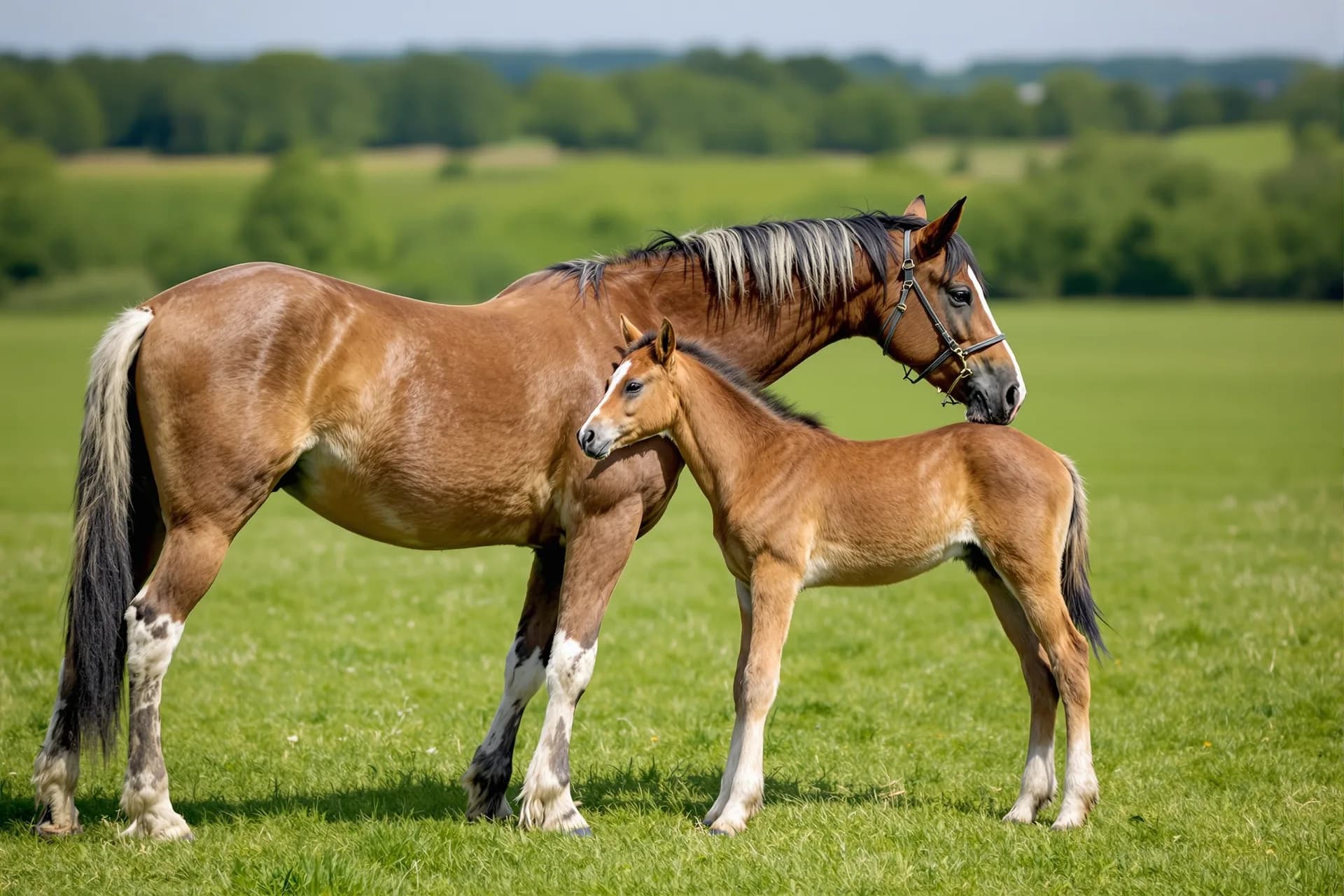
The birth of a foal is an emotional high point for every breeder and owner. But from the very first second of its life, you are fully liable for any damage caused by the offspring. We show you when the mother mare’s cover ends and when separate equine liability insurance for foals becomes essential.
Understanding legal liability for foals from birth
As a horse owner, you are fully liable for your foal from its first day of life. The basis for this is Section 833 of the German Civil Code (BGB), which regulates so-called strict liability. This means you are liable for damage caused by your horse, even without any fault on your part. This regulation considers horses to be an unpredictable source of danger. Damage amounting to several thousand euros can quickly occur. Most policies for the mare cover the foal only for the first twelve months. After that, the yearling absolutely needs its own horse owner's liability insurance. The statutory duty of liability makes early cover essential.
Foal injury cost trap: three practical cases analysed
A foal's curiosity and inexperience can quickly lead to costly damage. A typical scenario is a breakout from the paddock, which can cause a road traffic accident resulting in damage of more than €20,000. Even minor incidents add up quickly. If a foal bites a visitor, treatment costs and compensation for pain and suffering can quickly exceed €3,000. Property damage, such as a damaged stable door costing €500, also falls under your liability. Without comprehensive horse liability insurance, you bear these costs alone. These examples show how quickly the financial burden can become a threat to your livelihood.
Determining the right time for the foal policy
As a rule, foals are included under the mare’s liability insurance. However, this cover usually ends automatically after six or twelve months. By then at the latest, the question arises as to when horse liability insurance for foals becomes mandatory. A separate policy is essential in several situations.
- End of the premium-free co-insurance period (usually after the first year of life).
- Purchase of a foal that is no longer with its mother.
- Weaning the foal from the mare and raising it in a herd.
- Participation in foal shows or other events.
Check your mare’s policy carefully so you do not miss the deadline. A seamless transition to your own policy protects you against coverage gaps.
Section 833 of the German Civil Code in detail: mastering animal keeper liability for foals
Section 833 of the German Civil Code (BGB) is the central provision for every animal owner in Germany. It does not distinguish by the animal’s age, which is why your liability begins with the birth of the foal. The law defines horses as “luxury animals”, for which strict liability for inherent risks applies regardless of fault. That means you are always liable when the “typical animal danger” such as shying or biting materialises. An exonerating proof, as might be possible with livestock, is excluded for horse owners. Our expert tip: Make sure that your horse insurance also covers damage arising during herd rearing. Pasture accidents among young animals are common and can lead to high veterinary costs for the owners of the other horses. This is how you protect yourself against the most common risks.
Select optimal coverage limits and tariff features
An adequately high sum insured is the cornerstone of any horse liability insurance. Experts recommend at least ten million euros for personal injury, property damage and financial loss. Personal injury claims can quickly lead to costs in the millions, for example in the case of lifelong annuity payments. When choosing a plan for your foal, pay attention to important inclusions. These include damage to rented property such as stables or horse trailers, which often cover up to 20,000 euros. Also important are:
- Third-party and guest rider risk
- Uninsured loss cover
- Worldwide insurance cover
- Participation in tournaments and shows
A good horse liability insurance comparison offers comprehensive cover for an annual premium often under 100 euros. This investment protects all your assets.
Minimise risks and secure the future
The right cover for your foal begins with understanding your legal liability from day one. Co-insurance through the mare provides only temporary cover for a maximum of twelve months. After that, your own comprehensive horse liability insurance for the foal is essential to protect against financial risks running into the millions. Careful review of the policy terms and choosing a high level of cover are crucial. This creates a secure foundation for a carefree future with your horse. Request an individual risk analysis now: Have your insurance situation reviewed free of charge and receive specific suggestions for improvement.
Frequently asked questions
- From exactly when do I need my own insurance for my foal?
You need your own insurance as soon as the cover provided by the mare’s policy ends – usually at the end of the first year of life. If you buy a foal, your own insurance is required from the day of transfer.
- Does horse liability insurance also cover damage that my foal causes to other horses in the pasture?
Yes, a good horse liability insurance policy also covers damage caused by your foal to other horses. This is particularly important when raising them in a herd, as scuffles often occur here and can result in injuries.
- Are share riders or other riders already covered under the insurance for the yearling?
Even if a yearling has not yet been ridden, third-party rider risk should still be covered. This includes people who lead or care for the horse. Most policies include this protection as standard.
- Is the insurance coverage also valid abroad?
Many policies offer worldwide insurance cover for temporary stays abroad, for example for tournaments or holidays. Please check the exact duration and scope in your policy terms and conditions.
- What is the difference between liability insurance for a foal and a riding horse?
The main difference often lies in the premium. Since foals and yearlings in rearing pose a lower risk than ridden horses, the rates for them are usually lower. However, the basic liability cover is identical.
- Do I need to notify the insurer if I start backing my horse?
Yes, you should notify your insurer of the change from a young horse to a riding horse. With some tariffs, this may change the premium, as the risk is reassessed. Failure to report this may jeopardise your insurance cover.
Sources
- [1]Chamber of Agriculture provides information on horse husbandry and production.
- [2]Federal Chamber of Veterinary Surgeons provides information on the health of horses.
- [3]Laws on the Internet contains the full text of Section 833 of the BGB (German Civil Code) on liability of animal keepers.