Equine Surgery Insurance: IRAP, PRP & Regenerative Therapy
Does equine surgery insurance cover regenerative therapies like IRAP and PRP? Follow-up deadlines, coverage, and rehab options explained.
All details are taken from the provider's linked product page and the contract documents (IPID/policy conditions) published there; the insurer's documents prevail. Premiums, benefits and the insurance product itself may change – please verify the details directly with the partner before signing up; only the information provided there is binding.
 Katrin StraubManaging DirectorInsurance expert with over 20 years of experience in the insurance industry.
Published on
12 min read
Table of Contents
Regenerative therapies such as IRAP and PRP are often crucial for full recovery after joint or tendon surgery in horses. Strong equine surgery insurance covers these treatment costs as part of post-operative follow-up treatment. Reimbursement limits vary widely by tariff, ranging from fixed budgets to unlimited-time coverage. Comparing follow-up treatment periods carefully protects horse owners from high out-of-pocket costs.
Equine surgery insurance
Horse surgery insurance via nextsure: Three flexible tariffs, reimbursement up to twice the GOT rate, and free choice of clinic worldwide. Protect your horse from high surgery costs – digital, transparent and uncomplicated.
Learn moreMedical necessity of regenerative therapies in horses
Cellular healing after major procedures
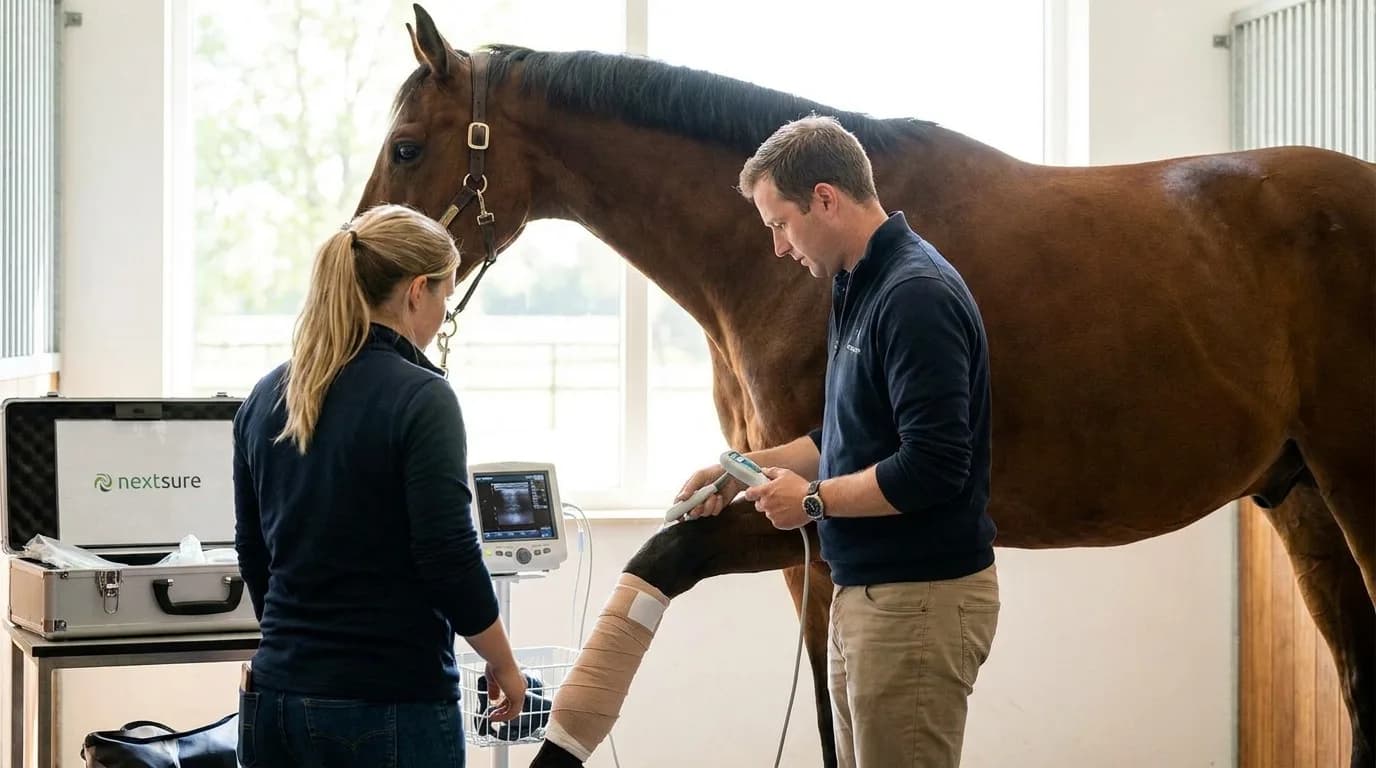
The need for regenerative therapies is especially clear after major orthopedic procedures on the musculoskeletal system. Veterinarians specifically use methods such as IRAP (interleukin-1 receptor antagonist protein) or PRP (platelet-rich plasma) to speed up the healing of cartilage and tendons. These methods use processed substances from the horse's own body for direct tissue regeneration in the joint. Sport horses benefit from this veterinary development. The treatments effectively reduce painful inflammation and sustainably promote cell regeneration. According to veterinary studies [4], regenerative therapies show measurable healing success after operations on the bone or ligament system. The costs of such specialized injections quickly add up to several hundred euros per session. Without suitable cover, horse owners bear this considerable financial risk entirely themselves. A single PRP treatment often costs between €300 and €500. With multiple required injections, the total quickly reaches four figures. This puts a huge strain on the budget.
Requirements for tariff-based cost coverage
The benefits of equine surgery insurance also include these treatment methods in strong tariffs. A surgical procedure under general or standing anesthesia is always the mandatory precondition for cost coverage of the subsequent follow-up treatment. Barmenia's insurance terms precisely define an operation as a procedure in which the skin is cut more than just superficially. Once this formal condition is met, insurance cover applies for the subsequent regeneration phase. The exact length of this phase varies considerably between providers on the German market. Some insurers cover only a few days. Other providers offer a far longer coverage period for extensive aftercare. Premium providers also cover procedures such as primary and secondary wound sutures as well as tooth extractions. This explicitly includes so-called wolf teeth. The definition of the procedure is decisive.
The importance of sufficiently long follow-up treatment periods
A sufficiently long follow-up treatment period is essential for successful rehabilitation. IRAP or PRP injections are usually given at defined intervals over several weeks to optimally guide the healing process. If the policy only covers ten days of follow-up treatment, expensive regenerative therapies inevitably fall outside the scope of reimbursement. When choosing a tariff, horse owners must therefore pay close attention to the exact definition of the follow-up treatment periods. A look at the contract details often reveals hidden restrictions on special treatment methods. Nextsure precisely analyzes these tariff details and filters out offers that cover a realistic rehabilitation period for sport and leisure horses. This protects against unexpected costs. Follow-up treatment is formally defined as a measure to restore health after a surgical procedure. It prevents the condition from worsening. The deadlines are strictly regulated by contract.
Cost coverage and follow-up treatment periods compared
Standard deadlines and modular extensions
Cost coverage and the defined follow-up treatment periods differ considerably on the German insurance market. Uelzener reimburses the costs of an operation as standard, along with three days of pre-treatment and seventeen calendar days of follow-up treatment [2]. This standard period is often not enough in practice for extensive regenerative therapies. For this reason, Uelzener offers an optional rehab module. This module extends cover for treatments such as IRAP, PRP, or stem cell therapy to up to six months after the surgical procedure. Such modular systems require a precise needs analysis before signing the contract. The wrong module leads to coverage gaps. Extending cover to six months provides enough room for complex healing processes. This time frame is often essential, especially for tendon damage. Investing in the add-on module pays off.
Fixed budgets versus unlimited time
Other providers take a different approach to limiting post-operative benefits. Zurich's equine health insurance covers regenerative therapies such as IRAP, PRP, or stem cell therapy up to a fixed amount of €1,000 per claim [1]. Pre-treatment and follow-up treatment directly connected to an insured operation are covered by Zurich with no time limit. GHV insurance, as part of its equine health insurance, even reimburses regenerative therapies up to €1,500 [3]. These fixed budgets offer horse owners a high degree of planning security. The lack of a time limit is a strategic advantage for lengthy tendon damage. A fixed budget of €1,500 usually covers three to four PRP sessions. That is entirely sufficient for most standard treatments. Cost control remains transparent.
Distinction from full health insurance
The difference between surgery insurance and full health insurance is especially clear with these special forms of therapy. Pure surgery cost insurance only pays out if a surgical procedure was performed beforehand. If the veterinarian treats tendon damage purely conservatively with PRP, the surgery policy does not apply. In this case, only comprehensive full equine health insurance, which also covers outpatient treatment, pays out. Nextsure advises horse owners in detail on this important distinction. The choice between surgery cover and full cover depends largely on the individual risk profile and the available budget. A well-founded decision prevents later disappointment in the event of a claim. The right policy provides the animal with optimal protection. Full insurance costs significantly more per month than pure surgery cover. In exchange, it removes the strict requirement of a surgical procedure. Flexibility increases enormously.
Waiting periods for orthopedic procedures
Special deadlines for joint conditions
Waiting periods for orthopedic procedures are a critical factor when taking out insurance. Barmenia's general insurance terms provide for a three-month waiting period for regular illnesses. For abdominal cavity operations due to life-threatening colic, a significantly shortened period of just five days applies. For joint operations, however, much longer blocking periods often apply. If isolated shadowing, osteochondrosis (OC), osteochondrosis dissecans (OCD), Birkeland fractures, or loose joint bodies (chips) are present, Barmenia defines a special waiting period of twelve months. This strict rule protects the pool of policyholders from owners deliberately taking out insurance to cover expensive pre-existing damage. A limit here often applies only to the surgery costs per day including anesthesia. Pre-examinations and imaging procedures do not always count toward this limit. The terms are complex.
Exceptions for accidents and prior insurance
An accident generally lifts these contractual waiting periods immediately. If the treatment is exclusively and verifiably due to a sudden accidental event acting from outside, the insurer pays from the first day. The general waiting period is also often waived entirely when switching seamlessly from a prior policy. The existing duration of the prior policy is credited toward the special waiting period. This, however, only applies to the scope of benefits that was already fully covered under the old contract. An increase in the reimbursement rate or the inclusion of new treatment methods still remains subject to the regular waiting period. Switching tariffs therefore requires strategic planning. Accidental damage must be clearly documented as such by the veterinarian. The burden of proof lies with the policyholder. Fast action is required.
Handling known pre-existing conditions
Fully documenting the animal's state of health before signing the contract prevents later disputes over pre-existing conditions. As a rule, illnesses or congenital developmental defects that were already known to the owner at the time of application are excluded from cover. For unknown developmental defects, however, full insurance cover applies within the agreed terms. Nextsure recommends a thorough veterinary examination before taking out high-quality premium tariffs. A clean record ensures smooth cost coverage for later regenerative therapies. Transparency toward the insurer is the most important ground rule. It forms the basis for a reliable partnership in an emergency. Developmental defects include genetically caused or acquired anomalies according to current scientific understanding. Concealing these risks the insurer withdrawing from the contract. Honesty pays off.
Premium tariffs and extended rehabilitation measures
Physiotherapy as a complement to cell therapy
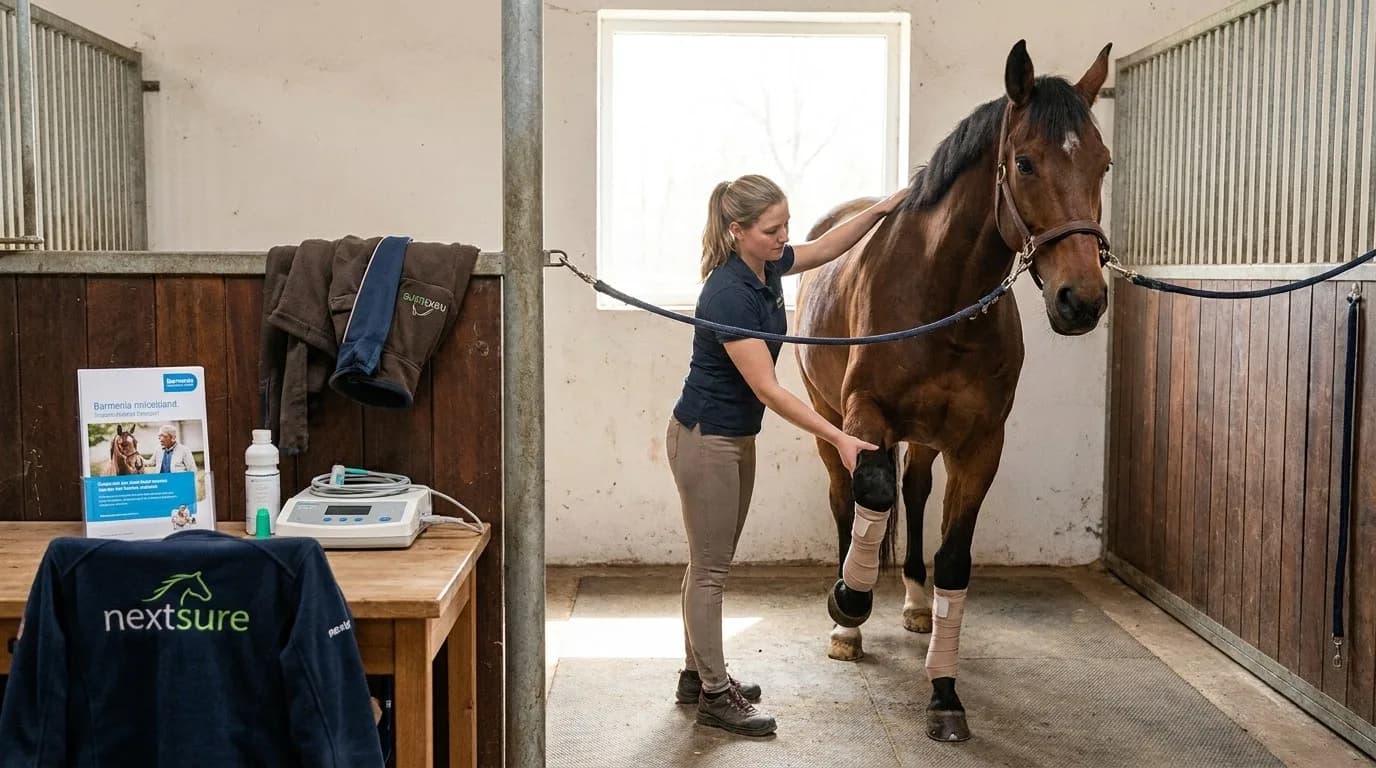
Insurers' premium tariffs offer decisive advantages for holistic rehabilitation of the horse. Barmenia's premium cover, for example, includes up to five physiotherapy sessions of up to sixty minutes each. These sessions are fully covered even after the regular follow-up treatment period has ended. A veterinarian or certified equine physiotherapist carries out these treatments following referral. This extension is central to rebuilding muscle after a long period of standing still. It complements cellular healing through IRAP or PRP on the biomechanical level. The horse regains its full performance capacity faster. Combining cell therapy with physiotherapy significantly speeds up the healing process. Muscles are rebuilt in a targeted way. This protects the joints.
Holistic rehab concepts for sport horses
Uelzener has also reformed its horse insurance policies and now offers a special rehab module [5]. Besides regenerative therapies, this module also covers extensive physiotherapy measures. Combining cellular regeneration with targeted movement therapy reflects the most modern standard in veterinary medicine. Such premium concepts are aimed primarily at owners of sport horses, for whom fully restoring performance capacity is the top priority. Monthly premiums for these tariffs are naturally higher than for simple basic policies. The financial protection in an emergency, however, far outweighs these extra costs. A sport horse needs intensive care after surgery. Rehab concepts cover exactly this need. The investment protects the animal's value.
Billing according to the fee schedule (GOT)
These premium benefits are billed strictly according to the veterinary fee schedule (GOT). Insurers reimburse costs up to the rate documented in the policy. During emergency service, strong tariffs even cover up to four times the GOT rate, including the statutory emergency call-out fee. Barmenia also offers the option of convenient direct billing with the veterinary clinic. The insurer pays the reimbursable amount directly to the treating veterinarian. This relieves the horse owner of extremely high advance payments. This service is a clear quality feature of customer-oriented insurers. Nextsure pays particular attention to such process advantages when choosing tariffs. The emergency call-out fee applies for treatment at night or on weekends. The veterinarian must explicitly confirm the emergency. This is a contractual requirement.
Alternative healing methods as a therapeutic complement
Recognized complementary methods
Integrating alternative healing methods for horses is becoming increasingly important in the post-operative phase. Besides high-tech procedures such as stem cell therapies, many veterinarians rely on complementary approaches for pain management. Acupuncture, homeopathy, laser therapy, magnetic field therapy, and neural therapy are recognized as a legitimate part of follow-up treatment in many modern policies. The requirement is usually that their effectiveness is documented in veterinary science and that billing follows the official veterinary fee schedule. These methods support pain relief and promote blood flow at the surgical site. They form a sensible complement to regenerative injections. This often makes healing progress more smoothly. Magnetic field therapy directly stimulates cell metabolism. Laser therapy quickly relieves acute pain. Both methods are well established.
Financial limits and explicit exclusions
The financial limits for these alternative treatments are precisely defined in the contract terms. GHV insurance covers alternative healing methods such as acupuncture and physiotherapy performed by the veterinarian up to a certain amount, for example €300 [3]. Other providers include these costs in the general follow-up treatment budget with no separate sub-limit. Certain procedures, however, remain frequently excluded across the industry. Barmenia, for example, explicitly excludes gold acupuncture, gold implants, or gold wire implants from cover. Horse owners must study these fine differences in the benefit catalogs closely. Simply trusting the term "natural medicine" is not enough. These exclusions serve to keep premiums stable for all policyholders. Expensive experimental procedures are consistently rejected. This keeps premiums affordable.
Documentation requirements for reimbursement
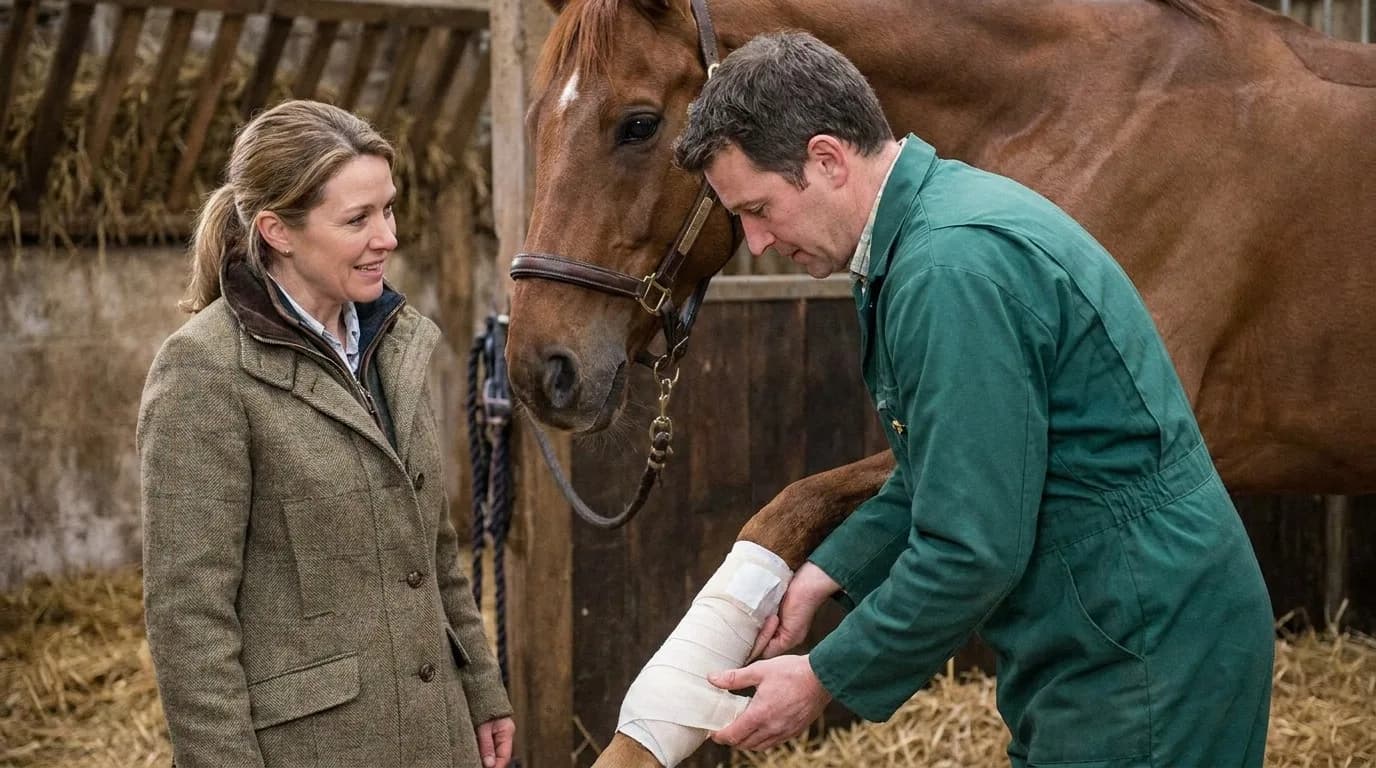
Combining conventional surgery, regenerative medicine, and alternative healing methods requires a high degree of coordination. The treating veterinarian must document all measures carried out in detail on the invoice. The invoice must clearly state the diagnosis, the billed service item according to GOT, and the exact date services were provided. Only a formally correct invoice enables smooth reimbursement by the insurer. Nextsure supports its customers in checking these important documents. A digital and transparent process significantly speeds up payment. This lets owners focus entirely on their horse's recovery. The horse's name and chip number must also be on the invoice without fail. If this information is missing, processing is delayed. Care is required here.
Exclusions and benefit limits in detail
General exclusions across insurers
A policy's benefit limits and specific exclusions define the actual value of the insurance cover. Routine examinations, preventive measures, or voluntary treatments not directly related to an illness or accident are excluded industry-wide. Insurers likewise generally do not cover the treating veterinarian's travel fees, waiting fees, or travel expenses. Special dietary feed and supplementary feed are also excluded from the scope of benefits, even if used to support healing. These clear limits serve to keep premiums stable for the entire pool of policyholders. Every horse owner should know these exclusions before signing up. They prevent false expectations in the event of a claim. Transport costs for the horse to the clinic are also not covered. Issuing health certificates or expert reports is likewise not reimbursed. The owner bears these costs.
Specific operations with no coverage
Specific operations are often subject to separate rules or complete exclusions in the terms and conditions. Operations to achieve a breed standard, cosmetic dental treatments, or procedures due to cryptorchidism are not covered by Barmenia. Treatment of hoof abscesses and hoof ulcers is also explicitly excluded, unless it is a veterinarian-diagnosed case of hoof cancer. Castrations and sterilizations are only covered if they are medically necessary due to gynecological, andrological, or oncological conditions. A special six-month waiting period also applies to these medically indicated castrations. These detailed rules show the complexity of the tariff terms. A specialized broker structures these details. Removing tartar and correcting jaw abnormalities are also excluded. Insurers focus on genuine medical emergencies. Cosmetic procedures are not paid for.
Contractual duties in the event of a claim
The policyholder's contractual duties are just as important as the exclusions. The owner must take all reasonable measures to proactively prevent illness and accidents to the animal. In the event of a claim, there is a strict duty to provide information to the insurer. Invoices must be submitted promptly, and no later than one month after treatment ends. A deliberate breach of these duties results in complete loss of insurance cover. In cases of gross negligence, the insurer may reduce the benefit according to the severity of the fault. Nextsure digitizes document management for its customers. This significantly minimizes the risk of missed deadlines. The insurer also has the right to have the horse examined by its own veterinarian. The insurer bears the cost of this. Cooperation is mandatory.
Typical exclusions in equine surgery insurance
- The veterinarian's travel fees and travel expenses
- Special dietary feed and supplementary preparations
- Operations to achieve a breed standard
- Cosmetic dental treatments
- Gold acupuncture and gold implants
- Treatment of uncomplicated hoof abscesses
These exclusions vary depending on the insurer and tariff line.
Strategic tariff selection for optimal protection
Needs analysis for sport and leisure horses
Strategically selecting the right tariff requires a precise analysis of individual risk. A young leisure horse needs a completely different coverage concept than a top-level competition horse. For sport horses, coverage for regenerative therapies such as IRAP and PRP is indispensable. The high strain of training more often leads to wear on tendons and joints. A tariff with unlimited follow-up treatment time or very high budgets for these special therapies is the best choice here. The monthly premium becomes secondary. Ensuring the best possible medical care is the top priority. Leisure horses often do fine with standard tariffs and shorter follow-up treatment periods. The strain on the musculoskeletal system is significantly lower out on the trail. Risk analysis determines the tariff.
Digital platforms and holistic advice
The Nextsure platform offers exactly the right digital infrastructure for these complex decisions. As a specialized broker, Nextsure doesn't just compare pure premiums — it analyzes the deeper layers of the insurance terms. Integrating health insurance for other pets also enables holistic cover for the entire animal household. The digital sign-up process is transparent and completed within minutes. At the same time, a personal expert is always available in the background for detailed questions. This hybrid model of technology and expert advice is unique on the German market. It delivers tailored solutions without compromise. Customers benefit from hand-picked tariffs instead of a confusing grab-bag of products. Advice is provided independently under Section 34d of the German Trade Regulation Act (GewO). This guarantees objectivity.
Premium stability and cancellation waiver
Long-term premium stability is another important criterion when choosing a tariff. Insurers regularly adjust their premiums in line with changes to the veterinary fee schedule and general claims inflation. Barmenia offers a special advantage in its premium cover for horses that were no older than seven at the start of the contract. From the start of the seventh policy year onward, the insurer waives its ordinary right of termination at the end of the term as well as its right of termination after a claim. This guarantee gives the owner enormous planning security for the horse's old age. Nextsure reliably identifies such hidden quality features. This builds real trust in the insurance cover. A cancellation waiver protects against a sudden loss of cover due to chronic illness. The horse remains reliably insured long-term. This is an invaluable advantage.
Frequently asked questions
- Are regenerative therapies such as IRAP, PRP, or stem cells covered?
Yes, strong equine surgery insurance policies cover regenerative therapies such as IRAP, PRP, and stem cell treatments. These modern methods are usually reimbursed as part of post-operative follow-up treatment. The exact reimbursement limits and time periods, however, vary considerably between tariffs. A close look at the insurance terms is essential to avoid coverage gaps.
- Are these therapies only reimbursed as part of follow-up treatment after surgery?
Pure surgery cost insurance only pays out if a surgical procedure under general or standing anesthesia was performed beforehand. The regenerative therapies must be directly related to this operation and take place within the defined follow-up treatment period. For conservative treatment without a prior operation, only comprehensive full equine health insurance pays out.
- Is there a limit on the costs for IRAP and PRP?
Cost limits are regulated differently depending on the insurer. Some providers, such as Zurich, cap reimbursement for regenerative therapies at a fixed amount, for example €1,000 per claim. Other insurers do not limit the amount but instead limit the duration of the reimbursable follow-up treatment phase to a few weeks or months after the procedure.
- Does reimbursement depend on the chosen tariff?
Reimbursement depends heavily on the chosen tariff and insurer. Basic tariffs often exclude extensive regenerative therapies entirely or offer only very short follow-up treatment periods of a few days. Premium tariffs or special rehab modules considerably extend the coverage period and include the most modern veterinary methods for optimal rehabilitation of the horse.
- Are physiotherapy and alternative healing methods also included?
Many high-quality tariffs include alternative healing methods such as acupuncture, magnetic field therapy, or physiotherapy in follow-up treatment. Barmenia's premium cover, for example, offers up to five physiotherapy sessions after the regular period has ended. Cover is not unlimited, though. Certain procedures such as gold acupuncture remain explicitly excluded from cover by most providers.
- What waiting periods apply to joint operations in horses?
A general waiting period of three months usually applies to regular illnesses. For special joint operations due to isolated shadowing, osteochondrosis (OC), osteochondrosis dissecans (OCD), or loose joint bodies (chips), many insurers, such as Barmenia, define a special waiting period of twelve months. For accident-related operations, the waiting period generally does not apply at all.
Sources
Conclude directly online
Verified partner tariffs at no extra cost. The button takes you straight to the provider's calculator.
 Barmenia
Horse surgery insurance
Surgery cost cover for horses in case of illness and accidents, including diagnostics and after-care.
- Waiting period:
- 3 months (colic surgery: 5 days, accidents: none)
- Coverage abroad:
- worldwide, up to 12 months
- Maximum benefit:
- depends on the cover level, as stated in the policy
- Surgery costs for illness and accidents, including tooth extractions and root canal treatment
- Pre-surgical examination (X-ray, endoscopy, biopsy, lab work)
- After-care including acupuncture, homeopathy, physiotherapy, laser therapy
- Emergency veterinary service up to 4x the standard veterinary fee schedule (GOT) rate plus the emergency callout fee
- Premium cover: up to 5 physiotherapy sessions (max. 60 minutes each) after the after-care period ends
- Once per animal: surgery costs for a birth-related, medically necessary caesarean section
Key exclusions
- Illnesses and developmental abnormalities known at the time of application
- Hoof abscesses and hoof ulcers (exception: hoof cancer)
- Surgery due to cryptorchidism
- Neutering that isn't medically necessary
Service-Champions GOLD: Nr. 1 der Versicherer im Multikanalvertrieb (ServiceValue, 10/2024)
Barmenia (Anbieter der Pferde-OP-Versicherung)
Special waiting periods: 12 months for joint surgery (chip fragments, OC/OCD, Birkeland fractures), 6 months for medically necessary neutering; Premium cover includes a waiver of the insurer's right to cancel from the 7th insurance year.
Fact sheet: benefits, exclusions and waiting periods in detail
All details are taken from the provider's linked product page and the contract documents (IPID/policy conditions) published there; the insurer's documents prevail. Premiums, benefits and the insurance product itself may change – please verify the details directly with the partner before signing up; only the information provided there is binding.
Information last updated: July 2026 · Source: provider product information (IPID/policy conditions)