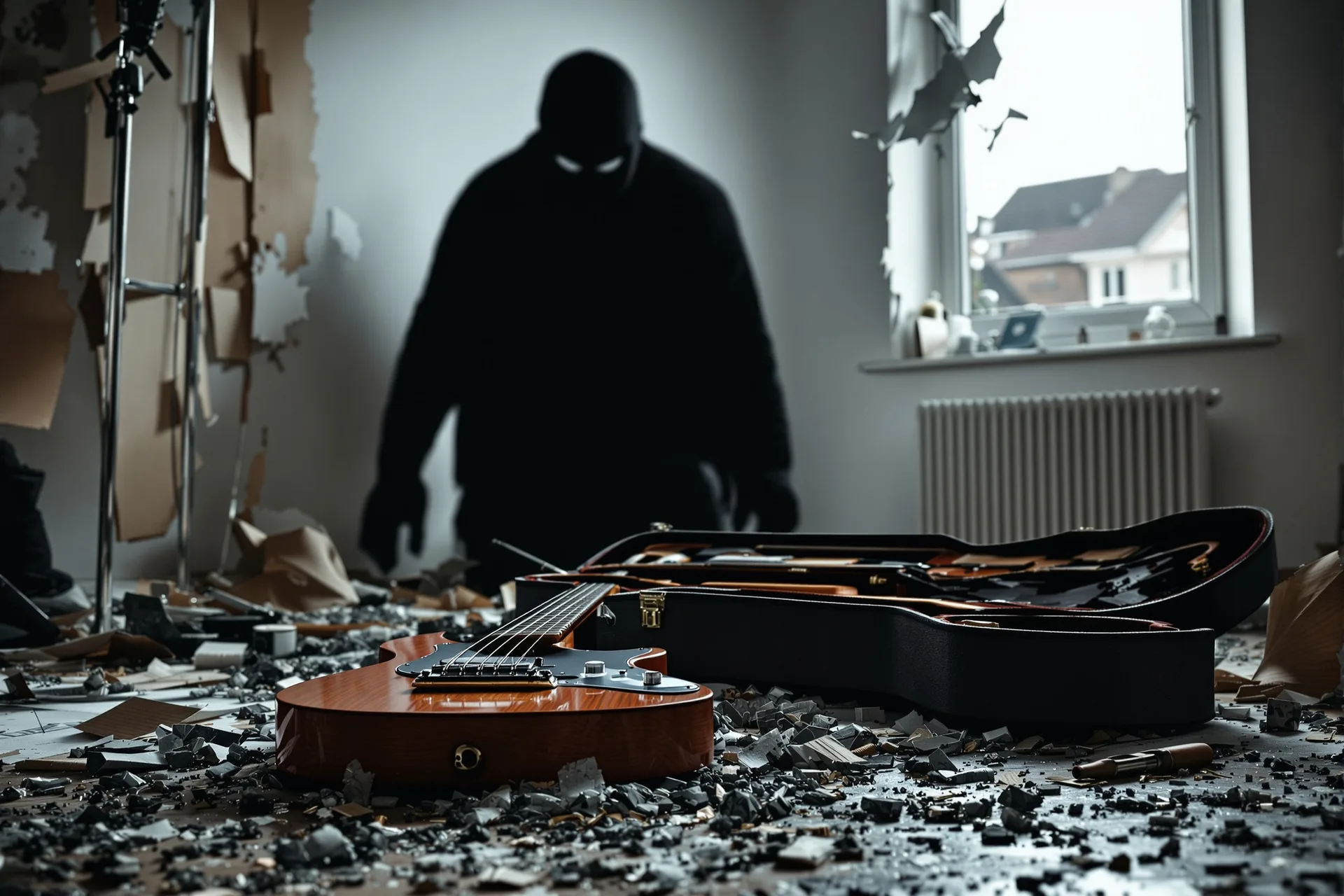
Musical instrument insurance theft
Protect your instrument effectively against theft. Find out why home contents insurance is often not enough. Request your free risk analysis.
 Katrin StraubManaging DirectorInsurance expert with over 20 years of experience in the insurance industry.
Published on
Last updated on
4 min read
Table of Contents
The theft of an instrument is an emotional and financial shock. Many musicians are lulled into a false sense of security by household contents insurance, which often only covers a fraction of the loss. This article shows you how specialised musical instrument insurance provides comprehensive cover against theft and which steps you need to take to ensure complete protection.
Risk analysis: The real theft risk for musicians
The theft of musical instruments is such a prevalent risk that the Association of German Music Retailers operates its own database for it. Every year, instruments worth hundreds of thousands of euros are stolen, from tour buses to rehearsal rooms. The emotional loss is often irreplaceable, and the financial damage can jeopardise your career. Many musicians underestimate the risk of straightforward theft, which accounts for more than 60 per cent of cases. A conventional contents insurance policy often covers only burglary, which offers little protection when travelling. The following sections highlight the specific vulnerabilities.
Benefits comparison: Household contents versus specialist insurance in practice
Imagine your cello worth €8,000 being stolen from your locked car. Through cover outside the home, household contents insurance often only pays if the theft occurs between 6 a.m. and 10 p.m. In addition, compensation is often limited to ten per cent of the total sum insured. A specialised musical instrument theft insurance offers decisive advantages here. As a rule, it covers simple theft from a vehicle around the clock. Waiving the night-time clause is a decisive advantage that protects you from a total loss. The difference in benefits can amount to thousands of euros. Here are the key differences:
- Household contents insurance: Often applies only to burglary theft, not to simple theft.
- Specialist insurance: Covers simple theft, leaving items unattended and often even loss.
- Household contents insurance: Strong time restrictions due to the night-time clause (10 p.m. to 6 a.m.).
- Specialist insurance: Applies worldwide and 24 hours a day, including when travelling.
- Household contents insurance: Compensation limits under cover outside the home are often low (e.g. €2,000).
- Specialist insurance: The sum insured applies in full, adjusted to the value of the instrument.
These differences make it clear why a general policy is not enough for valuable instruments and how important the details are.
Action guide: The first 48 hours after the theft
Quick and correct action after a theft is crucial for successful claims settlement. Even a delay of one day can jeopardise your claim. The police report is the first and most important step you must take without delay. It serves as official proof for your insurance company. Follow a clear sequence so you do not miss any deadlines. Follow these three steps:
- File a police report: Go straight to the nearest police station. Report the theft immediately, ideally within 24 hours. You will need a copy of the report for the insurer.
- Inform the insurer: Report the damage to your insurance company. Most insurers set a deadline of three to seven days for this. A phone call is often enough for the initial notification, but submit the written claim report promptly afterwards.
- Gather the documents: Your insurer will request several documents. These include the police report, proof of ownership (purchase contract, invoice) and, ideally, a current valuation report for the instrument.
A similar approach is also crucial for other valuables, such as a stolen camera, when it comes to insurance cover.
Expert knowledge: Decoding contract clauses and laws
The devil is in the detail, especially when it comes to insurance policies. A key point is how gross negligence is handled. If you leave your valuable instrument visible in an unlocked car for 30 minutes, you may be accused of gross negligence. Under Section 81 of the German Insurance Contract Act (VVG), the insurer may then reduce the benefit according to the seriousness of your fault. Our expert tip: Make sure your policy includes a waiver of the defence of gross negligence up to a claim amount of at least 10,000 euros. Many premium tariffs offer this protection. Another important aspect is all-risks cover. It ensures that all risks are insured unless they are explicitly excluded in the contract. This also protects you in the event of a claim while travelling. This helps you avoid gaps in cover, which are often found in standard policies.
Special cases in focus: value appreciation, lending and travel
Life as a musician is dynamic, and your insurance cover should be too. Three special situations require particular attention. First, value appreciation: the value of a fine instrument can double within five years. Without adjusting the sum insured, dangerous underinsurance occurs. Our expert tip: Have valuable instruments appraised by an expert every two to three years and submit the report to your insurer. Second, lending: if you lend your instrument, the cover must remain in place. Check whether your policy covers damage that occurs while another person is using your instrument, as is the case with a loan between musicians. Third, travel: worldwide cover is essential for touring musicians. Check the period of validity abroad, which is often limited to three to six months. This is particularly relevant for a student guitarist on a semester abroad. Request an individual risk analysis now: Have your insurance situation reviewed free of charge and receive specific recommendations for optimisation.
Frequently asked questions
- What documents do I need to make a claim after a theft?
You will need the police theft report, proof of ownership (e.g. purchase invoice) and ideally an up-to-date valuation report or photographs of the instrument. The more detailed your documentation, the smoother the processing.
- Is my instrument also insured against theft abroad?
Yes, most musical instrument insurance policies offer worldwide cover. However, please check the exact terms and conditions, especially the maximum duration of cover for extended stays abroad.
- What does ‘waiver of the defence of gross negligence’ mean?
If this clause is included in the contract, the insurer waives the right to reduce the benefit if you can be accused of grossly negligent behaviour (e.g. leaving the instrument unattended in an unsafe place for a short time). This is very important protection.
- Does the insurance also cover the theft of accessories?
Yes, as a rule, accessories such as cases, bows or stands are also insured, provided they are used together with the instrument and their value has been taken into account in the sum insured. Please check the policy for exact details.
- Do I need to have a valuation report prepared for my instrument?
For very valuable instruments, often worth €10,000 or more, insurers usually require an up-to-date appraisal from a recognised expert. This protects you against underinsurance and speeds up the claims process.
- What happens if my stolen instrument is recovered?
If the instrument is found within the insurer’s inspection period (usually one month), you must take it back. If the insurer has already settled the claim, the recovered instrument becomes the property of the insurer, or you reimburse the benefit paid.
Sources
- [1]Laws on the Internet offers the full text of the Insurance Contract Act (VVG) of 2008, which contains important regulations for insurance and their benefits.