Camera insurance for opportunistic theft
Protect your camera from opportunistic theft. Find out why home contents insurance often does not pay out. Request your free risk analysis now.
All details are taken from the provider's linked product page and the contract documents (IPID/policy conditions) published there; the insurer's documents prevail. Premiums, benefits and the insurance product itself may change – please verify the details directly with the partner before signing up; only the information provided there is binding.
 Katrin StraubManaging DirectorInsurance expert with over 20 years of experience in the insurance industry.
Published on
Last updated on
4 min read
Table of Contents
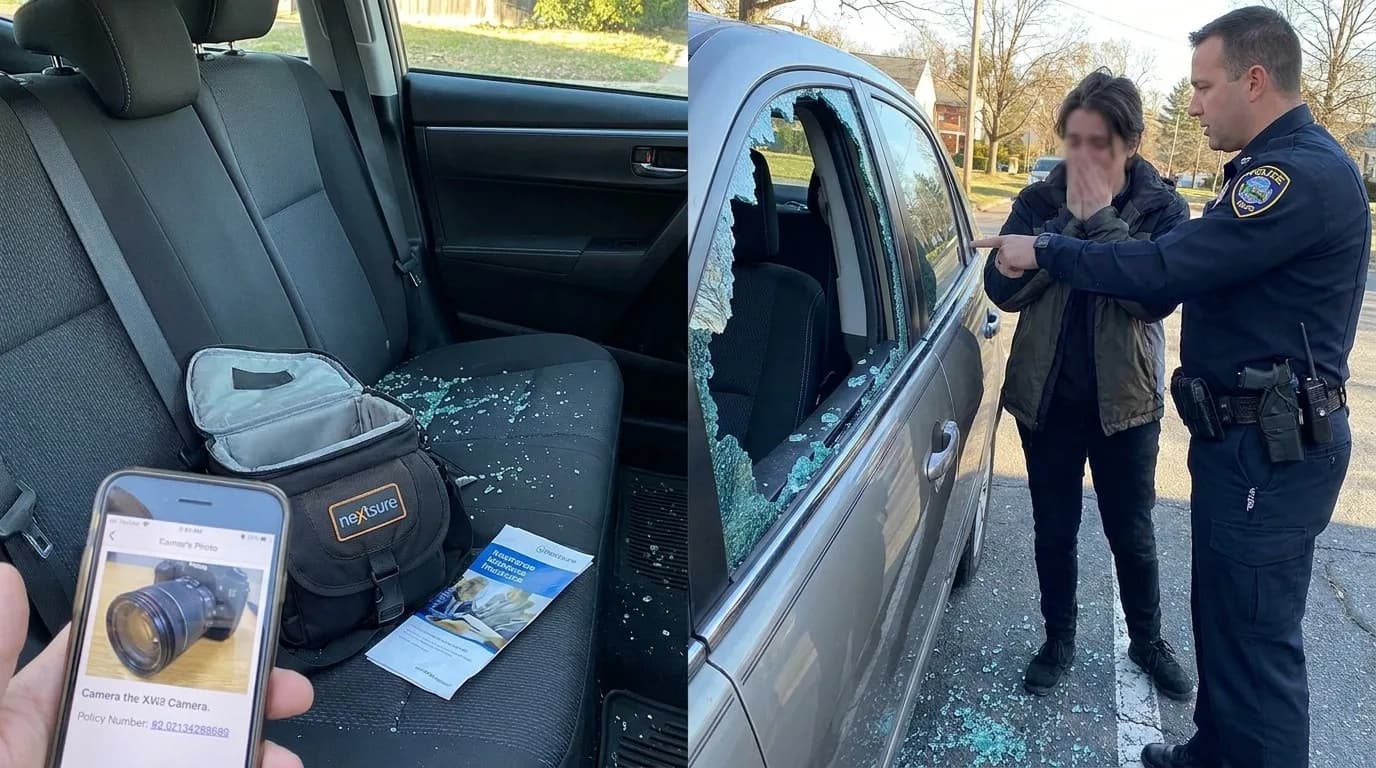
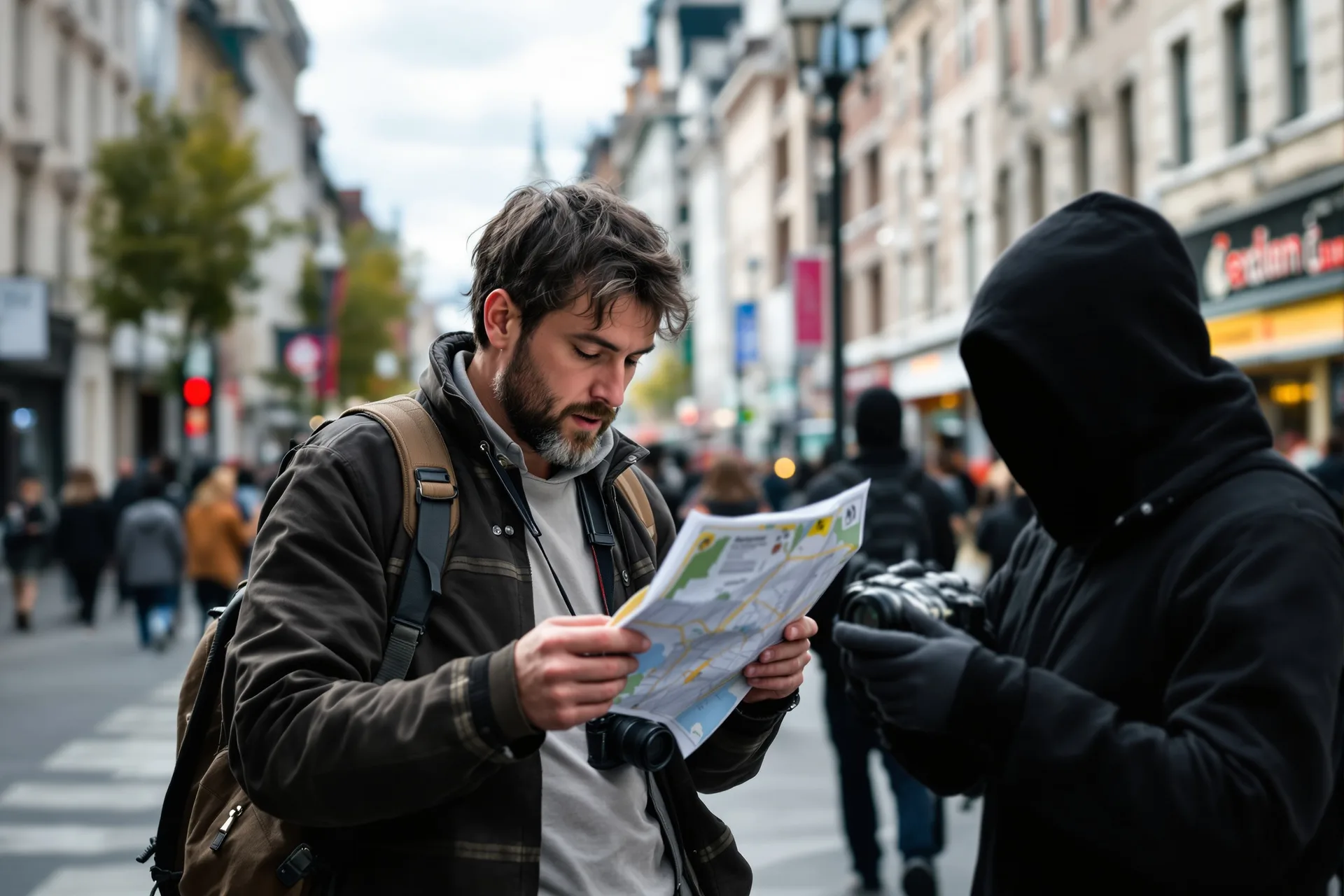
A brief moment of inattention in a café, and your expensive camera equipment is gone. This opportunistic theft can mean financial losses of several thousand euros. Find out why standard policies fall short here and how specialist camera insurance protects you from the costly consequences.

Camera Equipment Insurance
Secure your valuable camera equipment thoroughly against damage, theft, and loss with the camera equipment insurance from nextsure. Tailored protection for professionals and hobby photographers.
Learn moreTheft is not the same as theft: the crucial distinction
In insurance law there is a subtle but costly distinction. Contents insurance usually only covers burglary and theft, that is, forced entry into your home, or robbery under threat of violence. A spontaneous theft, known in legal jargon as "simple theft", is something entirely different. Here, the perpetrator takes advantage of an opportunity without overcoming an obstacle, which is the case in over 70 per cent of thefts of photo equipment. It is precisely this most common form of theft that is usually not covered by standard policies. A thief who takes your camera bag from the chair next to you while you are paying commits simple theft. This small difference in how the offence is carried out has major insurance consequences for you. Understanding this distinction is the first step towards proper cover.
The coverage gap: Why contents and travel baggage insurance often fail
Your contents insurance provides limited protection outside your own four walls through the so-called away-from-home cover. However, this usually only applies in enclosed spaces such as a hotel room and generally does not cover simple theft. Travel baggage insurance may sound like a solution, but the compensation limits for individual items are often capped at just a few hundred euros. In addition, both types of insurance often only reimburse the current value of the equipment, which after just two years can be only 60 per cent of the replacement value. A camera worth €3,000 is then worth only €1,800. A specialised camera equipment insurance closes exactly this gap. It is designed to protect you while you are on the move and covers you against the real risks photographers face.
All-risks cover: The core of specialist camera insurance
A good camera insurance policy is based on the principle of all-risks cover. This means: everything is insured unless it is explicitly excluded in the policy. This is a fundamental difference compared with contents insurance, which only covers defined risks. The cover typically includes a broad range of risks. These include:
- Simple theft and opportunistic theft
- Impact and breakage damage
- Water and liquid damage
- Operating errors or clumsiness
- Short circuit or power surge
- Vandalism and damage caused by third parties
The decisive advantage is new-for-old compensation, which reimburses you for the full purchase price in the first few years. This means you can replace your equipment with an equivalent item without any financial loss. This comprehensive protection is the reason why professionals and ambitious amateurs rely on such a policy.
Costs and benefits in practice: A clear example calculation
Imagine your camera gear worth €4,000 being stolen from your car. Without a specialist camera insurance policy, your direct loss comes to €4,000, less a possible replacement-value reimbursement of perhaps €500 from a travel baggage policy. With specialised camera insurance, the calculation looks different. With an annual premium of around €120 and an excess of €150 in the event of a claim, your maximum financial outlay is only €270. So in this scenario, you save €3,730. The investment in such insurance, which often costs less than three per cent of the equipment value per year, is a simple way to minimise risk. Especially when travelling, such as on a photo trip through Mexico, this protection is essential.
Expert tips: What you need to look out for in the fine print
The night-time clause: protection in your car around the clock
A critical point is theft from a vehicle. Many insurers restrict cover between 10 p.m. and 6 a.m., the so-called night-time clause. High-quality policies waive this and provide cover around the clock, provided the vehicle was locked. Some policies even cover the loss if the equipment was visible from outside, which represents enormous added value. Look out for wording such as “waiver of the night-time clause”. This one sentence can make the difference to a reimbursement of several thousand euros.
Gross negligence: a clearly defined grey area
Gross negligence occurs when you disregard the most basic duties of care, for example leaving your camera bag next to you at the airport while you go for a coffee. While simple negligence is usually covered, gross negligence often leads to refusal of payment. Better policies define clear limits here and also provide cover for gross negligence up to a certain amount, for example 5,000 euros. Such a clause offers an additional safety net when the worst happens.
Worldwide cover: peace of mind when travelling
For photographers, worldwide cover is a basic requirement. Check whether the insurance applies without geographical restrictions and without time limits for individual trips. A good policy makes no distinction here, whether the loss occurs in Düsseldorf or in the Namib Desert. This is particularly important for professional photographers working worldwide. The policy should accompany you wherever you go, without you having to check for new cover before every trip.
Stolen – what now? Your emergency plan in four steps
If the worst-case scenario occurs, quick and correct action is crucial for smooth reimbursement by the insurer. A structured approach helps you keep track in a stressful situation. Follow this checklist:
- Step 1: Inform the police immediately. Report the incident at once to the nearest police station. A police report is the most important requirement for the insurer.
- Step 2: Create a list of the stolen items. Note down all stolen items including manufacturer, model and, if available, serial numbers.
- Step 3: Notify the insurer immediately. Report the claim as quickly as possible; often there are deadlines of just three days for this.
- Step 4: Compile all supporting documents. Submit the police report, the list of stolen items and the original purchase receipts to your insurer.
Good preparation with a digital list of your equipment and copies of the invoices significantly speeds up the process. With these steps, you lay the foundation for a quick and straightforward settlement of the claim.
Conclusion: Proactive protection is the best investment
An opportunistic theft of camera equipment is a realistic risk with potentially high financial consequences. Relying solely on home contents insurance is a dangerous misjudgement that can lead to a 100 per cent coverage gap in the event of a claim. Specialist camera insurance closes this gap in a targeted way and offers comprehensive protection against the everyday risks of a photographer's life. Annual costs of two to four per cent of the replacement value are a small investment compared with a total loss. In the end, it is about being able to live out creativity and passion without financial worries. Well-considered insurance cover is the foundation for that. Request an individual risk analysis now: Have your insurance situation reviewed free of charge and receive concrete suggestions for improvement.
Frequently asked questions
- What exactly is meant by spontaneous theft?
Opportunistic theft, also known as simple theft, refers to the taking of your camera or equipment by an offender who takes advantage of a favourable, unattended opportunity, without using force or breaking a lock. A classic example is the theft of a camera bag from a chair in a café.
- Are all my accessories covered?
Yes, with a good camera insurance policy, you can insure all of your equipment. This includes not only the camera body, but also all lenses, tripods, flash units, filters, batteries and even the camera bag. The insured sum should correspond to the total value of all items.
- Will I receive a full refund of the purchase price?
Most specialist camera insurance policies offer new-for-old cover. This means that, in the event of a claim, you will receive the full amount within the first few years after purchase to buy an equivalent new device. This is a significant advantage over the current value indemnity provided by household contents insurance.
- What should I do first after a theft?
Report the theft to the local police immediately and ask for a copy of the report. Then inform your insurer straight away, as there are often short reporting deadlines of just a few days. The police report is the most important document for processing the claim.
- What does the insurer mean by gross negligence?
Gross negligence means that you have disregarded the most basic care. An example would be leaving expensive equipment visibly on the front passenger seat of an unlocked car for half an hour. Some premium policies cover damage caused by gross negligence up to a certain amount.
- Is the insurance also worth it for hobby photographers?
Absolutely. Insurance is worthwhile as soon as the value of your equipment exceeds an amount the loss of which would have a noticeable financial impact on you. Even for equipment valued at €1,500 or more, the cover can be worthwhile, as the annual premium is low in comparison with the potential total loss.
Sources
- [1]The Federal Agency for Civic Education (bpb) offers an article on crime in Germany, which is part of its Domestic Security dossier.
- [2]Facts about Germany presents an article on security in Germany.
- [3]Statista provides a topic page on crime in Germany, focusing on theft and robbery.
Conclude directly online
Verified partner tariffs at no extra cost. The button takes you straight to the provider's calculator.
 Hepster
Camera insurance
Worldwide cover for new and used cameras, including original accessories.
- Coverage area:
- worldwide
- Battery-wear threshold:
- up to 60% remaining capacity, device max. 4 years old
- Minimum term:
- 3 months (monthly subscription)
- Drop, breakage, sand, and liquid damage
- Fire, explosion, power surge, short circuit, sabotage, vandalism
- Battery and screen damage, plus battery wear (where not covered by warranty)
- Operating errors and improper handling
- Theft module: theft, burglary from a car or home, robbery
Key exclusions
- Loss and forgetting outside the insured theft scenarios
- Devices without a known serial/IMEI number
- Damage covered under warranty or manufacturer's guarantee
- Gross negligence or intentional acts
Trusted Shops: 4,5/5 „Sehr gut“ (2.600 Bewertungen)
hepster insgesamt (Anbieterbewertung, alle Versicherungen)
Claims must be reported online within 14 days; theft must be reported to the police within 24 hours. Insurer: Hiscox SA, Niederlassung für Deutschland
Fact sheet: benefits, exclusions and waiting periods in detail
All details are taken from the provider's linked product page and the contract documents (IPID/policy conditions) published there; the insurer's documents prevail. Premiums, benefits and the insurance product itself may change – please verify the details directly with the partner before signing up; only the information provided there is binding.
Information last updated: July 2026 · Source: provider product information (IPID/policy conditions)