Lameness before cover started: still insured?
Lameness before cover started or during the waiting period is excluded for good. Why the timing of the first symptoms decides the claim.
All details are taken from the provider's linked product page and the contract documents (IPID/policy conditions) published there; the insurer's documents prevail. Premiums, benefits and the insurance product itself may change – please verify the details directly with the partner before signing up; only the information provided there is binding.
 Katrin StraubManaging DirectorInsurance expert with over 20 years of experience in the insurance industry.
Published on
6 min read
Table of Contents
Where lameness appears before cover starts or during the waiting period, it counts as a pre-existing condition and is excluded permanently. Here is why the timing of the first symptoms decides everything, and how to protect yourself against future surgery costs.
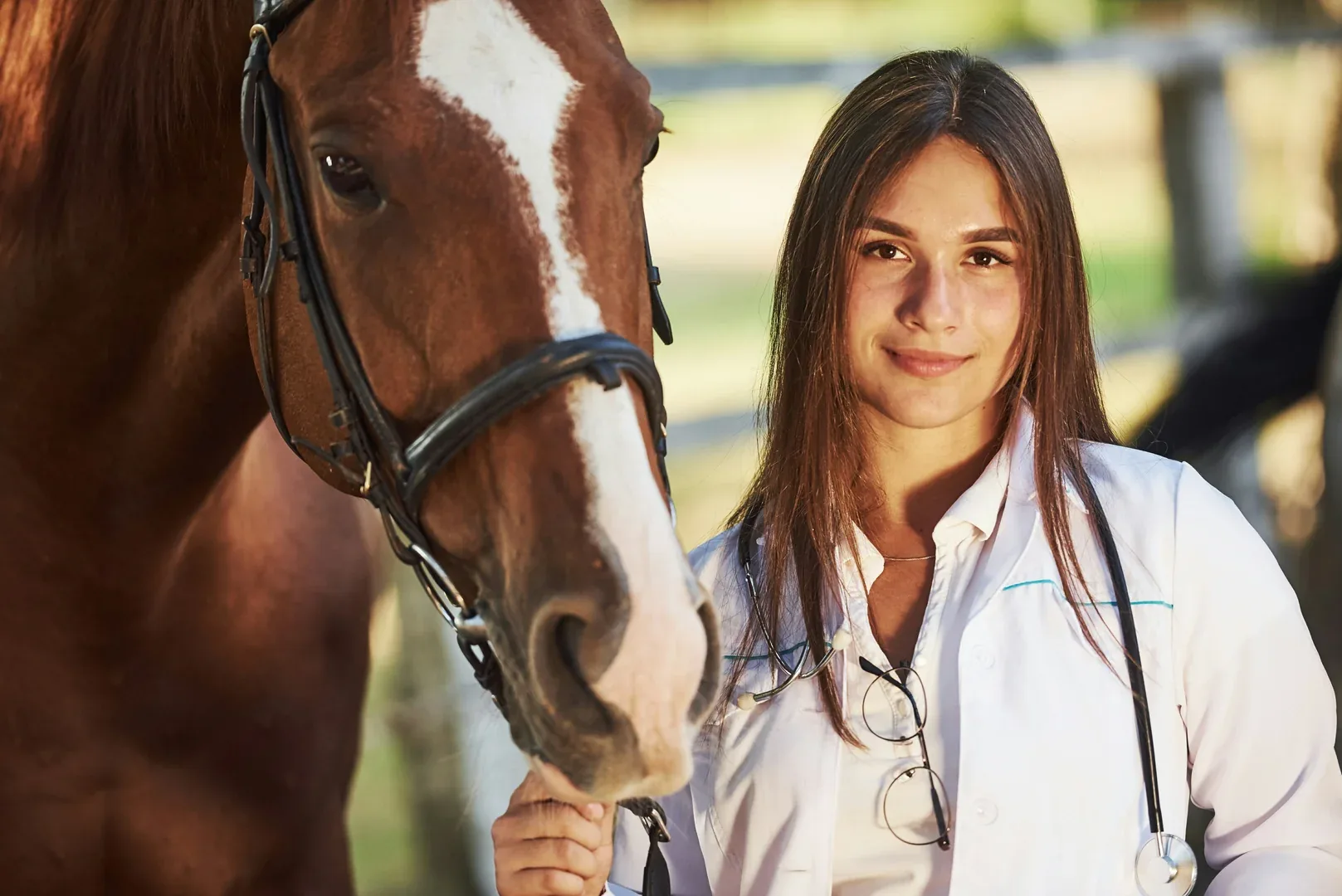
Equine surgery insurance
Horse surgery insurance via nextsure: Three flexible tariffs, reimbursement up to twice the GOT rate, and free choice of clinic worldwide. Protect your horse from high surgery costs – digital, transparent and uncomplicated.
Learn moreWhen does horse surgery cover actually respond?
Insuring a horse rests on a clear principle: a Barmenia horse surgery policy protects owners from heavy costs when surgery becomes veterinarily necessary. Whether the procedure happens under general anaesthetic, standing sedation or sedation is defined precisely: the incision must divide tissue over more than a single point to count as an insured operation.
Meeting the contractual deadlines is central to cover taking effect. The duty to pay does not necessarily arise on the day you apply or the day the contract nominally starts. For costs to be reimbursed, the insured event must occur after the agreed waiting period has run and before the contract ends.
- Veterinary necessity: the procedure must be medically required to restore the horse's health.
- A surgical procedure: carried out under general anaesthetic, sedation or standing sedation, dividing tissue over more than a single point.
- What comes with it: the pre-operative examinations and the aftercare within the period agreed.
- Waiting periods run out first: symptoms or a diagnosis may only appear once the relevant waiting period has passed.
In legal terms the insured event begins with the examination that leads directly to the diagnosis on which the recommendation to operate rests. Where the first signs are recorded before those deadlines expire, that stands in the way of any claim.
Pre-existing conditions: why early symptoms mean exclusion
When assessing a claim, insurers look very closely at how the illness developed over time. If clinically relevant symptoms of a condition such as lameness, or the diagnosis itself, are recorded before cover actually starts or during the waiting period, the outcome is unambiguous.
How a pre-existing condition carries through
The conditions provide that an illness and every consequence of it stay permanently outside cover where the first signs fall into the period before cover was in force. That is what keeps risk neutral across everyone insured. If you want the contractual detail, look specifically at the exclusions in horse surgery insurance.
- Clinically relevant symptoms: an irregular rhythm, unevenness in the gait or a horse taking weight off a limb before the contract was signed.
- Veterinary findings: diagnoses or attempted treatments already recorded in the equine passport or the clinical file.
- Consequential damage: secondary conditions demonstrably traceable to the original pre-existing problem.
Lameness is not a condition in its own right; it is a sign of an underlying problem in the musculoskeletal system. So if a horse is already showing an irregular gait pattern before the waiting period ends, the whole finding — and any operation it requires — is uninsured.
The slow-burn risk: how lameness stays unnoticed for so long
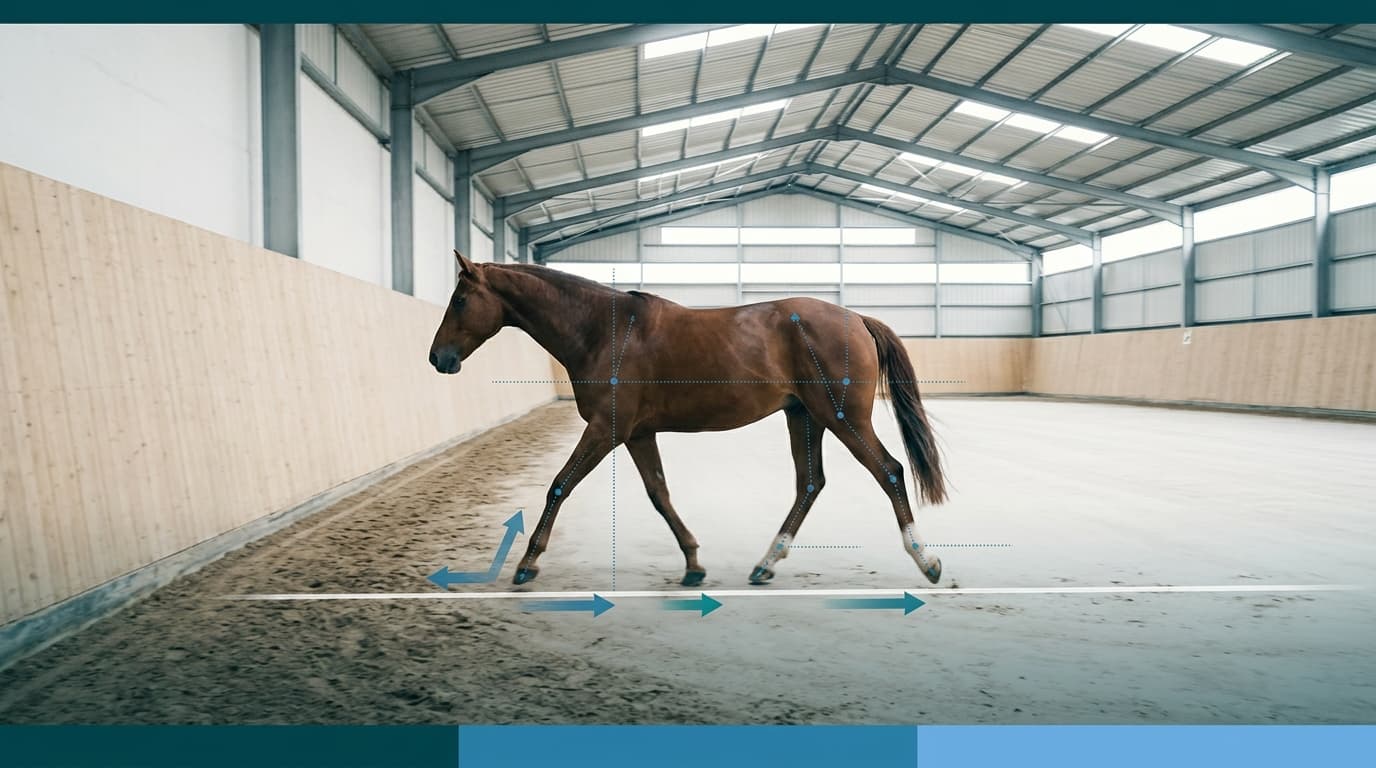
Lameness describes an abnormal physical state that by no means always shows itself as obvious hesitation or a limping gait. Joint or tendon damage often develops gradually, so that owners and riders miss subtle irregularities in rhythm for months.
What veterinary research shows
Studies underline how hard slight deviations in gait are for a layperson to spot. In work by Sue Dyson and Danica Pollard, 1,358 competition horses were assessed after riders, owners or the veterinary commission had classed them as fit to compete: 553 of them (41 per cent) proved lame all the same, rising to 46 per cent at lower competition levels. Behaviour such as repeated tail swishing, an open mouth or pinned ears is among the 24 markers in the Ridden Horse Pain Ethogram, which are ten times more common in horses that are in pain and often visible before any lameness is.
If the vet picks up such an unnoticed lameness during a routine examination inside the waiting period, the finding counts for documentation purposes as having arisen during that period. That is precisely why signing early, while the horse is still clinically unremarkable, matters so much.
The waiting periods in detail: from colic to joint surgery
The conditions draw precise distinctions between different illnesses and the waiting periods attached to them. Acute emergencies are covered quickly, while degenerative or chronic conditions carry longer deadlines.
The deadlines in the conditions
A look at the policy terms shows deadlines staggered by risk class. The short waiting period for colic surgery is particularly significant, whereas joint procedures such as chip surgery need a far longer lead time.
| Condition / type of operation | Waiting period | What the conditions say |
|---|---|---|
| Abdominal surgery (colic) | 5 days | A special short period for acute emergencies |
| General illness | 3 months | The standard deadline for all other conditions |
| Joint surgery (chips, OCD, Birkeland) | 12 months | Special waiting period for isolated radiographic shadows |
Where symptoms appear before the relevant deadline has run, surgical treatment of that specific cause stays permanently excluded. Which is exactly why a contract is best taken out as a precaution, not a reaction.
Expensive certainty: what a lameness work-up costs under the new GOT
A thorough lameness investigation calls on modern veterinary medicine and costs accordingly. The scale of fees for veterinary surgeons (GOT 2022) revised the rates charged for veterinary treatment.
What treatment and investigation cost
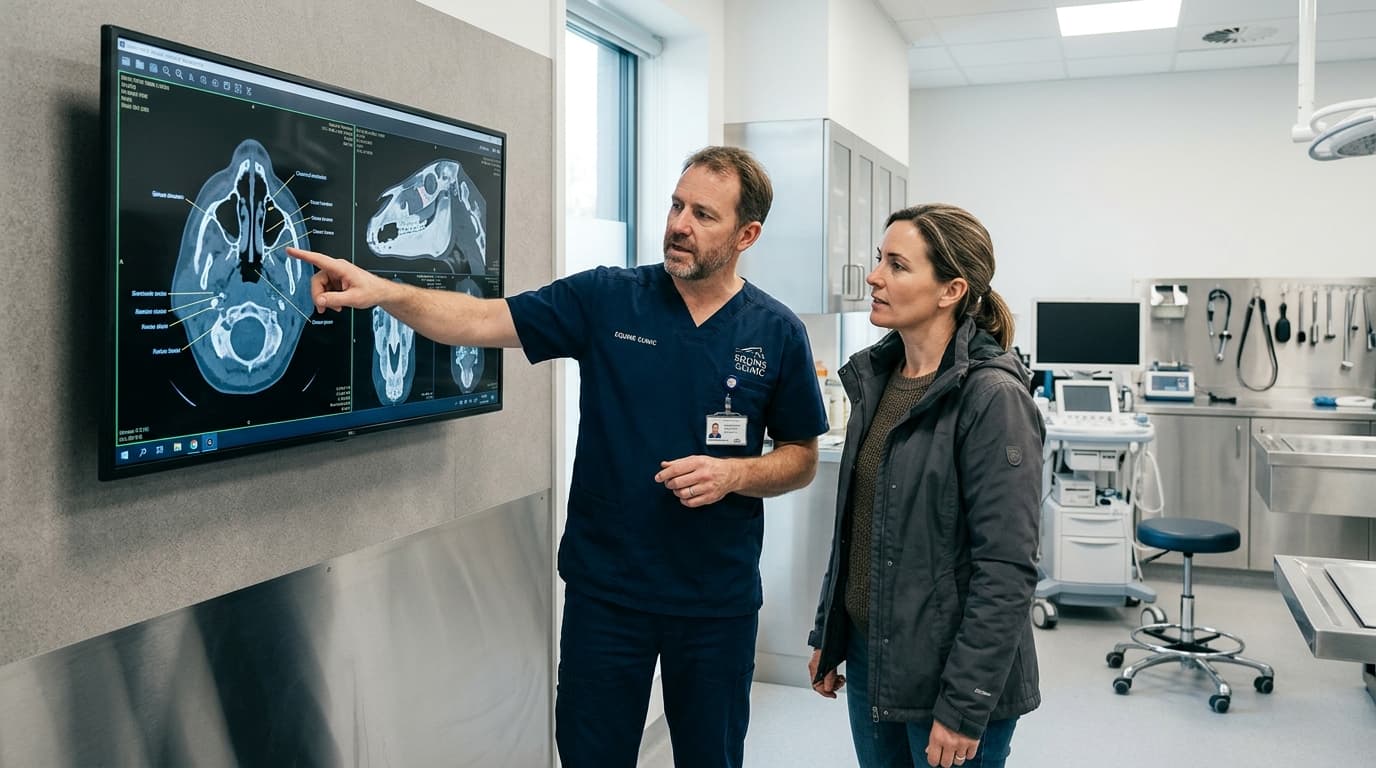
Even the basic clinical examination for lameness registers on the GOT scale, while comprehensive diagnostics with X-rays or ultrasound quickly reach higher sums. Across the market, a clinical lameness examination at twice the GOT rate costs 150 to 300 euros, and a full lameness work-up 200 to 600 euros.
| Veterinary service | Cost range | Notes |
|---|---|---|
| Clinical lameness examination | €150–300 | Market range at twice the GOT rate |
| X-ray (per image) | €50–80 | Market range at twice the GOT rate; several planes are needed to confirm a finding |
| Full lameness work-up | €200–600 | Market range in 2026 for the combined diagnostics |
Owners carry those diagnostic costs themselves where the finding falls into the period before cover started. All the more reason to have cover in place before the first signs of trouble.
Cover still pays off: full protection against new conditions
Even though lameness that appeared before the contract was signed stays permanently outside cover, that does not make insuring the horse pointless. Horse surgery insurance is a dependable umbrella against the financial risk of future emergencies and operations that have nothing to do with it.
Cover tailored to your horse
From acute colic surgery through wound repair to an unexpected injury in the field: new illnesses and accidents arising after the waiting period has run are covered in full. The nextsure digital marketplace lets you compare policies transparently and take one out without fuss.
- Full cover for new findings: every future, unforeseen operation covered once the deadlines have passed.
- Transparent choice: a quick comparison of suitable policies with no hidden clauses.
- Fully digital application: straightforward, and handled online.
Do not let an existing condition put you off. Taking cover out in good time protects you lastingly against the high cost of future procedures and secures the best care for your horse.
Frequently asked questions
- Is my horse insured if it was lame before cover started?
No. Where the lameness already existed as a clinically relevant symptom or as a veterinary diagnosis before cover began, that specific condition and its consequences are permanently outside cover.
- What happens if the lameness appears during the waiting period?
If the lameness appears within the contractual waiting period — generally three months for illness — the exclusion for pre-existing conditions applies just the same. The condition then counts as permanently uninsured.
- When exactly does the insured event begin for an operation?
Under the policy conditions, the insured event begins with the pre-operative examination. If that establishes grounds to operate, both the work-up and the operation that follows are covered, provided the waiting periods have been met.
- What does a lameness examination cost under the GOT?
Vets bill under the scale of fees for veterinary surgeons at one to three times the rate, with twice the rate usual for routine work. For a clinical lameness examination the market range at twice the rate is 150 to 300 euros; a comprehensive work-up with X-rays or ultrasound runs to 200 to 600 euros.
- Can I insure a horse that is already lame?
Yes, you can take out horse surgery insurance. The existing condition causing the lameness will be excluded, but the horse is fully covered for every future and unrelated illness — colic, for instance — and for accidents.
Sources
Conclude directly online
Verified partner tariffs at no extra cost. The button takes you straight to the provider's calculator.
 Barmenia
Horse surgery insurance
Surgery cost cover for horses in case of illness and accidents, including diagnostics and after-care.
- Waiting period:
- 3 months (colic surgery: 5 days, accidents: none)
- Coverage abroad:
- worldwide, up to 12 months
- Maximum benefit:
- depends on the cover level, as stated in the policy
- Surgery costs for illness and accidents, including tooth extractions and root canal treatment
- Pre-surgical examination (X-ray, endoscopy, biopsy, lab work)
- After-care including acupuncture, homeopathy, physiotherapy, laser therapy
- Emergency veterinary service up to 4x the standard veterinary fee schedule (GOT) rate plus the emergency callout fee
- Premium cover: up to 5 physiotherapy sessions (max. 60 minutes each) after the after-care period ends
- Once per animal: surgery costs for a birth-related, medically necessary caesarean section
Key exclusions
- Illnesses and developmental abnormalities known at the time of application
- Hoof abscesses and hoof ulcers (exception: hoof cancer)
- Surgery due to cryptorchidism
- Neutering that isn't medically necessary
Service-Champions GOLD: Nr. 1 der Versicherer im Multikanalvertrieb (ServiceValue, 10/2024)
Barmenia (Anbieter der Pferde-OP-Versicherung)
Special waiting periods: 12 months for joint surgery (chip fragments, OC/OCD, Birkeland fractures), 6 months for medically necessary neutering; Premium cover includes a waiver of the insurer's right to cancel from the 7th insurance year.
Fact sheet: benefits, exclusions and waiting periods in detail
All details are taken from the provider's linked product page and the contract documents (IPID/policy conditions) published there; the insurer's documents prevail. Premiums, benefits and the insurance product itself may change – please verify the details directly with the partner before signing up; only the information provided there is binding.
Information last updated: July 2026 · Source: provider product information (IPID/policy conditions)