The cost of dressing material after horse surgery: who pays?
Who pays for dressing material after horse surgery? When Barmenia reimburses aids and dressing changes under clause 2.3.5 of the conditions.
All details are taken from the provider's linked product page and the contract documents (IPID/policy conditions) published there; the insurer's documents prevail. Premiums, benefits and the insurance product itself may change – please verify the details directly with the partner before signing up; only the information provided there is binding.
 Katrin StraubManaging DirectorInsurance expert with over 20 years of experience in the insurance industry.
Published on
7 min read
Table of Contents
The good news for horse owners: Barmenia reimburses the cost of consumables and aids under clause 2.3.5 of the conditions. The key requirement is that the vet has explicitly prescribed them, for instance for expensive dressing changes or special shoeing.
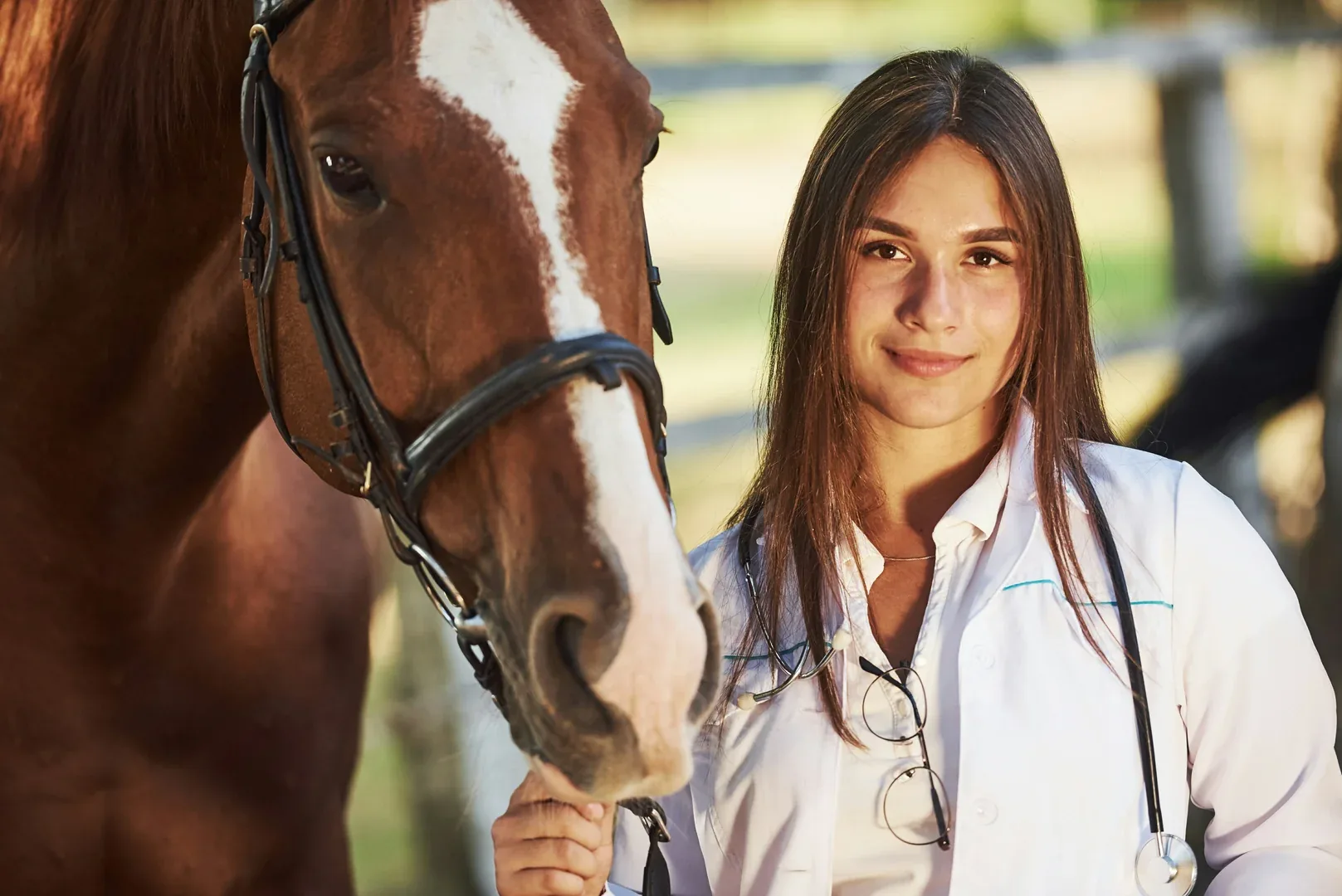
Equine surgery insurance
Horse surgery insurance via nextsure: Three flexible tariffs, reimbursement up to twice the GOT rate, and free choice of clinic worldwide. Protect your horse from high surgery costs – digital, transparent and uncomplicated.
Learn moreWhen does Barmenia pay for dressing material after an operation?
Consumables and medical aids are reimbursed by the insurer under clause 2.3.5 of the general insurance conditions (AVB Pferde-OP-Kosten of Barmenia Allgemeine Versicherungs-AG, as at 01.01.2024, document A 3726-02 01/2024): the costs of medication, consumables and aids are reimbursed when a vet has prescribed or dispensed them. The decisive basic requirement for cover is therefore that the dressing material or the aid relates directly to an insured operation and was prescribed or used by the treating vet.
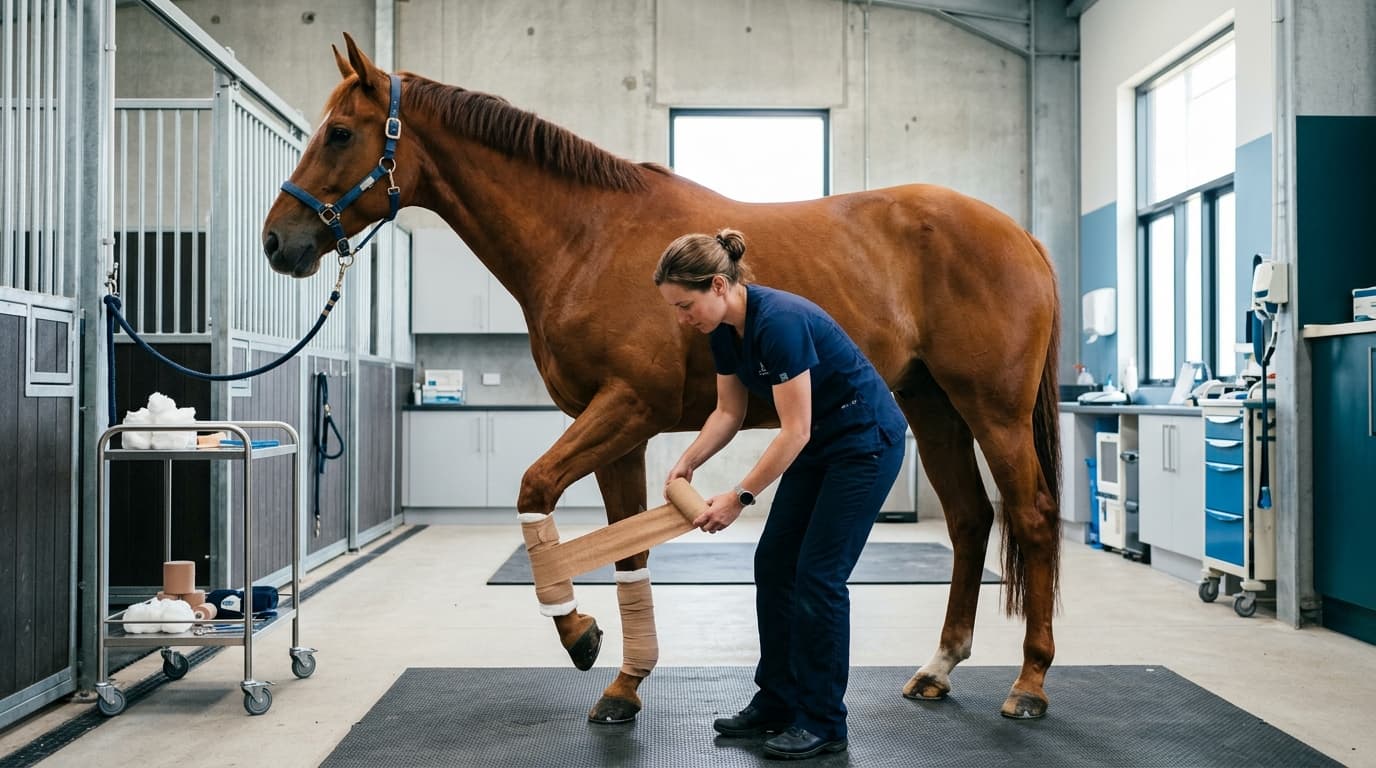
After a surgical procedure, post-operative wound care is a central part of the healing process. Whether after colic surgery, joint arthroscopy or the treatment of a complicated cut: medical consumables are indispensable for the hygienic care of the wound. Reimbursement requires that the vet prescribed or dispensed the medication and the consumables as part of the insured treatment. Provided the vet lists these materials on the official invoice, the contractual reimbursement applies within the agreed tariff scope.
- Sterile wound dressings and abdominal cloths to cover the operation wound directly
- Padding materials such as cotton wool or fleece to prevent pressure points on the limbs
- Elastic fixation bandages, short-stretch bandages and self-adhesive support dressings
- Cast dressings and immobilisation materials for bone or tendon injuries
- Disinfectant solutions and sterile irrigation fluids for the dressing change
The cost factor: dressing changes and wound healing
Physiological wound healing takes considerably longer in horses, particularly on the legs, than on the trunk. Because there is little soft tissue cover and the limbs move constantly, there is an increased risk of healing disorders, congestive oedema and the formation of excess granulation tissue. A properly applied and regularly renewed dressing is therefore essential to build up even compression and protect the wound from germs.
In the first two weeks after a surgical procedure, veterinary standards often call for a complete dressing change every two to three days. Over a treatment lasting several weeks, the amounts for sterile dressings, padding wool and elastic bandages add up noticeably. That makes it all the more important to know how far the follow-up treatment reaches in the tariff, for instance also when the horse is operated on abroad, or when it dies under anaesthesia. Clearly separate from the surgery cost policy is damage the horse causes in its box while convalescing: that is a matter for horse liability insurance in a rented stable.
| Treatment phase | Typical change interval | Material needed |
|---|---|---|
| Fresh surgical wound (days 1 to 7) | Every 1 to 2 days | Sterile dressings, compression bandages, padding wool |
| Stabilisation phase (weeks 2 to 3) | Every 2 to 4 days | Support bandages, adhesive fleece, wound dressings |
| Final phase (from week 4) | As needed / on removal | Protective dressings, skin protection products |
Does orthopaedic shoeing count as an aid?
A frequent question from practice concerns the use of therapeutic shoeing after surgery on tendons, joints or hooves. Special orthopaedic shoeing with wedge plates, bars or padded inserts is considerably more expensive than standard shoeing and weighs on the budget over several shoeing cycles. The basis for reimbursement is the rule on consumables and aids: the costs of medication, consumables and aids are covered when a vet has prescribed or dispensed them.
Cover requires a clear distinction from the regular farrier appointment. The normal trimming and shoeing rhythm without a surgical indication belongs to general animal husbandry and is not insured. If, however, the treating vet prescribes the orthopaedic measure as a therapeutic aid to relieve an operated tendon and certifies the necessity on the invoice, that expense falls within the contractual scope of cover. Depending on the agreed excess, only the agreed own share remains with the owner.
- Therapeutic special shoeing to relieve pressure after tendon or joint surgery
- Orthopaedic hoof wedges, silicone inserts and padding plates on veterinary instruction
- Specific hoof boots or dressing boots for protected wound healing on the hoof
- Prostheses and orthoses to stabilise the musculoskeletal system after trauma
Self-administered care: are owner dressing changes covered?
For practical and financial reasons, horse owners often carry out later dressing changes themselves in the stable after instruction from the vet. Reimbursement is then decided purely by the material, because what is insured are the veterinary costs actually invoiced: an owner's own input, such as the working time spent, is not a billable veterinary service. The material costs are reimbursable provided the consumables were prescribed or dispensed by the vet and billed through the practice or clinic.
If the horse owner buys dressing supplies on their own initiative in the shops or at a pharmacy without a corresponding veterinary prescription, there is no proof of medical necessity within the insured event. Clause 3.2 of the conditions also points to general exclusions: nutritional supplements, care products as well as dietary and supplementary feed are not paid for by the insurer, even when the vet recommends giving them during recovery.
| Type of service | Cover under the conditions | Requirement for reimbursement |
|---|---|---|
| Dressing applied by the vet | Yes | Vet's invoice listing the material |
| Material prescribed by the vet for own use | Yes | Veterinary prescription / practice invoice |
| Self-bought bandages without a prescription | No | No proof of indication |
| Supplementary feed & wound ointments from the shops | No | Excluded under clause 3.2 of the conditions |
How the vet's invoice for aids has to look
So that Barmenia can settle the submitted receipts without time-consuming queries, the vet's billing has to meet formally correct standards. Under section 7 of the scale of fees for veterinary surgeons, charges for medicines and for material used and dispensed must be shown separately, unless they are included in the fee rates of the schedule of fees; at the request of the person liable to pay, the invoice must also be itemised.
The scale of fees for veterinary surgeons (GOT) governs the billing of veterinary services transparently. For smooth reimbursement it is advisable to follow the criteria below on the invoice precisely. Further information on billing the fee rates correctly can be found in the guide to the applicable GOT rate.
- Exact naming of the consumables used (e.g. the number and type of wound dressings, bandages or casts)
- A clear link to the insured operation and the associated follow-up phase
- Statement of the GOT items applied for the veterinary application of the dressing or the treatment
- A note on medical necessity for special aids or orthopaedic shoeing
- Invoicing in the name of the owner recorded in the policy
Secure aftercare with horse surgery insurance
Surgery on a horse confronts owners with major emotional and financial challenges. That medical aftercare with dressing materials, medication and necessary aids makes up a noticeable share of the total costs is often underestimated in the preparation. Owners who know the conditions and document the veterinary prescription avoid queries when these items are billed.
On the independent comparison platform nextsure, tariffs can be compared transparently. nextsure's horse surgery policy offers flexible tariff options with comprehensive cover for operation costs and follow-up treatment under Barmenia's conditions. That lets you examine the clauses and tariff benefits at your leisure and protect your horse in the best possible way.
Frequently asked questions
- Are dressing changes by the owner covered?
No, as a rule not. The insurance conditions require consumables to have been prescribed or dispensed by the treating vet. If you buy dressing supplies in the shops on your own initiative and apply them yourself, the insurer does not cover those costs.
- Does orthopaedic shoeing count as an aid?
Yes, orthopaedic shoeing can count as a medical aid. Reimbursement does, however, strictly require the vet to have explicitly prescribed that shoeing as a medically necessary measure within the course of treatment after an operation.
- What has to appear on the vet's invoice?
For the consumables to be reimbursed, the vet has to list all materials used (such as padding wool, sterile dressings or cast dressings) in detail. The invoice should also make clear that these products were medically necessary and prescribed by a vet.
- Is supplementary feed for healing paid for?
No, dietary and supplementary feed are among the exclusions and are generally excluded from reimbursement, even when they are used as treatment. The same applies to preventive vitamin and mineral preparations.
- How long does wound healing on a horse's leg take?
Wounds on horses' legs often heal extremely slowly because of the strong tension and constant movement. In the initial healing phase a dressing change is usually needed every few days, which causes considerable material costs over the weeks.
Sources
Conclude directly online
Verified partner tariffs at no extra cost. The button takes you straight to the provider's calculator.
 Barmenia
Horse surgery insurance
Surgery cost cover for horses in case of illness and accidents, including diagnostics and after-care.
- Waiting period:
- 3 months (colic surgery: 5 days, accidents: none)
- Coverage abroad:
- worldwide, up to 12 months
- Maximum benefit:
- depends on the cover level, as stated in the policy
- Surgery costs for illness and accidents, including tooth extractions and root canal treatment
- Pre-surgical examination (X-ray, endoscopy, biopsy, lab work)
- After-care including acupuncture, homeopathy, physiotherapy, laser therapy
- Emergency veterinary service up to 4x the standard veterinary fee schedule (GOT) rate plus the emergency callout fee
- Premium cover: up to 5 physiotherapy sessions (max. 60 minutes each) after the after-care period ends
- Once per animal: surgery costs for a birth-related, medically necessary caesarean section
Key exclusions
- Illnesses and developmental abnormalities known at the time of application
- Hoof abscesses and hoof ulcers (exception: hoof cancer)
- Surgery due to cryptorchidism
- Neutering that isn't medically necessary
Service-Champions GOLD: Nr. 1 der Versicherer im Multikanalvertrieb (ServiceValue, 10/2024)
Barmenia (Anbieter der Pferde-OP-Versicherung)
Special waiting periods: 12 months for joint surgery (chip fragments, OC/OCD, Birkeland fractures), 6 months for medically necessary neutering; Premium cover includes a waiver of the insurer's right to cancel from the 7th insurance year.
Fact sheet: benefits, exclusions and waiting periods in detail
All details are taken from the provider's linked product page and the contract documents (IPID/policy conditions) published there; the insurer's documents prevail. Premiums, benefits and the insurance product itself may change – please verify the details directly with the partner before signing up; only the information provided there is binding.
Information last updated: July 2026 · Source: provider product information (IPID/policy conditions)