Does Barmenia Pay if a Horse Dies Under Anesthesia?
Find out whether Barmenia's equine surgery insurance covers costs if your horse dies during anesthesia induction or surgery.
All details are taken from the provider's linked product page and the contract documents (IPID/policy conditions) published there; the insurer's documents prevail. Premiums, benefits and the insurance product itself may change – please verify the details directly with the partner before signing up; only the information provided there is binding.
 Katrin StraubManaging DirectorInsurance expert with over 20 years of experience in the insurance industry.
Published on
12 min read
Table of Contents
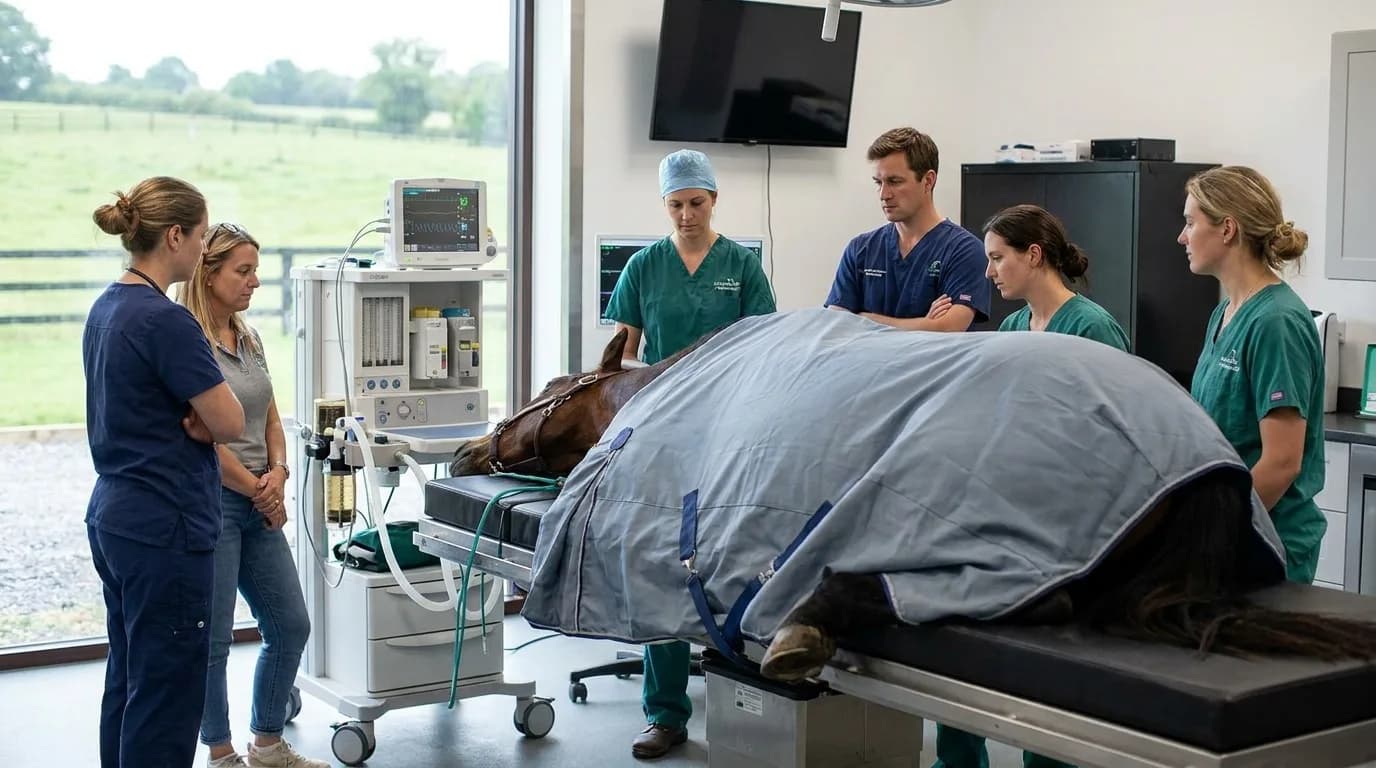
Yes, Barmenia covers the operation costs and examination costs if the horse dies during anesthesia. Under the current insurance conditions, the operation is deemed to have been carried out from the moment anesthesia induction begins. This rules out the historical point of dispute over the first incision. Horse owners therefore receive the full contractual reimbursement for the veterinary services incurred up to the day of death, according to the fee schedule.
Equine surgery insurance
Horse surgery insurance via nextsure: Three flexible tariffs, reimbursement up to twice the GOT rate, and free choice of clinic worldwide. Protect your horse from high surgery costs – digital, transparent and uncomplicated.
Learn moreBarmenia's legal definition of when an operation begins
The end of the historical "first incision" clause
The legal definition of when an operation begins determines thousands of euros in vet costs. Historically, many insurers refused to cover costs if the animal died during anesthesia induction and it never came to an incision [1]. Barmenia has closed this gap in its general insurance conditions (as of January 2024). If the insured horse dies after anesthesia has begun, the operation is deemed to have been carried out. The surgical procedure itself does not need to have started yet. This provides financial security. The clause protects the policyholder from unexpected bills from the equine clinic. Under Barmenia Allgemeine Versicherungs-AG's general conditions for equine surgery costs, anesthesia induction is the legal starting point of the operation. This precise definition prevents drawn-out coverage disputes. The insurer has done away with the outdated "first incision" clause. Horse owners are not left covering the preparation costs themselves. A sudden cardiac arrest during injection of the anesthetic thus triggers the full claim entitlement.
Billing under the fee schedule (GOT)
Billing strictly follows the veterinary fee schedule (Gebührenordnung für Tierärzte, GOT). Barmenia reimburses the vet's fees up to the rate documented in the policy. In emergency care, it even pays up to four times the fee rate plus the emergency-service fee. The treating vet must confirm the emergency on the invoice. This rule applies exactly when an emergency operation is started at night and the horse collapses before anesthesia. Cost reimbursement is fixed in the contract. A practical example illustrates this mechanism. If a horse suffers severe colic on a Sunday, the clinic charges four times the GOT rate for emergency care. If the animal dies during sedation, Barmenia covers these massively increased fees in full. The emergency-service fee of 50 euros net is also settled without objection. This protects against financial ruin.
The financial scale of the preparation phase
According to experts, a good equine surgery insurance policy should cover at least €5,000 per operation [4]. When a horse is being prepared at the clinic, costs in the four-figure range quickly add up. Imaging procedures such as X-ray, computed tomography (CT), or magnetic resonance imaging (MRI) are extremely expensive. These costs are covered by Barmenia, provided they serve to prepare for the operation. The animal's death does not cancel this contractual entitlement. In this scenario, the insured event ends exactly on the day of death. Barmenia treats all the diagnostics as part of the operation that was carried out. An MRI of a horse's head can quickly cost over €1,500 under the current GOT. This amount is reimbursed to the policyholder, even if the life-saving procedure could no longer take place. The link between the examination and the planned operation only needs to be documented by the vet. That is a huge advantage.
Anesthesia risk and cover for standing sedation
The cardiovascular risk of general anesthesia
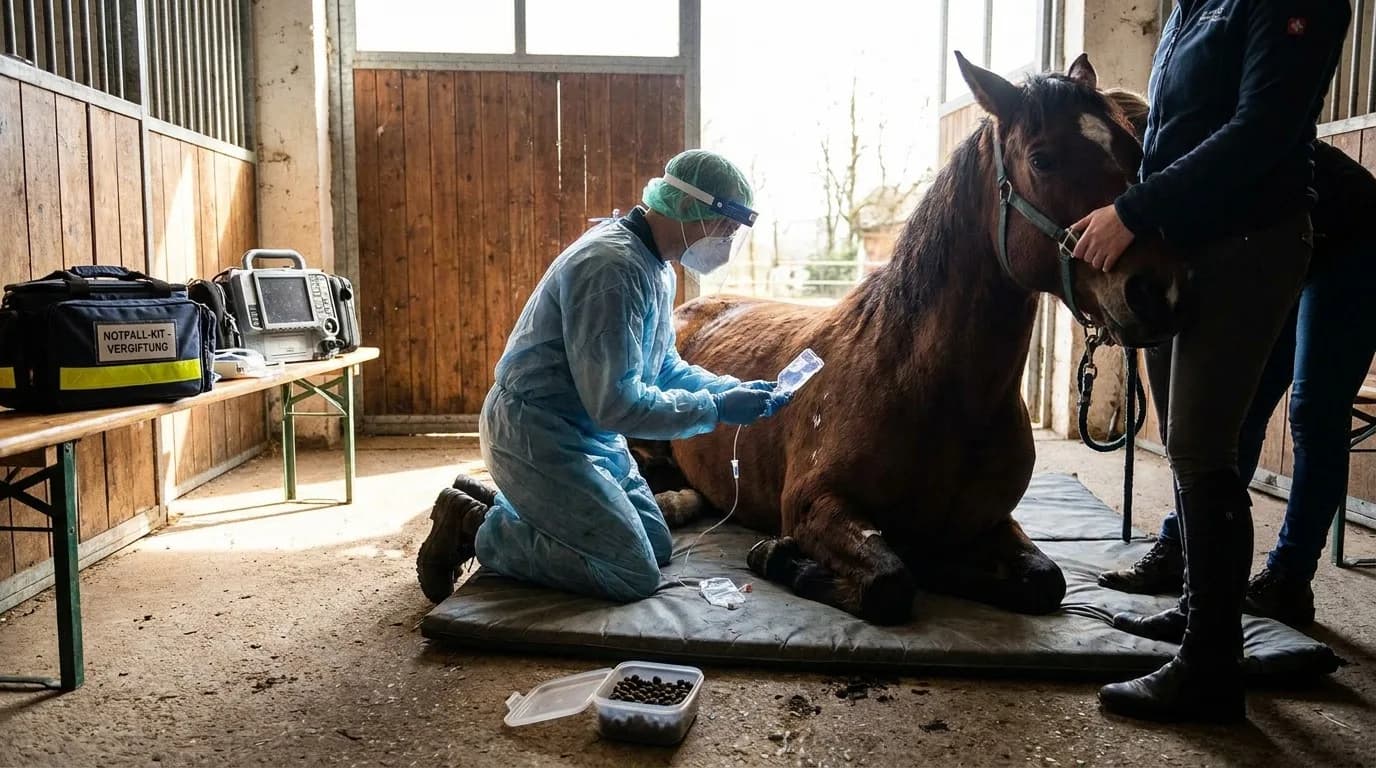
Because of horses' anatomy and mass, the risk of anesthesia is significantly higher than for small animals. Every surgical procedure under general anesthesia carries the risk of severe injury or a fatal outcome [2]. Complications during recovery often mean a horse can no longer stand up. In such cases, the animal often has to be euthanized. Barmenia covers these risks in full. Cover for standing sedation is also fixed in the contract. Standing sedation considerably reduces the cardiovascular risk. Vets prefer this method for smaller procedures to avoid the dangerous recovery phase. Barmenia treats standing sedation the same as classic general anesthesia in its insurance conditions. This encourages choosing the safest medical method. Owners don't need to worry about reduced cover if they opt against general anesthesia. This minimizes the risk of a fatal outcome.
Definition of covered procedures
Surgical procedures on or in the insured animal's body under sedation or local anesthesia count as a covered operation. The skin or underlying tissue must be cut through more than superficially. Wound care by suturing or stapling falls under this cover. Tooth extractions, including the removal of wolf teeth, are also explicitly co-insured. These procedures are carried out almost exclusively on a standing, sedated horse. Cost reimbursement is identical to that for general anesthesia. The risk of a fatal outcome is minimal here. Root canal treatments are also listed as covered operations in the current conditions. This is an important element, since dental conditions in horses often have to be treated surgically under sedation. Barmenia covers the cost of the procedure according to the GOT. The definition of an operation is thus drafted in a very customer-friendly way.
Aftercare for post-operative complications
If the horse survives anesthesia but dies from complications in the following days, the aftercare clause applies. Barmenia covers the cost of aftercare that follows on from the operation. Under the Premium tariff, preliminary examinations and aftercare of up to 14 days are covered [3]. This also includes inpatient costs at the equine clinic. Regenerative therapies such as IRAP, PRP, or stem cell treatments are also reimbursable. The policy documents the exact number of covered aftercare days. Medication, consumables, and aids are reimbursed if prescribed by the vet. If the insurance contract ends before aftercare is complete, ongoing treatments remain covered. This is especially important if a horse has to remain at the clinic for weeks after a serious colic operation. Financial cover for aftercare prevents life-saving measures from being cut short prematurely.
Reimbursement of pre-operative examinations
Diagnostics as part of the insured event
Reimbursement of pre-operative diagnostics is a core element of Barmenia's conditions. If an operation is carried out, the insured event begins with the examination needed to establish the diagnosis. This covers all veterinary measures for precise diagnosis. History taking, clinical examinations, and special procedures such as endoscopy or biopsy are included. Cost coverage under equine surgery insurance also applies if the horse dies under anesthesia after the diagnostics. There must be a link between the examination and the planned operation. Blood tests before anesthesia also fall under this cover. The vet just needs to note on the invoice that these measures served to prepare for the operation. This broad definition protects the horse owner from hidden costs. Diagnostics are often the most expensive part of treatment.
Cost coverage for expensive imaging procedures
An MRI of a horse's head can quickly cost over €1,500 under the current GOT. If this examination is necessary to plan a surgical procedure, Barmenia covers the cost. However, if the operation does not take place because the owner decides against it, cover for the preliminary examination lapses. Death under anesthesia, however, is contractually treated as a completed operation. So the obligation to reimburse the expensive diagnostics remains in place. This is a decisive advantage over older tariffs on the market. Ultrasound examinations of the tendons before a surgical procedure are also fully covered. In a claim, Barmenia only requires the corresponding examination documents to be submitted. The policyholder must submit the invoice within one month of treatment ending. Prompt submission ensures a quick payout.
Related insured events for multiple operations
If several operations are veterinarily necessary due to the same illness or the same accident, these count as a single, related insured event. The pre-operative examination for each procedure is added up. The insured event only ends once the aftercare period following the last operation has elapsed. This is especially relevant for complicated fractures or recurring colic. Barmenia offers unlimited maximum compensation here under Premium cover. Horse owners don't need to worry about the coverage sum running out prematurely. If a horse dies under anesthesia for a second operation after surviving the first, all costs incurred up to that point are settled. Combining everything into a single insured event prevents deductibles from being deducted multiple times. This is a huge financial advantage for the policyholder. Contractual clarity avoids disputes.
Important exclusions in equine surgery insurance
Illness-specific coverage exclusions
Exclusions define the limits of every insurer's obligation to pay. There are important exclusions in equine surgery insurance that horse owners absolutely need to know. Barmenia, for example, explicitly excludes treatment for cryptorchidism (a "rig" or undescended testicle). Hoof abscesses and their direct consequences are also excluded from cover [3]. Operations for vet-diagnosed canker (Hufkrebs), however, are not affected by this exclusion. Gold acupuncture or gold wire implants are likewise not reimbursed. These clear definitions prevent disputes in a claim. Special diet feed and supplementary feed are generally excluded, even if used as part of treatment. The issuing of health certificates or veterinary reports is not paid for by Barmenia. The horse owner has to fund these administrative costs out of pocket. The insurance focuses purely on core medical services.
Pre-existing conditions and routine procedures
Illnesses, accidents, or congenital developmental defects that were known at the time of application are permanently excluded. For unknown pre-existing conditions, however, full cover applies under the conditions. Routine examinations, dental care, or correcting jaw abnormalities do not fall under the surgery cover. Operations that merely serve to achieve the breed standard are also consistently declined. The policyholder bears the treating vet's travel fees, waiting fees, and other travel costs themselves. Transport costs for the horse to the clinic are likewise not covered. If the horse dies under anesthesia, Barmenia does not cover the costs of euthanasia or carcass disposal. These final expenses are not part of the surgery-cost insurance. The owner needs to budget for these costs separately. The policy covers only curative measures.
Pregnancy, birth, and castration
Complications during pregnancy and birth are subject to special rules. The costs of operations related to breeding or a false pregnancy are not covered. However, the operation costs for a caesarean section are covered once per insured animal. This must be veterinarily necessary due to complications during birth. Castration or sterilization is generally excluded. An exception only applies if the procedure is essential due to oncological conditions such as tumors. A special waiting period of six months applies to these medically indicated castrations. Inflammation of the reproductive organs also justifies cost coverage for castration. The vet must give a detailed justification of the medical necessity on the invoice. Without this justification, Barmenia declines reimbursement.
Key exclusions in Barmenia's equine surgery insurance
- Treatment for cryptorchidism (a "rig").
- Hoof abscesses and their direct consequences (exception: canker/Hufkrebs).
- Gold acupuncture and gold wire implants.
- Routine examinations and cosmetic dental treatments.
- Transport costs for the horse to the equine clinic.
Pre-existing conditions known at the time of application are generally excluded from cover.
Equine life insurance benefits as a complement
Compensating for a total financial loss
Life insurance benefits cushion a total financial loss. If a horse dies under anesthesia, the surgery insurance covers the vet costs but does not replace the animal's value. This is where the benefits of equine life insurance serve as a sensible complement. Life insurance pays out the agreed sum insured on death or emergency euthanasia. This lets the owner offset the financial loss from losing a valuable riding or competition horse. Combining both policies provides comprehensive all-round protection. nextsure specifically advises horse owners on this strategic cover. An expensive sport horse represents a considerable asset. If this horse dies on the operating table, life insurance protects against financial ruin. Surgery insurance alone isn't enough here.
How surgery and life insurance work together
Barmenia's surgery insurance and a separate life insurance policy work hand in hand in an emergency. While Barmenia settles the clinic bill according to the GOT, the life insurance provides liquidity for a replacement purchase. This setup is well established in practice, especially for expensive sport horses. A veterinary report from the clinic documents the death. Documentation of the failed anesthesia serves both insurers as proof of claim. Transparency toward both companies considerably speeds up payout. The horse owner must report the insured event promptly. Barmenia requires the invoice to be submitted at the latest one month after treatment ends. The life insurance often additionally requires a necropsy report. These administrative steps are essential for smooth settlement.
Cover for permanent unusability
Some life insurance policies pay out not only on death, but also if the horse becomes permanently unusable. If a horse survives a serious operation but can never be ridden again, this creates an economic loss. Barmenia's surgery insurance covers the medical rescue. In this case, the life insurance pays out a percentage of the sum insured. Horse owners should check the exact terms of their life insurance. Not every tariff includes the unusability clause as standard. A digital broker such as nextsure compares these fine tariff details transparently. Combining Barmenia's Premium cover with strong life insurance is the optimal strategy. This way, both the medical treatment and the animal's asset value are protected. That gives the owner maximum security.
Waiting periods and emergency-service reimbursement in a crisis
Regulating when cover starts
Waiting periods strictly regulate when cover starts after the contract is signed. The general waiting period for insured events due to illness is three months at Barmenia. For abdominal surgery, especially the dreaded colic, a much shorter waiting period of just five days applies. For joint operations due to isolated shadowing, OC, OCD, or chips, a special waiting period of twelve months applies. If an accident occurs, the waiting period is waived entirely. In this case, the treatment must be exclusively the result of the accidental event. If a previous policy existed without a break in time, Barmenia credits this prior insurance period toward the waiting periods. This makes it easier to switch to a stronger tariff. Cover begins exactly at the point in time stated in the policy. Timely payment of the first premium is essential for this.
Cost coverage in veterinary emergency care
Emergencies often happen at night or on weekends. Barmenia reimburses veterinary services provided as part of emergency care up to four times the GOT rate. The statutory emergency-service fee is also covered in addition. The vet must confirm the emergency on the invoice. Without this confirmation, Barmenia only reimburses the regular contractual rate. This emergency-service cover is essential, since clinics have to charge substantial surcharges outside regular consulting hours. A nighttime procedure for colic can quickly cost three times as much as a planned operation. Barmenia protects the horse owner from these extreme price spikes. The definition of emergency-service hours follows exactly the requirements of the veterinary fee schedule. This creates legal clarity for everyone involved.
Direct billing with the equine clinic
In an emergency, horse owners don't necessarily have to pay up front. At the owner's explicit instruction, Barmenia bills directly with the treating vet or equine clinic. Barmenia transfers the reimbursable amount directly to the clinic. This is a relief for owners facing bills that can quickly exceed €10,000. The condition is that the clinic accepts this direct billing. Prior agreement between the horse owner, the clinic, and nextsure as the supporting broker ensures a smooth process. The clinic usually needs an assignment declaration from the policyholder for this. Once Barmenia has issued its confirmation of cover, the money flows directly to the service provider. This process is a huge advantage, especially for expensive emergency operations. The owner doesn't have to take out an expensive loan.
Cover for hobby farm animals and other animal species
Insurance solutions for small herds
Cover for alternative animal species is becoming more important on smallholdings. Besides horses, many owners also keep sheep, goats, or alpacas. Specialized cover for hobby farm animals closes the gap left by standard pet insurance. These niche tariffs cover vet costs and liability risks for small herds. nextsure, as a digital broker, curates exactly these specialized solutions. Standard insurers often don't offer suitable cover concepts for hobby farm animals. The risk profile is very different from that of a riding horse. An alpaca needs completely different veterinary treatment than a warmblood horse. Tariffs need to reflect these specific risks precisely. nextsure analyzes the market and offers hand-picked policies for this niche. This way, even exotic animals get the best cover.
Cost risk for exotic and farm animals
An alpaca or a miniature sheep needs specialized vets in case of illness. Diagnostic and operation costs can quickly blow the budget here too. Hobby farm-animal insurance covers treatment costs under the GOT. As with equine surgery insurance, anesthesia risks and preliminary examinations are included. Premiums depend on the animal species and herd size. A transparent comparison via nextsure shows the differences in cover among the few providers on the market. Anesthesia in ruminants is extremely complex and prone to complications. If a valuable breeding animal dies during the operation, the financial loss is enormous. The insurance cushions these unpredictable vet costs. The owner can focus fully on their herd's recovery.
Liability risks for animal owners
Besides illness costs, the liability component is crucial for hobby farm animals. If sheep escape and cause a traffic accident, the owner is liable with their personal assets. Private liability insurance does not cover farm animals. A combined policy protects against these existential risks. nextsure analyzes the owner's individual needs digitally and in a legally sound way. This gives animal lovers tailored protection for their entire herd from a single source. Combining surgery cover with animal-owner liability is essential for every hobby farmer. Missing liability cover can, in the worst case, lead to financial ruin. nextsure's digital platform makes signing up for these specialized policies possible within minutes. That saves time and hassle.
Tariff comparison and reimbursement limits at Barmenia
Differences between the tariff lines
A tariff comparison reveals the qualitative differences between Barmenia's product lines. Finanztip explicitly recommends Barmenia's Top tariff for older horses [4]. This tariff meets all the minimum criteria for solid cover and stays attractively priced. The Premium tariff also offers unlimited reimbursement of operation costs. In addition, Premium cover includes up to five physiotherapy treatments after the regular aftercare period ends. Certified equine physiotherapists may carry out these treatments following a referral from the vet. Each session may last a maximum of 60 minutes. This extension is invaluable for rehabilitation after major orthopedic procedures. The Top tariff caps the annual maximum compensation, which can lead to co-payments for extremely expensive clinic stays. The Premium tariff eliminates this risk entirely.
Waiver of termination as a safety net
A special feature of Barmenia is its waiver of the ordinary right of termination. If the horse was no older than seven years at the start of the contract, the insurer waives ordinary termination from the seventh year of insurance onward. This applies to the Premium cover product line. Even after a reported insured event, Barmenia may then no longer terminate the contract. This waiver of termination offers enormous planning certainty for the horse's entire lifetime. Chronically ill animals thus don't lose their valuable insurance cover. The only exceptions to this waiver are terminations due to unpaid premiums or fraudulent misrepresentation. However, if Barmenia terminates all contracts in this product line at the same time, a special rule applies. For the individual horse owner, this waiver is nonetheless a major strategic advantage.
Integration of alternative healing methods
Alternative healing methods are firmly established in the higher-tier tariffs. Acupuncture, homeopathy, laser therapy, or magnetic field therapy are reimbursed as part of aftercare. The condition is that their effectiveness is supported by veterinary science and billing follows the GOT. Barmenia positions itself here as a modern insurer that supports holistic treatment approaches. nextsure helps horse owners understand these tariff details and sign up digitally for optimal cover. Personal expert advice ensures the right tariff choice. Neural therapy is also explicitly listed in the conditions as a reimbursable method. The vet must administer or prescribe these treatments. Integrating these gentle methods often considerably speeds up healing after major operations. The horse's wellbeing is the priority.
| Benefit | Top tariff | Premium tariff |
|---|---|---|
| Annual maximum compensation | Limited (e.g. €5,000) | Unlimited |
| Aftercare duration | 7 days | 14 days |
| Physiotherapy | Not included | Up to 5 treatments |
| Waiver of termination (from year 7) | No | Yes (entry age max. 7 years) |
The exact reimbursement limits vary depending on the individual contract and GOT rate.
Frequently asked questions
- Does Barmenia pay if my horse dies under anesthesia before the first scalpel incision?
Yes, Barmenia covers the costs. Under the current insurance conditions, the operation is deemed to have been carried out from the moment anesthesia induction begins. The surgical procedure itself does not need to have started to trigger the insurer's obligation to pay.
- Are the MRI costs reimbursed if the horse then dies under anesthesia?
Yes, pre-operative examinations such as an MRI or X-rays are reimbursed. Since death under anesthesia is treated as a completed operation, the obligation to reimburse the diagnostics that served to prepare for the procedure remains in full force.
- Does Barmenia's cover also apply to standing sedation?
Yes, surgical procedures under sedation or local anesthesia (standing sedation) are covered, provided the skin is cut through more than superficially. This also includes wound care by suturing or tooth extractions, which are typically carried out on a standing horse.
- How long is the waiting period for colic surgery?
For abdominal surgery, which includes life-saving colic surgery, Barmenia applies a much shorter waiting period of just five days. For regular illnesses, a general waiting period of three months applies, and for accidents it is waived entirely.
- Does Barmenia cover the cost of euthanasia after a surgical complication?
The surgery insurance covers the cost of the operation, the preliminary examination, and aftercare. The pure costs of euthanasia and carcass disposal are not part of the surgery-cost insurance and must be borne by the owner.
- Can Barmenia terminate the contract if my horse needs expensive operations?
Under the Premium tariff, Barmenia waives the ordinary right of termination from the seventh year of insurance onward, as well as the right to terminate after a claim. The condition is that the horse was no older than seven years at the start of the contract. This offers long-term planning certainty.
Sources
Conclude directly online
Verified partner tariffs at no extra cost. The button takes you straight to the provider's calculator.
 Barmenia
Horse surgery insurance
Surgery cost cover for horses in case of illness and accidents, including diagnostics and after-care.
- Waiting period:
- 3 months (colic surgery: 5 days, accidents: none)
- Coverage abroad:
- worldwide, up to 12 months
- Maximum benefit:
- depends on the cover level, as stated in the policy
- Surgery costs for illness and accidents, including tooth extractions and root canal treatment
- Pre-surgical examination (X-ray, endoscopy, biopsy, lab work)
- After-care including acupuncture, homeopathy, physiotherapy, laser therapy
- Emergency veterinary service up to 4x the standard veterinary fee schedule (GOT) rate plus the emergency callout fee
- Premium cover: up to 5 physiotherapy sessions (max. 60 minutes each) after the after-care period ends
- Once per animal: surgery costs for a birth-related, medically necessary caesarean section
Key exclusions
- Illnesses and developmental abnormalities known at the time of application
- Hoof abscesses and hoof ulcers (exception: hoof cancer)
- Surgery due to cryptorchidism
- Neutering that isn't medically necessary
Service-Champions GOLD: Nr. 1 der Versicherer im Multikanalvertrieb (ServiceValue, 10/2024)
Barmenia (Anbieter der Pferde-OP-Versicherung)
Special waiting periods: 12 months for joint surgery (chip fragments, OC/OCD, Birkeland fractures), 6 months for medically necessary neutering; Premium cover includes a waiver of the insurer's right to cancel from the 7th insurance year.
Fact sheet: benefits, exclusions and waiting periods in detail
All details are taken from the provider's linked product page and the contract documents (IPID/policy conditions) published there; the insurer's documents prevail. Premiums, benefits and the insurance product itself may change – please verify the details directly with the partner before signing up; only the information provided there is binding.
Information last updated: July 2026 · Source: provider product information (IPID/policy conditions)