Horse in the clinic: who pays for the accommodation?
A horse's clinic stay: who pays for the accommodation? What Barmenia reimburses for boarding at the clinic and what you carry yourself.
All details are taken from the provider's linked product page and the contract documents (IPID/policy conditions) published there; the insurer's documents prevail. Premiums, benefits and the insurance product itself may change – please verify the details directly with the partner before signing up; only the information provided there is binding.
 Katrin StraubManaging DirectorInsurance expert with over 20 years of experience in the insurance industry.
Published on
8 min read
Table of Contents
Under clause 2.3.2 c) of Barmenia's conditions, the cost of inpatient accommodation during follow-up treatment is reimbursed only within limits. You will find the exact cap in your policy schedule, while pure surgery costs are settled under the conditions.
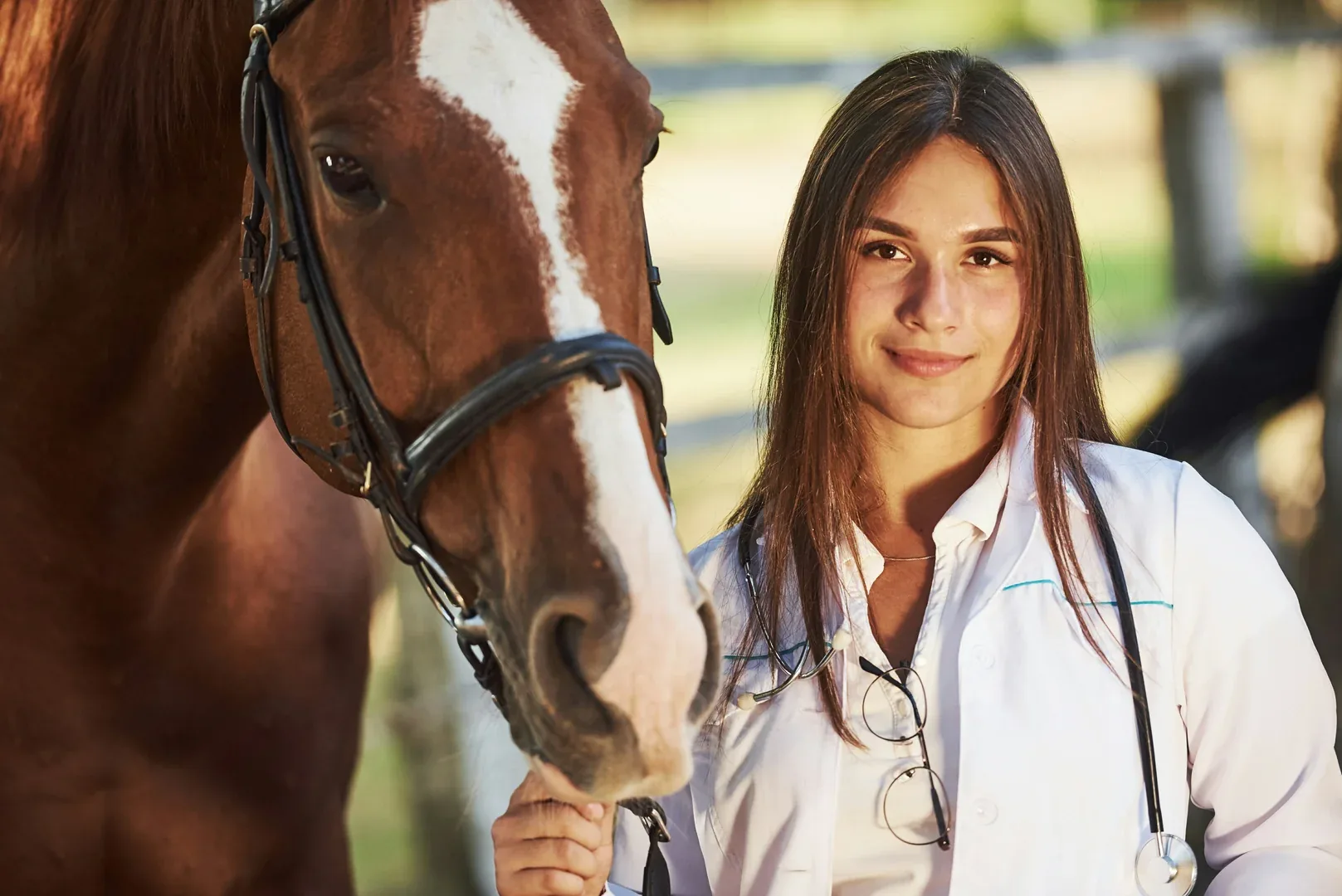
Equine surgery insurance
Horse surgery insurance via nextsure: Three flexible tariffs, reimbursement up to twice the GOT rate, and free choice of clinic worldwide. Protect your horse from high surgery costs – digital, transparent and uncomplicated.
Learn moreAccommodation costs under clause 2.3.2 c): what the conditions say
When a horse has to be admitted to an animal clinic for surgical treatment, many owners quickly face the question of who pays the ancillary costs. The cost of inpatient accommodation as part of veterinarily necessary follow-up treatment is not covered without limit by the Barmenia horse surgery policy, but is regulated contractually. For owners those amounts come on top of the running expenses already tied up with buying a horse and its equipment.
Under clause 2.3.2 c) of the general conditions for horse surgery-cost insurance (AVB Pferde-OP-Kosten, as at 01.01.2024), the cost of the clinic stay during the follow-up treatment period is covered within limits. That means the insurer pays the daily box and accommodation costs, but only up to the ceiling explicitly documented in your personal policy schedule.
How the accommodation is regulated and limited in time
Alongside the financial ceiling per calendar day, the maximum duration of reimbursement plays a decisive role too. In the basic conditions, reimbursement is typically limited to the medically necessary follow-up treatment, often capped at up to 10 calendar days immediately following the operation.
- Clause 2.3.2 c) of the conditions governs the cover of inpatient accommodation during follow-up treatment.
- The actual level of reimbursement (daily rate or total sum) follows individually from the policy schedule.
- Cover always presupposes direct medical necessity in connection with an insured operation.
- Stays purely for boarding or convenience, without surgical necessity, are excluded from cover.
Any owner who wants certainty about how a claim will be settled before or after an operation should therefore always check the exact clauses in the policy schedule and the agreed tariff version.
The line between surgery costs and inpatient accommodation
For a transparent settlement with the insurer, distinguishing precisely between the actual surgery costs and the pure accommodation costs is indispensable. In its conditions, Barmenia draws a strict line between veterinary procedures and general accommodation.
The actual surgery costs comprise all veterinary services directly connected with the surgical procedure. That includes the anaesthesia, the incision, wound care, consumables and the diagnostics performed on the day of surgery itself. Those items fall under the policy's regular scope and are reimbursed up to the agreed GOT rate.
How board and lodging are separated out
Set against those are the accommodation costs, shown as a separate position on the clinic invoice. Into that category fall the pure box rent, bedding, feeding and general stable care during the stay.
| Category | Items included | Settlement under the conditions |
|---|---|---|
| Surgical procedure | Anaesthesia, suturing, operation, surgical instruments | Fully reimbursed within the agreed maximum compensation |
| Surgical preparation | Examinations on the day before or the day of surgery | Reimbursed as part of the surgery costs |
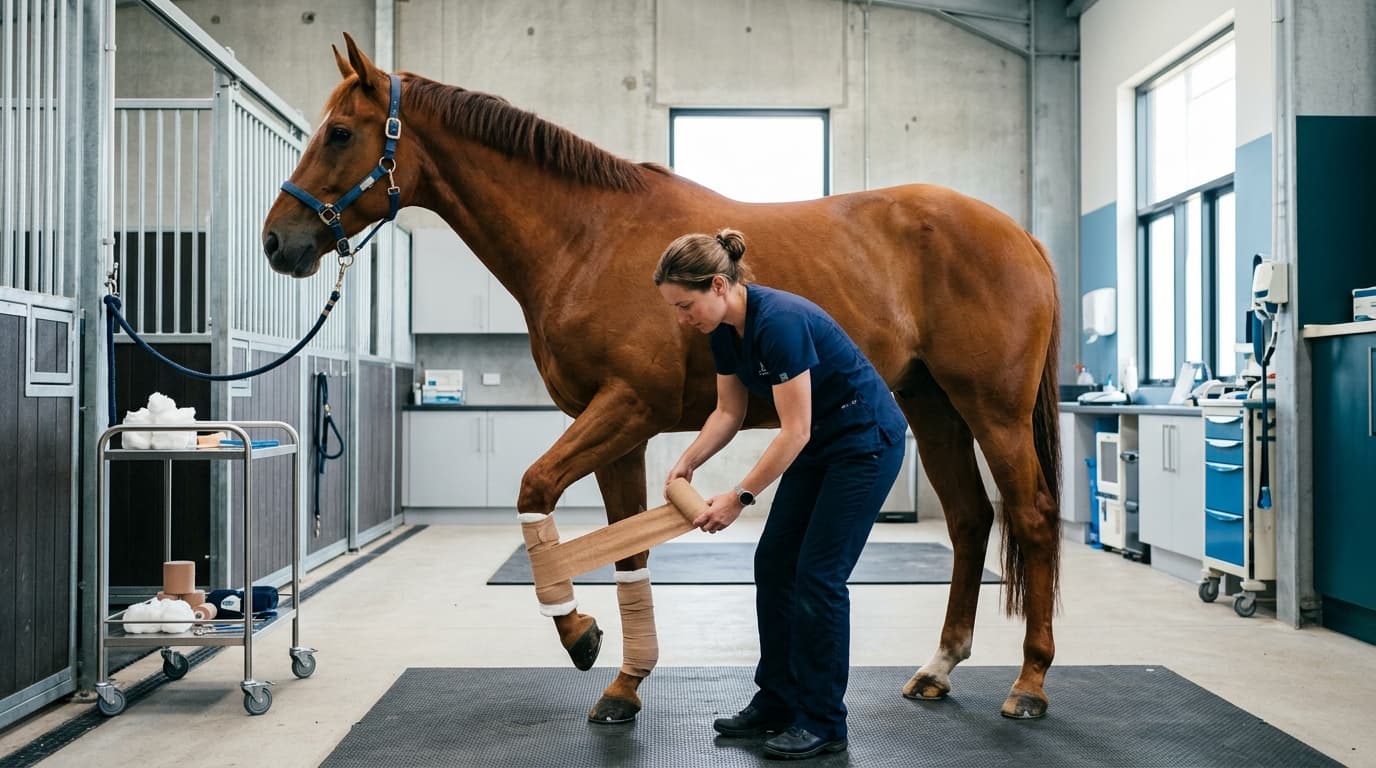
| Medical follow-up treatment | Medication, dressing changes, wound checks | Covered within the agreed follow-up treatment period |
| Inpatient accommodation | Box rent, feed, basic care, bedding | Sublimited reimbursement under clause 2.3.2 c) per the policy schedule |
Because pure accommodation is subject to separate sublimits, vaguely worded lump-sum invoices frequently delay reimbursement. A precise breakdown by the clinic protects you from queries and deductions.
Daily rates at the equine clinic: what to expect
What a day at the equine clinic costs depends chiefly on the scale of fees for veterinary surgeons (GOT). Since the fee schedule was recast, item 78 of the GOT has formed the statutory basis for billing the inpatient accommodation of horses.
The base value for inpatient accommodation per day, without treatment and without feed, is 29.33 euros net at the single GOT rate. In practice, equine clinics often charge two or three times the rate depending on effort, location and intensity of care.
Additional price factors during hospitalisation
Beyond the pure box rent, a clinic stay regularly incurs extra costs not included in the simple base price. Special feed, medication and elaborate care measures raise the daily total noticeably.
| GOT rate | Net daily rate under the GOT | Where it applies in practice |
|---|---|---|
| Single rate | €29.33 | Lower bound of the fee range for a horse's inpatient accommodation under item 78 |
| Double rate | €58.66 | Mid-range billing within the stepless framework, depending on the case |
| Triple rate | €87.99 | Upper bound of the regular fee range under section 2 GOT, for instance with high time expenditure or special circumstances of the individual case |
So that owners are not surprised by the actual costs, for plannable stays it is worth looking at the agreed tariff costs and daily-rate limits of the policy.
Colic surgery as a practical example of long stays
Acute colic surgery is among the most frequent and intensive emergencies in equine medicine. After the surgical procedure, the horse needs close medical monitoring so that life-threatening complications such as intestinal paralysis or infections are caught early.
As a rule, horses remain in the clinic's inpatient care for between seven and fourteen days after major colic surgery, depending on how healing progresses. At an assumed daily rate of one to two times the GOT rate, the pure accommodation costs quickly add up to several hundred euros, excluding the medical treatment.
Timeline and cost development during the clinic stay
The course of a typical post-operative stay can be divided into phases, each with a different intensity of care and cost structure.
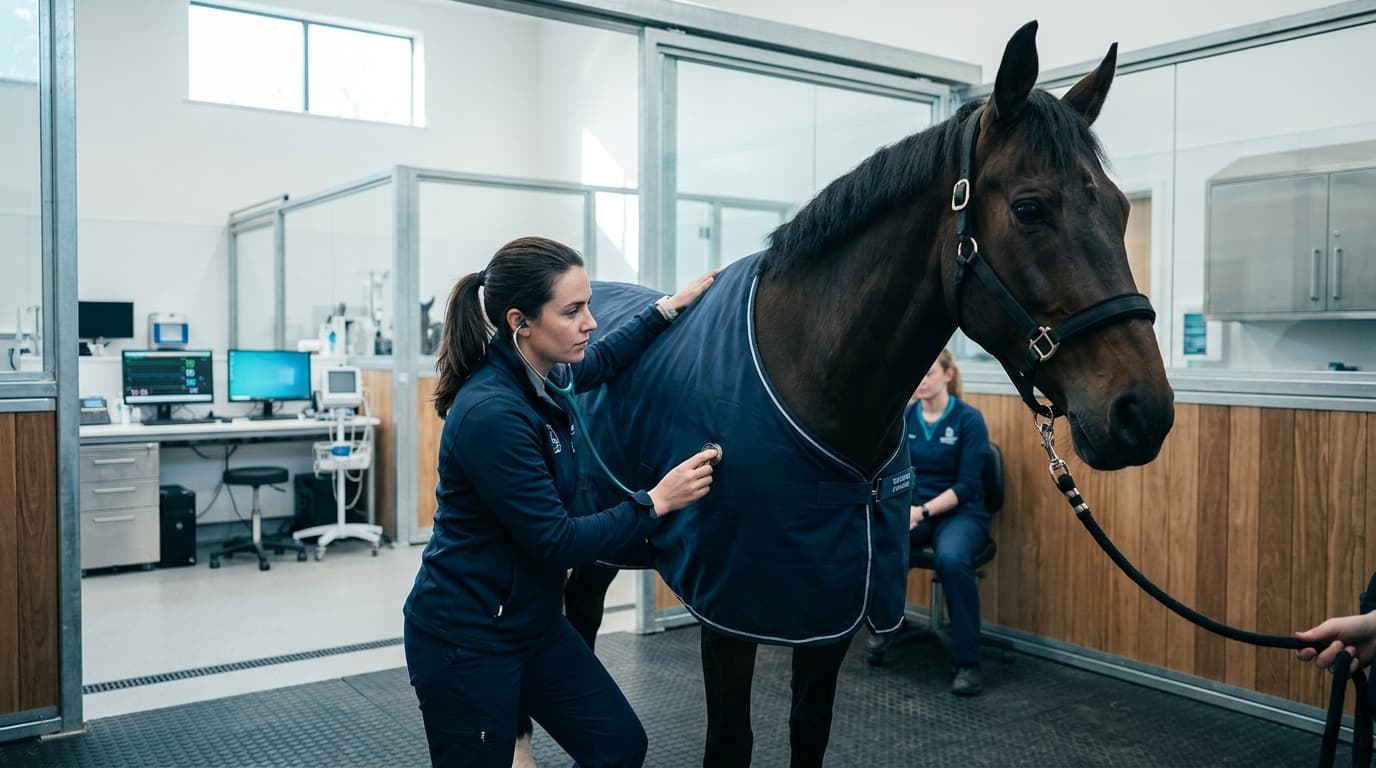
- Phase 1 (days 1 to 2): intensive monitoring straight after the anaesthetic, with continuous checks of the vital signs.
- Phase 2 (days 3 to 5): gradual re-feeding, wound checks and in-hand exercise.
- Phase 3 (days 6 to 10): stabilisation in the normal clinic stable until fit for discharge.
While the intensive medical measures of the first days are covered by the policy's main benefit, the fixed daily-rate limit under clause 2.3.2 c) applies to the pure use of the box from day 1. Once the stay ends, the connected insured event ends with the expiry of the agreed follow-up treatment period.
What to do about an unclear clinic invoice
After the horse is discharged, owners receive a detailed invoice from the equine clinic. To avoid surprises when the claim is settled, check that invoice carefully for the correct declaration of the individual items.
The insurer needs a transparent separation between veterinary treatment and pure accommodation. If vets roll everything into one lump sum, the insurer cannot precisely allocate the costs for clause 2.3.2 c).
Practical steps for checking the invoice
A structured approach ensures your claim can be processed promptly and without queries.
- Have the items broken down: ask the clinic for a detailed itemisation by GOT item.
- Check the accommodation: make sure the box rent appears as a separate position.
- Document medical necessity: for extended stays, have a short veterinary justification of the need for hospitalisation issued.
- Communicate in advance: for foreseeable clinic stays, discuss the expected daily rates with the treating vet early on.
This preparation simplifies submitting the receipts considerably and secures smooth reimbursement under your contract.
Check your conditions: the next step for horse owners
Protection against unforeseen costs during a clinic stay depends largely on the exact terms of your policy. A look at your own documents tells you which daily rates and benefit limits are agreed for your horse.
In your policy schedule, check specifically the entries on inpatient accommodation under clause 2.3.2 c) and the maximum length of the follow-up treatment period. That way you know exactly what share you may have to carry if it comes to it.
Transparent comparisons for cover that fits
We at nextsure help you see through complex insurance conditions. Via our digital platform you compare tailored tariffs transparently and simply.
- Check the policy schedule for the maximum reimbursement rates per calendar day.
- Keep waiting periods and exclusions in your own contract in view.
- If in doubt, use the personal advice of our insurance experts.
Read up in depth on the Barmenia horse surgery policy at nextsure to secure the best medical care for your horse when it counts.
Frequently asked questions
- What does a clinic place for a horse cost per day?
Pure accommodation starts at 29.33 euros per day at the single rate under the scale of fees for veterinary surgeons (GOT). Since that includes no feed or extra care, many equine clinics charge higher rates in practice. Over longer stays the amount adds up quickly.
- Does intensive monitoring count as accommodation?
No — veterinarily necessary intensive monitoring counts as medical follow-up treatment and is generally billed separately from the pure box rent. Barmenia reimburses veterinary treatment under the conditions, while pure accommodation is subject to the cap in clause 2.3.2 c).
- Does the limit apply per day or per stay?
Exactly how the reimbursement limit for inpatient accommodation is framed is documented in your personal policy schedule. Often a maximum reimbursement per day is agreed, or a time limit such as a fixed number of days per insured event.
- Are feed costs reimbursed during the clinic stay?
Pure feed costs, and dietary or supplementary feed, are generally excluded from reimbursement under the general conditions unless your individual tariff expressly covers them. They therefore usually fall to the horse owner's own share.
- How long does a horse stay in the clinic after colic surgery?
After major colic surgery, horses usually need intensive monitoring and stay in the equine clinic for between seven and fourteen days on average. That long stay means the pure accommodation costs can make up a relevant share of the total bill.
Sources
Conclude directly online
Verified partner tariffs at no extra cost. The button takes you straight to the provider's calculator.
 Barmenia
Horse surgery insurance
Surgery cost cover for horses in case of illness and accidents, including diagnostics and after-care.
- Waiting period:
- 3 months (colic surgery: 5 days, accidents: none)
- Coverage abroad:
- worldwide, up to 12 months
- Maximum benefit:
- depends on the cover level, as stated in the policy
- Surgery costs for illness and accidents, including tooth extractions and root canal treatment
- Pre-surgical examination (X-ray, endoscopy, biopsy, lab work)
- After-care including acupuncture, homeopathy, physiotherapy, laser therapy
- Emergency veterinary service up to 4x the standard veterinary fee schedule (GOT) rate plus the emergency callout fee
- Premium cover: up to 5 physiotherapy sessions (max. 60 minutes each) after the after-care period ends
- Once per animal: surgery costs for a birth-related, medically necessary caesarean section
Key exclusions
- Illnesses and developmental abnormalities known at the time of application
- Hoof abscesses and hoof ulcers (exception: hoof cancer)
- Surgery due to cryptorchidism
- Neutering that isn't medically necessary
Service-Champions GOLD: Nr. 1 der Versicherer im Multikanalvertrieb (ServiceValue, 10/2024)
Barmenia (Anbieter der Pferde-OP-Versicherung)
Special waiting periods: 12 months for joint surgery (chip fragments, OC/OCD, Birkeland fractures), 6 months for medically necessary neutering; Premium cover includes a waiver of the insurer's right to cancel from the 7th insurance year.
Fact sheet: benefits, exclusions and waiting periods in detail
All details are taken from the provider's linked product page and the contract documents (IPID/policy conditions) published there; the insurer's documents prevail. Premiums, benefits and the insurance product itself may change – please verify the details directly with the partner before signing up; only the information provided there is binding.
Information last updated: July 2026 · Source: provider product information (IPID/policy conditions)