Call-out charges and mileage: does horse surgery insurance pay?
Why horse surgery insurance does not cover the vet's mileage charge and call-out, and how the GOT 2022 governs these costs.
All details are taken from the provider's linked product page and the contract documents (IPID/policy conditions) published there; the insurer's documents prevail. Premiums, benefits and the insurance product itself may change – please verify the details directly with the partner before signing up; only the information provided there is binding.
 Katrin StraubManaging DirectorInsurance expert with over 20 years of experience in the insurance industry.
Published on
7 min read
Table of Contents
Clause 3.2 d) of the Barmenia conditions explicitly excludes the vet's travel, waiting and journey costs. Although almost every treatment takes place at the stable, the owner always carries the call-out costs themselves under the new GOT 2022.
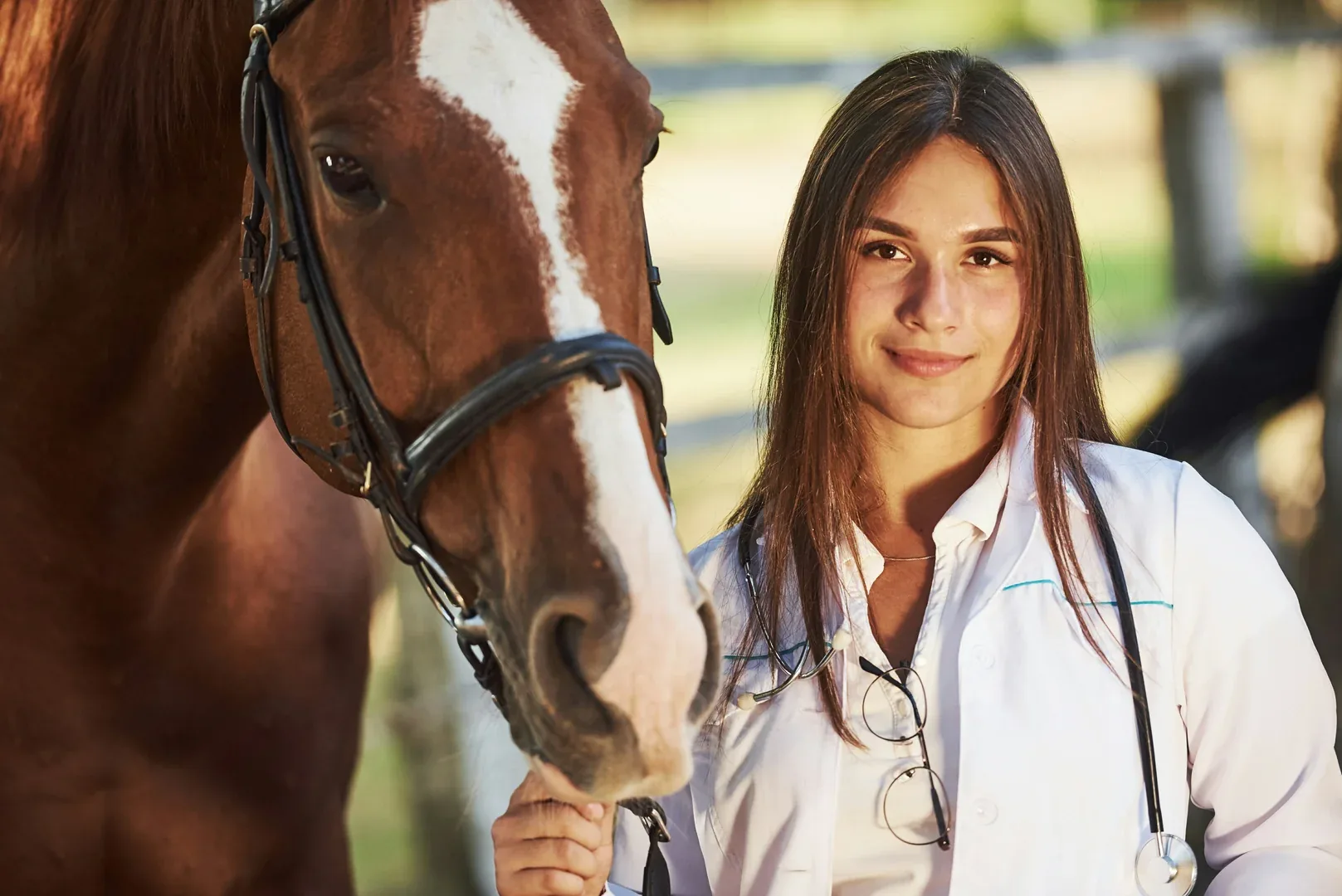
Equine surgery insurance
Horse surgery insurance via nextsure: Three flexible tariffs, reimbursement up to twice the GOT rate, and free choice of clinic worldwide. Protect your horse from high surgery costs – digital, transparent and uncomplicated.
Learn moreCall-out charges and mileage for horses: who carries the costs?
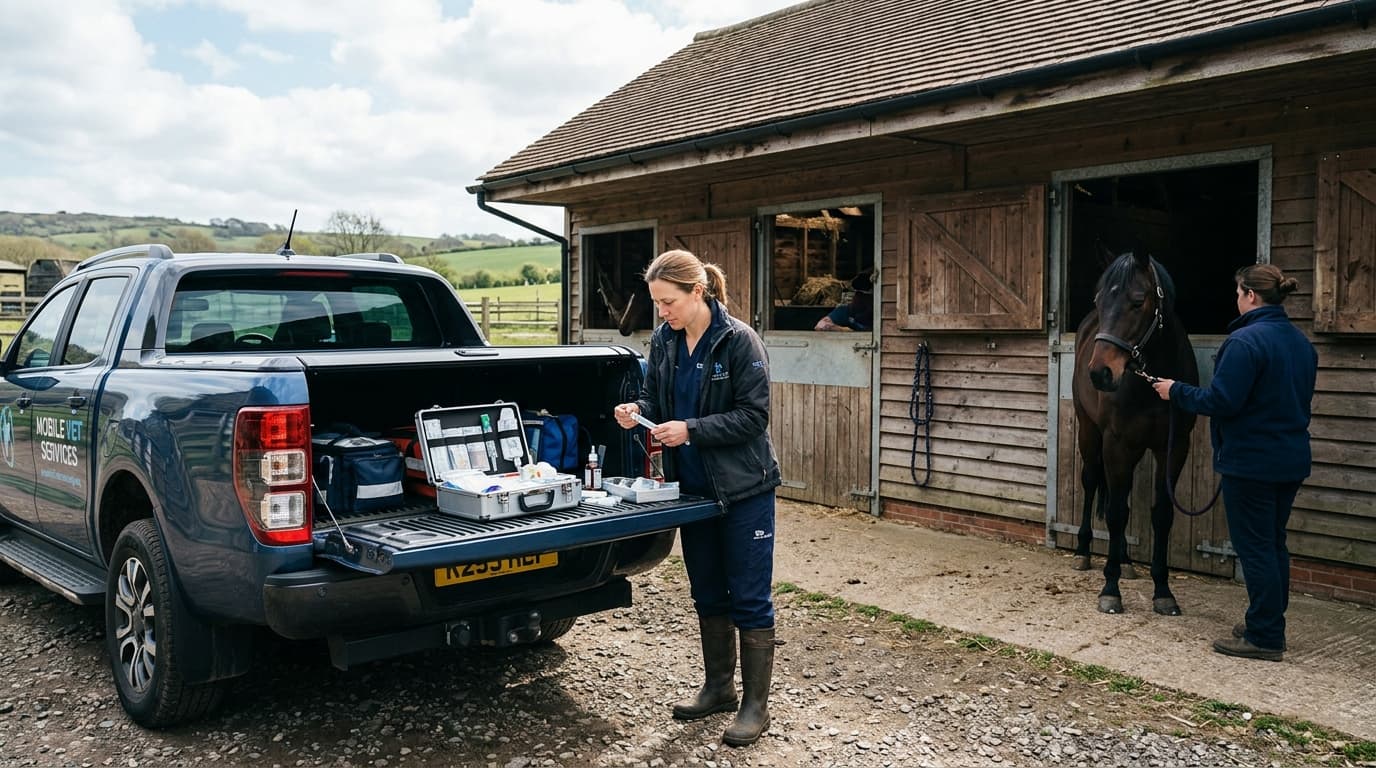
Anyone who owns a horse knows that veterinary treatment in everyday life takes place at the stable almost without exception. When the vet travels out for an examination, travel costs and mileage charges inevitably arise on top of the pure treatment costs. On the question of whether a surgery cost policy covers those expenses there is a clear rule: the Barmenia horse surgery policy does not reimburse the treating vet's call-out costs, mileage charges or travel compensation. Those items remain the horse owner's own responsibility as a matter of principle.
The reason these additional costs arise lies in the nature of equine medicine. Unlike small animals such as dogs or cats, horses cannot simply be transported to a practice at the first symptoms of illness or after an acute accident. Vets working on the move is therefore the standard. On the resulting invoice, the travel expenses appear as separate fee items.
- Examination and treatment fee: billing of the veterinary service performed on the animal
- Mileage charge under section 10 of the GOT: travel cost compensation for the vet's journey there and back
- Home visit fee under item 40 of the GOT: a flat charge for the mobile visit to the stable for leisure horses
- Medicines and consumables: medical products used or prescribed on site
For horse owners it is important to understand the structure of an invoice. Even though the operation itself and the direct pre- and post-operative treatment are covered within the contractual conditions, the purely logistical call-out fees always stay with the owner.
What exactly does clause 3.2 d) of the conditions say?
The exclusion of call-out and travel costs is based on the official insurance conditions. In Barmenia's general insurance conditions for horse surgery cost insurance (as at 01.01.2024, document A 3726-02 01/2024) this point is set out precisely. Clause 3.2 of the conditions lists all services for which there is explicitly no cover. Clause 3.2 d) specifically states that the treating vet's travel, waiting and journey costs are excluded from reimbursement.
| Area of cover | Status in the contract | Examples & basis in the conditions |
|---|---|---|
| Surgical procedure | Insured | Operations under general or partial anaesthesia as well as sedation |
| Pre- & post-operative treatment | Insured | Pre-operative examination on the day of surgery and follow-up treatment up to day 14 |
| Travel & journey costs | Not insured | Mileage and call-out flat rates under clause 3.2 d) of the conditions |
| Waiting charge | Not insured | Time spent waiting on site at the stable under clause 3.2 d) of the conditions |
| Horse transport | Not insured | Costs of transporting the horse to the clinic under clause 3.2 e) of the conditions |
For a claim to be settled smoothly, the vet's invoice has to be structured with strict transparency. The treating practice must show the pure operation and treatment costs separately from the mileage charges. That lets the insurer settle the reimbursable parts of the surgical preparation and aftercare without delay. Our comprehensive overview of benefits gives a detailed picture of all insured modules.
Mileage under the GOT 2022: how the vet bills it
Billing veterinary costs in Germany is governed by the statutory scale of fees for veterinary surgeons (GOT 2022). What matters for travel costs is section 10 of the GOT, which explicitly governs "mileage charge, travel compensation" and lays down that vets receive a mileage charge or travel compensation for visits. Vets are legally obliged to invoice the mileage charge in line with the requirements of that scale of fees. Waiving the mileage charge arbitrarily is prohibited under professional law.
- Calculation per double kilometre: when using their own motor vehicle, the rate is 3.50 euros per double kilometre
- Minimum amount per visit: if the kilometre calculation comes to less overall, at least 13 euros of mileage charge is due per visit, so short journeys never cost less than that base amount
- Several animal owners: if several horse owners are visited one after another on one journey, the mileage charge is apportioned
- Increased effort: in adverse traffic conditions the mileage charge is set at one to three times these amounts
Because section 10 of the GOT is strictly prescribed by law, call-out costs add up noticeably where visits are regular. Since the legislator gives the vet no room to negotiate, owners have to budget for these amounts even when a surgery policy covers the procedure itself.
The home visit fee: item 40 of the GOT as a cost factor
When the revised GOT came into force in November 2022, a separate home visit fee was introduced for veterinary visits outside the practice premises. It is anchored in the GOT schedule of fees under item 40 as 'home visit, except for farm animals'.
For horses kept as leisure or hobby animals, vets charge the home visit fee for every stable visit, which is 34.50 euros at the single rate. All practices that make home visits, including mobile practices, are obliged to charge this fee; unlike the mileage charge it is not apportioned, and the fee has to be levied per animal owner. It applies on top of the per-kilometre mileage charge under section 10 of the GOT.
- Flat expense: a fee of 34.50 euros at the single rate for visits to where the animal is kept
- Tied to the stable visit: according to the GOT working group of the Federal Chamber of Veterinary Surgeons and the bpt, the fee compensates among other things for appointment coordination, route planning, organising the equipment needed and planning the stock of the mobile pharmacy
- Classified as travel and visit costs: falls under the non-reimbursable additional costs pursuant to clause 3.2 d) of the conditions
The combination of home visit fee and mileage charge means a vet's visit to the stable causes fixed additional costs before the actual examination even begins. Owners should always take these expenses into account when calculating their ongoing tariff costs.
Emergency service and waiting charges: does the exclusion always apply?
In an acute emergency at the stable, for example severe colic or a deep cut, the vet's rapid intervention is vital. The vet often stays on site for several hours to stabilise the horse's condition or make it fit for transport to a clinic.
The practice invoices a so-called waiting charge for that time spent waiting and monitoring. Here too the contractual rule in clause 3.2 d) of the conditions applies without exception: waiting charges as well as call-out and emergency-service travel surcharges are not covered by the horse surgery policy.
- Excluded emergency-service extras: the vet's mileage charge, emergency call-out flat rates and waiting charge
- Insured emergency operation: the surgical procedure under anaesthesia or sedation including surgical wound care
- Insured emergency transport: reimbursement of the travel costs of an emergency transport to the clinic for an operation
Even though travel and waiting costs have to be carried by the owner, the insurance reliably protects against the expensive core elements of an emergency. If an unforeseen anaesthetic risk arises during an operation or a surgical procedure becomes necessary, the tariff covers the contractually agreed operation costs.
Horse surgery insurance: the benefits that really count
Even though call-out costs, mileage charges and settlement flat rates are not reimbursable under the insurance conditions, a specialised horse surgery policy protects against the massive financial risks of surgical procedures. The total costs of surgical procedures such as colic operations, arthroscopies or wound care at a clinic quickly reach four-figure or five-figure amounts.
The tariffs offer targeted protection for an emergency so that medical decisions do not founder on the budget. Through the nextsure marketplace, tariff variants that fit the need can be compared and managed digitally.
- Comprehensive cover of operation costs: reimbursement of veterinary-necessary operations under general anaesthesia, standing anaesthesia or sedation
- High GOT reimbursement rates: reimbursement up to twice the rate of the scale of fees to avoid gaps in cover
- Free choice of clinic: unrestricted choice of approved animal clinics and specialist practices worldwide including cover abroad
- Pre- and aftercare included: cover for the pre-operative examination on the day of surgery and for follow-up treatment up to the 14th day after the procedure
- Inpatient accommodation: reimbursement of the cost of accommodation at the clinic for up to 10 days
The clear contractual separation between uninsured call-out costs and fully reimbursable operation services keeps things calculable. A strong horse surgery policy makes sure horse owners are optimally protected in an emergency.
Frequently asked questions
- How high is the mileage charge under the GOT?
The mileage charge is governed by section 10 of the GOT: when the vet uses their own motor vehicle the rate is 3.50 euros per double kilometre, and if the kilometre calculation comes to less overall, at least 13 euros per visit is due. The vet invoices these costs for every stable visit.
- Does the exclusion also apply in the emergency service?
Yes, the exclusion of travel, waiting and journey costs applies without exception in the emergency service as well. The costs of the actual emergency operation on the horse are, however, covered within the tariff scope of the policy.
- Does health insurance pay for the call-out?
No, as a rule even comprehensive horse health policies do not cover call-out costs. The vet's travel and journey costs are among the common exclusions across the industry in the respective insurance conditions.
- What is the home visit fee for horses?
On top of the mileage charge, the vet charges a home visit fee under item 40 of the GOT schedule of fees, which is 34.50 euros at the single rate, when the horse is treated in its home stable. The horse owner carries this fee in full as well.
- What does a waiting charge on the vet's invoice mean?
A waiting charge is billed when the vet has to stay at the stable for a longer period for medical reasons without actively treating. Just like the mileage charge, the waiting charge is excluded from the insurance benefit under the Barmenia conditions.
Sources
Conclude directly online
Verified partner tariffs at no extra cost. The button takes you straight to the provider's calculator.
 Barmenia
Horse surgery insurance
Surgery cost cover for horses in case of illness and accidents, including diagnostics and after-care.
- Waiting period:
- 3 months (colic surgery: 5 days, accidents: none)
- Coverage abroad:
- worldwide, up to 12 months
- Maximum benefit:
- depends on the cover level, as stated in the policy
- Surgery costs for illness and accidents, including tooth extractions and root canal treatment
- Pre-surgical examination (X-ray, endoscopy, biopsy, lab work)
- After-care including acupuncture, homeopathy, physiotherapy, laser therapy
- Emergency veterinary service up to 4x the standard veterinary fee schedule (GOT) rate plus the emergency callout fee
- Premium cover: up to 5 physiotherapy sessions (max. 60 minutes each) after the after-care period ends
- Once per animal: surgery costs for a birth-related, medically necessary caesarean section
Key exclusions
- Illnesses and developmental abnormalities known at the time of application
- Hoof abscesses and hoof ulcers (exception: hoof cancer)
- Surgery due to cryptorchidism
- Neutering that isn't medically necessary
Service-Champions GOLD: Nr. 1 der Versicherer im Multikanalvertrieb (ServiceValue, 10/2024)
Barmenia (Anbieter der Pferde-OP-Versicherung)
Special waiting periods: 12 months for joint surgery (chip fragments, OC/OCD, Birkeland fractures), 6 months for medically necessary neutering; Premium cover includes a waiver of the insurer's right to cancel from the 7th insurance year.
Fact sheet: benefits, exclusions and waiting periods in detail
All details are taken from the provider's linked product page and the contract documents (IPID/policy conditions) published there; the insurer's documents prevail. Premiums, benefits and the insurance product itself may change – please verify the details directly with the partner before signing up; only the information provided there is binding.
Information last updated: July 2026 · Source: provider product information (IPID/policy conditions)