Cat Surgery Insurance Costs Compared 2026
Cat surgery insurance costs compared for 2026: tariffs from 8 euros, benefits, deductibles, and tips for the best value.
All details are taken from the provider's linked product page and the contract documents (IPID/policy conditions) published there; the insurer's documents prevail. Premiums, benefits and the insurance product itself may change – please verify the details directly with the partner before signing up; only the information provided there is binding.
 Katrin StraubManaging DirectorInsurance expert with over 20 years of experience in the insurance industry.
Published on
Last updated on
11 min read
Table of Contents
Comparing cat surgery insurance costs in 2026, a policy runs between roughly €8 and €35 a month, depending on the plan variant, the cat's age, and the deductible. The range is wide. The best value comes from plans with 80-90 percent reimbursement, 4x the GOT rate, and an annual limit of at least €10,000.
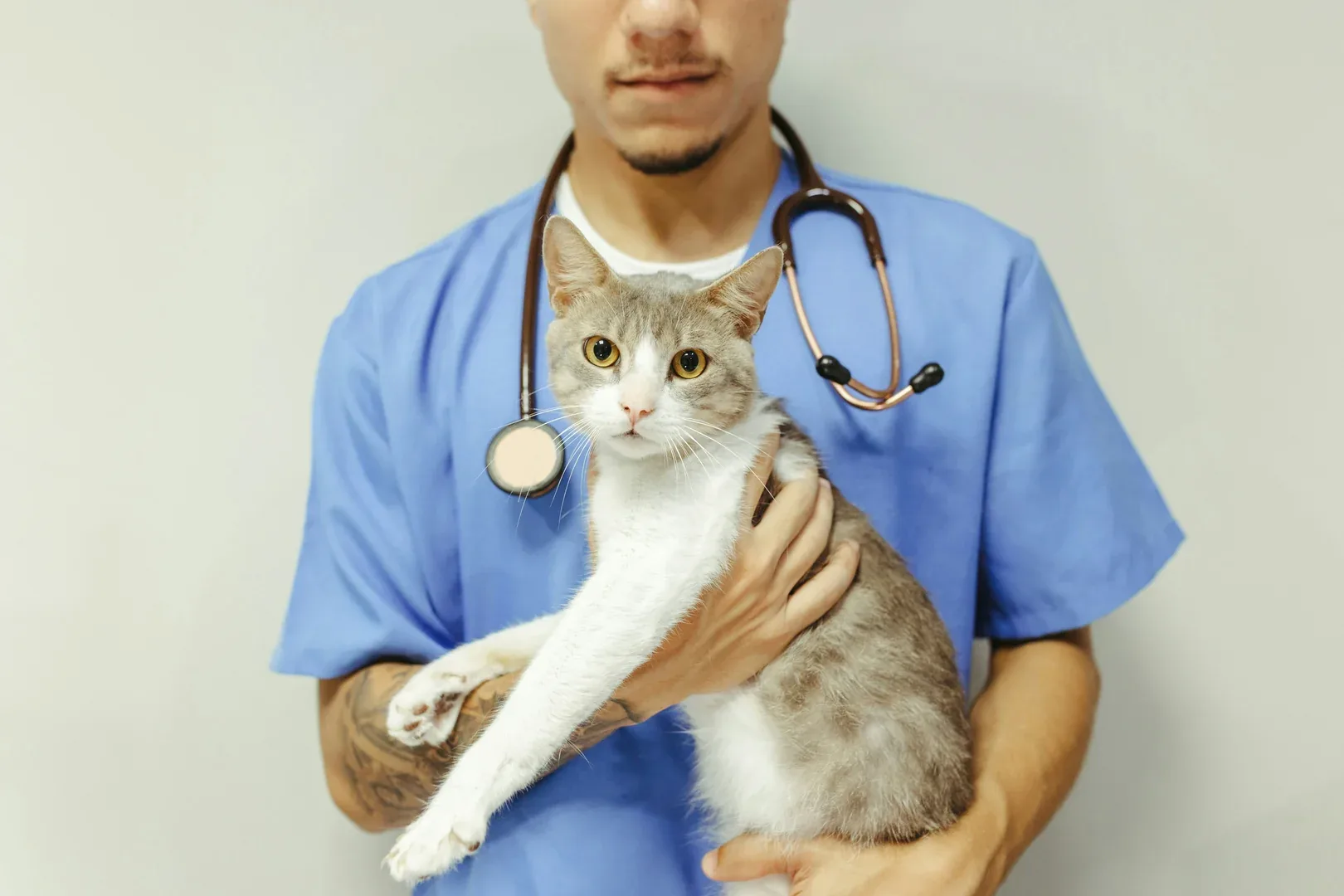
Cat health insurance
Comprehensive protection for your feline friend: The cat health insurance from nextsure covers vet costs and ensures financial security in case of illness or accident involving your cat.
Learn moreWhat Does Cat Surgery Insurance Cost Per Month?
Price Range by Plan Variant
Cat surgery insurance costs between €8 and €35 a month in 2026. The plan makes the difference. Basic plans with a €1,000 annual limit and 2x the GOT rate start at around €8 to €12 a month for a young, healthy domestic cat. Premium variants with a €10,000 annual limit and 4x the GOT rate run between €15 and €25 depending on age. Superior plans with no annual cap and 90 or 100 percent reimbursement run between €25 and €35 a month.
What Drives the Premium
Three factors determine the price when comparing cat surgery insurance costs: the cat's age at sign-up, breed, and living situation (outdoor versus indoor cat). Older animals from age eight cost noticeably more. Some providers no longer accept new applications for cats over ten at all. Breed also plays a central role. Breeds with documented surgery risks, such as Maine Coon (HCM) or Persian (kidney insufficiency), are calculated with surcharges or exclusions. Outdoor cats usually pay 15 to 25 percent more than purely indoor cats because of the higher accident risk.
Sample Calculation for 2026
For a two-year-old indoor European Shorthair, cat health insurance in surgery mode works out to around €10 a month on the Basic plan and €22 on the Premium plan. For an eight-year-old outdoor Maine Coon, the same Premium plan runs closer to €28 to €32. Age drives the price. The annual premium therefore adds up to €120 to €384. A single cruciate ligament surgery at €2,500 already pays back the cost of cover, according to the GDV's pet-ownership statistics.
| Plan variant | Young cat (2 yrs) | Middle-aged cat (6 yrs) | Senior (10 yrs) |
|---|---|---|---|
| Basic (€1,000 limit, 2x GOT) | €8-12 | €12-16 | €18-24 |
| Premium (€10,000 limit, 4x GOT) | €15-22 | €20-28 | €28-36 |
| Superior10 (no limit, 10% deductible) | €22-28 | €26-32 | €32-40 |
| Superior0 (no limit, no deductible) | €28-35 | €32-40 | €40-48 |
Reference values for European Shorthair; surcharges possible for breed or outdoor risk.
Which Surgeries Does Surgery Insurance Cover?
The Core Cover of Every Plan
Covered are veterinarily necessary surgeries under partial or general anesthesia due to illness or accident. This includes the entire procedure. Reimbursed are pre-surgical examinations on the day of surgery, follow-up treatment usually up to day 14 or 20, medication, consumables, and clinic accommodation, depending on the plan, up to calendar day 10, 15, or 20 after the surgery. Primary and secondary wound closure are also standard.
Typical Surgery Cases in Cats
The most common reasons for surgery in cats are fractures from accidents, tumor removal, medically indicated castration, removal of foreign objects from the stomach or intestines, and orthopedic procedures such as cruciate ligament or patella surgery [dr-hoelter]. Costs add up quickly. Tumor removal with histology quickly costs €1,500 to €2,500, foreign-object surgery on the intestine €2,000 to €3,500, and more complex fracture repair with implants €2,500 to €4,000. Premium and Superior plans additionally cover tooth extractions and root canal treatment, and Superior variants even cover physiotherapy, acupuncture, and laser therapy after the procedure.
What Isn't Reimbursed
Excluded are chronic or congenital conditions already known at the time of application. This clause is strict. Also excluded: conditions arising from pregnancy or birth, surgery performed to meet a breed standard (such as corrections for brachycephalic breeds), and purely routine or preventive measures. Watch the waiting period: if the cat becomes ill within the general one-month waiting period, or the special waiting period for certain conditions (often three to twelve months), that illness and all its consequences are permanently excluded from cover.
What's the GOT Rate for Reimbursement?
What the Veterinary Fee Schedule Regulates
The veterinary fee schedule (GOT) sets the minimum and maximum amounts vets may charge for each service. The 1x rate is the floor, the 4x rate the regular ceiling. During emergency service (nights, weekends, public holidays), the 4x rate is standard, and in exceptional cases even more. The 2022 GOT reform significantly raised these rates and, according to data from the Federal Ministry of Food and Agriculture, is the main reason for the growing financial burden on pet owners.
What Basic Plans Actually Reimburse
Basic plans often reimburse only up to 2x the GOT rate, sometimes with an exception for emergency service. Sounds sufficient, rarely is. In practice, most clinics bill at 3x or 4x the rate for complex procedures, because surgery under general anesthesia with positioning, monitoring, and aftercare is demanding. Anyone relying on a 2x plan bears the difference themselves. For a €3,000 surgery, that can quickly mean €1,000 in residual costs on top of the deductible.
Why the 4x Rate Is a Must
Premium, Superior10, and Superior0 plans reimburse 4x the GOT rate including the emergency-service surcharge. That's exactly the point. A cruciate ligament surgery on a Sunday evening isn't a contrived example — it's the typical situation surgery insurance is meant to cover. Anyone wanting to save money when comparing cat surgery insurance costs, without paying extra in a claim, should look at the maximum GOT rate first and the monthly premium second. A €12 plan with a 2x limit can end up costing more than a €22 plan with a 4x limit.
Surgery Insurance or Full Cover: Which Pays Off More?
The Underlying Logic
Pure surgery insurance covers only inpatient procedures — and therefore the financially harshest risk. Full health insurance additionally covers outpatient vet costs, diagnostics, chronic treatment, and medication outside of a surgical context. The premium difference is significant. Full cover usually costs two to three times a comparable surgery-only plan. For a Premium surgery plan at €22, full cover quickly runs €50 to €70 a month.
When Surgery-Only Cover Is Enough
For owners who can cover €100 to €500 a year in outpatient vet costs themselves and only want to insure against the catastrophic risk of a €3,000 surgery, pure surgery cover is the rational choice. According to insurer data, the likelihood of a major surgery case ranges between 5 and 15 percent per cat lifetime, depending on breed and age. The math is simple. At an annual premium of €240 over a 12-year contract term (total cost €2,880), the surgery plan pays off statistically if even a single significant surgery becomes necessary in that time.
When Full Cover Pays Off
Full cover pays off for young cats with a long expected contract term, for breeds with documented chronic risks, and for owners who don't want to absorb outpatient costs themselves. Full cover then also applies to recurring costs such as diabetes treatment, blood tests accompanying a kidney diet, or ongoing asthma therapy; such feline conditions can trigger long-term diagnostics and treatment [peta-katzenkrankheiten]. The middle path is often the most economical. Anyone looking for a cost-effective middle ground combines a Premium surgery plan with a reserve of €30 to €50 a month for outpatient costs — often the best value overall.
Which Cat Surgery Insurance Plans Are the Cheapest in 2026?
Four Plan Variants as a Market Benchmark
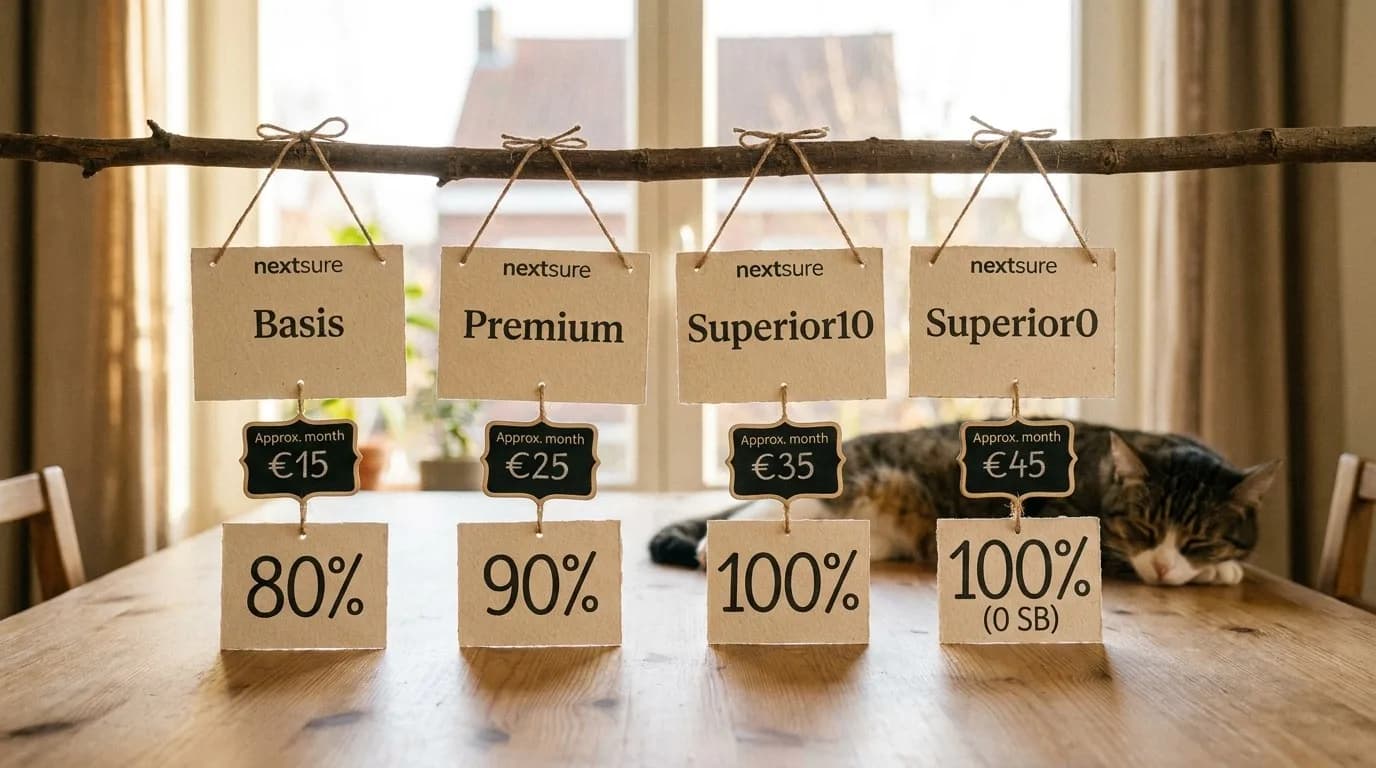
The German market for cat surgery insurance can be roughly divided into four plan classes: Basic, Premium, Superior10 (10 percent deductible), and Superior0 (no deductible). Hepster offers all four variants as an example. Basic starts at around €8 with a €1,000 annual limit and 2x GOT, Premium runs around €18 with a €10,000 limit and 4x GOT, Superior10 around €26 with no annual limit and 90 percent reimbursement, and Superior0 at €32 with 100 percent reimbursement.
Where Cat Surgery Cover Falls Short in Testing
Stiftung Warentest has already documented, in its tests of major online brokers' insurance apps, that many providers only score "satisfactory" or "poor." Plan quality varies widely [warentest-apps]. This applies doubly to cat surgery plans. Strikingly cheap offers under €8 often turn out to be plans with a 1x GOT rate, hard annual limits under €500, or twelve-month waiting periods for orthopedic procedures. In a claim, a large share of the bill then stays with the owner.
Three Selection Rules for 2026
First: 4x the GOT rate or better, nothing less. Second: an annual limit of at least €5,000, ideally with no cap, since tumor surgery with aftercare quickly exceeds €4,000. Third: a short waiting period for accidents (ideally zero days) and no more than three months for illness. Anyone considering pet health insurance instead of just surgery cover should also compare outpatient reimbursement limits and chronic-illness exclusions side by side.
Is Cat Surgery Insurance Worth It Cheap or With a Higher Premium?
The 8 Percent Threshold
Cat surgery insurance pays off, in calculation terms, once the likelihood of a €3,000 surgery over the cat's lifetime reaches around 8 percent. That's the critical threshold. With an average life expectancy of 14 years and a Premium plan premium of €22 a month, the owner pays around €3,696 over the full term. If a major surgery occurs, the reimbursement offsets that cost. If two surgeries occur, cover was clearly a net gain.
When the Comparison Tips the Other Way
For owners with a high steady income and a sufficient reserve of €5,000 in an instant-access savings account, forgoing insurance also works out mathematically. That's risk management. Anyone who can cover €3,000 out of pocket without ruining the family finances doesn't strictly need the policy. The typical Becker family with young children, however, usually doesn't fall into this category: a house, kids, and multiple other insurance needs tie up liquidity.
The Emotional Factor
Insurance isn't just math. The reality in vet practice is that owners without surgery cover have to make decisions under acute financial pressure — up to and including euthanasia for cost reasons. A policy that rules out exactly this situation for €15 to €25 a month has a value that goes beyond the reimbursement math. This is exactly where an independent broker's cat surgery cover test comes in: not the cheapest plan wins, but the one with the clearest promise of payout when it matters.
Which Cat Surgery Insurance Has No Deductible?
What a Deductible Means in Practice
The deductible is the share of the bill the owner pays themselves. A 20 percent deductible is standard in Basic and Premium plans, often with a minimum of €250 per claim. For a €3,000 surgery, that means: the owner pays €600 themselves, the insurance covers €2,400, provided the GOT rate and annual limit fit. Plans with a 10 percent deductible, or none at all, cost 30 to 40 percent more per month.
When the Surcharge Pays Off
Forgoing a deductible is worth it if expected surgery frequency is high, or if the owner doesn't want to come up with €600 in an emergency. For a young, healthy cat, that's often uneconomical. For an older animal with elevated surgery risk, or for owners who psychologically want full cost coverage, the Superior0 plan makes sense. An example: Premium with a 20 percent deductible at €22 a month versus Superior0 at €32. Per year, the owner pays €120 more for €600 in extra reimbursement per claim.
The Often-Overlooked Clause
The minimum deductible is the critical point. Some plans charge 20 percent, but at least €250 per claim. For an €800 surgery, the owner then pays not €160 (20 percent) but the full €250. This minimum clause makes cheap Basic plans less attractive for smaller procedures and tends to shift the economic sweet spot toward the Premium or Superior plans when comparing cat surgery insurance costs.
How Does Reimbursement Work in a Claim?
The Process in Three Steps
First: the owner pays the vet bill themselves initially, or has it issued in their own name. Second: the bill, along with the surgery report and diagnosis, is submitted to the insurer, usually digitally through the app or a web portal. Third: the insurer checks GOT compliance, the waiting period, and the diagnosis, and reimburses the agreed share within 14 to 30 days. The process is standardized. Only a few providers offer direct billing with the clinic, and usually only for inpatient procedures over €1,000.
The Owner's Obligations
The claim must be reported without delay. Supporting documents such as an adoption contract, purchase receipt, or pet passport must be provided. The cat must be clearly identifiable by chip or tattoo by the time of the first claim at the latest. Anyone who breaches these obligations risks a reduced payout or a total loss of the claim. Hepster and other providers explicitly mention this point in their product information sheets.
Common Points of Dispute
Reimbursement disputes usually arise in three places. First, over pre-existing conditions the owner didn't disclose at application. Second, over the line between acute and chronic illness. Kidney insufficiency that acutely worsens can, depending on the policy, be treated as a chronic exclusion or as an insured acute case. Third, over the GOT multiplier: the vet bills at 4x the rate, but the insurer accepts only 3x without written justification. The justification is what decides it. A medical justification from the vet helps here, and the clinic or broker service often supplies it directly.
How Do You Switch Cat Surgery Insurance Without Gaps?
Know the Notice Periods
Cat surgery insurance usually runs as a monthly or annual plan. For monthly plans, a minimum term of 12 months applies, followed by a 3-business-day notice period before the end of the insurance period. For annual plans, the contract renews automatically year to year, also with a 3-business-day notice period. A special right of cancellation exists after a claim and after premium increases without expanded benefits.
Waiting Periods With the New Provider
Switching has a catch. With the new insurer, waiting periods usually start over: one month generally, three to twelve months for certain conditions. If the cat falls ill during the new contract's waiting period, that illness is permanently excluded. Rule of thumb: activate the new contract first, then cancel the old one, with an overlap of one to three months. This double premium is cheaper than an excluded illness for the entire remaining contract term.
When Switching Pays Off
Switching pays off with premium jumps over 15 percent without any improvement in benefits, when discovering significantly better plans in a current comparison of cat surgery insurance costs, or when the cat's living situation changes (a move, or a transition from outdoor to indoor living). For older cats, switching is often no longer possible, or only with heavy surcharges and pre-existing-condition exclusions. The initial choice matters most. Anyone who needs cover long-term should optimize their plan choice at the start, not years later. More background on the cost and cover of pet health insurance helps with that initial choice.
Literature
https://www.test.de/Versicherungs-Apps-im-Test-5227792-0/
https://www.peta.de/themen/katzenkrankheiten/
https://www.drhoelter.de/Tierarzt/Tierkrankheiten/Katzenkrankheiten/
Frequently asked questions
- At What Age Should You Take Out Cat Surgery Insurance?
Ideally between three months and two years old. At this stage the cat is healthy, the premium is low, and pre-existing-condition exclusions don't apply. From age eight, premiums rise noticeably; from age ten, many insurers no longer accept new applications, or require health checks with extensive exclusions.
- What Does Cruciate Ligament Surgery Cost for a Cat Without Insurance?
Cruciate ligament surgery for a cat costs between €1,800 and €3,500 depending on the method and clinic. On top of that come aftercare, physiotherapy, and painkillers over several weeks. Total costs can rise to €4,000. Without insurance, the owner bears these costs entirely themselves.
- Are Castration and Sterilization Covered?
Purely preventive castration isn't included in the Basic plan. Premium and Superior plans cover castration and sterilization of the insured cat, often with a waiting period. A medically indicated castration (for example, due to a testicular tumor) is a covered surgical case under every plan.
- Does Cover Also Apply Abroad?
Yes, usually within Europe for stays of up to twelve months. Premium and Superior plans sometimes extend cover worldwide for six to twelve months. Important: emergencies abroad often require paying up front, with later reimbursement in euros.
- How Quickly Does the Insurance Pay After the Bill Is Submitted?
With complete documentation, reimbursement usually arrives within 14 to 30 days. If there are follow-up questions about the diagnosis or GOT rate, processing can take longer. Digital submission via app or portal speeds up the process considerably compared with mailing documents.
- What Happens if the Cat Develops a Chronic Illness?
Chronic conditions first diagnosed after the contract begins and after the waiting period ends are covered. Surgery needed in the course of the chronic condition is covered by the surgery insurance. It doesn't cover ongoing outpatient treatment costs — that requires full health cover.
Sources
Conclude directly online
Verified partner tariffs at no extra cost. The button takes you straight to the provider's calculator.
 Hepster
Cat health insurance
Full health coverage for cats across four tariffs, from Basis to Superior0, with reimbursement of up to 100% and no annual limit.
- Reimbursement:
- 80-100% depending on the tariff
- Deductible (Selbstbeteiligung):
- 0-20% depending on the tariff
- Waiting period:
- 1 month
- GOT rate:
- up to 4x (from Premium)
- Treatment and surgery for illness and accidents, with reimbursement of up to 100% depending on the tariff
- Post-surgery physiotherapy: 3 sessions (Basis), 5 (Premium), 10 (Superior)
- Veterinary clinic stays: up to 10, 15, or 20 days depending on the tariff
- From Premium: dental treatment, neutering, homeopathy/acupuncture, and a wellness allowance of up to €150/year
- Vet fees covered up to 2x the standard veterinary fee schedule (GOT) rate on Basis, up to 4x from Premium
- Coverage abroad: 12 months in Europe; Superior extends worldwide for up to 12 months
Key exclusions
- Known chronic or congenital conditions
- Pregnancy, false pregnancy, and birth
- Illnesses treated in the 6 months before the policy started
- Diagnoses made during the waiting period (permanently excluded)
Trusted Shops: 4,5/5 „Sehr gut“ (2.600 Bewertungen)
hepster insgesamt (Anbieterbewertung, alle Versicherungen)
Monthly subscription: minimum term 12 months, notice period 3 business days before the end of the billing period; prosthetics/orthotics have a 12-month waiting period. Insurer: Towarzystwo Ubezpieczen Europa S.A.
Fact sheet: benefits, exclusions and waiting periods in detail
 Cleos Welt
Cat health insurance
Combined health and surgery cover for cats, reimbursing vet costs up to the agreed maximum veterinary fee schedule (GOT) rate.
- Reimbursement:
- up to the agreed maximum GOT rate
- Coverage abroad:
- 12 months
- Notice period:
- 14 days before the end of the month
- Treatment for illness and accidents
- Surgery, including pre-surgical diagnostic examinations
- Pre- and post-treatment following a covered surgery
- Lab work and imaging diagnostics, plus medically necessary medication
- Coverage abroad: 12 months
Key exclusions
- Treatments and surgeries already known or recommended before the policy started
- Illnesses occurring before the waiting period ends
- War, earthquakes, floods, epidemics, and pandemics
- Damage caused intentionally
CHECK24 Tarifnote 1,0 „exzellent“
Cleos Welt Katzenkrankenversicherung, Tarif Rundum Plus
CHECK24 Tarifnote 1,0 „exzellent“
Cleos Welt Katzen-OP-Schutz (Rundum Plus inkl. SOS-Schutz)
Google Rezensionen: 4,5/5 Sterne (210 Bewertungen)
Cleos Welt insgesamt (Anbieterbewertung, alle Versicherungen)
Contract term at least 1 year with automatic renewal; sum insured and deductible (Selbstbeteiligung) as stated in the policy. Insurer: Uelzener Allgemeine Versicherungs-Gesellschaft a.G.
Fact sheet: benefits, exclusions and waiting periods in detail
Hepster
Cat surgery insurance
Surgery-only cover for cats across four tariffs; the top tariff has no deductible and no annual limit on surgery costs.
- Reimbursement:
- 80-100% depending on the tariff
- Deductible (Selbstbeteiligung):
- 0-20% depending on the tariff
- Waiting period:
- 1 month
- Surgery under anesthesia or sedation for illness and accidents
- Post-treatment: up to day 14, 15, or 20 depending on the tariff
- Veterinary clinic stays: up to calendar day 10, 15, or 20 depending on the tariff
- From Premium: neutering, tooth extractions, post-surgery physiotherapy (up to 10 days)
- Prosthetics/orthotics: up to €400 (Basis), up to €500 (Premium/Superior)
- Emergency transport allowance of up to €50 per claim
Key exclusions
- Known chronic or congenital conditions
- Illnesses that required surgery in the 6 months before the policy started
- Surgery performed to meet breed-standard appearance
- Basis: dental treatment of any kind
Trusted Shops: 4,5/5 „Sehr gut“ (2.600 Bewertungen)
hepster insgesamt (Anbieterbewertung, alle Versicherungen)
Monthly subscription: minimum term 12 months, notice period 3 business days before the end of the billing period; prosthetics/orthotics have a 12-month waiting period. Insurer: Towarzystwo Ubezpieczen Europa S.A.
Fact sheet: benefits, exclusions and waiting periods in detail
Hepster Cat health insurance: Cat health insurance tariff overview
| Tariff | Reimbursement | Deductible | Annual maximum |
|---|---|---|---|
| Basis | up to 80% | 20%, min. €250 per claim | Year 1: €1,000, from year 2: €2,000 |
| Premium | up to 80% | 20% per claim | €10,000 |
| Superior10 | up to 90% | 10% per claim | none |
| Superior0 | up to 100% | none | none |
Hepster Cat surgery insurance: Cat surgery insurance tariff overview
| Tariff | Reimbursement | Deductible | Annual maximum |
|---|---|---|---|
| Basis | up to 80% | 20%, min. €250 per claim | €1,000 |
| Premium | up to 80% | 20% per claim | €10,000 |
| Superior10 | up to 90% | 10% per claim | none (surgery costs only) |
| Superior0 | up to 100% | none | none (surgery costs only) |
All details are taken from the provider's linked product page and the contract documents (IPID/policy conditions) published there; the insurer's documents prevail. Premiums, benefits and the insurance product itself may change – please verify the details directly with the partner before signing up; only the information provided there is binding.
Information last updated: July 2026 · Source: provider product information (IPID/policy conditions)