Camera Insurance: Is the Lens Covered Too?
Find out whether your lens is covered under camera insurance, including kit lenses, interchangeable lenses, and sum insured.
All details are taken from the provider's linked product page and the contract documents (IPID/policy conditions) published there; the insurer's documents prevail. Premiums, benefits and the insurance product itself may change – please verify the details directly with the partner before signing up; only the information provided there is binding.
 Katrin StraubManaging DirectorInsurance expert with over 20 years of experience in the insurance industry.
Published on
12 min read
Table of Contents
Camera insurance covers lenses, but distinguishes between original accessories and separately purchased lenses. A kit lens included in the box is automatically part of the basic cover. Interchangeable lenses bought later require explicit declaration when signing up. The sum insured must reflect the total value of all components. Specialty tariffs offer worldwide cover against drops, liquids, and theft for the whole setup.

Camera Equipment Insurance
Secure your valuable camera equipment thoroughly against damage, theft, and loss with the camera equipment insurance from nextsure. Tailored protection for professionals and hobby photographers.
Learn moreBasic principles of lens cover in specialty insurance
Distinguishing kit lenses from later purchases
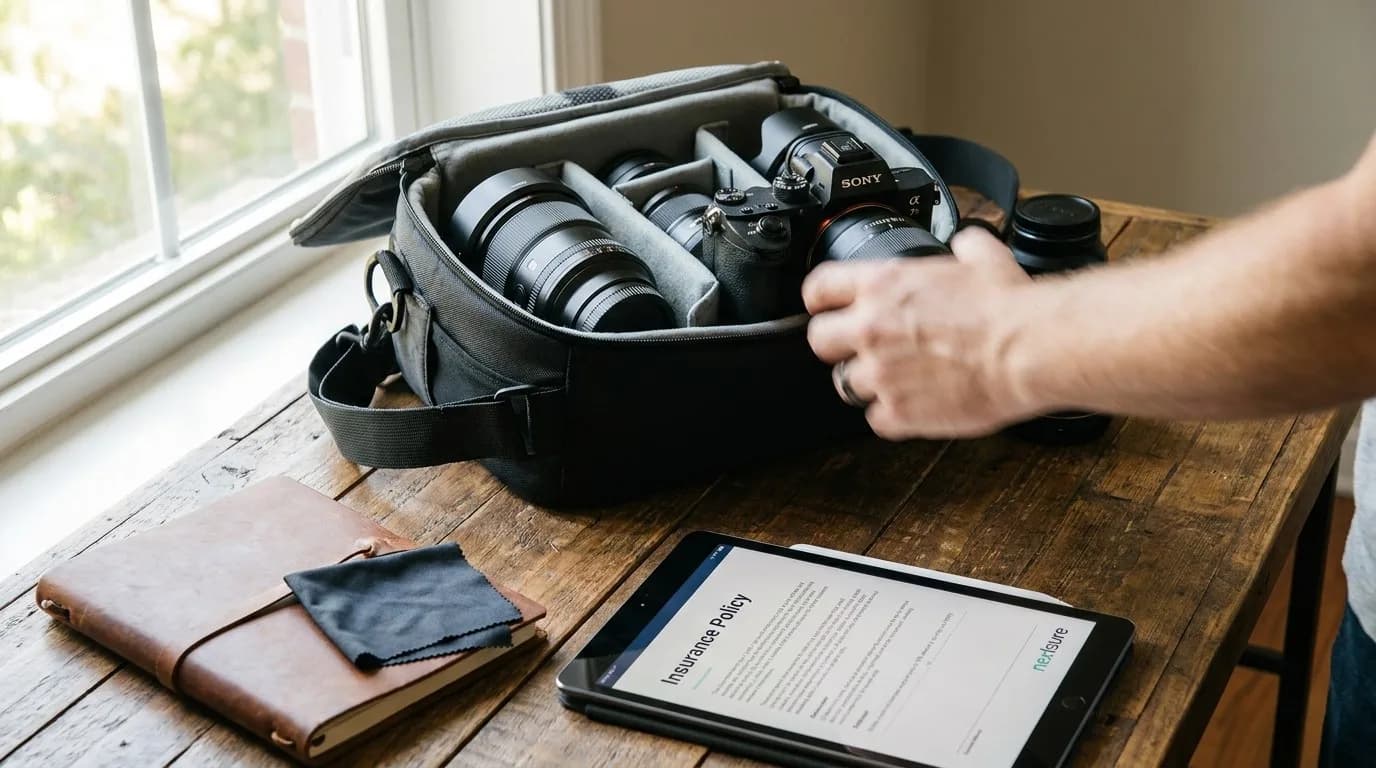
Lens cover forms the core of a capable policy for photographic equipment. As standard, insurers strictly distinguish between what came in the box from the factory and individual additions. A kit lens purchased together with the camera body in original packaging automatically falls under primary insurance cover. This rule applies immediately at sign-up. The bundle's replacement value defines the basic cover in this case. Photographers don't need to state separate serial numbers for the standard lens here. The administrative burden for the policyholder stays minimal in this scenario. Cover is fully active from the very first minute. A classic example is buying a mirrorless full-frame camera including a 28-70mm standard zoom. Here, the insurer treats the entire package as a single insured unit. This considerably simplifies the initial contract setup.
Reporting duty for separate equipment
As soon as the setup grows to include specialized prime lenses or telephoto lenses, the contractual basis changes. Accessories bought later or separately require active reporting during the ordering process [1]. Stating the manufacturer and model is mandatory. Without this explicit declaration, the expensive glass is not taken into account in a claim. A high-performance camera equipment insurance policy integrates these additional components directly into the existing contract. Documenting purchase receipts ensures smooth processing. Professional users therefore keep detailed inventory lists. Every new purchase must be communicated to the insurer promptly. With providers like hepster, the serial number must be reported in writing within two weeks of receiving the new device. This strict reporting deadline guarantees the insured items can be clearly identified. Missing this reporting duty inevitably leads to a loss of insurance cover for the item in question.
Importance of the correct sum insured
Structuring the policy requires precisely calculating the total sum. The chosen sum insured must exactly reflect the cumulative value of all bodies and lenses [2]. Underinsurance leads to percentage deductions from reimbursement in a claim. High-quality lenses often exceed the value of the camera body itself. Professional users therefore regularly check their policies are up to date. Adjusting the sum insured after new purchases prevents financial gaps in a total loss. A systematic comparison of the equipment against the contract data prevents coverage gaps. If a photographer, for example, owns a setup worth 8,000 euros but the policy is limited to only 4,000 euros, the insurer reimburses only 1,000 euros for a partial loss of 2,000 euros. This proportional reduction illustrates the absolute necessity of correctly stating the value. The sum must always reflect the undiscounted replacement value.
Tariff models for interchangeable lenses and equipment lists
List-based insurance tariffs
Two primary structuring approaches exist in the market for interchangeable lenses within contract terms. The first approach is based on detailed equipment lists, where each item is recorded with its serial number. Photographers must report newly purchased lenses immediately under this model, or they have no cover [5]. This method offers maximum transparency for the insurer. It does, however, require a high administrative effort from the policyholder. Every new purchase triggers an amendment. Damage can be assigned to specific devices without error under this approach. Insurer Hiscox SA, for example, requires the exact serial number for unique identification through its partner hepster. This list-based structure is excellent for high-priced specialty equipment. It categorically rules out mix-ups when settling claims.
Flat-rate coverage concepts
The second approach uses flat-rate tariffs that cover the entire equipment up to a defined maximum limit. These contracts bundle cameras, lenses, tripods, and memory cards under one overall sum insured [3]. This considerably lowers the administrative effort. Photographers can flexibly swap out their setup as long as the total value doesn't exceed the agreed limit. Such flat-rate tariffs, however, often explicitly exclude IT accessories like laptops or tablets [5]. Carefully checking the terms remains essential. A look at the small print protects against false assumptions. Flat-rate tariffs are especially suited to users with high turnover in their equipment pool. Not having to report individual serial numbers speeds up daily operations. Even so, purchase receipts for the affected items must be presented without exception in a claim.
Choosing the right model
Choosing the right model depends heavily on the turnover in your own equipment pool. Equipment insurance for professional photographers often relies on list-based tariffs for maximum legal certainty with very expensive individual pieces. Hobby photographers with a stable setup, by contrast, benefit from the simplicity of flat-rate coverage concepts. Independent comparison portals stress the need to carefully analyze tariffs regarding reporting duties for accessories [4]. Contractual flexibility determines the practical benefit. A regular tariff comparison optimizes the value for money. The choice between a list and a flat rate is a trade-off between administrative convenience and maximum specificity. nextsure recommends the list-based variant for lenses with an individual value over 1,500 euros. This guarantees smooth processing in a total loss.
| Feature | List-based tariff | Flat-rate tariff |
|---|---|---|
| Reporting duty for new purchases | Mandatory | Not required (up to the sum limit) |
| Administrative effort | High | Low |
| Transparency in a claim | Very high (serial numbers on file) | Medium (purchase receipts must be presented) |
| Exclusion of IT devices | Depends on the device | Often excluded |
The choice of model should depend on how often the equipment changes.
Worldwide cover for lenses while traveling
Geographic independence of the policy
Worldwide cover is an essential criterion in contract design for travel photographers. Electronic devices and their accessories are covered globally in modern specialty tariffs. Services under these contracts are administratively provided in Germany, while the physical location of the damage stays irrelevant. Drop damage at the Grand Canyon is settled identically to an incident in a home studio. This geographic independence creates planning certainty. Photographers move freely across national borders. Full attention goes to the perfect shot. Worldwide cover requires no prior notification of the travel route to the insurer. Cover applies continuously and without time limits for stays abroad. This is a key difference from standard home contents insurance, which often sets strict time limits on cover abroad.
Climatic and mechanical risks
Taking expensive lenses to climatically demanding regions carries specific risks. Sand, dust, and extreme humidity threaten the sensitive mechanics and optics of lenses. High-quality policies explicitly include sand and liquid damage, provided the device's function is impaired as a result. Worldwide cover for content creators covers exactly these travel-specific hazards. The insurer covers repair costs for a zoom lens jammed by desert sand without objection. Specialized workshops professionally clean the equipment at the insurer's expense. Mechanical force, for example from rough handling in airplane luggage, also falls under the scope of cover. The policy thus protects against the typical hazards of tough day-to-day production work. Cosmetic flaws with no functional impairment, however, remain excluded from the payout.
Reporting duties abroad
For international assignments, special reporting deadlines and documentation duties also apply. Damage must be reported without delay, at the latest within 14 days of becoming aware of it, through digital portals. Time zone differences or lack of internet access in remote areas don't exempt you from this contractual obligation. Digital insurance platforms such as nextsure allow claims to be reported by smartphone directly from the location. Acting quickly significantly speeds up later processing. The processes are optimized for mobile access. A photo of the damage is often enough for the initial assessment. With hepster, reporting is done centrally through the web portal or by email to MOIN Servicegesellschaft mbH. These clear communication channels prevent delays in processing. Meeting the 14-day deadline is a hard criterion for the payout commitment.
Theft cover for expensive lenses and accessories
Requirements for simple theft
Comprehensive theft cover requires carefully observing the contractual storage rules. Simple theft is only covered if the device was carried securely in personal custody. The insured lens must stay in constant sight or physical contact. A camera bag left unattended on a park bench inevitably leads to a loss of insurance cover. Cover against opportunistic theft applies to pickpocketing in crowds. The policyholder's duty of care is the focus here. Insurers strictly penalize negligence. If a photographer briefly leaves their equipment unattended during a shoot, cover lapses for that period. The insurer checks the exact circumstances of storage for every theft. The burden of proof for correct custody lies with the policyholder.
Break-in theft from vehicles and buildings
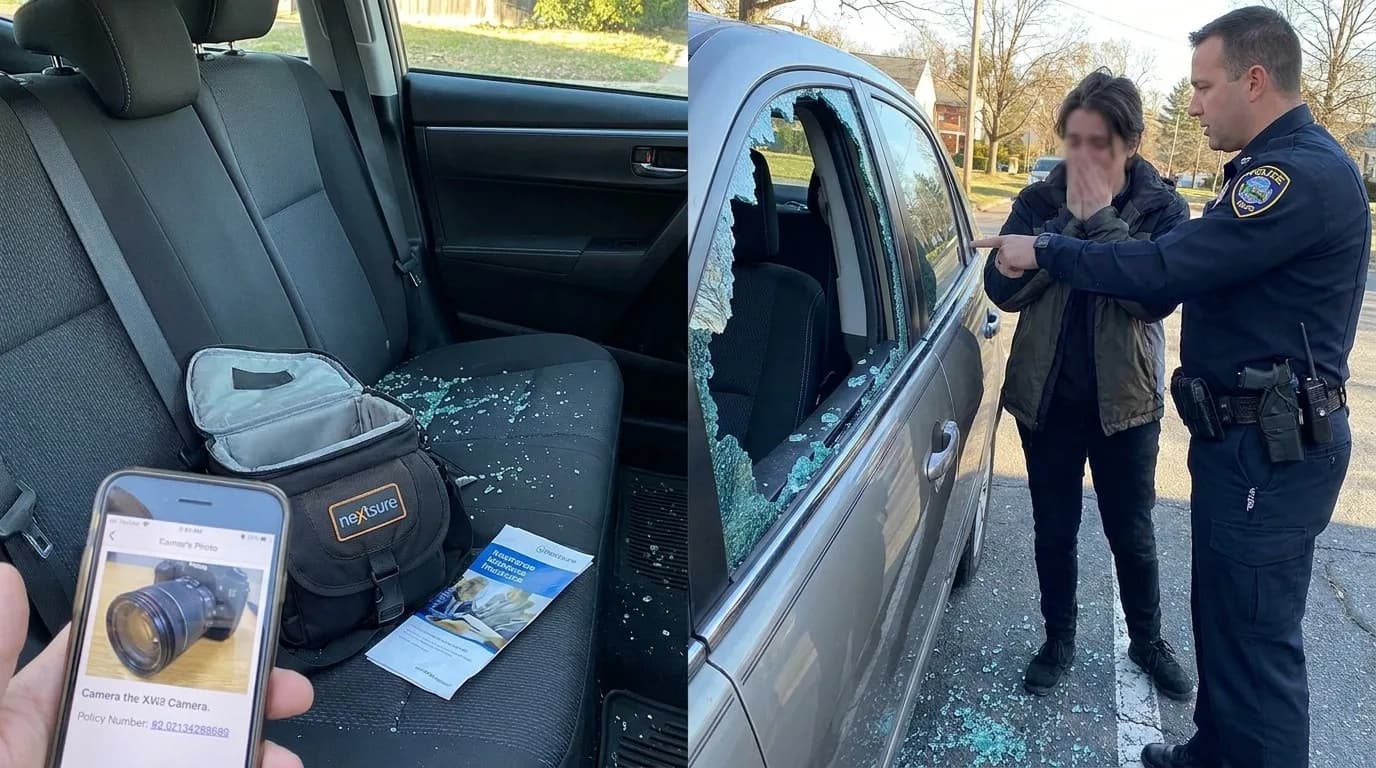
Break-in theft is subject to even stricter spatial and mechanical requirements. If the equipment is in a vehicle, that vehicle must be locked. In addition, the terms require storage in an area not visible from outside, for example in the trunk or glove compartment. If the expensive telephoto lens is visibly on the back seat, the insurer refuses to pay after a break-in. Inside buildings, the room or apartment must be locked without exception. Open windows count as gross negligence. Anyone affected must have signs of a break-in documented by the police. Mere loss from a hotel room with no visible signs of forced entry is often classed as simple theft. That then requires proof of personal custody, which is impossible in an empty room. Mechanically securing storage locations is therefore essential.
Robbery and police reporting duties
Robbery and looting form the third category of theft scenarios. These require the use of force or the threat of violence with danger to life and limb. Taking the item after the insured person loses the ability to resist is also covered. In all these criminal cases, there is a strict duty to report to the police. Those affected must report the incident to the responsible police station without delay, at the latest 24 hours after discovering it. The police case number serves as the basis for claims processing. Without this document, no payout is made. This 24-hour deadline is firmly anchored in the terms of providers like hepster. A late police report leads to a total loss of the insurer's obligation to pay. Immediate documentation at the scene is therefore essential.
Loaner equipment and temporary lens use
Risks with rented lenses
Loaner equipment plays an increasingly central role in professional photography. Photographers often rent specialized tilt-shift lenses or extremely fast super-telephoto lenses for just a single project day. Standard tariffs only cover property owned by the policyholder. Third-party property requires special contract extensions or short-term add-on policies. It's essential to insure rented film equipment before the first day of shooting begins. Liability toward the rental company carries enormous financial risk. A damaged rental lens can quickly cost several thousand euros. Rental companies often require proof of valid electronics insurance before handing over expensive glass. Without this proof, photographers have to put down high deposits. Integrating rented equipment into your own policy elegantly solves this liquidity problem.
On-demand solutions for photographers
Some insurers offer flexible modules that temporarily integrate rented items into cover. The sum insured automatically increases for the defined period by the value of the rented lenses. These on-demand solutions calculate the premium to the exact day. The administrative process runs entirely digitally. Users submit the serial number via app and activate cover immediately. This flexibility protects the budget. Photographers only pay for the equipment's actual usage period. A practical example is renting a 400mm f/2.8 lens for a sports event over the weekend. The photographer books cover on Friday evening and ends it on Monday morning. Costs are limited to these three days. This is far more economical than permanently raising the sum insured.
Documentation at handover and return
The temporary risk ends when the equipment is returned to the rental company. Damage occurring during the rental period is settled by the insurer directly with the owner. This prevents lengthy liability disputes between the photographer and the rental company. Documenting the condition at handover remains important. Existing scratches on the front element must be photographed without exception before the contract begins. This effectively avoids later disagreements. A clean handover record protects all parties involved from unjustified claims. The insurer doesn't pay for damage that already existed before temporary cover began. The burden of proof for flawless condition at handover lies with the policyholder. A short video recording of the lens in the rental company's presence is the safest method here.
Types of damage and coverage exclusions for lenses
Scope of all-risk cover
Under all-risk cover, types of damage include nearly all physical impacts from outside. Drops and breakage are the most common cause of defective lenses. If the camera falls off the tripod, the front element often shatters or the autofocus motor jams. Mechanical force is fully covered in these cases. Damage from fire, explosion, overvoltage, or short circuit also falls under contractual cover. Intended use must be impaired. A purely cosmetic flaw is not enough for a claim. Tariffs like hepster's also explicitly cover damage from sabotage and vandalism. Even operating errors and improper handling by the photographer are covered. This broad cover protects against the financial consequences of human error in hectic day-to-day production.
Clear limits of insurance cover
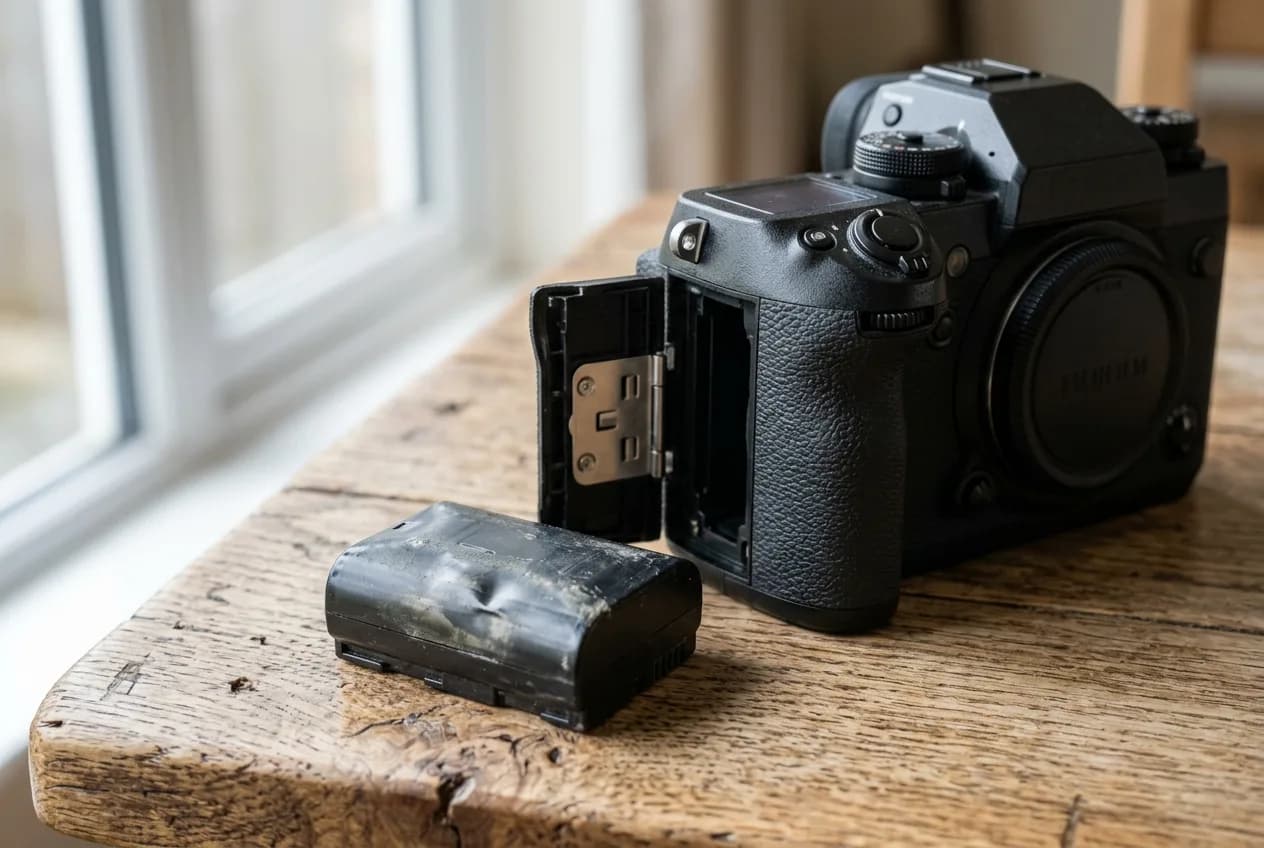
Besides the covered hazards, the terms define clear coverage exclusions. Damage caused by grossly negligent or intentional acts releases the insurer from its obligation to pay. Simply leaving equipment behind, forgetting it, or losing it is generally not covered. Wear parts are also subject to strict restrictions. Battery wear, for example, is only covered if maximum performance drops below 60 percent and the device is younger than four years. Cosmetic scratches with no functional impairment are not taken into account. Functionality is the central criterion for assessment. Consumables, auxiliary materials, and software of any kind are completely excluded from cover. Devices modified to specific customer wishes also lose their insurance cover. These exclusions serve to clearly define the insured risk.
Warranty cases and force majeure
Another key exclusion concerns warranty cases and statutory warranty claims. If a lens has a factory manufacturing defect, the manufacturer is liable. The insurance steps back subsidiarily in such cases. In addition, damage from war, civil unrest, pandemics, or nuclear energy is excluded as standard. Devices modified to customer specification often lose their insurance cover. Knowing these limits prevents false expectations in an emergency. Transparency about exclusions is a hallmark of reputable providers. A look at the insurance terms clarifies open questions in advance. Seizures or other actions by public authorities are also not covered. If customs abroad confiscates the equipment, the insurance provides no replacement. The photographer bears these force-majeure risks themselves.
Typical coverage exclusions in camera insurance
- Damage from grossly negligent or intentional conduct.
- Loss through simply leaving equipment behind or forgetting it.
- Cosmetic scratches that don't impair the lens's function.
- Factory manufacturing defects covered by the manufacturer warranty.
- Damage to devices modified to customer specification.
The exact exclusions vary by insurer and tariff.
Calculating the sum insured for the camera setup
Determining the total value
The sum insured forms the financial foundation of the entire contractual cover. It must reflect the current replacement value of all insured components. Photographers add up the purchase price of the camera body, the kit lenses, and all separately purchased lenses. Accessories such as external flashes, tripods, and memory cards also feed into this calculation [3]. Discounts from the purchase process must not be deducted. The undiscounted list price serves as the benchmark. Only this way is full replacement guaranteed after a total loss. If a lens is bought on sale for 800 euros instead of the regular 1,000 euros, the 1,000-euro value must still be insured. In a claim, replacement is based on the regular market price. Stating too low a value inevitably leads to problems.
Dangers of underinsurance
Precisely determining value protects against the serious consequences of underinsurance. If the equipment's actual value is 10,000 euros but the policy only covers 5,000 euros, the insurer only pays out proportionally in a claim. Damage of 2,000 euros then leads to reimbursement of only 1,000 euros. Regularly reviewing the sum insured is therefore mandatory. New purchases require an immediate contract adjustment. Digital management makes this process easier. A quick update in the customer portal is usually enough. The proportional reduction for underinsurance is an often underestimated risk. Many photographers forget to add small purchases like filters or memory cards to the total. These add up over the years and significantly distort the total value.
Deductible and reimbursement limits
In the event of a total loss or theft, the insurance reimburses at most the agreed maximum sum. Some tariffs provide for a deductible that is subtracted from the reimbursement amount. This deductible noticeably lowers the ongoing premium. The choice between a tariff with or without a deductible depends on individual risk tolerance. A detailed inventory list with purchase receipts and serial numbers speeds up valuation after an incident. Being organized is worth real money here. Complete documentation ensures a fast payout. With hepster, the first or one-time premium is due immediately after signing up. Full insurance cover only begins with this payment. Correct financial handling is thus the basis for any claims settlement.
Contract terms and policy flexibility
Classic annual contracts and subscriptions
The contract terms of modern policies adapt to users' dynamic needs. Traditional annual contracts with automatic renewal continue to dominate the market. They offer a notice period of a few business days before the end of the insurance period. Alongside these classic models, flexible monthly subscriptions are increasingly establishing themselves. These subscriptions often have a minimum term of three months. After that, they can be cancelled monthly. This structure especially suits hobby photographers who only use their equipment intensively during certain seasons. With hepster, the monthly subscription renews automatically month to month. The notice period here is just three business days before the end of the period. These extremely short deadlines offer unprecedented contractual freedom. Users don't tie themselves to a tariff for years.
Fixed terms for projects
Fixed contract terms with no automatic renewal are especially suited to time-limited projects. A photographer books cover for exactly the duration of a three-week expedition. The contract ends automatically at the agreed date, with no explicit cancellation required. This model prevents unnecessary ongoing costs after the project ends. The premium is due as a one-time payment immediately after signing up. Cover begins right on time for the start of the trip. Such a setup offers maximum cost transparency for project-based work. Since the contract expires automatically, there is no ordinary right of cancellation here. The photographer doesn't need to deal with any administrative cancellation after returning. These fixed terms are ideal for insuring expensive rented equipment during a specific assignment.
Special cancellation rights and switching tariffs
Special cancellation rights exist regardless of the chosen term model. After a claim has been settled, both the policyholder and the insurer have the right to terminate the contract early. Premiums for subscriptions are conveniently paid by direct debit or credit card. Switching between different tariff models is often possible in just a few clicks with digital providers. This structural agility makes insuring expensive equipment extremely convenient today. Users manage their policies centrally through intuitive web portals. nextsure's digital infrastructure supports this seamless switching. As the equipment grows, a monthly subscription can easily be converted into a more comprehensive annual tariff. Adapting to new life circumstances happens with no bureaucratic hurdles.
Frequently asked questions
- Is the lens automatically covered under camera insurance?
A kit lens included in the box is automatically covered together with the camera body. Separately purchased interchangeable lenses, however, must be explicitly declared when signing up. The sum insured must cover the total value of all items.
- How do I insure additional lenses?
Additional lenses can be added to the policy during the ordering process by stating the manufacturer, model, and purchase price. For list-based tariffs, the serial number is also required. The sum insured increases according to the value of the new lenses.
- Does the lens count toward the sum insured?
Yes, the value of every insured lens must be factored into the total sum insured. Precise calculation based on undiscounted list prices prevents underinsurance. In a total loss, the insurer reimburses at most the contractually agreed maximum sum.
- Does cover only apply to original accessories in the box?
The basic cover of many tariffs initially only covers original accessories included in the box. Through contractual extensions, however, third-party lenses, tripods, and flashes can easily be added to the policy. Transparently declaring all components to the insurer is important.
- Are rented lenses covered by my policy?
Standard policies only cover property owned by the policyholder. For rented equipment, specialized insurers offer temporary add-on modules. These on-demand solutions calculate the premium to the exact day and protect against liability claims from rental companies in the event of damage or loss.
- What happens with drop damage to a lens?
Drop damage and breakage are among the primary claims covered under all-risk cover. If the lens's function is impaired by the drop, the insurance covers the repair costs. In an economic total loss, the current or replacement value is reimbursed according to the tariff terms.
Sources
Conclude directly online
Verified partner tariffs at no extra cost. The button takes you straight to the provider's calculator.
 Hepster
Camera insurance
Worldwide cover for new and used cameras, including original accessories.
- Coverage area:
- worldwide
- Battery-wear threshold:
- up to 60% remaining capacity, device max. 4 years old
- Minimum term:
- 3 months (monthly subscription)
- Drop, breakage, sand, and liquid damage
- Fire, explosion, power surge, short circuit, sabotage, vandalism
- Battery and screen damage, plus battery wear (where not covered by warranty)
- Operating errors and improper handling
- Theft module: theft, burglary from a car or home, robbery
Key exclusions
- Loss and forgetting outside the insured theft scenarios
- Devices without a known serial/IMEI number
- Damage covered under warranty or manufacturer's guarantee
- Gross negligence or intentional acts
Trusted Shops: 4,5/5 „Sehr gut“ (2.600 Bewertungen)
hepster insgesamt (Anbieterbewertung, alle Versicherungen)
Claims must be reported online within 14 days; theft must be reported to the police within 24 hours. Insurer: Hiscox SA, Niederlassung für Deutschland
Fact sheet: benefits, exclusions and waiting periods in detail
All details are taken from the provider's linked product page and the contract documents (IPID/policy conditions) published there; the insurer's documents prevail. Premiums, benefits and the insurance product itself may change – please verify the details directly with the partner before signing up; only the information provided there is binding.
Information last updated: July 2026 · Source: provider product information (IPID/policy conditions)