Camera Insurance for Battery Damage: Rules & Age Limits
A data-driven guide to camera insurance for battery damage, covering capacity limits, device age, and tariff models for creators.
All details are taken from the provider's linked product page and the contract documents (IPID/policy conditions) published there; the insurer's documents prevail. Premiums, benefits and the insurance product itself may change – please verify the details directly with the partner before signing up; only the information provided there is binding.
 Katrin StraubManaging DirectorInsurance expert with over 20 years of experience in the insurance industry.
Published on
12 min read
Table of Contents
Camera insurance covers battery damage, provided it isn't a regular warranty case. Many tariffs only pay out for battery wear once remaining battery capacity drops below 60 percent. Battery cover also often only applies if the device is younger than four years at the time of the claim. A careful tariff comparison secures the best cover for expensive photo equipment.

Camera Equipment Insurance
Secure your valuable camera equipment thoroughly against damage, theft, and loss with the camera equipment insurance from nextsure. Tailored protection for professionals and hobby photographers.
Learn moreBasics of camera insurance for battery damage
Definition of the insured event
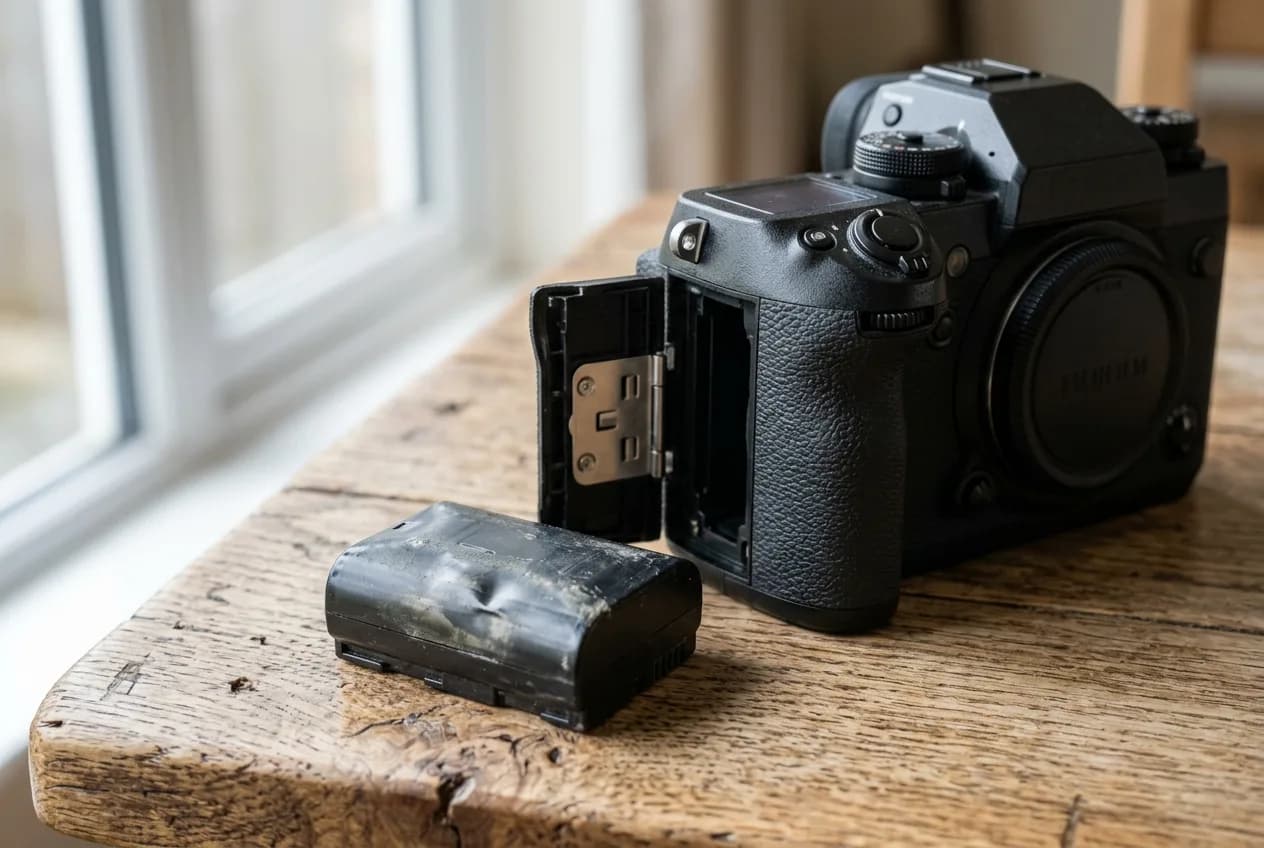
The basics of a high-performance camera equipment insurance policy define exactly when battery damage is covered. A defective battery is an operational risk for content creators. Insurers draw a strict line between a sudden defect caused by external factors and gradual capacity loss. A drop or liquid damage that destroys the battery falls under regular all-risk cover. Pure wear, on the other hand, requires special tariff add-ons. Providers such as Wertgarantie build wear into their all-in-one cover [2]. Other insurers exclude gradual performance decline entirely. Carefully checking the policy terms prevents coverage gaps in an emergency. A timely comparison of providers reveals significant differences in risk assessment. Consumables are excluded across the industry. That explicitly includes removable storage media, auxiliary materials, and operating supplies. All kinds of software also remain uninsured. Instruments and devices delivered already defective are likewise excluded from cover. That's a hard fact.
Causes and burden of proof
The definition of battery damage varies significantly between insurance companies. A short circuit caused by overvoltage during charging counts as an insured event across the industry. Sabotage or vandalism that damages the camera's power supply is also covered. The critical point remains the natural wear of the lithium-ion cells. Many policies require proof of the exact remaining capacity via a certified diagnostic report. Without this technical evidence, insurers often refuse to pay. Documenting the battery's condition before taking out a policy creates legal certainty. Photographers need to keep an eye on their devices' charge cycles. Proactive battery management makes later claims much easier to file. Damage from intentional or unlawful harm by unauthorized third parties is included in premium tariffs. That requires precise documentation. Mechanical force is only covered after a detailed review.
Economic relevance of the cover
The specialty insurance market offers specific coverage concepts for professional equipment. Camera insurance makes economic sense from a camera value of around 300 euros [2]. Below that, cumulative premiums quickly exceed the battery's replacement cost. High-end system cameras require power-supply cover as a matter of course. Repair costs for defects, or a contribution toward a new purchase, ease the financial burden [5]. A defective original battery often costs well over 100 euros. Building this risk into the main policy lowers ongoing operating costs for photographers. nextsure curates tariffs that reflect these specific risks transparently. The sum insured is based on the unsubsidized purchase price. That eases the budget. Signing up in good time protects against unpredictable follow-on costs in professional day-to-day work.
Coverage terms and capacity limits
The 60 percent rule for wear
The coverage terms set clear capacity limits for battery wear. A key industry standard is the 60 percent mark. With providers like hepster, damage from battery wear is only covered if maximum battery performance does not exceed 60 percent [1]. If capacity is at 61 percent, there is no claim to a replacement. This hard limit requires a precise measurement when a claim is filed. Covering repair costs for battery damage often requires exactly this minimum capacity threshold [3]. Photographers absolutely need to factor in this threshold when choosing a tariff. A policy without this clause offers no real added value under heavy use. Battery cover, moreover, often only applies if the device is younger than four years at the time of the damage [1]. This limit is absolute. Once this period has passed, cover for chemical wear lapses entirely.
Technical diagnosis and burden of proof
Authorized specialist workshops carry out the technical check of the capacity limits. The policyholder bears the burden of proof for the performance decline. Modern camera systems read out remaining battery health internally. This digital log serves as the primary evidence for the insurer. A sudden voltage drop under load does not automatically count as wear below 60 percent. Other clauses for electronic defects often apply here instead. A clear separation between chemical wear and electronic failure speeds up claims processing. A detailed workshop estimate must state the cause beyond doubt. Unclear diagnoses inevitably delay payout. Damage that already existed before the insurance contract began is categorically excluded. That prevents systematic fraud. The insurer checks submitted reports for plausibility and consistency with the timeline.
Charging electronics and accessory status
Besides pure capacity, insurers also assess the charging electronics. A defect in the camera's internal charge controller does not fall under the battery wear clause. Induction damage or short circuits in the device are classic property damage. In these cases, the policy covers the entire repair, including a new battery. The distinction between accessories and the main device is essential here. Separately purchased accessories are often excluded from cover. Original accessories included in the box, however, enjoy full protection. A close look at the insurance certificate clarifies the status of replacement batteries. Accessories bought later must be explicitly added to the policy to avoid coverage gaps. Original accessories are usually protected. Documenting purchase receipts for all accessories is essential for smooth claims processing.
| Criterion | Condition for battery cover | Reason for exclusion |
|---|---|---|
| Remaining capacity | Below 60 percent | Above 60 percent |
| Device age | Younger than 4 years | Older than 4 years |
| Cause | Technical defect / wear | Warranty case / manufacturer fault |
The exact figures may vary depending on the chosen tariff and insurance company.
Age limits for camera equipment
Maximum terms for battery cover
Strict age limits define whether camera equipment can be insured at all. With hepster, battery wear is only covered if the device is younger than four years at the time of the claim [1]. Once the camera exceeds this age, cover for the battery lapses entirely. Other providers set even stricter deadlines for signing up. Many insurers require a maximum device age at sign-up, which for some providers is only 3 to 6 months [3]. The maximum device age for taking out R+V's GeräteSchutz is exactly 6 months [4]. These restrictions force buyers into quick decisions. Anyone who misses the deadline is left carrying the risk themselves. Speed matters here. Signing up immediately after buying the camera is the safest strategy for minimizing risk.
Waiting periods for used devices
Age limits vary considerably between individual tariff add-ons. While the battery falls out of cover after four years, the camera itself often stays insured for longer. With certain providers, cameras can be insured regardless of the device's age [1]. For devices older than 7 days, R+V applies a waiting period of 6 weeks before cover begins [4]. This grace period prevents insurance fraud involving already-damaged equipment. The original invoice is mandatory proof of the purchase date. Used devices often require a special valuation report or current proof of function. The serial number or IMEI must be reported to the insurer in writing within two weeks of receiving the device. The deadline is binding. Without this registration, there is no valid insurance cover for the used device.
Strategic planning for content creators
For content creators with an extensive equipment fleet, managing these age limits gets complex. A four-year-old camera body often still works flawlessly. The battery, however, usually reaches the end of its chemical life by that point. The policy still covers drop damage at that stage, but refuses to pay for a battery replacement. This gap calls for forward-looking budget planning for replacement parts. Upgrading equipment before the four-year deadline runs out optimizes the insurance benefit. The nextsure platform helps fully protect professional photo equipment. Transparent data sheets show the age limits of all curated tariffs at a glance. Devices manufactured or modified to customer specification generally cannot be insured. Custom builds are often uninsurable. Standardized equipment makes insurability much easier.
Distinction from manufacturer warranty and statutory warranty
Subsidiarity of the insurance benefit
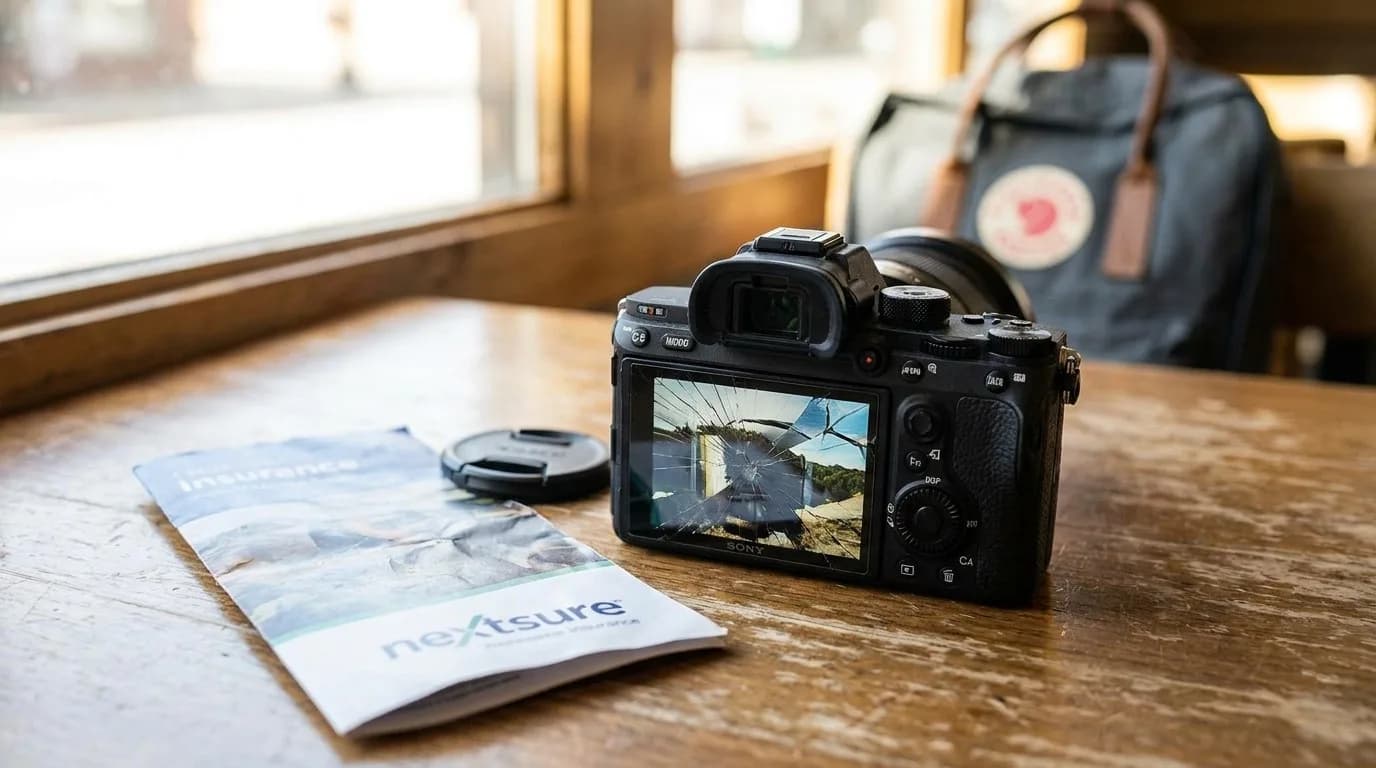
The distinction between insurance cover and manufacturer warranty requires legal precision. Battery and screen damage is only covered provided it isn't a statutory warranty or manufacturer warranty case. The statutory warranty period of 24 months covers initial manufacturing defects. Manufacturer warranties on batteries are often limited to six or twelve months. A performance decline in the first six months therefore falls under the manufacturer's responsibility. The insurer consistently refuses to pay during this phase. The policyholder must first pursue the claim with the retailer. This subsidiarity protects the insurer from unjustified costs. Damage covered by the statutory warranty is contractually excluded. The legal position is clear. A parallel claim against both the manufacturer and the insurer is not legally permitted.
Reversal of the burden of proof and claims management
The reversal of the burden of proof after twelve months under the statutory warranty changes the dynamic. The buyer must prove that the battery defect existed from the very beginning. In practice, this is almost impossible. This is exactly where camera insurance becomes an essential safety net. It covers the cost when the manufacturer refuses to pay. A written rejection letter from the manufacturer speeds up the process with the insurer. Clearly documenting the communication prevents friction. Professional claims management requires patience and a methodical approach. Damage from war, civil war, war-like events, civil unrest, or pandemics is excluded from insurance cover. Force majeure is excluded. Nuclear energy, ionizing radiation, strikes, and seizure by public authority also release the insurer from its obligation to pay.
Recalls and modifications
Design flaws affecting entire camera series often lead to recalls. In these cases, the insurer's obligation to pay is fully suspended. The manufacturer bears sole responsibility for replacing the faulty batteries. Modifications made by the user to the camera jeopardize both the warranty and the insurance cover. Devices modified to customer specification generally cannot be insured. Using uncertified third-party batteries releases the insurer from paying out in the event of a claim. Original accessories remain a mandatory condition for smooth claims processing. Strictly following the manufacturer's specifications keeps insurance cover intact long-term. Damage caused by gross negligence or intentional acts is contractually excluded. Intent releases the insurer from paying. The insurer reviews the exact circumstances of every claim for possible negligence.
Tariff models and contract terms compared
Subscriptions versus fixed terms
Modern tariff models offer flexible contract terms for different needs. The market primarily distinguishes between fixed terms and flexible subscriptions. A monthly subscription offers maximum flexibility with a minimum term of three months. The notice period here is often just three business days before the end of the insurance period. An annual subscription automatically renews from year to year with the same notice period. Fixed contract terms end automatically with no ordinary right of cancellation. This structure allows precise adjustment for temporary projects. A tariff comparison reveals the true costs over the camera's full life cycle. That offers maximum flexibility. The choice between a subscription and a fixed term significantly affects a photographer's long-term cost structure.
Payment terms and cancellation rights
Payment terms affect the liquidity of freelance photographers. The first premium is due immediately after sign-up, at the latest two weeks after receiving the certificate. For subscriptions, payment is collected monthly or annually in advance. Late payment jeopardizes insurance cover from day one. Automatic contract renewal requires active management of the policy. Both parties have an early right of cancellation after a claim has been settled. This special cancellation right allows switching to another provider. Precise premium calculation determines whether the policy is worthwhile. Late payment jeopardizes cover. Paying premiums on time is the basic precondition for smooth claims processing in an emergency.
Matching cover to the usage profile
Choosing the right model depends heavily on the individual usage profile. A one-off expedition is often well served by short-term cover. Permanent studio use, on the other hand, calls for a stable annual subscription. The premium is based on the device's unsubsidized purchase price, including original accessories. Accessories bought later require a separate notification to the insurer. Adjusting the sum insured when buying new equipment prevents dangerous underinsurance. A regular policy review by an independent broker optimizes the portfolio. nextsure offers a digital, transparent platform for exactly this. That requires active management. Automatic renewal from month to month or year to year ties the policyholder to the chosen tariff.
Worldwide cover and theft options
Global cover for travel photographers
Worldwide cover is absolutely essential for travel photographers. The policy applies globally, while the contractual services are provided in Germany. To protect cameras and drones on trips, you need all-risk cover. Basic cover includes drop, breakage, sand, and liquid damage. Extended cover explicitly includes theft, break-in theft, and robbery and looting. Theft is only covered if the device was carried securely in personal custody. The device must stay within sight or physical contact. A backpack left unattended on the beach immediately voids insurance cover. The device stays in view. Constant physical control over the equipment is the basic precondition for theft cover while traveling.
Specific conditions for break-in and robbery
The conditions for break-in theft are legally narrow. The device must be stored in a locked car, in a closed area that can't be seen into. A glove compartment or a covered trunk meet these criteria. If the camera is visibly lying on the back seat, the insurer refuses to pay. Inside buildings, the device must be in a locked room. Robbery requires the use of force or the threat of violence against the insured person. Precisely documenting how the incident happened is decisive for the claim. Witness statements strengthen the policyholder's position. Visible cameras are not covered. Taking the device after the insured person has lost the ability to resist also counts as insured robbery.
Exclusion of simple loss
Cover against opportunistic theft requires constant vigilance. Loss through leaving the device behind, forgetting it, or misplacing it is categorically excluded. This fine legal distinction can decide thousands of euros. Theft must be reported to the police immediately, at the latest 24 hours after discovery. The police case number is a mandatory part of the claim report. Without this official registration, no payout is made. The combination of worldwide cover and theft protection offers the best worldwide cover for content creators. The premium surcharge for theft risk is a worthwhile investment. Robbery requires a police investigation. Filing the report with the responsible police station in time is a mandatory step in the claims process.
Claims processing and reporting duties
Deadlines and identification details
Fast claims processing requires strict compliance with all contractual reporting duties. The policyholder must report the damage without delay, at the latest within 14 days of becoming aware of it, online. The serial number or IMEI uniquely identifies the device. This number must be provided at the time of sign-up, or at the latest two weeks after receiving a replacement device. Devices without a registered serial number are completely excluded from insurance cover. The duty of truthfulness in describing the claim is binding. False statements lead to the immediate loss of all contractual claims. The portal is always online. Reporting the claim digitally through the web portal speeds up the initial intake and assignment of the case to a claims handler.
Duty to mitigate and repair requirements
The duty to mitigate damage forces photographers to act proactively. After water damage, the device must be switched off immediately and dried. Further attempts to use it that make the damage worse count as gross negligence. Gross negligence releases the insurer from paying. Customers should only send in the defective device after being explicitly asked to by the insurer. Unauthorized repair attempts, or hiring an unauthorized workshop, jeopardize reimbursement. The insurer reserves the right to specify the repair workshop. A structured process ensures a swift return to working order. Acting quickly is mandatory. The policyholder must keep the cost of the damage as low as possible so as not to jeopardize their claim.
Payout and current-value calculation
The insurer pays out compensation after reviewing all submitted documents. In the event of a total loss or theft, the insurer reimburses the current value or provides an equivalent replacement device. The decision between repair and replacement lies with the insurance company. Devices delivered already defective are excluded from cover. The policy only applies to damage occurring after the contract started. Pre-existing damage falls under the fraud exclusion. Complete documentation of the device's condition at purchase protects against later disputes. Transparent processes and clear communication are key to successful claims handling. Reporting is mandatory. Damage from theft, break-in theft, robbery, or vandalism must be reported to the police within 24 hours.
Steps for reporting a battery defect claim
- Switch off the device immediately and stop charging it.
- Report the damage online to the insurer within 14 days.
- Have the camera's serial number or IMEI ready.
- Request a diagnostic report on remaining capacity from a specialist workshop.
- Submit the purchase receipt and proof of the device's age.
In the case of theft, a police report must also be filed within 24 hours.
Cost-effectiveness for content creators
Cost-benefit analysis of the policy
The cost-effectiveness of a specialty policy depends on the value of the equipment used. Camera insurance makes economic sense from a camera value of around 300 euros [2]. Professional full-frame cameras and fast lenses far exceed this value. A total loss from a drop or theft threatens the livelihood of freelance content creators. The monthly premium represents a predictable operating expense. It protects against unpredictable spikes in cost when a claim occurs. A defective battery or a shattered screen disrupts cash flow significantly. Transferring this risk to an insurer stabilizes financial planning. Cover applies globally. The electronic device is insured worldwide, while the contractual services are provided centrally in Germany.
Weighing the specific exclusions
The cost-benefit analysis must factor in the specific exclusions. A tariff that only covers battery wear below 60 percent remaining capacity offers limited value for that particular case. The policy's strength lies in all-risk cover for catastrophic damage. Mechanical force, fire, or overvoltage usually cause an economic total loss. Repair costs often exceed the camera's residual value. In these scenarios, the insurance proves its true worth. A contribution toward a new purchase enables a quick upgrade to current technology. A well-founded comparison of providers maximizes the return on investment. Forgetting isn't an insured event. Damage from losing the insured device through leaving it behind or misplacing it is strictly excluded contractually.
nextsure's curated approach
The broker platform nextsure positions itself as a digital partner for these niche risks. Instead of an overwhelming grab-bag of options, the platform offers curated tariffs. The focus is on transparency and a fast online needs assessment. Photographers find the right cover for their valuable equipment within minutes. Personal expert advice from insurance brokers delivers precisely tailored coverage concepts. Brokerage is paid directly by the insurance companies, so end customers incur no additional fees. This curated approach reduces complexity and secures optimal risk cover for creative professionals. Responsibilities are clear. All reports and declarations are handled centrally through the service company's web portal, while the risk carrier operates in the background.
Frequently asked questions
- Does camera insurance pay out for battery damage?
Yes, camera insurance pays out for battery damage, provided it doesn't fall under the statutory warranty or manufacturer warranty. Damage from short circuits, liquid, or mechanical force is covered as standard. Pure battery wear, however, requires special tariff add-ons and is subject to strict conditions regarding remaining capacity.
- Up to what remaining battery performance is the battery covered?
Most insurers only pay out for battery wear once maximum battery performance drops below a critical threshold. The industry-standard threshold here is 60 percent. If remaining capacity is at 61 percent or higher, there is no claim to a free replacement from the insurer.
- Does an age limit on the device apply to battery damage?
Yes, insurers define clear age limits for cover against battery wear. With many providers, the device must be no older than four years at the time of the claim. Once the camera exceeds this age, cover for the battery lapses, even though other damage remains covered.
- Are warranty cases excluded from camera insurance?
Warranty cases are generally excluded from insurance cover. If a battery defect occurs within the first few months, the retailer's statutory warranty or the manufacturer's warranty applies first. The insurance only pays out once these primary claims have expired or been legitimately refused by the manufacturer.
- What counts as regular battery wear in cameras?
Battery wear refers to the natural, chemical aging process of lithium-ion cells through repeated charge cycles. This gradual capacity loss is fundamentally different from a sudden defect caused by overvoltage or a drop. Only tariffs with an explicit wear clause cover this age-related performance decline.
- What deadlines apply for taking out camera insurance?
The deadlines for signing up vary considerably. Some providers require the camera to be no more than three to six months old. Other companies insure devices regardless of age but impose a waiting period of several weeks for older cameras before cover becomes active.
Sources
Conclude directly online
Verified partner tariffs at no extra cost. The button takes you straight to the provider's calculator.
 Hepster
Camera insurance
Worldwide cover for new and used cameras, including original accessories.
- Coverage area:
- worldwide
- Battery-wear threshold:
- up to 60% remaining capacity, device max. 4 years old
- Minimum term:
- 3 months (monthly subscription)
- Drop, breakage, sand, and liquid damage
- Fire, explosion, power surge, short circuit, sabotage, vandalism
- Battery and screen damage, plus battery wear (where not covered by warranty)
- Operating errors and improper handling
- Theft module: theft, burglary from a car or home, robbery
Key exclusions
- Loss and forgetting outside the insured theft scenarios
- Devices without a known serial/IMEI number
- Damage covered under warranty or manufacturer's guarantee
- Gross negligence or intentional acts
Trusted Shops: 4,5/5 „Sehr gut“ (2.600 Bewertungen)
hepster insgesamt (Anbieterbewertung, alle Versicherungen)
Claims must be reported online within 14 days; theft must be reported to the police within 24 hours. Insurer: Hiscox SA, Niederlassung für Deutschland
Fact sheet: benefits, exclusions and waiting periods in detail
All details are taken from the provider's linked product page and the contract documents (IPID/policy conditions) published there; the insurer's documents prevail. Premiums, benefits and the insurance product itself may change – please verify the details directly with the partner before signing up; only the information provided there is binding.
Information last updated: July 2026 · Source: provider product information (IPID/policy conditions)