
Camera Insurance with Monthly Cancellation: Tariffs
Monthly-cancellable tariffs, contract terms, and coverage models compared for content creators and photographers.
All details are taken from the provider's linked product page and the contract documents (IPID/policy conditions) published there; the insurer's documents prevail. Premiums, benefits and the insurance product itself may change – please verify the details directly with the partner before signing up; only the information provided there is binding.
 Katrin StraubManaging DirectorInsurance expert with over 20 years of experience in the insurance industry.
Published on
12 min read
Table of Contents
Camera insurance that can be cancelled monthly gives content creators maximum flexibility with no long-term contract commitment. Providers such as Hepster require a minimum term of three months with a notice period of three business days. Other tariffs allow daily cancellation. Cover applies worldwide for drops, liquid damage, and optionally theft. These models are ideal for time-limited projects or expensive trips abroad.

Camera Equipment Insurance
Secure your valuable camera equipment thoroughly against damage, theft, and loss with the camera equipment insurance from nextsure. Tailored protection for professionals and hobby photographers.
Learn moreCamera insurance term models: monthly cancellable vs. annual contract
How the monthly subscription works
The term models of a modern policy define the policyholder's financial commitment and strategic flexibility. The market shows strong contrasts here between classic annual contracts and highly flexible subscriptions. Camera insurance that can be cancelled monthly is aimed primarily at professional users and serious hobbyists with strongly fluctuating workloads. Provider Hepster, for example, structures its monthly subscription with an initial minimum term of exactly three months [1]. After these first 90 days, the contract renews automatically month to month unless the customer actively cancels. The notice period in this specific model is an extremely short three business days before the end of the respective insurance period. That gives the customer back operational control. By contrast, fixed terms end automatically without cancellation and are often designed for very short assignments. That gives control.
Annual contracts and daily cancellation
A classic annual contract ties the customer in for a full twelve months, but usually offers a significant discount on the total annual premium. Here too, many modern digital providers apply a notice period of three business days before the end of the insurance year, a marked improvement on the historical three-month deadlines. Photographers looking for high-performance camera insurance need to compare these deadlines and the resulting tie-up of liquidity carefully. Provider Friendsurance goes an even more radical route and does away with a minimum term entirely in its model [2]. There, the tariff can genuinely be cancelled daily. If cancelled early, the annual premium paid in advance is refunded to the customer pro rata, to the exact day. That maximizes financial liquidity and lowers the barrier to entry. It lowers barriers.
Genuine short-term tariffs for projects
Besides rolling subscriptions, the market also offers genuine short-term tariffs for completely isolated, tightly time-limited assignments. Specialty broker Aktivas, for example, offers fixed terms of exactly 14 or 28 days [4]. These contracts end automatically once the term expires, with no separate cancellation required from the policyholder. Such models are absolutely ideal for short-term cover for individual trips, where the risk only rises significantly for a few weeks. Anyone who uses expensive equipment on an ongoing basis, however, benefits more in the long run from a rolling monthly subscription with lower monthly premiums. The nextsure platform analyzes these diverse contract structures in detail for the end customer. The nextsure team, led by lead analyst Sarah Müller, specifically filters out tariffs that offer genuine flexibility with no hidden renewal clauses. That protects the consumer. Cost traps are avoided.
Scope of cover: what damage flexible camera insurance covers
All-risk cover in everyday use
The scope of cover of a policy determines its real, monetary value in an actual claim. Comprehensive all-risk cover protects expensive electronic devices against the most common and most expensive physical risks in tough day-to-day production work. This primarily includes unforeseeable drop damage, major breakage, and any form of mechanical force. If an expensive telephoto lens falls onto hard asphalt during a hurried lens change and the glass shatters, this broad cover applies. Specific elemental damage from sand ingress and aggressive liquids is likewise fully covered. This matters especially for demanding outdoor shoots on beaches or in humid tropical regions. The damaging event must objectively impair how the insured device functions. A purely cosmetic scratch on the magnesium housing is often not enough for a payout. The viewfinder must be affected. Scratches aren't enough.
Battery damage and operating errors
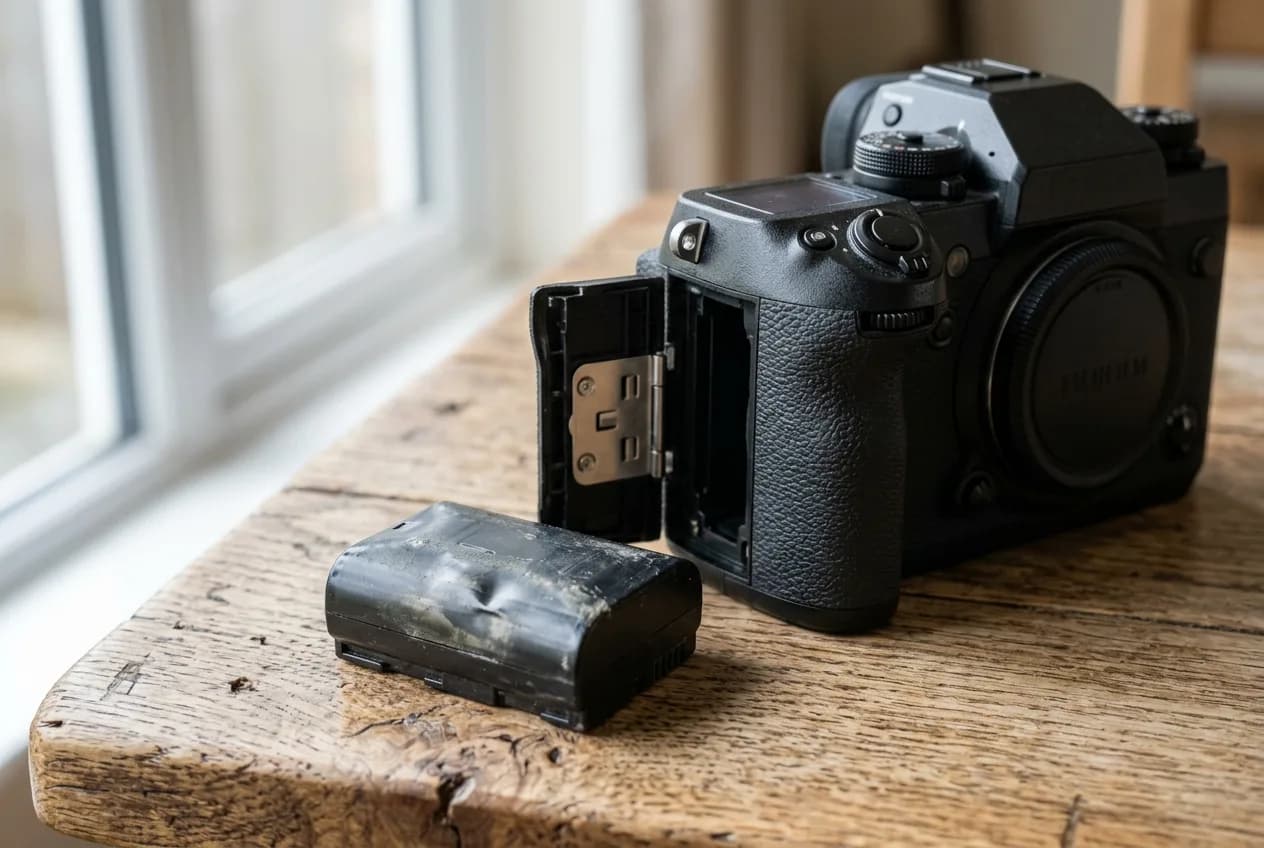
A particular quality feature of high-quality tariffs is the explicit inclusion of gradual battery damage. Natural battery wear is covered by top providers, provided maximum battery performance measurably drops below the critical threshold of 60 percent. Another hard condition for this benefit is the device's exact age. The insured device must be no older than four years at the time of the reported claim, counted from the original purchase date. Sudden damage from fire, explosion, implosion, dangerous overvoltage, and short circuits in the device is likewise a fixed part of the insurance terms. Human operating errors and improper handling by the photographer are also settled without objection. That's a major financial advantage over the statutory warranty. Legally speaking, the warranty only covers initial manufacturing defects. Wear is missing.
Worldwide scope and vandalism
Vandalism and targeted sabotage by unauthorized third parties round out the broad scope of electronics insurance. If strangers deliberately destroy expensive equipment at an event, the insurer covers the resulting repair costs or replacement value. For professional users who need worldwide cover for content creators, the policy's geographic scope is absolutely decisive. Modern policies apply globally on every continent without exception. Services under the insurance contract, however, are provided legally and financially in Germany. In practice, that means repair or financial replacement is usually handled through certified German service partners. nextsure pays meticulous attention to this worldwide validity when selecting tariffs. That way, sensitive equipment stays reliably protected on every continent. Borders fall away.
Theft cover: requirements for worldwide insurance cover
Personal custody as a requirement
Theft cover is subject to strict contractual requirements in the insurance terms that photographers absolutely need to know in detail. Simple theft is only covered by almost all providers if the device was carried securely in personal custody. Concretely and legally bindingly, that means: the photographer must always keep the camera in direct sight or noticeable physical contact. A theft must be noticeable immediately because of this proximity. Simply leaving the equipment unattended, setting it down, or forgetting it on a park bench is explicitly and without exception excluded from insurance cover. Cover against opportunistic theft therefore always requires the owner's active, uninterrupted attention. That significantly minimizes moral hazard for the insurer. Rules apply.
Break-in theft from vehicles
Break-in theft from vehicles is an extremely common and expensive scenario in professional film productions. Here, financial cover only applies under very specific, strict conditions. The insured device must be in a completely locked car. In addition, cover requires the equipment to be stored in a closed area of the vehicle that cannot be seen into from outside at all. The fixed trunk or a lockable glove compartment are mandatory for this under the terms. If the expensive camera is even partly visible on the back seat, the company refuses to pay entirely. The same applies to break-in theft from fixed buildings. The house, apartment, or hotel room must be properly and tamper-resistantly locked. Tilted or open windows immediately void cover. Caution is advised.
Robbery and looting
Robbery and looting form the third essential pillar of comprehensive theft cover. The insurer pays out in these extreme cases when physical violence is used against the insured person. A credible threat of violence with immediate danger to life and limb also triggers full insurance cover. Likewise, taking the equipment after the insured person loses the ability to resist, for example due to an accident or fainting, is covered contractually. Anyone acting as a modern media producer seeking a combination of camera and drone cover must carefully check whether these strict custody rules also apply exactly to the remote-controlled aircraft. nextsure compares these complex clauses completely transparently for the end customer. The analysis shows, based on data, precisely which providers genuinely settle theft claims in a customer-friendly way. Facts count.
Cost structure: premiums and deductible in the monthly subscription
Base premiums and payment method
The cost structure of flexible tariffs varies considerably in the market depending on the exact device value and the individually chosen scope of cover. Provider Hepster offers solid basic cover for affordable equipment from as little as 1.90 euros a month [1]. This extremely low entry price usually applies to cameras in the lower price segment and often doesn't yet include theft cover. Competitor Schutzklick positions itself slightly higher, with tariffs from 5.50 euros a month, but offers different basic benefits in return [3]. With all providers, the final monthly premium is always calculated from the camera's unsubsidized, regular purchase price, including the original accessories included in the box. Accessories bought separately, or added later, often have to be explicitly insured on top. The insurer conveniently collects the premiums due monthly via SEPA direct debit or credit card. That eases the ongoing budget. Liquidity is preserved.
Effect of the deductible
A key strategic lever for significantly reducing the premium is contractually agreeing on a fixed deductible. Many digital providers let the customer freely choose at sign-up between a premium tariff with no deductible at all and a cheaper model with a deductible. With Hepster, for example, an optional deductible of exactly 10 percent of the assessed claim amount can be agreed. This immediately and noticeably lowers the monthly insurance premium. Friendsurance takes a different approach and does away with a deductible entirely in its flexible model [2]. In a valid claim, the insurer there covers the full repair costs up to the maximum agreed sum insured. Photographers need to calculate whether the monthly surcharge for waiving the deductible entirely is economically worthwhile over the year. Doing the math pays off.
Sum insured and valuation
The sum insured documented in the certificate forms the absolute, unshakeable upper limit of financial compensation. Specialized brokers such as P&P Pergande & Pöthe offer professionals flat-rate insurance with fixed, predefined sums of 5,000 or 10,000 euros [5]. With digital, monthly-cancellable subscriptions, by contrast, the individual device is usually identified exactly via its specific serial number or IMEI and insured at its current replacement value. The first premium payment is due immediately after signing the contract digitally. nextsure strongly advises stating the equipment's actual value at sign-up absolutely realistically and verifiably. Deliberate underinsurance inevitably leads to painful financial gaps in the event of a total loss. Correct, invoice-based valuation is essential. Guessing is dangerous.
| Provider | Minimum term | Notice period | Deductible |
|---|---|---|---|
| Hepster | 3 months | 3 business days | Optional 10% |
| Friendsurance | None | Daily | None |
| Aktivas | 14 or 28 days | Ends automatically | Depends on tariff |
Premiums vary depending on the device's purchase price.
Exclusions: when camera insurance doesn't pay out
Gross negligence and intent
The contractual exclusions define the clear legal limits of each insurer's obligation to pay. Grossly negligent or even intentional conduct by the policyholder inevitably leads to an immediate, total loss of insurance cover. Anyone who leaves their expensive camera equipment completely unprotected outdoors in heavy, pouring rain is acting with gross negligence under established case law. Technical or physical damage demonstrably present before the insurance contract was formally signed is also strictly and without exception excluded. Insurers' claims departments check submitted damage photos and reports very closely for plausibility against the timeline. Devices delivered already defective from the factory are also not covered by electronics insurance. Only the statutory right of return or the warranty against the original retailer applies here. This is absolutely clearly regulated by law. There are no exceptions.
Wear parts and warranty cases
Another hugely important area of exclusion concerns classic wear parts and pure consumables. External removable storage media such as expensive CFexpress cards, chemical auxiliary materials, and standard batteries generally cannot be insured. Installed software of any kind, operating systems, or expensive licenses are also completely excluded from physical device cover. If a faulty firmware update disables the camera's main circuit board, electronics insurance usually doesn't pay out. Damage clearly covered by the retailer's statutory warranty or the voluntary manufacturer warranty is also subsidiarily excluded. The insurer contractually does not act as a convenient substitute for the manufacturer. War, civil unrest, global pandemics, and damage from nuclear energy are classic force-majeure exclusions. These massive accumulation risks cannot be insured under standard policies across the industry. The risk is too great.
Modifications and identification requirement
Electronic devices that have been substantially rebuilt or modified to specific customer wishes often immediately lose their basic insurability. Purely acoustic instruments or simple work tools with no measurable electronic core also fall completely outside the scope of these specialty policies. The customer must inform the insurer of the body's and lenses' unique serial number or specific IMEI number without exception and on time. Without this unambiguous, technical identification, there is no active cover in the system. As a digital broker, nextsure places the highest priority on transparent, understandable disclosure of exactly these limitations. Hard exclusions are proactively communicated during the advisory process so that no false expectations arise in an emergency. A precise, unvarnished look at the insurance terms saves expensive trouble later. That builds long-term trust. Transparency wins.
Key coverage exclusions at a glance
- Grossly negligent leaving-behind or forgetting of equipment
- Natural battery wear for devices older than four years
- Damage that already existed before the contract was signed
- Classic warranty cases and manufacturing defects
- Consumables such as SD cards and external batteries
The exact exclusions are defined in the respective insurance terms.
Obligations: the policyholder's duties in a claim
Duty of truthfulness and device registration
The contractual obligations cover all mandatory duties the customer must fulfill before and after a claim. Culpably violating these strict duties can lead to a partial or total loss of the insurer's obligation to pay. First, all questions in the digital application must be answered absolutely truthfully and completely. Customers must pay the agreed premiums on time and in full, undiminished amount. If a new device or an adequate replacement is purchased from a retailer after a total loss, the new serial number must be reported to the insurer in writing within exactly two weeks. This 14-day deadline is absolutely binding contractually. Without the current, correct serial number in the system, the insurer cannot match the new device to a future claim. Precision is mandatory.
Duty to mitigate and reporting deadlines
In an acute claim, the policyholder is under a strict duty to actively mitigate the damage. The policyholder must take all reasonable and possible measures to keep the financial cost of the damage as low as possible. A device that fell into a lake and got wet must be switched off immediately, disconnected from the battery, and professionally dried. The policyholder must report the resulting damage to the provider without delay. The maximum contractual reporting deadline with most providers is exactly 14 days after first becoming aware of the damaging event. With modern digital providers, reporting is usually done efficiently through a dedicated online portal. Complete and absolutely truthful information about exactly how the incident happened is required without exception. Deliberately false statements legally count as outright insurance fraud. Honesty lasts longest.
Police report for theft
For criminal acts by third parties, significantly stricter and shorter deadlines apply to the policyholder. Damage from simple theft, serious break-in theft, robbery, looting, vandalism, or targeted sabotage requires an official police report without exception. This formal report must be filed with the locally responsible police station without delay, at the latest 24 hours after first discovering the incident. The policyholder must forward the police case number issued there to the insurer immediately and without being asked. nextsure supports customers with clear, guided digital processes to strictly meet these tight deadlines. The claim report on the platform is structured so that no important deadlines or documents can be overlooked. Fast, documented action secures a smooth financial payout. Time is money.
Target groups: who benefits from a monthly-cancellable tariff
Content creators and agencies
The primary target groups for highly flexible policies are diverse and strongly shaped by digital ways of working. Professional content creators, travel vloggers, and high-reach influencers often need extremely expensive specialty equipment for tightly time-limited, specific ad campaigns. If an expensive, rented cinema camera is only rented or temporarily bought for an intensive three-month shoot, a rigid annual contract is entirely uneconomical. Camera insurance that can be cancelled monthly adjusts exactly and dynamically to the real project duration. Once the production is successfully completed, the policyholder simply cancels the policy with a short three-day notice period. That significantly optimizes the agency's calculated production costs. Rigid fixed costs turn into flexible, easily managed variable project costs under this model. Budgets are relieved.
Hobby photographers while traveling
Serious hobby photographers also benefit hugely from this modern, decoupled tariff structure. Anyone who mainly uses their expensive, mirrorless full-frame camera on an extended summer holiday or a multi-week, dusty safari in Africa often doesn't need expensive all-risk cover in their safe living room at home. Existing home contents insurance usually covers the risk of break-in theft at home entirely sufficiently. For the demanding trip, the digital monthly subscription is then specifically activated via smartphone. It reliably protects against unforeseeable drop damage in the mountains or aggressive moisture on the beach. After returning safely, the user ends the subscription in a few clicks. This smart, needs-based cover prevents permanent, expensive overinsurance. The money saved stays liquid with the customer. Efficiency rises.
Drone pilots and tech enthusiasts
Certified drone pilots and tech-savvy enthusiasts also appreciate the extremely short terms offered by insurtechs. The global market for electronic devices and camera technology moves extremely fast and is driven by innovation. Anyone who replaces their expensive equipment yearly or even every six months doesn't want to be stuck in old, inflexible contracts. Daily or monthly cancellation allows a fast, unbureaucratic switch of the insured item directly in the app. As a platform, nextsure focuses precisely on these dynamic, modern realities of digital natives' lives. Only tariffs that breathe and dynamically adapt to users' fast rhythm are brokered. Rigid, opaque annual contracts are a relic of the analog past for this demanding target group. Maximum flexibility is the new, unshakeable standard. Change is happening now.
Frequently asked questions
- Is there camera insurance with monthly cancellation?
Yes, various insurtechs now offer policies that can be cancelled monthly. These subscriptions are aimed specifically at users who need flexibility. After an initial minimum term, the contracts renew automatically month to month unless actively cancelled.
- How long is the minimum term for a monthly subscription?
The minimum term varies considerably by provider. Hepster, for example, requires an initial commitment of three months before monthly cancellation applies. Other providers, such as Friendsurance, waive a minimum term entirely and even allow daily cancellation of cover.
- What notice period applies to flexible tariffs?
With rolling monthly subscriptions, the notice period is often an extremely customer-friendly three business days before the end of the respective insurance period. If this deadline is missed, cover extends for another month. With genuine short-term tariffs for a few weeks, the contract usually ends automatically.
- Can I also choose a fixed term or an annual subscription?
Yes, classic annual contracts are still standard in the market and often offer a discount on the total premium. Anyone who uses their equipment intensively all year round usually does better financially with an annual subscription. Here too, a notice period of three business days before the end of the year often applies.
- Is the monthly subscription suitable for individual projects or trips?
Absolutely. The monthly subscription is ideal for time-limited assignments such as expensive shoots abroad, safaris, or specific ad campaigns. Once the project is finished, the policy can be cancelled, turning fixed costs into variable project costs. That prevents expensive, permanent overinsurance.
- Is theft always covered in the monthly-cancellable policy?
No, simple theft cover is often an optional module that raises the monthly premium. Strict requirements also apply: the device must be carried securely in personal custody. Leaving the camera unattended is excluded from insurance cover across the industry without exception.
Sources
Conclude directly online
Verified partner tariffs at no extra cost. The button takes you straight to the provider's calculator.
 Hepster
Camera insurance
Worldwide cover for new and used cameras, including original accessories.
- Coverage area:
- worldwide
- Battery-wear threshold:
- up to 60% remaining capacity, device max. 4 years old
- Minimum term:
- 3 months (monthly subscription)
- Drop, breakage, sand, and liquid damage
- Fire, explosion, power surge, short circuit, sabotage, vandalism
- Battery and screen damage, plus battery wear (where not covered by warranty)
- Operating errors and improper handling
- Theft module: theft, burglary from a car or home, robbery
Key exclusions
- Loss and forgetting outside the insured theft scenarios
- Devices without a known serial/IMEI number
- Damage covered under warranty or manufacturer's guarantee
- Gross negligence or intentional acts
Trusted Shops: 4,5/5 „Sehr gut“ (2.600 Bewertungen)
hepster insgesamt (Anbieterbewertung, alle Versicherungen)
Claims must be reported online within 14 days; theft must be reported to the police within 24 hours. Insurer: Hiscox SA, Niederlassung für Deutschland
Fact sheet: benefits, exclusions and waiting periods in detail
All details are taken from the provider's linked product page and the contract documents (IPID/policy conditions) published there; the insurer's documents prevail. Premiums, benefits and the insurance product itself may change – please verify the details directly with the partner before signing up; only the information provided there is binding.
Information last updated: July 2026 · Source: provider product information (IPID/policy conditions)