
Commercial glass insurance: cover & costs
Protect your business against high costs caused by broken glass. Get important information on cover, costs and how to choose the right glass insurance.
 Katrin StraubManaging DirectorInsurance expert with over 20 years of experience in the insurance industry.
Published on
Last updated on
9 min read
Table of Contents
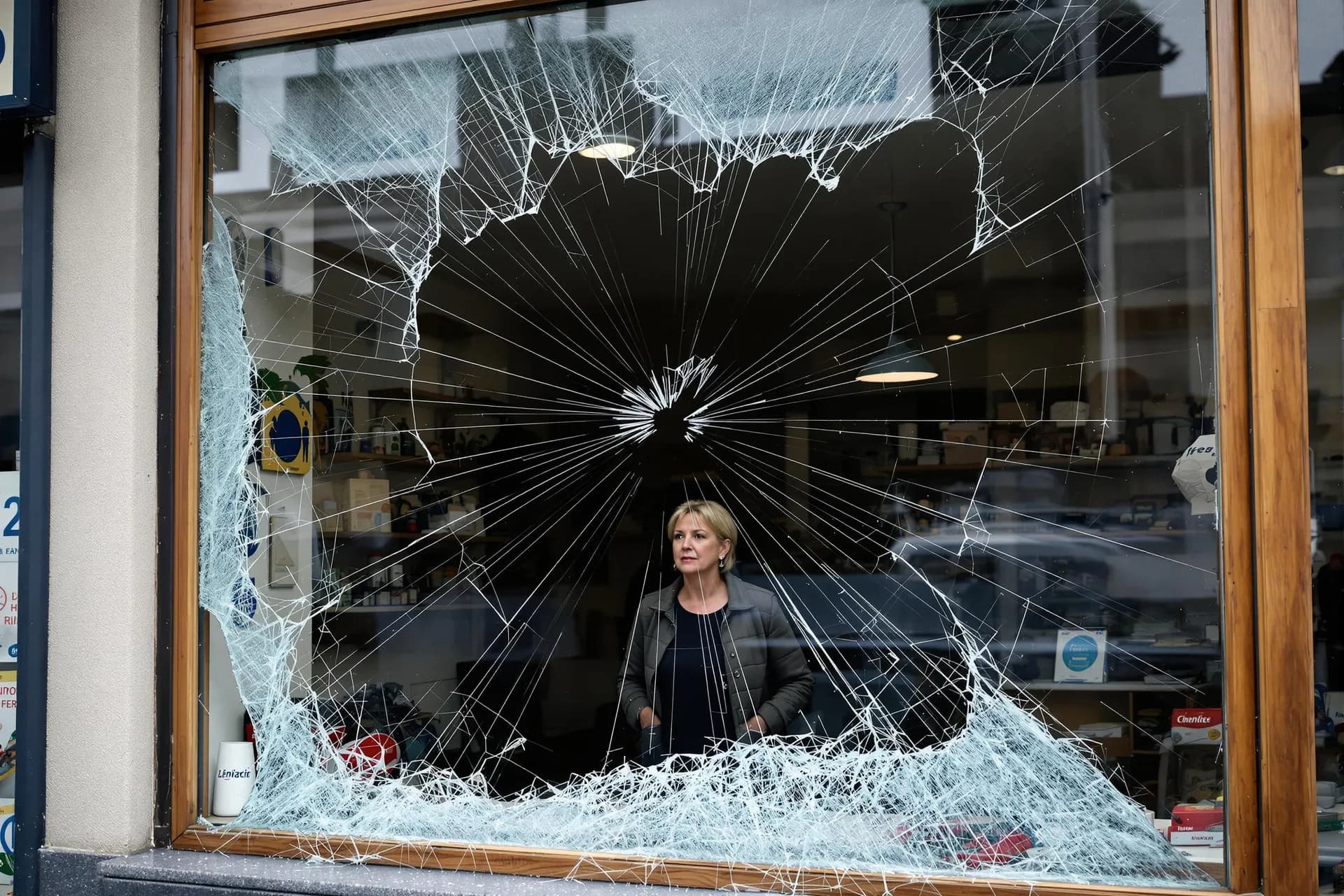
A cracked shop window or a broken glass door at your business premises? Damage like this can quickly lead to costs of several thousand euros. Commercial glass insurance minimises these financial risks and effectively protects your business operations.
Glass breakage in commercial premises: an often underestimated risk with high consequential costs
Many business owners significantly underestimate the risk of glass breakage and the associated costs. Damage to a large shop window front can quickly lead to repair costs of several thousand euros. The causes of glass breakage are varied: they range from carelessness, accounting for 27 per cent of cases, to stone chips at ten per cent, and burglary, which statistically makes up four per cent of claims. Especially for businesses with customer traffic or valuable displays, cover is essential. A suitable contents insurance can provide additional support here. Repairing a mirrored wall or an entrance door made of safety glass is often associated with very high costs. Without commercial glass insurance, you bear these costs alone. This can have a serious impact on your company’s liquidity.
Typical causes of damage and their financial impact
The most common causes of glass breakage in the commercial sector are often quite ordinary. Negligence by employees or customers tops the statistics at 27 per cent. A falling object or a door opened carelessly is often enough. Stone chips, for example caused by passing vehicles, are responsible for ten per cent of claims and can destroy expensive specialist glazing. Vandalism and break-ins, which still account for four per cent of glass breakages, not only incur repair costs but often also result in the loss of goods. The costs of emergency glazing and the swift removal of broken glass quickly add up to several hundred euros, even before the actual repair begins.
A business interruption insurance can offer additional security here. Bear in mind that stress in the glass can also lead to breakage. Although these account for a smaller proportion, they are often difficult to predict. Covering these risks is an important building block for the financial stability of your company.
Commercial glass insurance cover: Understanding the exact scope of cover
Commercial glass insurance typically covers damage to building and contents glazing. This usually includes external and internal glazing permanently attached to the building. Prefabricated or installed panes and glass panels are generally insured as well. The costs of emergency glazing to temporarily seal openings are often covered up to, for example, EUR 1,500. It is important that the policy covers not only the glass replacement itself, but also ancillary costs such as disposal, scaffolding or crane work. A commercial property insurance policy is a sensible addition. The exact benefits can vary depending on the provider and tariff, so a careful comparison is essential.
Building glazing: insuring windows, doors and façades securely
Building glazing includes all glass surfaces permanently connected to the building. This covers window and door glazing, glass roofs, rooflights and also glass blocks. In the event of a claim, for example involving a large shopfront installation, costs can quickly run into five figures. Make sure that special glazing such as safety glass or insulated glazing is explicitly included in the cover, as these often have higher replacement costs. The insurance generally covers the cost of replacing the panes with the same type and quality. The costs of removing and refitting obstacles, such as protective grilles, can also be insured up to a sum of EUR 2,000. Comprehensive insurance for retail and trades should take this aspect into account. Covering the cost of repainting, artwork or films on the glass is also an important point and can be covered up to EUR 1,500.
Contents glazing and special glazing: protection for interiors and advertising installations
In addition to pure building glazing, insuring contents glazing is also an important aspect of commercial glass insurance. This includes, for example, glass tops on tables, display cabinets, mirrors or counter glazing. In representative business premises or in retail, damage worth several hundred to a few thousand euros can quickly occur here. For example, an employee carelessly knocks against a glass display cabinet, which breaks and damages other glass surfaces as well. Many tariffs also cover special glazing. This can include:
- Artistically finished glass (often up to a specified amount, e.g. EUR 15,000)
- Advertising installations such as illuminated signs or company signs made of glass (sometimes optional)
- Glazing for aquariums or terrariums (depending on the tariff)
- Glass ceramic hobs (included in some policies)
Check carefully which of these elements are present in your business and whether they are sufficiently insured under the chosen tariff. Commercial legal expenses insurance can help in disputes over the scope of cover. Including the cost of renewing lettering or decorative elements on the glass can also be relevant and is often covered up to EUR 1,500.
Keeping an eye on costs: How to calculate your commercial glass insurance
The cost of commercial glass insurance depends on several factors. The type and extent of the glass surfaces to be insured are decisive. Large shopfronts or specialist safety glazing tend to result in higher premiums than simple office windows. The chosen sum insured also plays a role; the higher the maximum reimbursement amount in the event of a claim, the higher the premium. Some insurers offer flat-rate tariffs, while others calculate the premium based on the exact square metres of the glass surfaces. The location of the business can also be a factor; in areas with a higher risk of vandalism, premiums may rise. Comparing different offers is essential in order to achieve an optimal price-performance ratio. Repairing a shop window can quickly cost several thousand euros.
To assess the costs realistically, you should carry out an exact inventory of all glass surfaces in your business. This includes:
- External glazing (windows, doors, shop windows, façade elements)
- Internal glazing (glass partitions, display cases, mirrors, glass furniture)
- Special glazing (safety glass, insulating glass, artistically finished glass, advertising installations)
- Roof glazing and rooflights
Many insurers offer online calculators that allow you to obtain an initial estimate of the premium, often based on the type of business and the total glass area. For an exact quote, however, an individual calculation by the insurer is usually necessary. Bear in mind that additional benefits such as cover for films or lettering can affect the premium, but can save considerable costs in the event of a claim. An affordable business liability insurance is important, but do not skimp on essential cover such as glass insurance.
Choosing the right plan: key criteria for your decision
When choosing a commercial glass insurance policy, you should not only focus on the price. The scope of cover in detail is what matters. Check carefully which types of glass are insured and whether there are any exclusions. For example, are damage caused by vandalism or natural events such as storms and hail covered? The amount of the excess in the event of a claim is another important point; a lower excess often means a slightly higher premium, but can be worthwhile for more frequent smaller claims. Also pay attention to the arrangements for new-for-old compensation – ideally, the insurer should cover the cost of re-glazing with the same type and quality without deductions for age or wear and tear. The product liability insurance is another component of commercial insurance cover. Clarify whether the costs of emergency glazing and the disposal of broken glass are also covered, often up to an amount of EUR 2,000.
Our expert tip: Pay attention to these details in the small print for optimum protection
The small print, the general insurance terms and conditions (AGlB), often contains crucial details. For example, check whether there are waiting periods before cover takes effect. Another important point are also obligations – i.e. duties you have as the policyholder, such as reporting a claim without delay. Are consequential losses, for example due to rainwater penetrating after broken glass, also insured, or do you need separate cover against natural hazards for this? Also clarify how the insurer handles losses caused by gross negligence; some tariffs only provide limited cover here, or none at all. Pay attention to exclusions: Losses caused by war, internal unrest or nuclear energy are often not covered. Hollow glass items such as drinking glasses or vases are usually excluded. A careful review of these points protects you from nasty surprises in the event of a claim.
Glass breakage claim: How to act correctly and secure your claim
If glass breaks, swift and correct action is required to limit the damage and secure your claims under commercial glass insurance. Document the damage immediately with photos before anything is altered. Temporarily secure the breakage site to prevent further damage or injury; the costs of emergency glazing are often covered up to a sum of 1,500 euros. Report the damage to your insurer without delay – most providers have dedicated hotlines or online portals for this purpose. Have your policy number ready. Clarify the next steps with the insurer, especially regarding the repair. Insurers often have partner contractors whose appointment can speed up the process. Keep all receipts and invoices carefully. A commercial cyber insurance cannot help with glass breakage, but it is an example of another important specialist insurance policy. The disposal costs for the broken glass are generally also covered by the insurer.
After the claim has been reported, the insurer will review the case. Have the following information ready:
- Date and time of the damage
- Precise description of how the damage occurred
- Photos of the damaged glazing and, if applicable, the cause
- Quotation for the repair (if already available)
- Your policy number
Only arrange repairs after consultation with and approval from the insurer, unless it is an urgent emergency measure to limit the damage. The insurance usually reimburses the costs of replacing the glazing with material of the same type and quality. Costs for scaffolding or cranes, if required for the repair, may also be insured up to 2,000 euros. The renewal of coatings or films on the glass is also often covered up to an amount of 1,500 euros. Good insurance for landlords often also includes glass insurance. Prompt and complete reporting of the claim is the key to a swift settlement.
Frequently asked questions
- Which types of glass are typically covered under commercial glass insurance?
By default, panes and sheets of glass that belong to building or furniture glazing are insured. This includes windows, doors, shop windows, display cabinets, mirrors, glass roofs and skylights. Special types of glass such as safety glass or insulated glass are often also covered.
- What should be considered in the event of damage to a glass advertising installation?
Advertising installations such as illuminated signs or company signs made of glass can often be optionally included in commercial glass insurance. Check your policy to see whether this item is included and up to what amount costs are covered.
- Are scratches on glass panes also covered?
No, pure surface damage such as scratches, scuffs or chips, where the pane is not broken all the way through, is generally not covered by commercial glass insurance.
- Does commercial glass insurance also cover the costs of urgently needed emergency glazing?
Yes, the costs for emergency glazing or boarding up to temporarily secure an opening are covered by most policies, often up to a certain amount such as €1,500.
- How quickly must glass damage be reported to the insurance company?
Glass damage should be reported to the insurer without delay, as quickly as possible. The exact deadlines and reporting channels are set out in the insurance terms and conditions.
- Are glass pieces of furniture such as tables or shelves always insured as well?
Glass furniture falls under furniture glazing and is included in many commercial glass insurance tariffs. However, it is important to check the exact scope in the insurance certificate, as there may be differences between providers.
Sources
- [1]The German Insurance Association (GDV) provides a comprehensive overview of statistics on the German insurance industry.
- [2]Statista provides detailed information and statistics on the insurance sector in Germany on a dedicated topic page.
- [3]The Federal Statistical Office (Destatis) publishes structural data on services that are relevant for industry analysis.
- [4]The German Insurance Association (GDV) provides information on business performance in property, industrial, commercial and agricultural insurance.
- [5]Das Investment offers an article on claims in industrial insurance, especially in the context of AGCS in 2021.
- [6]Statista provides statistics on the vacancy rate of office properties in Germany.
- [7]The Federal Statistical Office (Destatis) is the official source of official statistics in Germany.