Commercial and residential building insurance
Protect your mixed-use property to the fullest. Information on costs, cover and legal aspects. Request your risk analysis!
 Katrin StraubManaging DirectorInsurance expert with over 20 years of experience in the insurance industry.
Published on
Last updated on
6 min read
Table of Contents
Optimal buildings insurance for commercial and residential properties: Your comprehensive guide
One property, two types of use – double the need for protection? The right buildings insurance for commercial and residential use is crucial to avoid financial risks in the event of damage. Find out how to choose the right policy and avoid pitfalls.
The 50% rule: understanding the foundation of proper hedging
The correct classification of your property is the first step.
If the building is used for commercial purposes more than fifty per cent of the time, a special commercial building insurance policy is usually required.
If the commercial share is below that, a residential building insurance policy with declaration of the commercial use may be sufficient.
This distinction has a significant impact on premiums and cover.
An accurate calculation of the floor area is therefore essential for insurance cover.
The type of business also plays a role; a trade business often carries higher risks than an office.
This is how you secure the long-term preservation of your property's value.
The correct classification avoids gaps in cover in the event of a claim.
Define the scope of services: choose basic protection and sensible extensions
A solid buildings insurance policy for commercial and residential use typically covers damage caused by fire, escape of water, storm and hail.
For example, it covers repair costs after a burst pipe floods a shop on the ground floor.
Storm damage to the roof of a three-storey mixed-use building is usually covered as well.
However, many owners underestimate additional risks.
Consider which optional cover extensions make sense for your property.
These include:
- Natural hazards insurance: protection against flooding, torrential rain or snow load – increasingly important as weather extremes become more frequent.
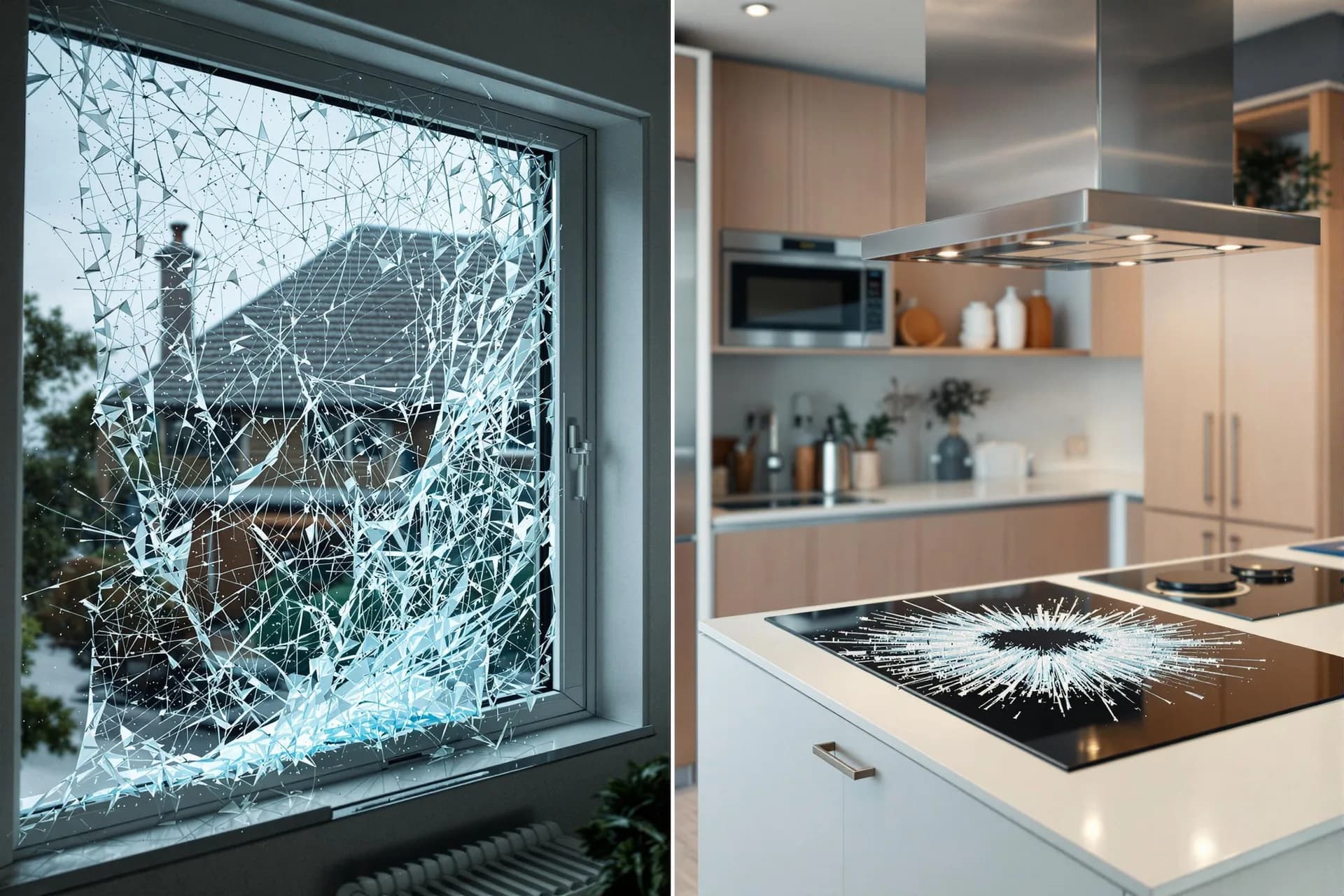
- Glass insurance: covers breakage damage to shop windows or large glass façades, which can quickly result in costs of several thousand euros.
- Loss of rent insurance: compensates for lost rental income if the building becomes unusable after a claim, often for up to 48 months.
- Solar PV system cover: Special protection for solar modules on the roof. [<="///">.]
A precise needs analysis helps to tailor the insurance cover optimally to the specific risks of your mixed-use property.
This ensures that, in the event of a claim, you are not left facing high costs.
Calculate costs: understand premium calculation and 1914 value
The premiums for building insurance for commercial and residential use depend on many factors.
These include the value of the building, the type of commercial use and the location.
An important factor is the sum insured, which is often determined according to the so-called 1914 value.
This notional calculation value states the theoretical construction costs of the building in 1914 in gold marks.
Multiplied by the current index-linked new-for-old factor adjusted annually by the GDV, this gives the current new-build value.
For 2024, for example, this factor is 26.1.
The formula is: 1914 value x index-linked new-for-old factor x insurer's rate = annual premium.
A correct determination of the 1914 value is crucial to avoid dangerous underinsurance.
For mixed-use buildings with up to fifty per cent commercial use, form 771 can be used.
This takes account of volume and features.
A precise valuation ensures that, in the event of a claim, you receive compensation that makes reconstruction possible at current prices.
Knowledge of this calculation logic helps you compare offers more effectively.
Special case for renting: passing insurance costs on to tenants
As the landlord of a mixed-use property, you can apportion the building insurance costs to your tenants on a pro rata basis.
The prerequisite is an appropriate agreement in the tenancy agreement, which often refers to Section 556 of the German Civil Code (BGB).
In the case of mixed use, a precise allocation of the costs is crucial.
Premiums for commercially used areas are often more expensive than for residential areas due to higher risks.
A residential tenant therefore only has to bear the share of the costs attributable to purely residential use.
A ruling by the Tempelhof-Kreuzberg Local Court (2016) confirmed that costs for commercial portions must be deducted in advance.
This applies not only to insurance, but also to water or electricity costs.
A transparent service charge statement is essential here to avoid conflicts.
Clarify the allocability and the apportionment key precisely in order to act in a legally compliant manner.
This creates clarity for both sides and secures your claims as landlord.
Mastering legal pitfalls: understanding the VVG, VGB and disclosure obligations
Buildings insurance for commercial and residential properties is based on the Insurance Contract Act (VVG) and the General Residential Buildings Insurance Conditions (VGB).
There are various versions of the VGB (e.g. VGB 2008, VGB 2011), and their exact wording is decisive in the event of a claim.
A key duty of the policyholder is to provide complete and accurate details of all material risk factors before and during the policy term.
This includes an exact description of the commercial use, such as a quiet office or a workshop with three machines.
A change in use, such as converting office space into a brothel, is also subject to notification and must be reported to the insurer.
If you conceal relevant details, you risk losing your insurance cover in the event of a claim.
A breach of the duty to notify can result in the insurer being released from liability, even if the loss amounts to only one million euros.
Always inform your insurer about structural alterations or new risks.
This ensures that your insurance cover is always up to date and applies when you need it.
Learning from practice: Recent court rulings and their significance
Court decisions shape the interpretation of insurance terms and highlight typical areas of dispute.
The Federal Court of Justice (BGH) has clarified that the exclusion for damage caused by „mould“ (dry rot) in escape of water insurance also applies where the fungal infestation is the result of an insured escape of water.
This underlines the importance of checking exclusions carefully.
Another judgment concerns the burden of proof in flood damage claims; the policyholder must prove the insured event.
These rulings illustrate how important precise contract wording and accurate documentation of damage are.
They also show that not every water damage claim is automatically covered.
Keeping up to date with recent case law helps you assess your own rights and obligations more accurately.
Seek expert advice: optimal cover and avoid pitfalls
The choice of the right building insurance for commercial and residential use requires care and expertise.
A tailored needs analysis is essential to ensure cover that fits precisely.
Expert tip: Make sure the sum insured is sufficient to avoid underinsurance.
The indexed replacement value cover is usually the best choice here, as it takes account of price increases in the construction industry.
Clarify exactly which risks are covered by the chosen tariff and which optional modules, such as a natural hazard insurance, make sense for your specific situation.
Obtain several quotes and compare not only the price, but also the detailed descriptions of benefits and exclusions.
Professional advice can help you avoid pitfalls and optimise your insurance cover.
Don't underestimate the complexity, especially for mixed-use properties with different types of commercial use.
Careful planning protects you from nasty surprises and secures your livelihood in the event of a claim.
nextsure is happy to support you in analysing your risk situation.
Frequently asked questions
- Do I need a specific building insurance policy if I run a small office in my residential building?
Yes, you must inform your insurer of commercial use. As long as the residential portion predominates (more than fifty per cent) and the commercial use is low-risk (e.g. a purely office-based business), this can often be taken into account within your existing residential building insurance with an additional premium. However, a precise assessment is always necessary.
- What happens if I don’t correctly declare the commercial portion of my property?
A false or incomplete declaration of commercial use may be regarded as a breach of the duty of disclosure. In the worst case, the insurer may reduce the benefit in the event of a claim or refuse it entirely. Honesty and accuracy are crucial here.
- Are damage caused by heavy rain always covered by buildings insurance for commercial and residential properties?
No, damage caused by heavy rain or flooding is natural hazard damage. This usually needs to be covered through an additional component, natural hazard insurance. Basic cover usually does not cover this.
- How often should I review my buildings insurance for a mixed-use property?
You should have your policy reviewed regularly, at least every three to five years, as well as whenever there is any material change (e.g. renovation, change in use of the business, increase in value). This ensures that your cover remains up to date and that there is no underinsurance.
- What does 'index-linked replacement value' mean in buildings insurance?
The index-linked sum insured ensures that the insurance amount is adjusted annually in line with construction price trends. In the event of a claim, you will therefore receive the costs for a new build of the same kind and quality at current prices, even if construction costs have increased since the contract was concluded.
- What role does the type of business play in the building insurance premium?
The type of business has a significant impact. A manufacturing business with machinery or the storage of flammable materials poses a higher risk (e.g. fire risk) and leads to higher premiums than, for example, a purely administrative office or a doctor’s surgery with a low property value.
Sources
- [1]Federal Statistical Office (Destatis) provides information on construction prices and property price indices.
- [2]Federal Statistical Office (Destatis) provides further information on construction prices.
- [3]Munich Chamber of Industry and Commerce provides guidance on insurance for businesses.
- [4]German Environment Agency (UBA) provides information on the impact of climate change on the financial sector.
- [5]German Environment Agency (UBA) provides a report on climate risk insurance.
- [6]Laws on the Internet provides the full text of the German Civil Code (BGB), here specifically on Section 1128.
- [7]German Insurance Association (GDV) provides statistics on claims expenditure for residential building insurance due to natural hazards (2003-2022).