
Dental Insurance for Braces at KIG 1 & 2: What's Covered
Which dental insurance plans cover braces classified as KIG 1 or 2?
All details are taken from the provider's linked product page and the contract documents (IPID/policy conditions) published there; the insurer's documents prevail. Premiums, benefits and the insurance product itself may change – please verify the details directly with the partner before signing up; only the information provided there is binding.
 Katrin StraubManaging DirectorInsurance expert with over 20 years of experience in the insurance industry.
Published on
12 min read
Table of Contents
Dental supplementary insurance for braces at KIG 1 and 2 is essential, since statutory health insurance doesn't cover the cost for these mild misalignments. Specialized tariffs reimburse between 70% and 100% of treatment costs, which can quickly reach €3,000 to €6,000. Timing is crucial. The policy must be taken out before a dentist diagnoses the misalignment or recommends treatment.
dental supplementary insurance
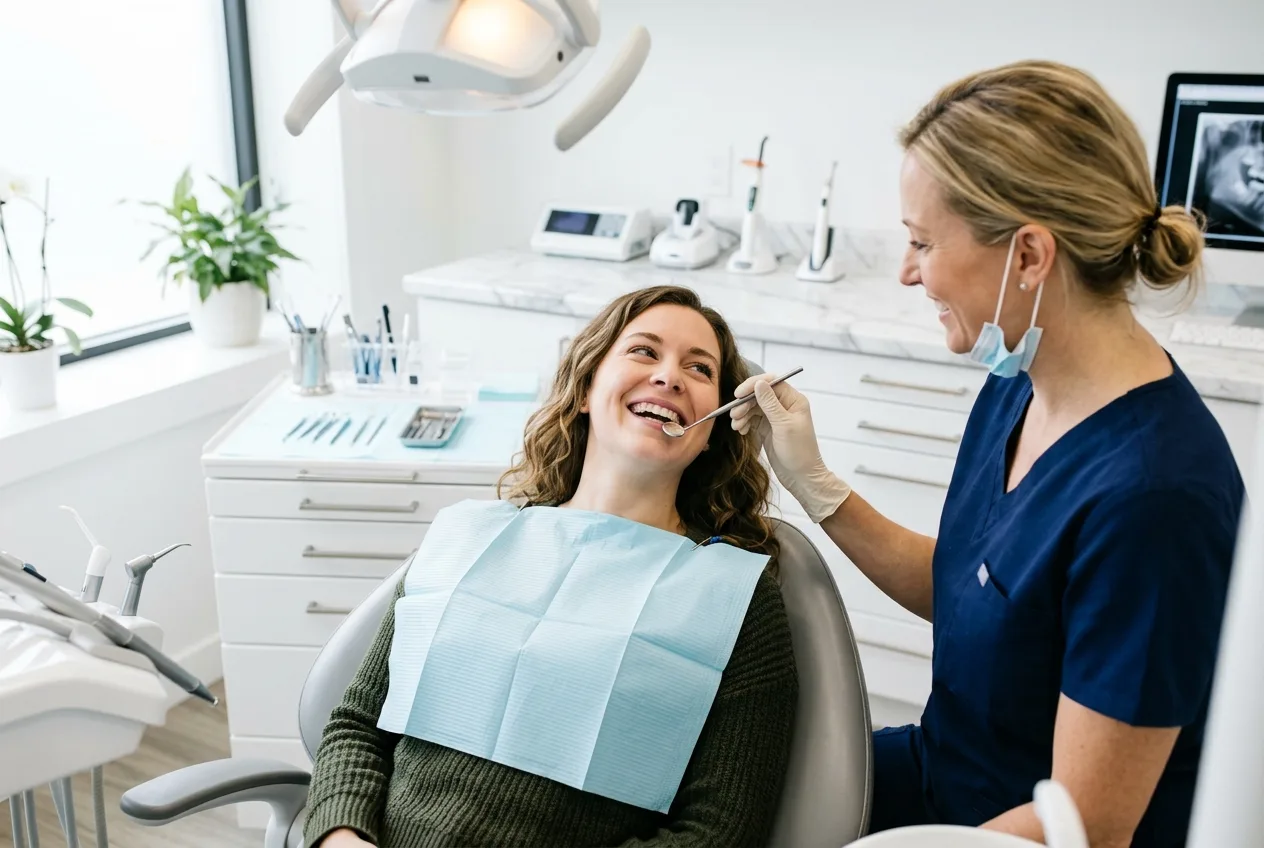
Find the right dental supplementary insurance at nextsure. Comprehensive protection, digital processing, and tailor-made rates for your most beautiful smile.
Learn moreThe KIG System and the Gap for Mild Misalignments
Classifying Dental Misalignments
The KIG system classifies dental misalignments into five different levels to assess the medical necessity of treatment. Statutory health insurance only covers the cost of orthodontic therapy once a case is classified in Kieferorthopädische Indikationsgruppe (KIG) 3. Under the strict guidelines of statutory insurers, levels 1 and 2 don't involve sufficient medical necessity, so parents have to bear the resulting costs entirely themselves. Dental supplementary insurance closes this financial gap. According to the official definitions, level 1 covers very mild misalignments, such as a deep bite of one to three millimeters, which insurers classify as purely cosmetic [1]. In practice, this classification determines thousands of euros in treatment costs that burden families without private cover. The system is rigid. Parents need to act proactively here to avoid financial strain.
The Challenge With KIG 2 Diagnoses
Level 2 covers mild misalignments, including, for example, a frontal crossbite or crowding with a deviation of one to three millimeters [1]. Although dentists and orthodontists very often recommend early correction in these specific cases, to avoid later chronic problems with the jaw joint or with daily dental care, statutory insurers consistently refuse reimbursement. Parents then face the major challenge of covering the cost of braces for their children. Without strong private cover, families have to pay the entire cost of treatment out of pocket, which puts a heavy strain on the family budget. The right tariff avoids this burden. Strategy beats chance here. A KIG 2 diagnosis is a classic case for private supplementary policies.
Statistical Relevance and the Need to Act
Almost every second child under 18 needs orthodontic treatment at some point during their development [2]. This rate demonstrates the relevance of taking out dental insurance for your child early. Once the specialist has officially made the diagnosis, it becomes almost impossible to find a suitable tariff that still covers the cost of this specific treatment. Independent experts therefore recommend taking out a policy as soon as the child's baby teeth have fully developed [3]. Forward-looking planning effectively protects families from unexpected, high expenses in the future. The market offers specialized tariffs tailored exactly to these needs, providing comprehensive cover. Act in good time. Waiting always ends up costing more money.
The Cost Risk of Braces With No Statutory Cover
The Financial Scale of Orthodontics
The cost risk of orthodontic treatment is often underestimated. Modern braces in Germany cost an average of €3,000 to €6,000, strongly depending on the treatment method chosen and the total duration of therapy. If statutory health insurance doesn't pay because a case is classified as KIG 1 or 2, parents bear this substantial sum entirely from taxed income. A suitable dental supplementary policy reliably absorbs these costs and also provides access to modern, comfortable treatment methods such as invisible aligners or discreet mini-brackets. This reduces the financial burden on families considerably, which noticeably eases everyday life. Every individual case requires a precise calculation and a strategic approach to financing. That protects your budget.
Hidden Additional Costs of Treatment
Besides the pure material costs for brackets and wires, there are also high fees for the orthodontist, regular checkup appointments, and special diagnostic procedures such as digital volume tomography. Many parents underestimate these ongoing costs, which inevitably add up over a typical period of two to three years. A detailed treatment and cost plan from the dentist gives precise insight into the expected expenses and the individual billing items. Policyholders submit this plan before treatment begins—that avoids gaps in coverage. Insurers then check medical necessity and the exact tariff reimbursement in detail. A truly good policy also fully covers these often overlooked additional costs and provides real security. Check the details. Hidden costs add up quickly.
Insurer Conditions in Detail
Choosing the right cover requires a very close look at the detailed tariff terms of each individual provider. Some insurers exclude purely cosmetic treatment under KIG 1 entirely, such as HUK-COBURG's tariffs, which contractually only pay from a medical necessity level of KIG 2 onward [4]. Other providers such as ARAG, in direct contrast to statutory health insurance, already pay for very mild misalignments at levels 1 and 2 [5]. Reimbursement rates vary considerably depending on the tariff level chosen, ranging between 70% and 90% of the total cost. A well-researched comparison of the terms is therefore essential to find the best cover for your child. nextsure helps families evaluate these complex differences transparently. Comparing pays off. The differences are enormous.
Comparing Tariffs for Mild Misalignments
Advigon Insurance's Benefit Levels
A tariff comparison reveals clear, decisive differences in actual benefit practice. Advigon Insurance, for example, offers its customers two very different benefit levels: the solid Dental Medium (AZM) tariff and the comprehensive Dental Luxus (AZL) tariff. The AZM tariff reimburses 75% of the cost of dental treatment and dentures, while the premium AZL tariff covers a full 100% of eligible expenses. Both tariffs do away with any waiting period, to the customer's benefit, so policyholders have an immediate, direct entitlement to all agreed benefits. Immediate cover is guaranteed. This is a decisive, measurable advantage over many competitors on the market, which often impose blocking periods lasting months. The final choice depends heavily on the family's individual need for security and available budget. Choose wisely.
Reimbursement Caps in the First Years
Reimbursement caps in the first years of the contract are a key criterion when choosing a tariff. Under Advigon's AZM tariff, maximum benefits in the first 48 months are contractually capped at a total of €2,400. The stronger AZL tariff offers a significantly higher, more comfortable reimbursement limit of up to €4,000 for dental treatment over the exact same period. After month 48, these financial caps no longer apply at all, and cover applies without limit. These limits also don't apply from the outset in the event of an unforeseen accident, which provides valuable extra protection for active, sporty children. Families should be sure to factor these specific scales into long-term planning for orthodontic treatment. The budget has to work. Plan ahead.
Crediting Prior Insurance Time
A special, very customer-friendly feature of Advigon's tariffs is the generous crediting of existing prior insurance time. If customers switch seamlessly from another dental policy to the AZM or AZL tariff, their proven prior insurance time can lead to the reimbursement caps being waived immediately. That's a major advantage. This requires provable prior insurance of at least 48 months and an absolutely seamless contractual transition with no gap in time. The prior policy must also contractually show minimum benefits of 75% to switch into the AZM tariff, or 100% to switch into the AZL tariff. This smart mechanism rewards loyal insurance customers and makes switching to a better provider enormously easier. It's worth it for families to critically review existing old policies and optimize them where needed. Switching saves money.
| Benefit feature | Dental Medium (AZM) | Dental Luxus (AZL) |
|---|---|---|
| Reimbursement rate | 75% | 100% |
| Max. reimbursement, 48 months | €2,400 | €4,000 |
| Preventive care per year | €90 | €140 |
| Waiting periods | None | None |
Both tariffs offer advanced pain management and benefits with no caps in the event of an accident.
The Right Time to Take Out a Policy
Signing Up Before the First Diagnosis
The timing of taking out a policy is decisive for keeping your entitlement to benefits later on. When taking out dental supplementary insurance, the misalignment must not yet have been diagnosed or officially recommended by a dentist [2]. If the orthodontist has already made a binding note of upcoming treatment in the patient file, the vast majority of insurers refuse to cover this specific case. In consultations, parents often desperately ask about taking out insurance despite treatment already recommended. In such difficult cases, there are only very few specialty tariffs on the market, and these usually come with extremely high premium surcharges or very strict benefit limits. Acting early and proactively is therefore by far the best protection for the family budget. Don't wait. Act now.
The Ideal Age to Start Coverage
Independent experts recommend taking out insurance as soon as the child's baby teeth have fully developed, which is usually around age three to four [3]. At this early point, no orthodontic diagnoses have generally been made at all yet, and monthly premiums for children are calculated affordably. Advigon's AZM tariff, for example, costs children and young people up to age 25 only a very affordable €5.69 a month, while the premium AZL tariff comes to a fair €9.20. This very small monthly investment reliably secures dental benefits later worth thousands of euros. Acting early pays off. Waiting a long time almost always ends up costing families considerably more than paying premiums in good time. Get your child covered.
Waiting Periods and Immediate Cover
Another key aspect when timing your policy purchase is the providers' tariff waiting periods. Many classic, older tariffs impose a rigid eight-month waiting period for all orthodontic benefits before the first bill can be submitted. Modern tariffs such as ARAG's or Advigon's do away with these customer-unfriendly waiting periods entirely, to customers' delight [5]. This difference is decisive. In concrete terms, this means full coverage applies immediately once the policy is accepted. Still, the iron rule remains: treatment must not have been recommended before the sign-up date. Immediate cover helps families enormously with sudden, unexpected diagnoses right after the policy starts. That provides security. Compare the terms closely.
Reimbursement Caps and Benefit Scales in Detail
How the Benefit Scales Work
Reimbursement caps very precisely regulate the maximum payouts from the insurance in the first years of the contract. Almost all reputable insurers use such benefit scales to protect the pool of policyholders from immediate large claims shortly after signing up and to keep premiums stable. Under Advigon's AZM tariff, the maximum reimbursement is €600 in the first year of the policy, €1,200 in the second year, and €1,800 in the third year. The stronger AZL tariff offers €1,000 in the first year, €2,000 in the second, and €3,000 in the third in reimbursement volume. These amounts add up continuously over the first four years of the contract. Precise knowledge of these specific figures is extremely important for the family's financial planning. Calculate carefully. The budget is limited.
Strategic Treatment Planning
For a typical orthodontic treatment, which usually spans several years, these tariff scales often line up surprisingly well with the actual course of treatment and the flow of bills. High costs are almost never incurred all at once, but are logically spread across the various treatment phases, such as initial diagnostics, fitting the braces, and regular wire adjustments. If, for example, active treatment only begins in the third year of the policy, significantly higher reimbursement amounts are already freely available. Timing is decisive. Parents should compare the dentist's treatment plan in detail against the tariff limits and discuss it with the dentist. Smart, forward-looking planning optimizes cost reimbursement and considerably minimizes the family's out-of-pocket share. Talk to the dentist. Plan the phases.
Budgeting for Further Dental Treatment
A dental supplementary policy with an orthodontics module for children must disclose these scales absolutely transparently in its terms. Beyond the purely orthodontic benefits, these budgets often also cover all of the child's other dental treatment. If the child additionally needs expensive composite fillings, fissure sealing, or pain management in the first years, this is also counted against the same tariff budget. Once the first 48 months have passed, contractual benefits under most premium tariffs are then available without limit. This provides long-term, reliable financial security for the whole family, regardless of whatever dental challenges may arise in the future. That's real provision. Protect your child comprehensively.
Key Aspects of the Reimbursement Caps
- Scales usually apply for the first 36 to 48 months after taking out the policy.
- For accident-related dental treatment, these limits no longer apply immediately under top-tier tariffs.
- Prior insurance time can be credited for a seamless switch.
- The budget often covers orthodontics and dental treatment combined.
- Once the scale period has ended, unlimited coverage applies.
Always check the currently available tariff balance before treatment begins.
Add-On Modules for Pain-Free Treatment
Innovative Pain Management Methods
A tariff's add-on modules significantly increase treatment comfort for young patients. Beyond simply covering the cost of braces, truly high-quality tariffs offer additional benefits that are extremely important especially for anxious children. Advigon's AZM and AZL tariffs, for example, include significantly advanced pain management as standard. This covers gentle methods that complement classic local anesthesia, such as professional acupuncture, gentle general anesthesia, calming laughing gas, or deep twilight sleep. Such specialized benefits are ideal for young patients with pronounced dental anxiety who would refuse normal treatment. A relaxed, anxiety-free dentist visit is worth a great deal for a child's psychological development. Anxiety-free at the dentist. That's priceless.
Preventive Care During the Braces Period
Another extremely important building block in dental care is regular preventive care. Regular professional teeth cleaning is absolutely essential especially during ongoing orthodontic treatment, since fixed braces make daily oral hygiene at home considerably harder. The AZM tariff contractually reimburses up to €90 per calendar year for these preventive measures, split into a maximum of €70 per individual session. The premium AZL tariff offers an even higher budget of €140 a year for cleaning. These targeted preventive measures effectively protect the teeth from decay and painful gum disease throughout the entire time the braces are worn. Permanently healthy teeth are the ultimate goal of any orthodontic intervention. Prevention is key. Make use of these budgets.
Modern, Tooth-Preserving Techniques
Modern, tooth-preserving treatment techniques perfectly round out a top-tier tariff's range of benefits. This includes, for example, micro-invasive caries infiltration, a completely pain-free treatment of early-stage decay with no drilling at all. Preventive fissure sealing and attractive, high-quality composite or resin fillings are also covered without issue by good tariffs. In terms of quality, these specific benefits go far beyond the statutory insurance level and ensure lasting, aesthetic dental health. Families benefit enormously from comprehensive, high-quality care from a single source. Investing early in a genuine premium tariff always pays off in the long run through healthy teeth. Quality pays off. Don't cut corners in the wrong place.
Choosing the Right Dental Supplementary Insurance via nextsure
Curated Tariffs Instead of a Confusing Jumble
Choosing the right tariff requires in-depth expertise and market knowledge. The German market for dental supplementary insurance is confusing and shaped by countless, often hidden, detailed rules. nextsure positions itself clearly here as a digital insurance broker that safely and transparently guides families through this tariff jungle. Instead of offering a confusing jumble of hundreds of tariffs, nextsure presents only hand-picked, curated solutions tailored exactly to families' specific needs. The absolute focus is on radical transparency and a clear, understandable cost-benefit assessment for the end customer. A well-researched, independent comparison saves families real money and a lot of hassle over the years. We advise independently. That builds trust.
Digital Efficiency Meets Expert Advice
The nextsure platform enables direct sign-up online. Customers get personal expert advice when needed, which reliably ensures the chosen tariff really meets specific requirements, such as full coverage for KIG 1 and 2. As an officially licensed insurance broker under Section 34d of the German Trade Regulation Act (GewO), nextsure operates completely independently and exclusively in customers' best interest. The broker's compensation comes transparently from commissions paid by the respective insurance companies, so the entire advisory and comparison service is completely free for end customers. This fair approach guarantees an objective, honest, and thoroughly needs-based tariff recommendation. Our service is free. You don't pay a single extra cent.
Comprehensive Cover for the Whole Family
Besides specialized dental supplementary insurance, nextsure also offers tailored solutions for many other important areas of life, from modern e-scooter insurance to essential income protection. This lets families bundle their entire, often complex, insurance needs in one secure place and manage them entirely digitally. Everything stays organized. The smart combination of maximum digital efficiency and personal, expert advice makes nextsure an extremely strong, reliable partner for modern households. The platform keeps developing technologically to consistently meet the ever-growing demands of digital customers. This gives the whole family a secure, reassuring feeling in every situation in life. We're your partner. You can rely on us.
Frequently asked questions
- Which Dental Supplementary Insurance Pays for Braces If Statutory Insurance Doesn't at KIG 1 or 2?
Premium tariffs from providers such as Advigon or ARAG cover the cost of orthodontic treatment even for mild misalignments at KIG levels 1 and 2. Advigon's AZL tariff, for example, reimburses 100% of the cost up to the tariff maximums, while ARAG pays between 70% and 90% depending on the tariff level. A careful comparison of the terms is decisive.
- What Exactly Do the KIG Levels Mean?
The Kieferorthopädische Indikationsgruppen (KIG) classify the severity of dental misalignments into five levels. Level 1 describes very mild, purely cosmetic deviations, while level 2 covers minor misalignments such as crowding of up to three millimeters. Statutory health insurance only covers treatment costs from level 3 onward, since only then is there sufficient medical necessity as defined by the rules.
- How Much Is Reimbursed for Mild Misalignments?
The reimbursement amount depends heavily on the tariff chosen. Strong dental supplementary policies reimburse between 70% and 100% of the cost of braces for KIG 1 and 2. In the first years of the contract, however, reimbursement caps usually apply, limiting reimbursement to, for example, €2,400 or €4,000 within the first 48 months. After that, these limits usually no longer apply.
- Does the Insurance Need to Be in Place Before Treatment Starts?
Yes, dental supplementary insurance must be taken out before a dentist or orthodontist diagnoses a misalignment or recommends treatment. If the diagnosis is already noted in the patient file, most insurers refuse to cover this specific case. Experts therefore recommend taking out a policy early, while the child is still very young.
- Is the Tariff Worth It for My Child?
Since almost every second child under 18 needs orthodontic treatment, the financial risk is very high. The cost of braces often reaches €3,000 to €6,000—a lot of money. Given the low monthly premiums for children, often under €10, dental supplementary insurance is a very economical way to protect against high one-off costs.
- Does the Insurance Also Cover Invisible Braces?
Many modern dental supplementary policies cover the extra cost of more aesthetically pleasing solutions such as invisible aligners or mini-brackets, provided the treatment is medically sensible. Statutory health insurance, even from KIG 3 onward, only pays for simple standard care with visible metal brackets. The difference is clear. Private supplementary cover closes this gap and provides access to modern treatment methods.
Sources
Conclude directly online
Verified partner tariffs at no extra cost. The button takes you straight to the provider's calculator.
 Advigon
Supplemental dental insurance
Four supplemental dental tariffs ranging from basic cover to full protection, including children's tariffs with orthodontics.
- Dental Medium premium:
- €5.69-32.30/month depending on age
- Dental Luxus premium:
- €9.20-54.50/month depending on age
- Waiting period:
- none (AZM/AZL)
- Dental treatment: 75% (Dental Medium) or 100% (Dental Luxus)
- Dentures/crowns (Zahnersatz): 75% (AZM; 100% for standard care) or 100% (AZL)
- Preventive dental care: 100% up to €90/year (AZM) or up to €140/year (AZL)
- No waiting periods in Dental Medium and Dental Luxus
- Children's tariffs with orthodontics (KFO): Dental Clever €9.68/month, Dental Premium €18.76/month
- Stiftung Warentest rated Dental Premium "very good" (1.5) (Finanztest 2/25)
Key exclusions
- Reimbursement caps in the first 48 months: AZM €600-2,400, AZL €1,000-4,000 (tiered)
- No explicit benefit exclusions are stated in the available documentation
Stiftung Warentest „SEHR GUT (0,6)“, Finanzen 07/2025 (285 Tarife im Test)
Advigon Zahnzusatzversicherung Dental Luxus (AZL)
MORGEN & MORGEN M&M Rating Zahnzusatz: 5 Sterne „Ausgezeichnet“ (08/2023)
Advigon Versicherung AG, Dental Luxus (AZL)
Reimbursement caps do not apply in the case of an accident, after month 48, or with a recognized prior policy.
Fact sheet: benefits, exclusions and waiting periods in detail
 die Bayerische
Supplemental dental insurance
Supplemental dental cover in three tariffs (Smart, Komfort, Prestige) with no waiting period; the top tariff reimburses 100%.
- Reimbursement:
- 75-100% depending on the tariff
- Waiting period:
- none
- Teeth cleaning:
- €80-200/year depending on the tariff
- Zahn Sofort module:
- €29.90/month, ends after 2 years
- Dentures/crowns and dental treatment: Smart 75%, Komfort 80-100%, Prestige 100%
- Professional teeth cleaning in all tariffs (€80-200 per calendar year)
- No waiting periods in any of the three tariffs
- Orthodontics: €1,500 (including statutory health insurance benefit) or €2,000 (without statutory health insurance benefit) in Komfort and Prestige
- Prestige includes teeth whitening and a Happybrush sonic toothbrush
- Stiftung Warentest 07/2025: Zahn Prestige rated test winner with "very good" (0.5)
Key exclusions
- Treatments recommended or started before the policy began (only covered via the Zahn Sofort module)
- A flat 40% deduction for dentists without statutory-insurance accreditation
- Reimbursement capped at up to 3.5x the dental fee schedule (GOZ) rate
- Abroad, reimbursement is capped at the domestic benefit level
Stiftung Warentest „SEHR GUT (0,5)“, Ausgabe 07/2025 (285 Tarife im Test)
die Bayerische, Tarif ZAHN Prestige
ASCORE „Tarif des Jahres 2024“ (Krankenzusatz Zahn)
die Bayerische, Zahn Prestige 2023
Levelnine Rating „EXZELLENT“ (Stand 11/2024, gültig bis 11/2025)
die Bayerische, Tarif ZAHN Prestige
Benefit tiering: €500 in year 1 (Smart), €1,250 (Komfort), or €1,500 (Prestige); unlimited from calendar year 5; caps also do not apply in the case of an accident.
Fact sheet: benefits, exclusions and waiting periods in detail
Advigon Supplemental dental insurance: Benefits: Dental Medium (AZM) and Dental Luxus (AZL)
| Benefit | Dental Medium (AZM) | Dental Luxus (AZL) |
|---|---|---|
| Dental treatment | 75% | 100% |
| Pain therapy | 75% | 100% |
| Preventive dental care | 100% up to €90/year | 100% up to €70 per treatment, up to €140/year |
| Dentures/crowns | 75% (100% for standard care) | 100% |
| Monthly premium by age | €5.69-32.30 | €9.20-54.50 |
die Bayerische Supplemental dental insurance: Tariff comparison: Smart, Komfort, Prestige
| Benefit | Smart | Komfort | Prestige |
|---|---|---|---|
| Dentures/crowns (above standard care) | 75% | 80-90% | 100% |
| Dentures/crowns (up to standard care) | 75% | 100% | 100% |
| Dental treatment | 75% | 100% | 100% |
| Professional teeth cleaning | €80/calendar year | €100 per treatment, max. €150/year | €100 per treatment, max. €200/year |
| Orthodontics | not included | €1,500 (incl. statutory insurance) / €2,000 (excl. statutory insurance) | €1,500 (incl. statutory insurance) / €2,000 (excl. statutory insurance) |
| Teeth whitening | not included | not included | included |
| Example annual premium (age 33) | €152.40 | €244.80 (rural) / €321.60 (urban) | €405.60 (rural) / €529.20 (urban) |
All details are taken from the provider's linked product page and the contract documents (IPID/policy conditions) published there; the insurer's documents prevail. Premiums, benefits and the insurance product itself may change – please verify the details directly with the partner before signing up; only the information provided there is binding.
Information last updated: July 2026 · Source: provider product information (IPID/policy conditions)