
Get dental insurance for children
Protect yourself from high costs for braces. Find out why dental insurance for your child makes sense and how to find the best cover.
All details are taken from the provider's linked product page and the contract documents (IPID/policy conditions) published there; the insurer's documents prevail. Premiums, benefits and the insurance product itself may change – please verify the details directly with the partner before signing up; only the information provided there is binding.
 Katrin StraubManaging DirectorInsurance expert with over 20 years of experience in the insurance industry.
Published on
Last updated on
10 min read
Table of Contents
Around one in two children in Germany needs braces, but statutory health insurance often only covers part of the cost. Dental supplementary insurance for children can close this gap and help offset costs in the thousands. We show you when and how to best protect your child.
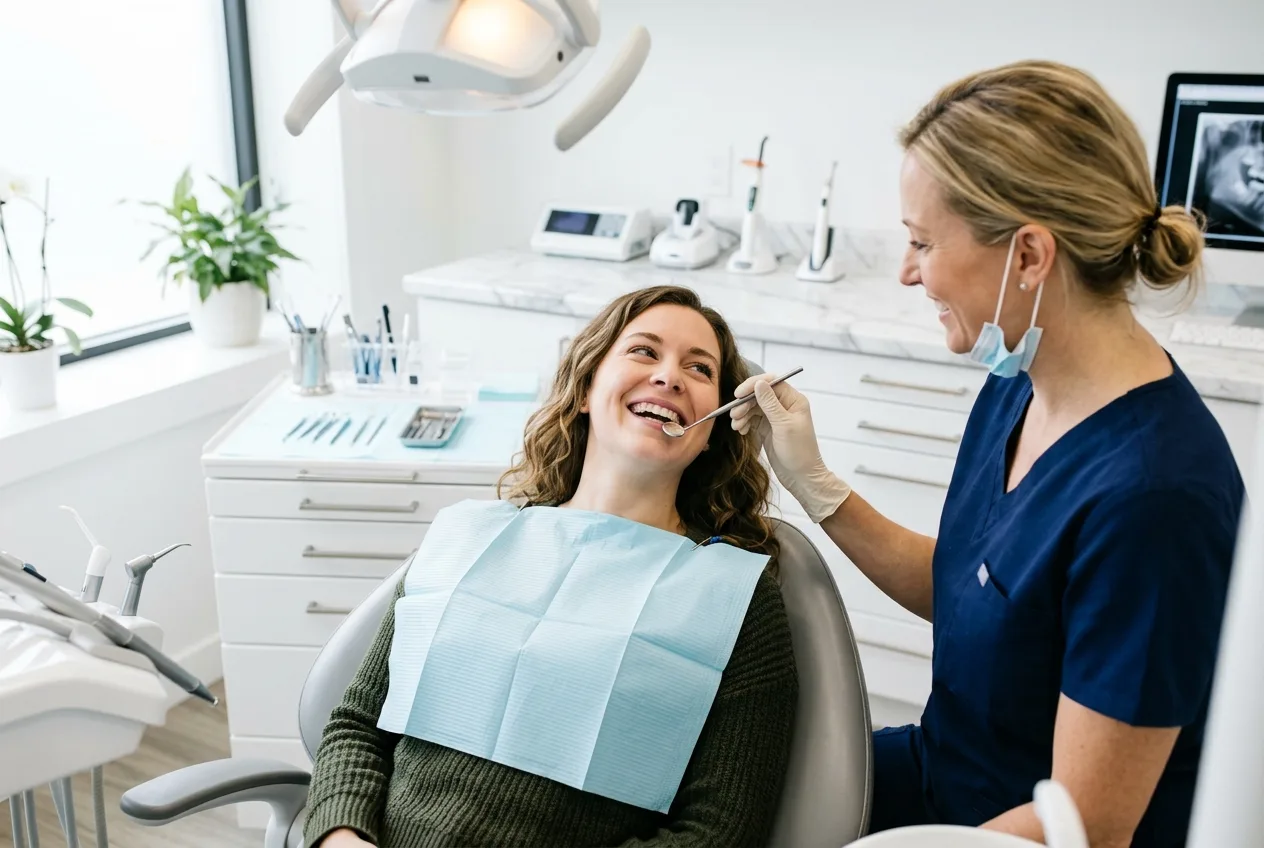
dental supplementary insurance
Find the right dental supplementary insurance at nextsure. Comprehensive protection, digital processing, and tailor-made rates for your most beautiful smile.
Learn moreBrace cost trap: Why statutory health insurance often isn’t enough
Statutory health insurance (GKV) only covers the cost of braces under strict conditions. The key factor is classification in the orthodontic indication groups (KIG), which divide the severity of the misalignment into five stages. Costs are only covered from KIG stage 3, i.e. in the case of a pronounced misalignment that must be treated for medical reasons.
Milder misalignments in KIG stages 1 and 2 are regarded as an aesthetic issue, and treatment costs of up to 4,000 euros must be paid in full privately. Even where the GKV does cover the costs (KIG 3-5), parents must first pay an upfront contribution of twenty per cent. Although this amount is reimbursed once treatment has been successfully completed, it still represents a financial burden for many families. In addition, there are costs for modern and more comfortable options that go beyond standard care.
Scope of cover: What a good children’s dental insurance policy covers
A powerful dental supplementary insurance closes precisely the gaps left by statutory health insurance (GKV). It not only reduces your out-of-pocket share, but also expands access to high-quality care options. A key advantage is coverage for orthodontic treatments, including KIG levels 1 and 2. This ensures your child receives the necessary correction, even if it does not fall under the strict GKV rules.
In addition, many policies cover important supplementary benefits that can quickly cost several hundred euros. These include, for example:
- Modern treatment methods: Costs for discreet ceramic brackets or lingual braces, which can cost up to 1,500 euros more, are covered in part or in full.
- Professional teeth cleaning: Especially for wearers of fixed braces, intensive preventive care is important to reduce the risk of tooth decay. Many policies reimburse the 80 to 120 euros per cleaning.
- Fissure sealing: Protection of the back teeth against tooth decay is often only paid for by the GKV for the two rearmost molars. A private insurance policy covers sealing for all back teeth.
- High-quality fillings: Instead of amalgam, the costs for tooth-coloured composite fillings are reimbursed at 100 per cent.
A calculation example: A brace costs 4,500 euros. The GKV covers the standard rate of 3,000 euros for KIG 3. For supplementary benefits such as better brackets and a retainer for stabilisation, 1,500 euros are incurred. A good insurance policy covers ninety per cent of this, i.e. 1,350 euros.
The right time: when you should take out the insurance
The ideal time to take out dental insurance for your child is between the ages of three and five. At this age, the baby teeth are usually complete, but any misalignment has generally not yet been medically diagnosed. This is crucial, because insurers do not cover treatments that have already been identified or recommended. Take out the policy before the orthodontist confirms a need for treatment.
Taking out cover early not only secures you lower premiums, often under €15 per month, but also prevents exclusions from cover. Once a diagnosis is on the table, it is often too late for a comprehensive policy. Early cover is therefore one of the most important strategic decisions for your child's dental health.
Contract details in focus: What you need to pay attention to when choosing a tariff
Not every policy is equally good. To find the best dental supplementary insurance for your child, you should look out for several criteria. The amount of reimbursement for orthodontics is the most important feature. It should be at least eighty, preferably ninety per cent, and should also apply to KIG levels 1 and 2.
Also pay attention to the following points in the policy terms:
- Benefit schedule: In the first few years, reimbursement is often limited. A good policy should already provide at least EUR 1,000 for orthodontics in the first year.
- Waiting periods: Many tariffs provide an eight-month waiting period before orthodontic benefits can be claimed. However, some providers waive this.
- Scope of cover: The policy should explicitly include modern techniques such as invisible aligners, retainers for follow-up care and functional diagnostic services.
- Prophylaxis benefits: Cover for professional teeth cleaning should be possible at least once, preferably twice a year, without high co-payments.
A careful comparison of the terms and conditions protects you from unpleasant surprises when making a claim and ensures the best possible treatment.
Expert tip: Health questions and the insured event
When taking out dental supplementary insurance, you must answer health questions truthfully. A common question is: “Has a misalignment of the teeth or jaw been diagnosed, or has treatment been recommended?” A “Yes” often leads to rejection or an exclusion of benefits. Therefore, taking out the policy before your first visit to the orthodontist is so important.
Our expert tip: In orthodontics, the insured event does not occur only when the brace is fitted, but as soon as the doctor draws up the treatment and cost plan. An orthodontic insurance policy taken out only after this point will no longer provide cover for this specific case. So plan ahead to ensure full protection.
Conclusion: Act proactively and save costs
Yes, you can and should take out dental insurance for your child to minimise financial risks and secure first-class treatment. Statutory health insurance covers only a fraction of the possible costs, particularly for minor misalignments and modern treatment methods. A good policy for under 20 euros a month can save you four-figure sums.
The key to success lies in acting early and carefully comparing the plans. This creates the foundation for your child’s healthy smile without breaking the bank. The right cover gives you the freedom to make decisions in the interests of health rather than the size of your wallet.
Frequently asked questions
- From what age can I take out dental insurance for my child?
You can often take out supplementary dental insurance for your child from birth. It makes sense to take out cover by the age of three to five at the latest, as by then the baby teeth are all in place and, as a rule, no misalignments have yet been diagnosed.
- What happens if I cancel before the treatment is completed?
If you terminate the contract, entitlement to benefits also ends. Any treatments already started must then be paid for in full by you from the time of termination. The right to reimbursement of the GKV co-payment may also be jeopardised.
- Are waiting periods common in dental supplementary insurance for children?
Yes, in the field of orthodontics, there is often a special waiting period of eight months. However, some plans also offer immediate cover without waiting periods, which is an important comparison criterion.
- Does the insurance also cover discreet or “invisible” braces?
High-performance plans also cover the additional costs of more aesthetically pleasing solutions. These include tooth-coloured ceramic brackets, lingual braces fitted on the inside of the teeth, or clear aligner trays, which are not paid for by the statutory health insurance scheme.
- What is the difference between the co-payment and private supplementary services?
The co-payment is the twenty per cent of the standard treatment costs that you initially pay for a health insurance benefit (KIG 3-5) and later get reimbursed. Private additional services are all costs for treatments that go beyond the standard of statutory health insurance (e.g. better materials) and must be paid in full by you.
- Can I claim the premiums for dental insurance as a tax deduction?
Yes, contributions to supplementary dental insurance can be claimed in your tax return as part of preventative expenses. This applies, together with other insurance contributions, up to the statutory maximum amounts.
Sources
- [1]Health equity provides a report on children’s dental health in Germany, which is world-leading, but does not reach all children equally.
- [2]National Association of Statutory Health Insurance Dentists (KZBV) provides information on measures to prevent early childhood caries.
- [3]German Dental Association (BZAEK) provides information on prevention in children’s and adolescent dentistry.
- [4]Federal Ministry of Health provides information on the recommended dental check-ups.
- [5]National Association of Statutory Health Insurance Funds contains a press release on the topic of dental health.
- [6]German Society for Paediatric Dentistry (DGKiZ) provides comprehensive information and resources on paediatric dentistry.
Conclude directly online
Verified partner tariffs at no extra cost. The button takes you straight to the provider's calculator.
 Advigon
Supplemental dental insurance
Four supplemental dental tariffs ranging from basic cover to full protection, including children's tariffs with orthodontics.
- Dental Medium premium:
- €5.69-32.30/month depending on age
- Dental Luxus premium:
- €9.20-54.50/month depending on age
- Waiting period:
- none (AZM/AZL)
- Dental treatment: 75% (Dental Medium) or 100% (Dental Luxus)
- Dentures/crowns (Zahnersatz): 75% (AZM; 100% for standard care) or 100% (AZL)
- Preventive dental care: 100% up to €90/year (AZM) or up to €140/year (AZL)
- No waiting periods in Dental Medium and Dental Luxus
- Children's tariffs with orthodontics (KFO): Dental Clever €9.68/month, Dental Premium €18.76/month
- Stiftung Warentest rated Dental Premium "very good" (1.5) (Finanztest 2/25)
Key exclusions
- Reimbursement caps in the first 48 months: AZM €600-2,400, AZL €1,000-4,000 (tiered)
- No explicit benefit exclusions are stated in the available documentation
Stiftung Warentest „SEHR GUT (0,6)“, Finanzen 07/2025 (285 Tarife im Test)
Advigon Zahnzusatzversicherung Dental Luxus (AZL)
MORGEN & MORGEN M&M Rating Zahnzusatz: 5 Sterne „Ausgezeichnet“ (08/2023)
Advigon Versicherung AG, Dental Luxus (AZL)
Reimbursement caps do not apply in the case of an accident, after month 48, or with a recognized prior policy.
Fact sheet: benefits, exclusions and waiting periods in detail
 die Bayerische
Supplemental dental insurance
Supplemental dental cover in three tariffs (Smart, Komfort, Prestige) with no waiting period; the top tariff reimburses 100%.
- Reimbursement:
- 75-100% depending on the tariff
- Waiting period:
- none
- Teeth cleaning:
- €80-200/year depending on the tariff
- Zahn Sofort module:
- €29.90/month, ends after 2 years
- Dentures/crowns and dental treatment: Smart 75%, Komfort 80-100%, Prestige 100%
- Professional teeth cleaning in all tariffs (€80-200 per calendar year)
- No waiting periods in any of the three tariffs
- Orthodontics: €1,500 (including statutory health insurance benefit) or €2,000 (without statutory health insurance benefit) in Komfort and Prestige
- Prestige includes teeth whitening and a Happybrush sonic toothbrush
- Stiftung Warentest 07/2025: Zahn Prestige rated test winner with "very good" (0.5)
Key exclusions
- Treatments recommended or started before the policy began (only covered via the Zahn Sofort module)
- A flat 40% deduction for dentists without statutory-insurance accreditation
- Reimbursement capped at up to 3.5x the dental fee schedule (GOZ) rate
- Abroad, reimbursement is capped at the domestic benefit level
Stiftung Warentest „SEHR GUT (0,5)“, Ausgabe 07/2025 (285 Tarife im Test)
die Bayerische, Tarif ZAHN Prestige
ASCORE „Tarif des Jahres 2024“ (Krankenzusatz Zahn)
die Bayerische, Zahn Prestige 2023
Levelnine Rating „EXZELLENT“ (Stand 11/2024, gültig bis 11/2025)
die Bayerische, Tarif ZAHN Prestige
Benefit tiering: €500 in year 1 (Smart), €1,250 (Komfort), or €1,500 (Prestige); unlimited from calendar year 5; caps also do not apply in the case of an accident.
Fact sheet: benefits, exclusions and waiting periods in detail
Advigon Supplemental dental insurance: Benefits: Dental Medium (AZM) and Dental Luxus (AZL)
| Benefit | Dental Medium (AZM) | Dental Luxus (AZL) |
|---|---|---|
| Dental treatment | 75% | 100% |
| Pain therapy | 75% | 100% |
| Preventive dental care | 100% up to €90/year | 100% up to €70 per treatment, up to €140/year |
| Dentures/crowns | 75% (100% for standard care) | 100% |
| Monthly premium by age | €5.69-32.30 | €9.20-54.50 |
die Bayerische Supplemental dental insurance: Tariff comparison: Smart, Komfort, Prestige
| Benefit | Smart | Komfort | Prestige |
|---|---|---|---|
| Dentures/crowns (above standard care) | 75% | 80-90% | 100% |
| Dentures/crowns (up to standard care) | 75% | 100% | 100% |
| Dental treatment | 75% | 100% | 100% |
| Professional teeth cleaning | €80/calendar year | €100 per treatment, max. €150/year | €100 per treatment, max. €200/year |
| Orthodontics | not included | €1,500 (incl. statutory insurance) / €2,000 (excl. statutory insurance) | €1,500 (incl. statutory insurance) / €2,000 (excl. statutory insurance) |
| Teeth whitening | not included | not included | included |
| Example annual premium (age 33) | €152.40 | €244.80 (rural) / €321.60 (urban) | €405.60 (rural) / €529.20 (urban) |
All details are taken from the provider's linked product page and the contract documents (IPID/policy conditions) published there; the insurer's documents prevail. Premiums, benefits and the insurance product itself may change – please verify the details directly with the partner before signing up; only the information provided there is binding.
Information last updated: July 2026 · Source: provider product information (IPID/policy conditions)