Does Barmenia Cover Horse Poisoning From Poison Bait?
Find out whether Barmenia covers poison-bait poisoning, which waiting periods apply, and how emergency claims are handled.
All details are taken from the provider's linked product page and the contract documents (IPID/policy conditions) published there; the insurer's documents prevail. Premiums, benefits and the insurance product itself may change – please verify the details directly with the partner before signing up; only the information provided there is binding.
 Katrin StraubManaging DirectorInsurance expert with over 20 years of experience in the insurance industry.
Published on
12 min read
Table of Contents
Does Barmenia's equine surgery insurance pay out for poisoning from poison bait? Yes, Barmenia's general insurance terms explicitly classify ingesting poison bait as an accident. This means the regular waiting period is waived entirely. If a life-saving operation becomes necessary after poisoning, the insurance covers the vet costs incurred. The exact reimbursement rate depends on the tariff chosen.
Equine surgery insurance
Horse surgery insurance via nextsure: Three flexible tariffs, reimbursement up to twice the GOT rate, and free choice of clinic worldwide. Protect your horse from high surgery costs – digital, transparent and uncomplicated.
Learn morePoisoning from poison bait as an accident under Barmenia's equine surgery insurance
The legal classification of ingesting poison
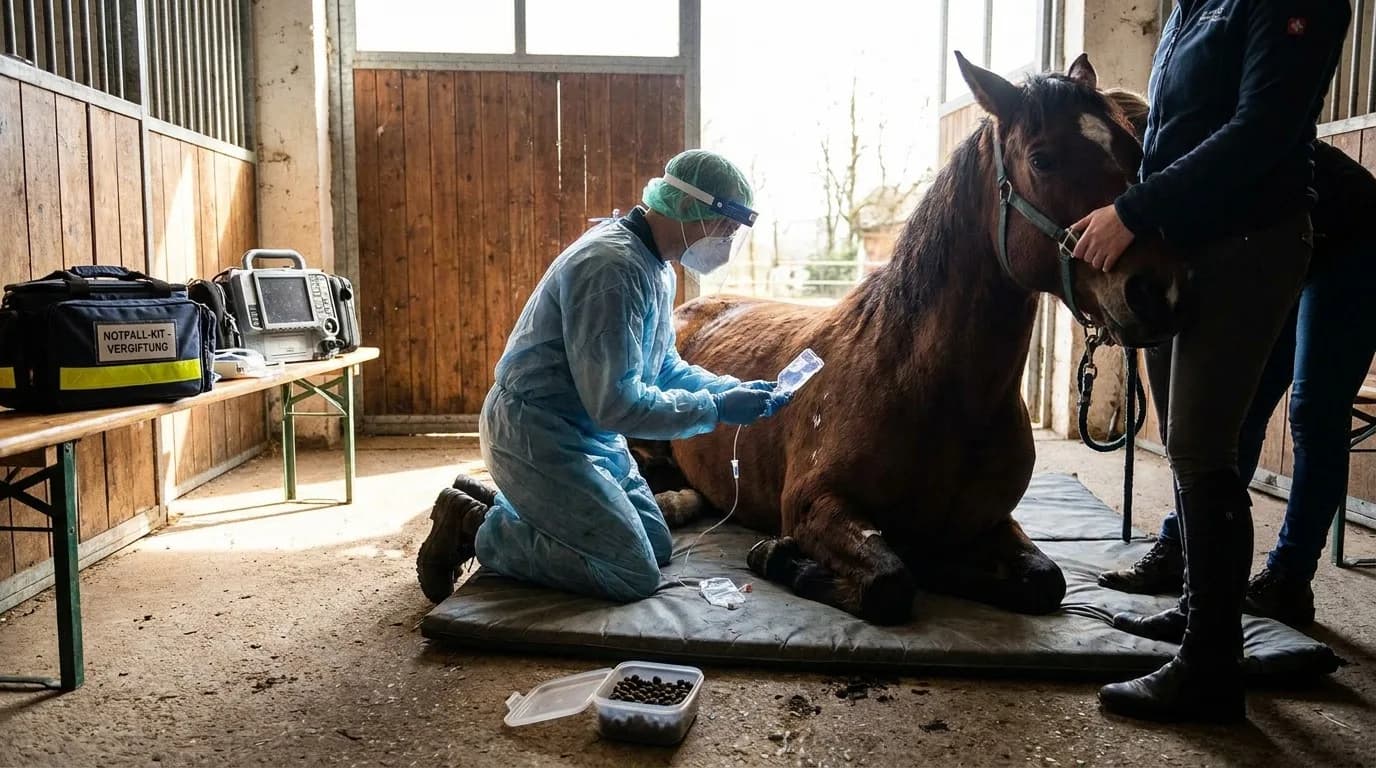
Poisoning presents an extreme risk for horse owners, one that requires fast action. Barmenia's equine surgery insurance explicitly defines ingesting harmful bait as an accidental event in its current insurance terms [1]. This legal status is decisive for the commitment to pay in a real emergency. In the case of poisoning, vets often have to intervene surgically immediately to save the animal's life. Classifying it as an accident ensures surgical measures are covered without any delay caused by contractual waiting periods. Horses react extremely sensitively to toxins. Toxic substances cause severe gastrointestinal problems. Barmenia covers the costs here: clear terms create transparency; the focus stays on medical care. Ingesting toxic substances such as rat poison via a poison bait is treated as an insured accident by Barmenia. If an animal needs an operation because it ingested poison bait, accident surgery insurance covers the costs incurred.
Medical necessity of the procedure
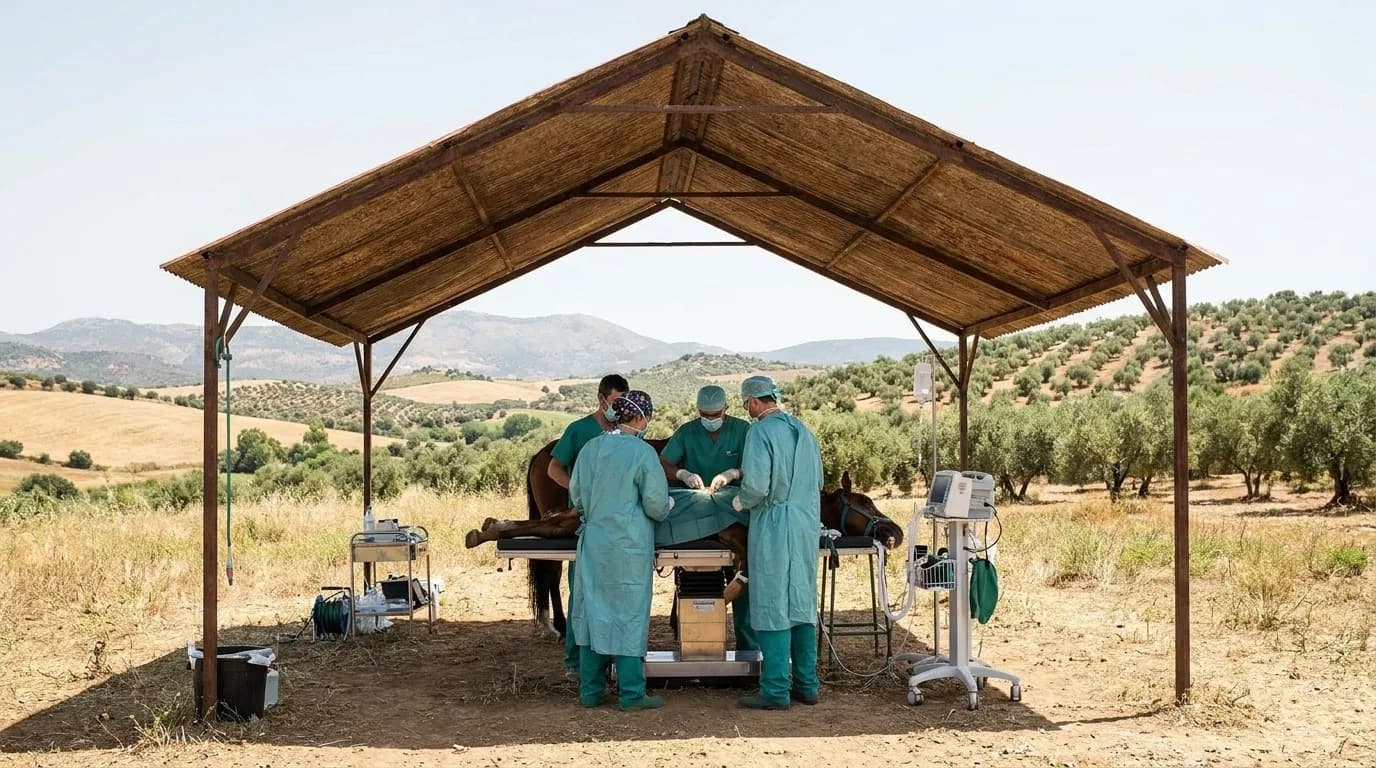
The medical necessity of an operation following poisoning must be established beyond doubt by the treating vet. Poisoning in horses can lead to severe symptoms such as colic, circulatory problems, and refusal to eat within just a few hours [2]. If conservative treatment methods are not enough, surgery is often the only option left. Barmenia covers the cost of these operations, provided the skin or underlying tissue is cut through more than superficially. This also includes the necessary general or standing anesthesia. Precise documentation of the procedure is essential. The vet's report serves as the primary evidence. This speeds up the claims process. Without a detailed diagnosis, the insurer can refuse or delay cost coverage. Horse owners should therefore always insist on precise invoicing from the veterinary clinic. The nextsure platform supports customers in checking these documents. This increases certainty of claims processing. Common poisonous plants in pastures that are life-threatening for horses include autumn crocus, monkshood, and common ragwort.
Distinction from regular illnesses
The clear distinction between an illness and an accident is of central importance in insurance law. While an illness is defined as an unforeseeably occurring physical condition, an accident is an event that suddenly acts on the body from outside. Barmenia has explicitly placed ingesting poison bait in the accident category. This classification protects the horse owner from unexpected gaps in cover. The benefits of equine surgery insurance thus cover not only classic injuries, but also this specific form of external impact. An accident usually requires immediate action. Costs escalate quickly. Classifying it as an accident removes the bureaucratic hurdles of a pure illness diagnosis. Barmenia takes a practical approach to interpreting its insurance terms here. Barmenia offers three tariffs for equine surgery insurance: Basic, Top, and Premium cover.
Waiting period for unforeseeable emergencies and poison ingestion
Waiver of the general waiting period
The waiting period is a critical factor when choosing pet insurance. At Barmenia, the general three-month waiting period is waived entirely if it is an accident. Since ingesting poison bait counts as an accident, cover applies from the very first day of the contract term. This is especially important, since poisonings are unforeseeable and require immediate surgical intervention. Equine surgery insurance without a waiting period for accidents provides the necessary financial backing in extremely stressful situations. Immediate cover is a strong argument for this tariff. Immediate cover is a core feature of Barmenia's tariffs: it prevents financial delays in acute emergencies. Barmenia offers three tariffs for equine surgery insurance: Basic, Top, and Premium cover.
Special waiting periods for specific diagnoses
Although accidents are covered immediately, special waiting periods apply for certain other diagnoses. For joint operations involving isolated opacities, OC, OCD, or chips, for example, a waiting period of twelve months applies. For abdominal surgery not caused by an accident, the waiting period is five days. This differentiation is important to keep premiums stable for the community of policyholders. Barmenia communicates these periods in the contract terms. However, if colic was clearly triggered by poison bait, the accident clause applies and the waiting period is waived. Horse owners must therefore ensure the vet precisely notes the cause of the colic on the invoice. Only this way can the insurer correctly classify and process the case as an accident. The tariffs of Barmenia Direkt and Adcuri GmbH are absolutely identical for equine surgery insurance, since Barmenia is the risk carrier in both cases.
Crediting prior policies
Another advantage of Barmenia's equine surgery insurance is the possible crediting of prior policies. If a horse owner switches to Barmenia from another provider and the previous contract transitions seamlessly, existing insurance periods can be credited toward the waiting periods. However, this only applies to benefit scopes that were also included in the previous contract. If the new tariff offers higher reimbursement rates or a lower deductible, the regular waiting periods apply to these improvements. nextsure's experts analyze existing contracts and check whether switching to Barmenia makes sense. This individual review ensures no gaps in cover arise and the horse owner is always optimally covered. Seamlessly continuing cover is an essential aspect of contract optimization. For clear identification of the insured horse in the event of a claim, the life number or chip number must be stated on the vet's invoice.
Cost coverage and GOT rates for colic surgery after poisoning
Reimbursement under the fee schedule
Cost coverage is strictly based on the veterinary fee schedule. Emergency treatment following poisoning from poison bait quickly costs an average of over 1,200 EUR at the vet [3]. If an operation becomes necessary, these costs rise drastically. Barmenia reimburses the vet's fees up to the rate documented in the policy. In the Basic tariff, reimbursement is generally up to 2 times the rate, while Premium cover covers considerably higher rates. Vet costs have risen sharply in recent years. Cost coverage for colic surgery after poisoning includes not just the procedure itself but also the pre-surgical examinations. This includes clinical examinations, blood tests, and imaging procedures that are absolutely necessary for establishing the diagnosis. Barmenia offers three tariffs for equine surgery insurance: Basic, Top, and Premium cover.
Emergency service fees and increased rates
Poisonings frequently happen on weekends or in the late evening, when regular vet practices are closed. In these cases, veterinary emergency care applies, which is entitled to bill increased fee rates and a flat-rate emergency service fee. Barmenia's Premium cover reimburses vet costs in an emergency up to 4 times the rate under the veterinary fee schedule [4]. In addition, the statutory emergency service fee is covered. This requires the vet to explicitly confirm the presence of an emergency on the invoice. The Premium tariff absorbs these price spikes. Without veterinary confirmation, the insurer settles claims only at the regular rates. When admitting the horse to the veterinary clinic, owners should ideally point out the required documentation right away. The tariffs of Barmenia Direkt and Adcuri GmbH are absolutely identical for equine surgery insurance, since Barmenia is the risk carrier in both cases.
Aftercare and physiotherapy
Cost coverage does not end once the horse leaves the operating table. Reimbursable costs also include the expenses for follow-up treatment related to the operation. The number of insured aftercare days varies by tariff. In Premium cover, up to five additional physiotherapy sessions of up to 60 minutes each are covered once the agreed period has ended. These sessions can be carried out by a vet or a recognized animal physiotherapist following referral. Alternative treatment methods such as acupuncture or magnetic field therapy are also reimbursed, provided their effectiveness is documented in veterinary science and they are billed under the GOT. This comprehensive aftercare ensures the horse is rehabilitated as well as possible after severe poisoning. For clear identification of the insured horse in the event of a claim, the life number or chip number must be stated on the vet's invoice.
| Tariff variant | Regular GOT rate | Emergency GOT rate | Aftercare days |
|---|---|---|---|
| Basic cover | Up to 2x | Up to 2x | 5 days |
| Top cover | Up to 3x | Up to 3x | 10 days |
| Premium cover | Up to 3x | Up to 4x | 15 days + physio |
Reimbursement for emergency care requires explicit veterinary confirmation on the invoice.
Comparing Barmenia's tariffs for optimal surgical cover
Basic cover for cost-conscious owners
A tariff comparison is essential for finding the right cover. Barmenia offers three tariffs for equine surgery insurance: Basic, Top, and Premium cover [4]. Basic cover is aimed at horse owners looking for solid basic protection for the absolute worst case. It covers the essential surgery costs up to 2 times the GOT rate and includes a five-day aftercare period. This is sufficient for many standard operations, but reaches its limits with complex weekend emergencies. The Basic tariff offers solid basic cover for cost-conscious owners. nextsure's experts, however, advise checking regional vet costs, since higher rates are often billed in metropolitan areas. An upgrade may be worthwhile. The tariffs of Barmenia Direkt and Adcuri GmbH are absolutely identical for equine surgery insurance, since Barmenia is the risk carrier in both cases.
Top cover as the balanced middle ground
Top cover positions itself as the golden middle ground in Barmenia's portfolio. It raises the reimbursement limit to 3 times the GOT rate, which is often essential for complicated procedures or treatment by specialists. In addition, the duration of insured aftercare doubles to ten days. This gives the horse more time for a fully covered recovery period at the clinic. Top cover shows its strengths especially with poisonings that require longer inpatient observation. Accommodation costs at the veterinary clinic add up quickly. With ten days of aftercare, the most critical phases after a serious colic operation are generally well covered. This tariff offers a very balanced ratio of premium to benefit. For clear identification of the insured horse in the event of a claim, the life number or chip number must be stated on the vet's invoice.
Premium cover for maximum security
For horse owners who want no compromises, Premium cover is the best choice. It not only reimburses up to 4 times the GOT rate in an emergency, but also extends the aftercare period to fifteen days. A special highlight is the inclusion of up to five physiotherapy sessions once the regular aftercare period has ended. In addition, in this tariff Barmenia waives its ordinary right of termination from the seventh year of insurance onward, provided the horse was no more than seven years old at the start of the contract. This waiver of termination is a massive advantage for aging horses, which carry a higher risk of surgery. This provides security. The digital platform nextsure especially recommends Premium cover for valuable sport and breeding horses, where the best possible medical care with no financial limits is the priority. Under Premium cover, Barmenia reimburses vet costs in an emergency up to 4 times the rate under the veterinary fee schedule (GOT).
Exclusions and benefit requirements in equine surgery insurance
Known pre-existing conditions and defects
Exclusions clearly and precisely define the limits of cover. Excluded from cover are illnesses, accidents, or congenital, genetically caused defects that were already known to the owner at the time of application. This is a standard practice across the industry, to protect the community of policyholders from opportunistic sign-ups. For conditions not known at the time the contract was taken out, however, full cover applies. The health assessment when applying requires precision: if pre-existing conditions are concealed, Barmenia can withdraw from the contract or refuse to pay in the event of a claim. It is therefore advisable to disclose all past veterinary findings transparently. nextsure's brokers help with correctly answering the health questions, to proactively avoid later disputes over claims processing. Barmenia offers three tariffs for equine surgery insurance: Basic, Top, and Premium cover.
Excluded operations and treatments
Alongside pre-existing conditions, there are specific procedures that are generally not reimbursed. These include routine and preventive checkups, cosmetic dental treatment, and operations carried out solely to produce a breed standard. Travel fees, standby fees, and the treating vet's travel costs, as well as transport costs for the horse, are also excluded from reimbursement. Diet and supplementary feed are also not paid for, even if used as part of treatment. These exclusions in equine surgery insurance are important to know, to avoid false expectations. Another important exclusion concerns operations for illnesses arising from epidemics or pandemics. However, these exclusions do not apply to poisoning from poison bait, since this is an unforeseeable accidental event that is explicitly covered. The tariffs of Barmenia Direkt and Adcuri GmbH are absolutely identical for equine surgery insurance, since Barmenia is the risk carrier in both cases.
Policyholder obligations
The policyholder has certain duties, so-called obligations, that must be fulfilled both before and after a claim occurs. Before a claim, all reasonable measures must be taken to avoid illness and accidents. After a claim occurs, there is a comprehensive duty to provide information. The owner must give the insurer all information required to determine the scope of the obligation to pay. Barmenia is entitled to obtain information directly from the treating vets. In the case of intentional breach of these duties, the insurer is fully released from paying. In the case of gross negligence, the payout can be reduced according to the severity of the fault. Cooperative, prompt communication with the insurer is therefore essential for a successful claims process. For clear identification of the insured horse in the event of a claim, the life number or chip number must be stated on the vet's invoice.
Billing vet costs and identifying the horse
Mandatory information on the vet's invoice
Processing a claim requires formal precision. When a claim is made, the costs incurred must be proven by submitting the invoice without delay, no later than one month after treatment ends. The owner's name and the diagnosis must be clearly stated on the invoice. In addition, the billed line items must be itemized in detail under the applicable GOT. Flat-rate invoices are not accepted by the insurer. For clear identification of the insured horse in the event of a claim, the life number or chip number must be stated on the vet's invoice [5]. If this number is missing, Barmenia can refuse to process the claim, since it cannot be proven beyond doubt that the animal treated is identical to the insured animal. Horse owners must actively point out this requirement to the vet. Barmenia offers three tariffs for equine surgery insurance: Basic, Top, and Premium cover.
Option for direct billing
A big advantage of Barmenia's equine surgery insurance is the option for direct billing with the veterinary clinic or the treating vet. On the policyholder's explicit instruction, Barmenia pays the reimbursable amount directly to the service provider. This is an enormous relief for the horse owner, since they do not have to advance the often very high surgery costs from their own funds. Direct billing must be arranged with the clinic in advance. Not every practice accepts this arrangement — prior agreement is essential. If special lab tests or diagnostic procedures such as ECG, X-ray, or ultrasound are billed, the insurer can request the corresponding examination documents. Submitting these documents digitally through the nextsure customer portal considerably speeds up the review process and ensures prompt settlement of outstanding claims directly to the clinic. The tariffs of Barmenia Direkt and Adcuri GmbH are absolutely identical for equine surgery insurance, since Barmenia is the risk carrier in both cases.
When the insurance benefit becomes due
The insurance benefit is paid out once Barmenia has completed all necessary inquiries. If these checks are not finished within one month of the claim being reported, the policyholder has the right to demand an advance payment. This corresponds to the amount the insurer will likely have to pay at minimum. However, if the inquiries are delayed due to fault on the horse owner's part, for example incomplete documents, this period is extended accordingly. The tariffs of Barmenia Direkt and Adcuri GmbH are absolutely identical for equine surgery insurance, since Barmenia is the risk carrier in both cases [5]. Regardless of the sales channel chosen, the same strict but fair processing deadlines apply. nextsure's brokers monitor these deadlines for their customers and proactively follow up on delays. Under Premium cover, Barmenia reimburses vet costs in an emergency up to 4 times the rate under the veterinary fee schedule (GOT).
Steps for a successful claim at Barmenia
- Make sure the horse's chip number or life number is on the invoice.
- Have the vet state the diagnosis and detailed GOT line items.
- For emergencies, obtain explicit confirmation of veterinary emergency care.
- Submit the invoice to the insurer no later than one month after treatment ends.
- Clarify in advance whether the veterinary clinic accepts direct billing with Barmenia.
Incomplete invoices are the most common reason for payout delays.
Extended cover for hobby and farm animals compared
Coordinating different animal insurance policies
Extended cover often goes beyond the individual horse. Many horse owners keep other animals, which also carry specific risks. A coordinated insurance strategy is essential here. Cover for hobby and farm animals requires tailored solutions that fit into the existing portfolio. While equine surgery insurance covers extreme medical costs, other animals may need more comprehensive health insurance or specific liability solutions. The digital platform nextsure offers a decisive advantage here. It makes it possible to centrally manage and compare different policies for different types of animal. This ensures the budget is used efficiently and every animal companion in the household or on the farm enjoys the best possible cover, without overlaps. Barmenia offers three tariffs for equine surgery insurance: Basic, Top, and Premium cover.
nextsure's broker model
nextsure's broker model differs fundamentally from pure comparison portals. Instead of overwhelming customers with a confusing array of tariffs, nextsure offers hand-picked, curated tariffs. Barmenia's equine surgery insurance is an excellent example of such a quality product, included in the portfolio because of its clear terms and strong benefits. Advice is independent and transparent. Remuneration comes from commissions paid by insurance companies, so the service remains free for the end customer. This model ensures the horse owner's individual needs stay at the center. Whether it's about cover against poisoning, choosing the right GOT rate, or integrating other animal insurance policies, nextsure's experts provide well-founded analysis and support the entire process from online sign-up through to claims processing. The tariffs of Barmenia Direkt and Adcuri GmbH are absolutely identical for equine surgery insurance, since Barmenia is the risk carrier in both cases.
Digital management and personal service
The combination of digital efficiency and personal expertise makes the difference. nextsure customers benefit from simple online sign-up and clear digital contract management. At the same time, a knowledgeable contact person is always available for complex questions, such as the exact definition of an accident in Barmenia's AVB. This hybrid approach solves the typical pain points many pet owners face: claims are reported digitally. Especially in emotionally stressful situations, such as a life-threatening poisoning of a horse from poison bait, a reliable partner is worth its weight in gold. The platform ensures all relevant documents quickly reach the risk carrier, and the owner's liquidity is protected through prompt reimbursement. This is how modern insurance brokerage meets the high demands of digitally savvy private customers in Germany. For clear identification of the insured horse in the event of a claim, the life number or chip number must be stated on the vet's invoice.
Frequently asked questions
- Does Barmenia treat poisoning as an accident?
Yes, Barmenia's general insurance terms explicitly define ingesting poison or harmful bait as an accident. This means all medically necessary operations resulting from such poisoning fall under the accident cover of the equine surgery insurance and are reimbursed according to the tariff terms.
- Is there a waiting period for accidents?
No, for claims caused by an accident, the general three-month waiting period is waived entirely. Since poisoning from poison bait is treated as an accident, cover for the necessary operation applies from the very first day of the contract term, with no delay.
- Does Barmenia pay out immediately for an accident?
Barmenia pays out its benefits once all inquiries needed to establish the claim have been completed. If the review takes longer than one month, you are entitled to an advance payment. This rule is clear. A precondition for prompt payment is submitting a correct, detailed vet invoice.
- What counts as an accident at Barmenia?
According to Barmenia, an accident is an event that suddenly acts on the horse's body from outside and results in physical harm. Alongside classic injuries from falls or kicks, this definition explicitly includes health damage from ingesting toxic substances such as poison bait.
- Is surgery after poison ingestion covered?
Yes, if the poisoning leads to a life-threatening situation such as severe colic and a surgical procedure under anesthesia becomes medically necessary, Barmenia covers the surgery costs. The pre-surgical examinations and aftercare are also covered under the chosen tariff.
- What GOT rate is reimbursed for an emergency operation?
That depends on the tariff chosen. Basic cover reimburses up to 2 times, and Top cover up to 3 times, the rate under the veterinary fee schedule (GOT). Premium cover even covers costs up to 4 times the GOT rate, including the statutory emergency service fee, for veterinarily confirmed emergencies.
Sources
Conclude directly online
Verified partner tariffs at no extra cost. The button takes you straight to the provider's calculator.
 Barmenia
Horse surgery insurance
Surgery cost cover for horses in case of illness and accidents, including diagnostics and after-care.
- Waiting period:
- 3 months (colic surgery: 5 days, accidents: none)
- Coverage abroad:
- worldwide, up to 12 months
- Maximum benefit:
- depends on the cover level, as stated in the policy
- Surgery costs for illness and accidents, including tooth extractions and root canal treatment
- Pre-surgical examination (X-ray, endoscopy, biopsy, lab work)
- After-care including acupuncture, homeopathy, physiotherapy, laser therapy
- Emergency veterinary service up to 4x the standard veterinary fee schedule (GOT) rate plus the emergency callout fee
- Premium cover: up to 5 physiotherapy sessions (max. 60 minutes each) after the after-care period ends
- Once per animal: surgery costs for a birth-related, medically necessary caesarean section
Key exclusions
- Illnesses and developmental abnormalities known at the time of application
- Hoof abscesses and hoof ulcers (exception: hoof cancer)
- Surgery due to cryptorchidism
- Neutering that isn't medically necessary
Service-Champions GOLD: Nr. 1 der Versicherer im Multikanalvertrieb (ServiceValue, 10/2024)
Barmenia (Anbieter der Pferde-OP-Versicherung)
Special waiting periods: 12 months for joint surgery (chip fragments, OC/OCD, Birkeland fractures), 6 months for medically necessary neutering; Premium cover includes a waiver of the insurer's right to cancel from the 7th insurance year.
Fact sheet: benefits, exclusions and waiting periods in detail
All details are taken from the provider's linked product page and the contract documents (IPID/policy conditions) published there; the insurer's documents prevail. Premiums, benefits and the insurance product itself may change – please verify the details directly with the partner before signing up; only the information provided there is binding.
Information last updated: July 2026 · Source: provider product information (IPID/policy conditions)